

Adapted from: Steps to the Throne by Rabbi Nosson Muller
אַחַת שָׁאַלְתִּי מֵאֵת ה׳ אוֹתָהּ אֲבַקֵּשׁ, שִׁבְתִּי בְּבֵית ה׳ כָּל יְמֵי חַיַּי, לַחֲזוֹת בְּנֹעַם ה׳ וּלְבַקֵּר בְּהֵיכָלוֹ
One thing I asked from Hashem, that shall I seek: to dwell in the House of Hashem all the days of my life, to behold the sweetness of Hashem and to contemplate in His Sanctuary. (Tehillim 27:4)
This verse, in the chapter of Tehillim added to our daily prayer during this special time of year, has become the anthem of Elul. After all is said and done, the Jewish heart, at its core, seeks only one thing: to dwell in the House of Hashem, and to gaze at His sweetness.
An insight into the repetitious nature of the pasuk which uses the words sha’alti and then avakesh, is offered by R’ Dovid Soloveitchik.
The choices people make are normally governed by the available options. For example, a child will typically choose a red lollipop above any other color. However, when red is not an available option, no child will reject candy altogether. He will pick from whatever is there.
Adults are no different. If we were offered any gift in the world, we would choose whatever we’d like to have most. Some would take a house, others a successful career, and still others would opt for a new car.
In the event a person’s first choice is not on the list of items offered, he will not walk away from the overall offer. He will happily settle for the next best thing available.
A man chooses from what there is.
In this verse, we express that in this case, it is different. There is no choice to make. A place in Hashem’s Home is the only thing we need, the only thing we lack.
We begin by asking for just one thing, Achas sha’alti. We then reiterate our request with osah avakesh, making it clear to our Benefactor that no replacement will mollify our desire for His Presence in our lives.
We want nothing else and ask for nothing more.
Osah avakesh: It is only for this that we ask.
Because it is the one and only thing that matters to a believing Jew.
———
After our entreaty for a permanent residence in Hashem’s dwelling, the pasuk continues with a request to gaze at the sweetness of Hashem.
In the context of the verse, the two seem to be connected. Only with a permanent residence in Hashem’s Presence can His true sweetness be perceived.
Why must one follow the other?
R’ Dovid Soloveitchik explains with an incident from his youth.
As a youngster in Brisk, R’ Dovid Soloveitchik observed a Jew who was perpetually happy. A wide smile always appeared on his face, and no situation would ever drag him down.
One day, R’ Dovid encountered this fellow in the mikveh. He was groaning deeply, with a sadness that seemed to emanate from the deepest parts of his soul. It was completely out of character for a man who never showed any despair, and shocked R’ Dovid to the core. Upon returning home, R’ Dovid shared his astonishment with his father, the Brisker Rav.
“The man you met has a very difficult life,” the Brisker Rav replied. “His tribulations are enormous, and he was letting out his pain.”
“But he is always so happy. What happened today that he couldn’t control his sadness like he usually does?” asked R’ Dovid.
“It wasn’t specific to today,” the Rav explained. “This fellow is a true scholar and he staves off his sorrow with the constant study of Torah. The joy it brings him keeps a smile on his face. In the mikveh, however, he is forced to stop. It is forbidden to learn there so his pain overwhelmed him.”
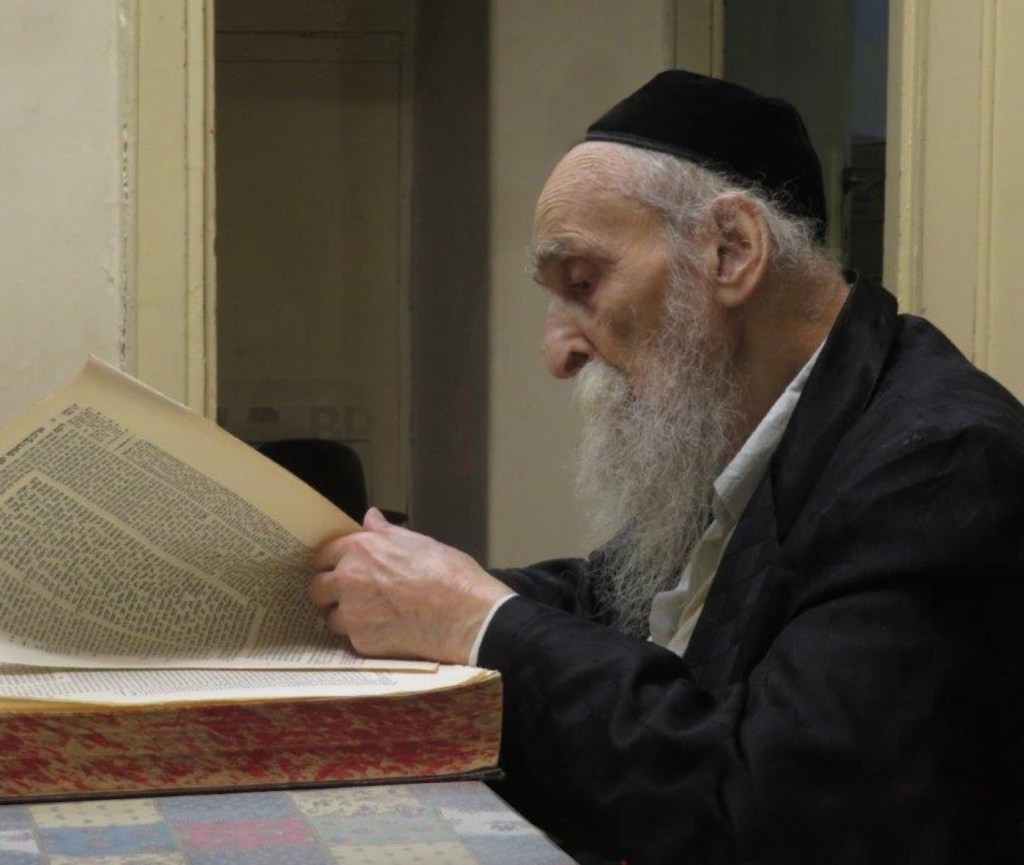
This Jew in Brisk merited to constantly reside with his Creator through the study of Torah. It enabled him to see the beauty of Hashem despite his difficult situation.
Torah adjusts the lens through which we look at our personal difficulties and struggles. Everything Hashem does carries incredible beauty, even in places where it is not apparent on the surface.
Studying Torah enables us to always perceive that as an absolute truth.
When we live with Him, we realize His sweetness.




 The Official ArtScroll Blog