
The Final Volume of the Yaakov and Ilana Melohn Edition of Or HaChaim is ready! In honor of the completion of this masterpiece series, download the Or HaChaim on Parshas Ki Seitzei for free here: Or HaChaim on Parshas Ki Seitzei


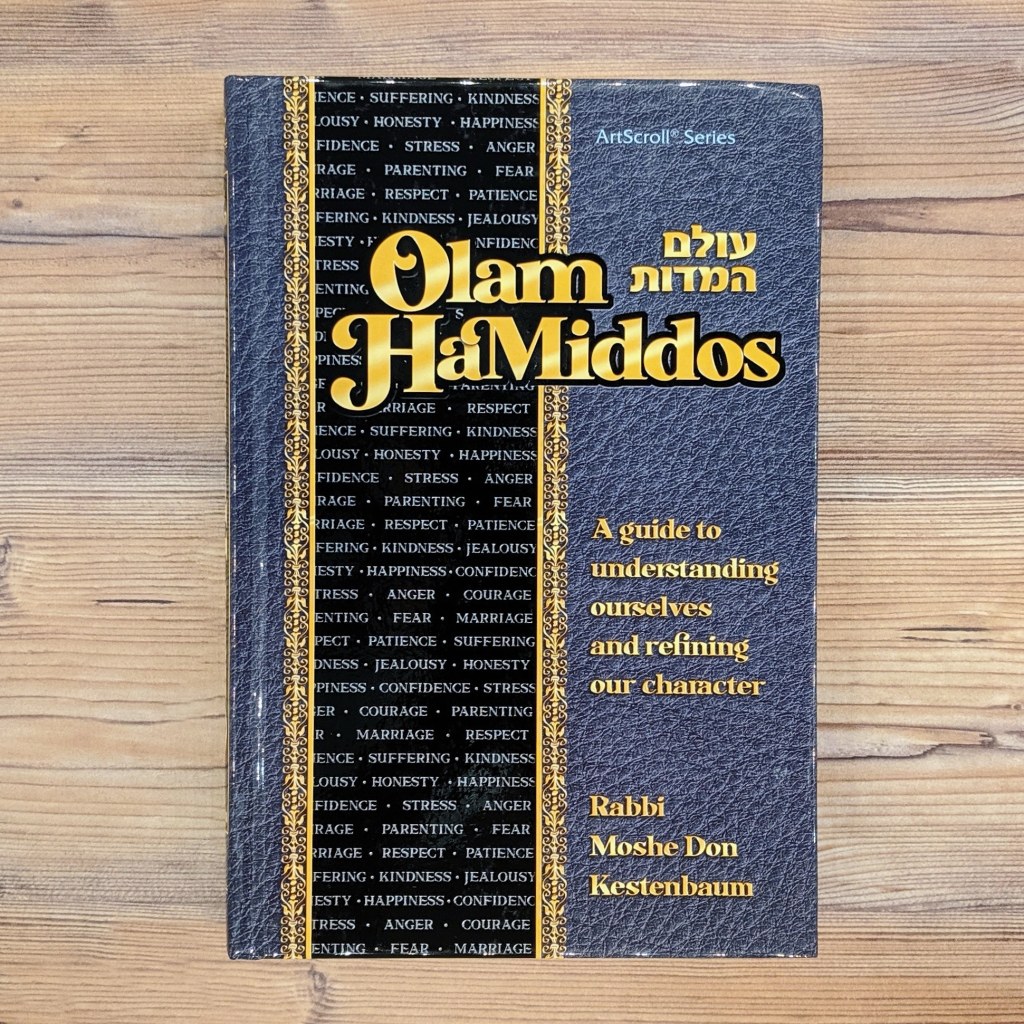
AS: Your Hebrew sefer, Olam HaMiddos, is being studied enthusiastically by so many in the Torah world. Can you tell us how you came to write it, and why you think it’s been so successful?
RMDK: What perhaps makes this sefer special is that it contains thoughts and observations that were helpful for my own personal development, and were not created with the intention of committing them to writing. When I was in beis medrash in Yeshiva of Far Rockaway, my rebbi, Rav Yechiel Perr shlita, infused in us a love for mussar and I began to pay closer attention to my thoughts and feelings. I shared some of these ideas over the years, when I was teaching Orchos Tzadikim to the bochurim in the Yeshiva of Waterbury, but I never considered writing a sefer until Rav Sheya Lazenga asked me to give a weekly vaad to the yungerleit on middos. In writing notes in preparation for those vaadim, I realized, “Wow, I think I have a sefer!”
AS: Why is tikkun hamiddos so important – and why is it so hard, especially today?
RMDK: Tikkun hamiddos is so important, simply, as the Vilna Gaon and others write, because that is why we are here — to perfect our character! I don’t know if it’s harder today than before, but perhaps in these times where we are used to having everything come easy to us, we are less prepared to put in the effort to fight and overcome our natural tendencies.
AS: In the sefer you discuss becoming a “ba’al middos” – someone who “owns” his middos. In these days of selfies and “fake news,” how can we learn to do that?
RMDK: Probably by taking fewer selfies! As the Mesillas Yesharim writes, the yeitzer hara’s trick is to distract us. It is easier today more than ever to become distracted by everyone and everything else, rather than looking inside ourselves. My hope be”H is that this sefer brings people to discover themselves, seeing their unique greatness and their flaws. When we understand ourselves and work to better ourselves, life becomes all that much more enjoyable and meaningful.

With over 300,000 copies of his children’s books in print, Shmuel Blitz is one of the premiere children’s authors of our time. We spoke to him about his newest book, A House Full of Love: The Story of Rebbetzin Batsheva Kanievsky.
AS: In an age of so many entertaining distractions, how do we get our children to love reading – and how important is it that they do?
SB: The easy answer is, to give our children great books. We saw how in the secular world, as children’s reading habits were growing worse and worse because of modern distractions, when the Harry Potter series was published, all these “non-reading” children were once again reading. And loving it. They couldn’t wait for the next volume. Give children books that they like – and they will read. That’s what I try to do. Studies have proven over and over that the more a child reads outside of school the better he will do inside of school. So it is VERY important to make sure our children are reading.
AS: There are literally hundreds, perhaps thousands, of stories about Rebbetzin Kanievsky’s greatness. Tough job choosing what to put into your book. How did you go about choosing?
SB: It was tough, but at the same time it was easy. There was so much to choose from. Stories of her middos, stories of her devotion to her husband, Reb Chaim shlita, and so much more. I chose the stories that I felt would most relate to a child, and that a child would learn from, and that would hold their interest. And mostly stories that children could incorporate into their own life.
AS: What are some of the lessons our youngsters can learn from Rebbetzin Kanievsky?
SB: There is no end to what our children can learn from Rebbetzin Kanievsky. Every action she did, every word she spoke. Just as we learn from gedolim, such as her husband, ybl’ch, Rav Chaim, we can learn from her. Our children – and we, also – can learn from the way she took care of her own children, her neighbor’s children, her family, her community, and everyone who came to her. It made no difference if the guest was an important person, or the poorest person, or even a person with severe mental problems. Her house and heart were open to all. She was a true role model for all of us.

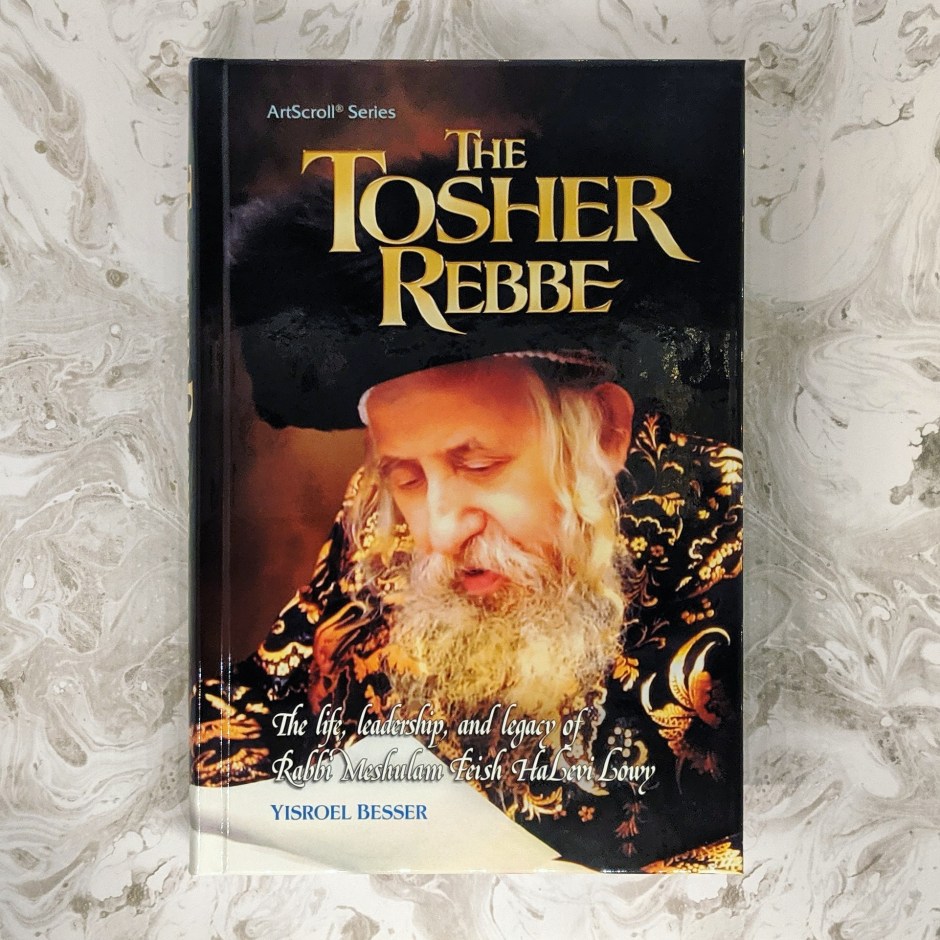
AS: You’ve captured so many facets of the Tosher Rebbe’s greatness. What went into writing this biography?
RYB: I live in Montreal, so I was able to go into the heart of Tosh, and the people close to the Rebbe opened up to me. Much of the historical material was documented, but the stories, the warmth, the heart of the book came from those close to him.
AS: The Rebbe was so saintly, yet he understood people’s everyday fears and challenges. How was he able to do that?
RYB: The Baal Shem Tov said that a neshamah comes down to this world for 70 or 80 years, just to do a tovah for another Yid. Because the Tosher Rebbe was such a chassid, all the taharah, Torah, tikun middos, perishus — they all led to helping others. He took a very pragmatic approach to shalom bayis. He was a big advocate of women having more cleaning help. He understood people’s needs davka because he was so holy, not despite being holy.
AS: There are so many stories in the book, about his chesed, his tzedakah, his vision, his berachos. Can you share one that made a strong impression on you?
RYB: Many wealthy people came and gave money to the Rebbe, because they were grateful to him for his help. But the money never stayed with him — he gave it to anyone who needed it. Once, a Yid came who was a maggid shiur; he was making a chasunah, and he didn’t have enough money. The Rebbe asked him what masechta he was learning. “Beiah.” The Rebbe asked him a question and they started speaking in learning. The gabbaim were surprised; the Rebbe didn’t usually do this. Then the Rebbe asked him about a Tosafos in Berachos that contradicted what they were discussing. As the man got up to leave, the Rebbe said, “Check the Tosafos in Berachos as soon as possible. Don’t wait, do it now. You’ll see I’m right.” There was a Shas in the waiting room. The man opened it, went to the Tosafos — and found a fat envelope full of cash! The Rebbe understood that his gabbaim wouldn’t want him give such a large amount to one person, so he found a way to use his learning and send the man the money. There are so many tzaddikim, and so many talmidei chachamim – the Rebbe merged both.


Wonderful news for the many thousands who have already enriched their understanding of Chumash Shemos with the Yaakov and Ilana Melohn Edition Or HaChaim. They have enjoyed the breathtaking depth, clarity, and insight of this classic Torah commentary and its masterful elucidation – and now they can continue this journey of discovery with Sefer Devarim Volume 1: Parashas Devarim – Shoftim, just in time for the Torah reading.
And if you are not yet familiar with the brilliance of Rav Chaim ben Moshe ibn Attar, the 18th century Torah sage whose commentary on the Torah is learned and loved by so many segments of Klal Yisrael, prepare to discover the treasures of one of the foremost commentaries on Chumash, the Or HaChaim HaKadosh.
Great though the commentary is, it is not simple. The Or HaChaim points out countless nuances in the Chumash text, and he blends the pshat of the Chumash with the interpretations of Chazal as well as his original comments. R’ Chaim weaves many Kabbalistic concepts into the commentary, and also explains many of the fundamental principles of our faith.
Using the famed format of the Schottenstein Edition Talmud, the elucidated translation helps us gain a clear understanding of the Or HaChaim’s text, and the notes provide explanations, sources, and deeper insights into his words. Every volume includes the Or HaChaim commentary, the text of the Chumash, Targum, and Rashi. Or HaChaim and Rashi are both fully vowelized.
So many insights, so many fascinating ideas. How do Moshe’s words in Sefer Devarim differ from all the other words in the Torah? What are the four conditions necessary for our tefillos to be accepted, and how do we learn them from Moshe Rabbeinu’s words? Why do the Jewish People seem to suffer more than any other?
All these and so many more. Or HaChaim explains the Chumash on multiple levels, often with breathtaking originality and with lessons for life that are as relevant today as they were three centuries ago.


PARASHAS MATTOS
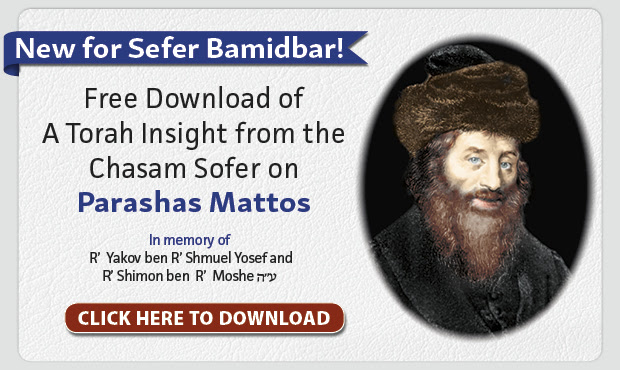
1. The Sanctity of the Sages’ Words
‘וידבר משה אל ראשי המטות לבני ישראל לאמר זה הדבר אשר צוה ה
Moshe spoke to the heads of the tribes of the Children of Israel, to say: This is the thing that Hashem has commanded (30:2).
While the simple meaning of the phrase, וידבר משה אל ראשי המטות לבני ישראל,is Moshe spoke to the heads of the tribes of the Children of Israel, this phrase can also be interpreted as: Moshe spoke about the heads of the tribes to the Children of Israel. [The term אֶל can mean about, as in Shemos 6:13; see Rashi there.] What did Moshe tell the Children of Israel about the heads of their tribes? ‘לאמר זה הדבר אשר צוה ה ,[You are] to say: This is the thing that Hashem has commanded. I.e., when a Torah leader issues a ruling or gives an instruction, your attitude should be “This is the Word of Hashem” coming from the mouth of the Sage. It is indeed so, for the shepherds of Hashem’s flock merit to have Ruach Hakodesh, the Spirit of Holiness, speaking from within them (Chasam Sofer al HaTorah, p. 146b ד”ה וידבר משה א)
2. The Sanctity of Man’s Word
זה הדבר אשר צוה ה’ איש כי ידור נדר לה’ וגו’ ככל היוצא מפיו יעשה
This is the thing that Hashem has commanded. If a man will take a vow to Hashem … in accordance with whatever emerges from his mouth shall he do (30:2‐3).
Why does Moshe introduce this mitzvah with the words ‘זה הדבר אשר צוה ה, This is the thing that Hashem has commanded? After all, Hashem commanded us about all the mitzvos of the Torah! There is, however, an allusion in these words that applies specifically to nedarim (vows), as follows: What is the benefit of taking a vow that forbids oneself something which the Torah permits? The Mishnah teaches (Avos 3:17): נדרים סייג לפרישות, nedarim are a protective fence for abstinence. When a person wishes to elevate himself spiritually by abstaining from some form of material indulgence, but feels he is not strong enough to withstand temptation, he may undertake a neder that will obligate him to abide by his resolution. This type of neder is praiseworthy, and is the subject of our passage [as the verse says, ‘איש כי ידור נדר לה, If a man will take a vow “to Hashem”].
When a man takes a vow with this good intention, he may rest assured that Hashem is guiding him. Indeed, whenever a person expresses a worthy thought, the words merging from his mouth are driven by Hashem, as it is stated (Mishlei 16:1), לאדם מערכי לב ומה’ מענה לשון, Man can arrange feelings, but eloquent speech comes from Hashem. Thus, a person may decide in his heart to seek spiritual elevation through abstinence from some form of pleasure, and when he then expresses his inner wish in the form of a neder, it is actually Hashem Who places the words in his mouth.
This is alluded to in the words, ככל היוצא מפיו יעשה. The simple meaning is in accordance with whatever emerges from his (the person’s) mouth shall he do. But since the previous verse mentioned Hashem, this phrase can also be interpreted to mean: in accordance with whatever emerges from His (Hashem’s) mouth shall he do. The words of the neder that emerge from the person’s mouth actually originate from Hashem’s mouth, for it is He Who places those words in the mouth of the one whose heart inspired him to climb to a higher spiritual level.
We can now explain Moshe’s introductory words, ‘זה הדבר אשר צוה ה, This is the thing that Hashem has commanded. Rashi notes that most prophets would say, ” ‘כה אמר ה”,So says Hashem, which means that the prophet is conveying his own understanding of Hashem’s Word. Only Moshe was able to say, ‘זה הדבר אשר צוה ה, “This” is the thing that Hashem has commanded, meaning “This is precisely what Hashem commanded.” That is because Moshe was on the highest level of prophecy, at which שכינה מדברת מתוך גרונו, The Shechinah would speak from within his throat. When Moshe uttered prophecies, it was Hashem’s Word Itself emanating from his mouth.
Of course, we are not on Moshe’s level. But the fact that the Shechinah spoke from within Moshe should be a lesson to us that it is possible for Hashem to let his Word emerge from the mouth of a human being. This makes us realize that when we utter a neder for the sake of spiritual growth, it is Hashem Who places the words of the neder in our mouth, for each person according to his own level. As the verse states (ibid.), לאדם מערכי לב ומה’ מענה לשון, Man can arrange feelings, but eloquent speech comes from Hashem. We may thus be confident that any neder taken for the sake of Heaven is guided by Hashem (Chasam Sofer al HaTorah, p. 147 ב ד”ה זה הדבר).
In Memory of
R’ Yakov ben R’ Shmuel Yosef
and R’ Shimon ben R’ Moshe ע”ה
© Copyright 2019 by MESORAH PUBLICATIONS, Ltd.

Close to 500 years ago, the revolutionary idea of Mikra’os Gedolos was introduced, in which Torah commentaries were printed on the same page as the text they discussed.
The Czuker Edition Mikra’os Gedolos on Chumash and on Nevi’im took that concept to an entirely new level. And now that new level of excellence includes the Kesuvim, as ArtScroll announces the publication of the Czuker Edition Mikra’os Gedolos on Daniel / Ezra /Nechemiah.
Like the others in the series, the text of every commentary was intensively researched. Scholars used the most accepted edition available as their “base text” and then compared it with other editions, ensuring an unprecedented level of textual accuracy.
This volume includes the classic Mikra’os Gedolos commentaries: Targum Yonasan ben Uziel, Rashi, Radak, Rid, Ralbag, Minchas Shai, Biur HaGra, Mezudas David, Mezudas Tzion, and Malbim. In addition, it includes mefarshim that don’t usually appear on the Mikra’os Gedolos page: Mahari Kara, Maharal, Minchah Ketanah, Rishon LeTzion, Chomas Anach, Yesod VeShoresh HaAvodah. Finally, the volume also includes new, original additions: Likkutei Shas U’Medrashei HaTannaim, an original comprehensive compilation, citing relevant texts from Talmud Bavli, Yerushalmi, and major Midrashim where a verse is discussed; an original collection of comments by Baal HaTurim on Chumash explaining verses in Nevi’im and Kesuvim, and Sifsei Zekainim , an anthology of classic commentaries explaining Rashi’s commentary.
Every commentary is menukad (vowelized). All abbreviations are “opened up” and the text is punctuated. When a commentary quotes another sefer, the source citation is noted.
State-of-the-art typography ensures a wonderful learning experience. The binding is side sewn, library quality and the paper is acid-free and specially milled, to ensure the volumes will last for generations.
The Kesuvim are part of our mesorah. With this new volume, we can study and understand them on a whole new level.


Ahh, summer. Time of pools and bungalows and road trips and hiking and cooking.
Cooking?
That’s right, cooking. Because even if we’re all in vacation mode, everybody is hungry. We’ve got guests dropping in for an hour, a weekend, or half the summer. We’ve got teens back from yeshivah, bringing their laundry and their endless appetites home with them. We’ve got the little ones’ “Mommy I’m hungry” mantras every hour, on the hour (and in between!).
We want to feed our families and guests well, with food that is nutritious, delicious, and a delight to the eye. And we don’t want to spend lots of time preparing it.
So does that mean pizza and hot dogs every night? Not quite, according to Rivky Kleiman, author of the bestselling new cookbook, Simply Gourmet. There are so many fabulous, creative, and, yes, gourmet dishes you can prepare without spending hours in the kitchen.
Summer, says Rivky, is the perfect time to try the many recipes in Simply Gourmet that are marked with a “Simple Supper” icon.” To be dubbed a “simple supper,” a recipe had to meet very strict criteria: Prep time could be no longer than 10 minutes total, and the food had to be ready, prep to table, in less than an hour.
How does General Tso’s Chicken and Broccoli Bake sound for dinner? Fifty minutes, from prep to plate. Your Garlic Mayo Skirt Steak Dinner can be ready in (no kidding!) 25 minutes, including cooking time. Poached Mediterranean Flounder and Quinoa Crusted Branzino are two fabulous Nine Days’ “simple suppers.” And there are so many more, quick to prepare, delicious to eat, perfect for your summer schedule.
There’s one kind of cooking that everyone loves in the summer — barbecues! Simply Gourmet is a fabulous resource for unforgettable barbecues. Try the Simple Savory Lamb Chops or Sweet Chili-Glazed Chicken Wings with a side of Grilled Vegetable and Kale Salad — the memory of that barbecue meal will keep you warm when the winter winds blow in!
Wishing all of our readers a great — and delicious — summer vacation.


Parashas Pinchas – The Righteousness of Pinchas
פִּינְחָס בֶּן־אֶלְעָזָר בֶּן־אַהֲרֹן הַכֹּהֵן
Pinchas, son of Elazar, son of Aharon the Kohen (25:11).
After Pinchas killed Zimri, the people protested: Since Pinchas was (maternally) a descendant of Yisro, who fattened calves to be sacrificed as idols, he should not have had the audacity to kill Zimri, a prince in Israel. In response, the Torah emphasizes that Pinchas was (paternally) a descendant of Aharon, who was known for his pursuit of peace (Rashi).
But this is difficult to understand. Didn’t everyone realize that in killing Zimri, Pinchas had acted zealously for the sake of Hashem’s Glory? Why would the fact that he was descended from an idol-worshiper diminish the significance of his great deed?
To address this, let us analyze the events that led to Pinchas’s deed. At the end of previous parashah, the Torah describes how the Jews became attracted to the Moavite women and their idols. Moshe set up tribunals to punish the sinners, and then a Jewish man (Zimri) came forward with a Moavite woman (Cozbi), and consorted with her in front of Moshe and the entire assembly. How could Zimri have been so brazen as to publicly engage in sin even while the sinners were being judged? Furthermore, Rashi tells us that when Moshe told Zimri that the Moavite woman was forbidden to him, he responded, “If so, who permitted you to marry the daughter of Yisro, a Midianite?” But did Zimri not know that Tzipporah had converted to Judaism? How could he use Moshe’s precedent as an excuse for sinning with the non-Jewish Cozbi?
It seems correct to explain that Zimri was aware of the prohibition against having relations with a non-Jewish woman, but he believed that the prohibition applied to the other Jews who sinned with the Moavites, but not to him. The Torah says (above, 25:2) that the Moavite women invited the Jews to join the feasts of their gods, indicating that the Jews who sinned had left the Jewish Camp and joined the Moavites in their camp. In that case, Zimri felt, having relations with the Moavite women was surely forbidden, since it would enable the women to entice the men into worshiping their idols. His case was different, though, since Cozbi had entered the Jewish Camp. Zimri therefore argued that she was not seeking to lure him into idolatry. To the contrary, she was apparently seeking to convert to Judaism, so he should be permitted to live with her!
Therefore,even as the other sinners were being sentenced to death, Zimri was unafraid to engage in his act; he felt that their punishment would not apply to him. And he further pointed out that Moshe himself married the daughter of Yisro, meaning to insinuate that just as she had converted, Cozby too could convert! Although Cozby might have an ulterior motive for converting, who could prove that her intentions were not sincere? Perhaps she would become an upstanding Jewess and produce righteous offspring. Claiming that his act was justified, he was unafraid to carry it out in public.
The people were swayed by Zimri’s argument and stood by while he sinned. Pinchas, however, understood that it had no merit, for Cozbi had surely entered the Jewish camp with the intent of helping the Moavite cause by seducing Zimri. Knowing that Zimri’s act could not be justified, Pinchas killed both him and Cozbi.
We can now understand the people’s reaction to Pinchas’s act of zealous revenge. Thinking that Zimri had a valid argument, they told Pinchas: You yourself are descended from an idol-worshiper who converted, yet you turned out righteous. How could you be so sure that Cozbi would not also have converted and produced righteous offspring, just as your ancestor Yisro did?
Hashem responded and validated Pinchas’s act, turning the focus to his paternal lineage from the perfectly righteous Aharon. Furthermore, the Torah stresses below (v. 18) that Cozbi was slain on the day of the plague for the matter of Pe’or. With this it clarifies that Pinchas’s judgment was correct. Cozbi could not have entered the Jewish camp with good intentions, for she did so on that terrible day when her people were actively luring the Jews into the worship of Pe’or. Clearly, she was part of their plot and both she and Zimri deserved to be put to death (Chasam Sofer al HaTorah, p. 131 ד”ה פינחס א).
In Memory of
R’ Yakov ben R’ Shmuel Yosef
and R’ Shimon ben R’ Moshe ע”ה
© Copyright 2019 by MESORAH PUBLICATIONS, Ltd.
 The Official ArtScroll Blog