
Adapted from: Flashes of Greatness by Rabbi Shlomo Landau
One day a gentleman in his fifties walked into a baal teshuvah yeshivah in Eretz Yisrael, approached one of the rabbis, and said, “I am finally here, and I am ready. Please teach me Torah.” The rabbi welcomed him and said that he was thrilled to have the man join the yeshivah, but what did he mean when he said that he was “finally here”? In addition, it wasn’t every day that a gentleman in his fifties would suddenly decide to join a yeshivah. “Please, tell me your story,” the rabbi requested.
The gentleman asked the rabbi if they could sit down, and he shared his remarkable story.
My mother was a Holocaust survivor who lost everything and everyone in her family. Forlorn and alone, she eventually made her way to Eretz Yisrael, where she met my father and finally experienced her first feelings of happiness and belonging. After they married, they moved to Tel Aviv. Shortly thereafter, they had me, and it seemed like my mother’s life was finally beginning to get back on track. But one day, out of the blue, my father passed away. Once again, my broken mother was left alone in the world, but this time with a young child to care for. Sadly, she did not have the emotional ability to care for me properly, and she also lacked the financial resources to provide for me, so she made the difficult decision to send me to an orphanage. The nearest one was in Bnei Brak, and although she did not know it at the time, she had sent me to the Ponevezh Batei Avos under the auspices of the tireless Ponevezher Rav.
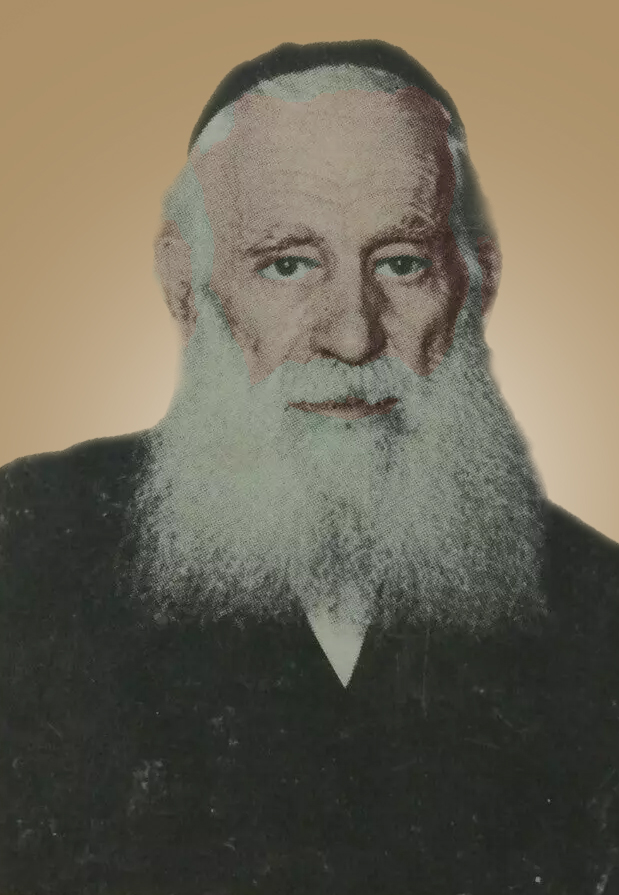
I was immediately put under the charge of a loving and caring staff, and I thrived both emotionally and spiritually. For the first few months, my mother did not come to visit me; she must have been dealing with her own grief. But several months into my stay, she traveled to Bnei Brak to visit me and was horrified when she realized that she had sent me to a religious institution.
On the spot, she informed the staff that she was taking me out, as she would never want to have her child exposed to any form of Yiddishkeit.
The orphanage staff begged and pleaded and shared how wonderfully I had been doing, but she was adamant, and that very day she brought me back to her apartment in Tel Aviv.
When the Ponevezher Rav heard what had transpired, he was devastated. He had been following my progress and knew how well I had been advancing, and he also realized how counterproductive a move back home would be for me.
The very next day, the esteemed Ponevezher Rav traveled to Tel Aviv and knocked at our door. My mother was quite taken aback to see this saintly-looking rav on her threshold, and to her credit, she welcomed him into our small apartment and offered him a seat in our tiny kitchen. The Rav tried his hardest to convince my mother that my return to the orphanage was the best path for me and that while it was indeed a religious institution, the religion was what drove the warmth and care and high quality of the facility. My mother was unmoved and adamantly insisted that there was no way in the world that I was going back.
The Ponevezher Rav was crestfallen. And then he did something that I will never ever forget for as long as I live. He put his head down on the kitchen table and began to sob uncontrollably. For ten long minutes the Rav wept unabashedly, his entire being shaking from his deep sadness. After ten minutes, he wiped his eyes, straightened his hat and frock, and calmly and politely walked out the front door.
“For close to fifty years, those tears and those sobs have never left me, and they have accompanied me at every step of my life. I always knew in my heart of hearts that those tears would one day lead me back to everything that the Ponevezher Rav and the Batei Avos stood for.” The man concluded, “My journey has been long and complicated, but I am finally ready to come back home!”





 The Official ArtScroll Blog