

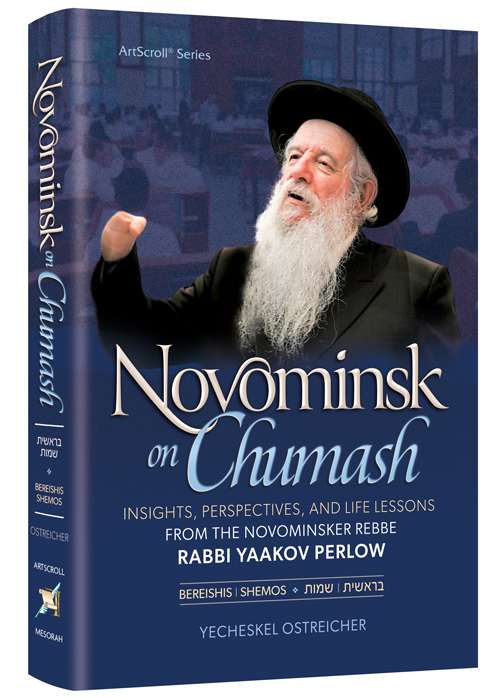
Adapted from: Novominsk on Chumash by Yecheskel Ostreicher
וְיִשְׂרָאֵל אָהַב אֶת יוֹסֵף מִִכָּל בָּנָיו כִּי בֶן זְקֻנִים הוּא לוֹ
Now Yisrael loved Yosef more than all his sons since he was a child of his old age (Bereishis 37:3).
Targum Onkelos as well as the Midrash explain that Yaakov loved Yosef because the two learned together. He was the son who was taught all the Torah that Yaakov had learned in the beis midrash of Shem and Eiver.
Interestingly, though, Yosef’s status as one of the founding figures of Klal Yisrael is not his role as the wise son of Yaakov who absorbed all that his father taught, but as Yosef HaTzaddik, for overcoming the nisayon with Potiphar’s wife.
Perhaps this is because the advantage of being the wise son was not something he had worked on himself; he was merely the recipient of what his father taught him. But when he was all alone, without the support or assistance of his father, and he himself worked to achieve greatness in serving Hashem, he earned his eternal and defining title — tzaddik. This title was given to Yosef when he passed the nisyonos placed before him in Mitzrayim, and it is how he is known for all eternity. Yosef shows us that we too can overcome the challenges we face and live lives of kedushah.

By serving as our light in the galus, Yosef rose above the other Shevatim, becoming a quasi-Av, as the pasuk (Tehillim 77:16) says of Bnei Yisrael, bnei Yaakov v’Yosef selah, the sons of Yaakov and Yosef, selah. The Gemara (Sanhedrin 19b) derives from here that Bnei Yisrael are considered the children of Yosef; Yosef serves as a father for us all, guiding us through galus.
These two distinct roles of Yosef are highlighted in the difference between Nusach Sefard and Nusach Ashkenaz regarding the order of the Ushpizin. In Nusach Ashkenaz, Yosef comes after Yaakov — in chronological order; in Nusach Sefard he comes between Aharon HaKohen and Dovid HaMelech — in the order of the Sefiros (spheres of holiness) that each of the Ushpizin exemplifies. Yosef’s, Yesod [lit., foundation], representing kedushah, is the sixth, followed by Malchus, that of Dovid HaMelech.
Perhaps there is something deeper here as well. Yosef had two qualities: He learned Torah from Yaakov, and he served as a bridge between Yaakov and the rest of the Shevatim. This avodah lasted only as long as Yosef was in his father’s home. When he was taken down to Mitzrayim and faced the impurity of that land all alone, he became a tzaddik, the one who illuminates the way for us in galus.
Thus, while Nusach Ashkenaz places Yosef as the son of Yaakov, the one who inherited Yaakov’s Torah and passed it on to his brothers, Nusach Sefard focuses on the aspect of his being a tzaddik, the one who assists us in our preparation for the arrival of Mashiach ben Dovid.
The coffin holding Yosef’s remains was carried through the Midbar as Bnei Yisrael wandered from place to place. Yosef was with them, and the example of his life inspired them to overcome the struggles of galus until they entered Eretz Yisrael. That is why in Nusach Sefard Yosef is placed after Moshe and Aharon: Even with the benefit of the greatness of Moshe and Aharon, Bnei Yisrael still needed support to guide them into the land of geulah, the land where Dovid’s malchus would eventually shine forth.
Shortly before Yaakov passed away, he called for Yosef, and an interesting encounter ensued. וַיַּרְא יִשְׂרָאֵל אֶת־בְּנֵי יוֹסֵף וַיֹּאמֶר מִי־אֵלֶּה. וַיֹּאמֶר יוֹסֵף אֶל אָבִיו בָּנַי הֵם אֲשֶׁר נָתַן לִי אֱלֹקִים בָּזֶה וַיֹּאמַר קָחֶם נָא אֵלַי וַאֲבָרֲכֵם — Then Yaakov saw Yosef’s sons and he said, “Who are these?” And Yosef said to his father, “They are my sons whom Hashem has given me here.” He said, “Bring them to me, if you please, and I will bless them” (Bereishis 48:20).
It seems that something that Yosef said stimulated Yaakov to bless Menashe and Efraim with a special berachah. What was it? One word: בָּזֶה [lit., in this] — in this decadent land, in this seemingly hopeless situation. Yosef was telling his father that these children of his were born in the land of Egypt, far from any connection to ruchniyus, and yet they retained their kedushah. For this they earned a special berachah. The Gemara (Avodah Zarah 17b) says that when someone defeats his yetzer hara he receives extra reward; the berachah of Menashe and Efraim was Yosef’s reward for maintaining his kedushah in a land so far removed from anything holy.
The merit and memory of Yosef HaTzaddik empowers us to forge through and gives us the strength to overcome wave after wave of tumah that life in galus sends our way.





 The Official ArtScroll Blog