

Adapted from: A Heart for Another by Rabbi Yaakov Bender
My rebbi, Rav Shmuel Berenbaum, wasn’t a featured speaker at assemblies or conferences, and his students knew that if they wanted him to be mesader kiddushin at their weddings, then they had to wait until after second seder for the chuppah to begin.
Many of our weddings took place in Aperion Manor, simply because it was close to the yeshivah. Someone else would fill in the kesubah, and the chassan and kallah would make all their preparations; the chuppah waited for the Mirrer Rosh Yeshivah to arrive just after 8:00!
He davened in yeshivah and learned mussar seder and kept sedarim like a young Torah student on the first day of the zman (semester). Physically and geographically, his footprint was very small. He lived his life within a relatively small space, traveling between yeshivah and his home.
But from his corner, he left such a huge impression. Seventy-five thousand people showed up to his levayah, each of them feeling a profound sense of mourning. They understood that with his diligence in Torah, he was creating a current of berachah and protection that flowed well beyond Ocean Parkway; his Torah elevated all of them.
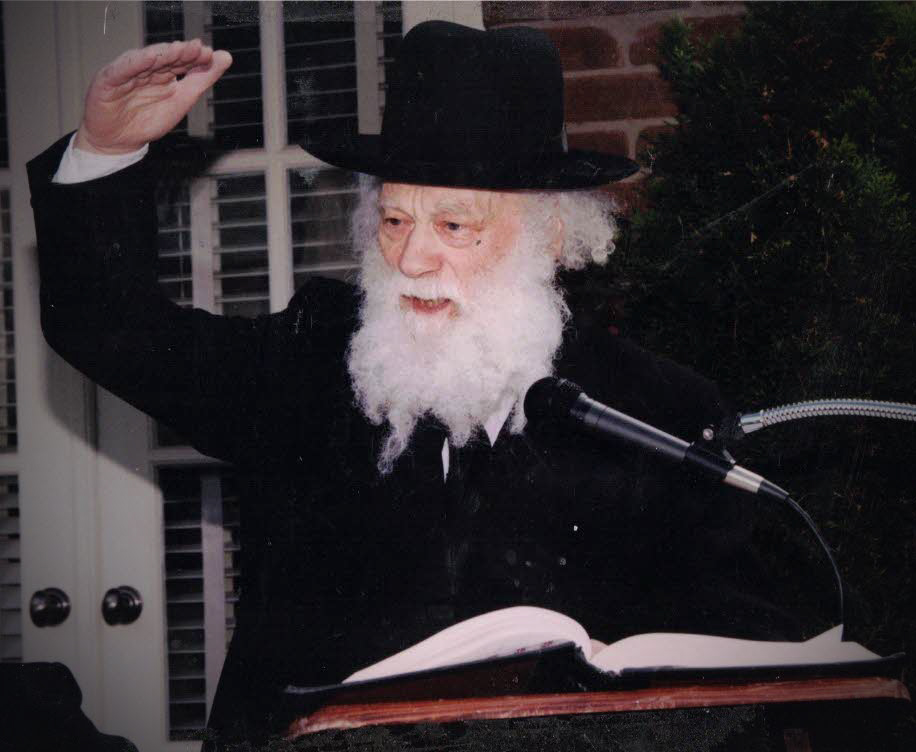
He was not one for lengthy meetings and activism, but somehow, with just a few conversations, he launched an international chessed organization — a fund that is active and thriving until today — benefiting young Torah scholars who, like him, make such a profound impact on the world without moving from their shtenders.
And because he lived this way, able to shake heaven and earth from his little corner, he wanted us to realize that we had that same potential.
My mother would go to the country during the summers, taking my younger siblings to the bungalow colony, but I stayed back in Brooklyn so as not to miss yeshivah.
There were no options of finding a ride upstate on Friday afternoons, so I did what most bachurim did, and left on Thursday night. On Sunday, Reb Shmuel asked where I had been Erev Shabbos, and I explained why I had left early.
He didn’t like the explanation. “This week, you will stay on Erev Shabbos too and I will pay for your car service up to the mountains,” said the Rosh Yeshivah, as if it was the most obvious solution in the world.

The Rosh Yeshivah, who did not have an extra dollar, made it clear that whatever it would cost, it was a small price to pay. He wanted me to know this secret, about the impression left by an ordinary yeshivah bachur sitting in his seat for a few hours on a summer Friday.
This Gadol, who took such splendor, such beauty, and such glory with him when he passed away, wanted all of us to realize that not only did we each have that power, but that we each bore that responsibility.
If a person can leave an imprint, they must. Now, in a media-driven world, we confuse relevance with prominence. We live in a world that is impressed by publicity, and if someone is famous or popular, their opinions are assumed to be worthwhile.
There is a Rashi — one of the most famous Rashis in the Torah — that tells us differently. And Yaakov left from Be’er Sheva and he went to Charan (Bereishis 28:10). If he went to Charan, isn’t it obvious that he left Be’er Sheva?
Rashi explains that it is obvious that he left Be’er Sheva, but the pasuk is teaching us that his leaving itself made an impact, because when a tzaddik leaves a place, its glory, splendor, and beauty depart along with him.

Yaakov did not merely go to Charan — he left Be’er Sheva, and this made a difference!
The Kli Yakar asks a question. If the impression was made by the fact that Yaakov Avinu was a tzaddik, then why did his leaving the city make such an impact: Weren’t Yitzchak and Rivkah tzaddikim? They were still there, so in their merit, that glory, splendor, and beauty should have remained!
Clearly, what we see here is that every single person has the ability to leave their own imprint, their mark of splendor and beauty, and a tzaddik epitomizes this! Yitzchak and Rivkah certainly had an effect on their surroundings, but none of them could create the unique impression that Yaakov was meant to leave.
In America, they say that no one is indispensable. They say, cynically, that the cemetery is filled with people who were considered irreplaceable.
This Rashi says differently. It says everyone is indispensable, and that people who live their lives aligned with Hashem’s Will have a unique mark that they are meant to leave on creation.


 The Official ArtScroll Blog