
Adapted from: Powerful Moments by Rabbi Yitzchok Hisiger
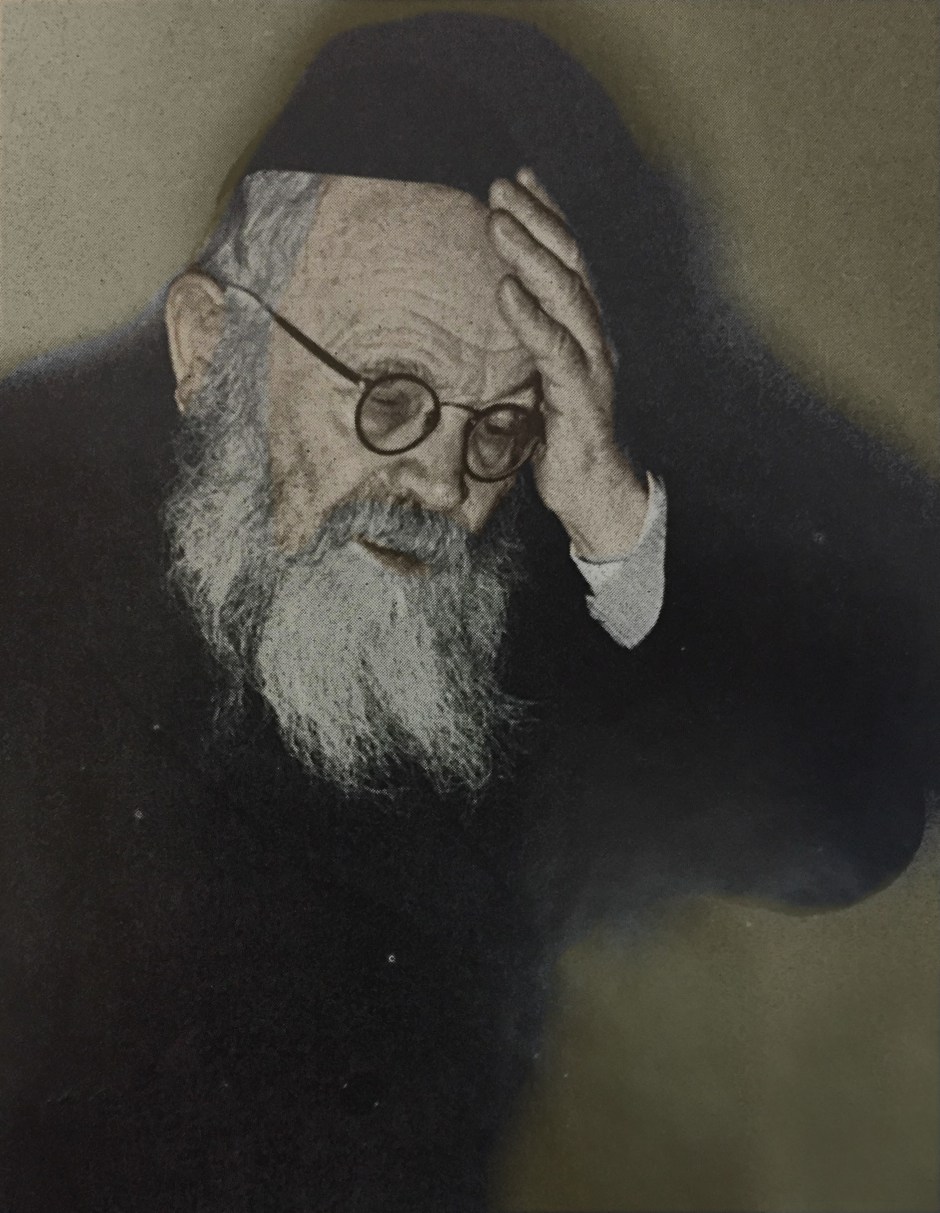
Rav Mattisyahu Salomon, mashgiach of Beth Medrash Govoha, recalled that when he was a bachur learning at Yeshivas Kfar Chassidim, the mashgiach of the yeshivah, Rav Elya Lopian, had a vaad for the talmidim during which they would take on kabbalos, resolutions. One kabbalah that he had the bachurim accept was not to get angry from Kabbalas Shabbos, at the onset of Shabbos on Friday evening, until Havdalah, at the conclusion of the holy day.
This was surely a worthy kabbalah — making sure not to get angry is always commendable — but why did Rav Elya choose that particular time frame?
Rav Elya explained, “Im yirtzeh Hashem, all of you will ultimately get married and establish families. At your Shabbos seudos each week, your children will become lively. This one will be jumping around, while another will be teasing his sibling. As chaos reigns, you may succumb to kaas, anger. By accepting upon yourself to work on not getting angry and remaining calm and serene for the duration of Shabbos Kodesh, you will have trained yourself and be properly prepared for that stage in life.”

Rav Yitzchak Koslowitz, rosh chaburah at Beth Medrash Govoha, who first shared the above anecdote with me, added an enlightening comment of the Taz. In Hilchos Shabbos (296:1), the Rema states that the reason for the minhag to spill out wine from one’s kos during Havdalah is because, as the Gemara (Eruvin 65) says, “Kol she’ein yayin nishpach b’soch beiso kamayim eino bichlal berachah — Anyone in whose house wine does not flow like water is not included in the Torah’s blessing.” Thus, as a positive siman at the start of the week, we pour out some wine at Havdalah. [Note: This custom is distinct from that of spilling out wine at the conclusion of Havdalah.]
The Taz disagrees with the Rema’s source of this custom, pointing out that pouring out wine for a mere siman, in his opinion, would be forbidden because of the issur of bal tashchis. Instead, the Taz notes that in the dictum of “Kol bayis shelo nishpach bo yayin kamayim ein bo siman berachah,” the phrasing is shelo nishpach, that has not been poured, in the past tense, rather than she’ein shofchim, in the present tense. This, says the Taz, teaches that one must not get angry in his home even when damage has occurred — meaning that the “wine” has already been spilled by a member of the household.
“The way of people is to get upset about things like this,” says the Taz. “Thus, we are told, ‘Any home in which wine that is spilled [mistakenly] is not treated like water [that has been spilled], in that case there is no siman berachah in such a home.”

The Taz is instructing us to treat mishaps and accidents at home as nothing more than a spill of water.
It is imperative, indeed, that a home be an island of tranquility, peace, and serenity.
Rav Doniel Cohen, rosh yeshivah of Yeshivah Shaarei Orah of Lakewood, recalled an incident that occurred over three and a half decades ago, when he was a bachur learning at Yeshivas Brisk. It was Erev Pesach and he went to the home of his cousin, Rav Shlomo Weissman, then a yungerman residing on Rechov Sorotzkin, to assist him in filtering his homemade wine. It was a time-consuming and exasperating process that Rav Shlomo had begun many months earlier, removing sediment and unwanted particles from the wine, which would be used on Pesach. [Rav Shlomo, who still makes his own wine today, told me that he has thankfully improved and expedited the process since then.]

Finally, a significant amount of wine had been purified. Rav Shlomo and Rav Doniel were pleased to be completing the task when the unthinkable happened. One of the Weissman children walked by and knocked over a five-liter container of the painstakingly prepared wine, causing the red liquid to spill across the floor.
One would not have blamed Rav Shlomo for being infuriated, berating the child. Instead, to Rav Doniel’s astonishment, he was completely calm. He said tranquilly, “Kol bayis shelo nishpach bo yayin kamayim ein bo siman berachah.”
Months of work were now for naught, but Rav Shlomo was unfazed, a reaction that Rav Cohen recalls to this day. Indeed, to him, it was as if water had spilled on the floor.




 The Official ArtScroll Blog