
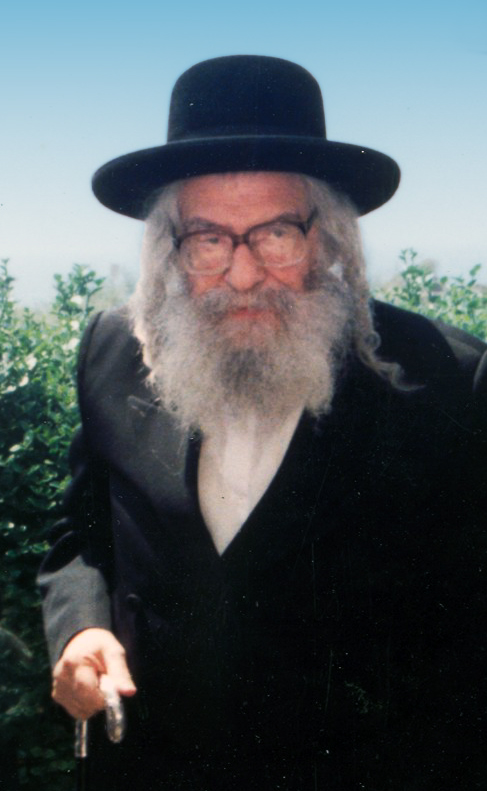
Adapted from: One for the Books by Rabbi Yechiel Spero
Little Leah was growing up in a Chassidishe mishpachah. Like most five-year-olds, she had her little routines, and when she woke up in the middle of the night, she always knew where to go—to the comforting embrace of her parents’ bedroom. That’s where the world felt safe, where she could drift back to sleep, enveloped by their presence.
One cold, dark night, Leah woke up and ran to her parents’ room, only to find it… empty. The beds were untouched, the lights were off, and there wasn’t a trace of her beloved father and mother. The house felt eerily quiet. She called out, “Mommy! Tatty!” but was answered with silence. A wave of fear gripped her. Where could they be?
She began wandering through the house, her small feet padding against the cold floor, her sobs growing louder as she searched each room. Yet her parents weren’t anywhere to be found. The house that had always been her haven now felt unfamiliar and vast. Tears streamed down her cheeks as she whispered to herself, “I just need someone… someone to help me fall asleep.”

What Leah didn’t know was that her parents had stepped out to a wedding, deciding to quickly run and say mazel tov. They had arranged for a neighbor to check in on Leah, but at this late hour, the neighbor wasn’t there. Leah was alone.
Then her eyes caught sight of a small piece of paper stuck to the fridge. On it was written a phone number. Leah had heard her parents talk about this number once. It was a number they said was only for the direst of emergencies. The kind of number you call when there’s no one else to turn to.
With trembling hands, Leah picked up the phone and dialed.
The phone rang. And rang. And rang. Each ring felt endless to the frightened little girl. Finally, just as she was about to hang up, someone picked up. A warm, calm voice came through the receiver. “Who is this?” the voice asked gently.
Leah took a shaky breath. “It’s Leah. I’m home alone, and I’m scared. My parents aren’t here.”
There was a pause on the other end. Then the voice spoke again, full of reassurance. “Don’t worry, Leah. Your parents will be home soon. You’ll be okay.”

“But I’m scared,” Leah countered. “And when I’m scared, my parents usually tell me stories. That’s what helps me fall asleep.”
The man on the other end of the line, with much sensitivity and warmth, didn’t hesitate. “Then I’ll tell you a story.”
And he did. He told her a beautiful story, weaving a world of comfort and imagination for the little girl. Her tears slowed; her breathing calmed. And then, as he began the second story, the line grew quiet. Leah was finally falling asleep, clutching the phone, her fears fading into the night. Now relaxed, she hung up the phone and went to back to bed.
The next morning, Leah ran to her parents, her face alight. “Mommy, Tatty,” she exclaimed, “I was scared, but I called the number on the fridge, and the man told me stories until I fell asleep.”
Her parents exchanged puzzled glances. “What number?”
Leah pointed to the refrigerator, and when they saw the number, their faces went pale. That number served as a direct line to one person: their Rebbe, the Pnei Menachem, the Admor of Ger.

They asked Leah to repeat what happened, hoping it was a child’s dream. But Leah’s details were too vivid, too real. Their little daughter, in her moment of need, had called the Rebbe himself.
Overcome with a mix of awe and embarrassment, they rushed to the Rebbe’s house to apologize. How could they have allowed such a thing to happen? The Rebbe simply smiled, his face radiating joy. “There’s no need to apologize,” he said. “Baruch Hashem, the stories worked. That’s what matters.”
The Pnei Menachem taught them what it means to truly care for another Yid. Even a little girl in the middle of the night. Even when she calls unexpectedly. Because to him, every Yid mattered, no matter how small.
And Leah? She would carry that night in her heart forever, the night a tzaddik made her feel safe, simply by telling her a story.




 The Official ArtScroll Blog