

Adapted from: Rav Yaakov Bender on Chumash
ְאִם מִן הָעוֹף עֹלָה קָרְבָּנוֹ לַה׳ . . . וְְשִׁסַּע אֹתוֹ בִכְנָפָיו לֹא יַבְדִּיל. . . אִשֵּׁה רֵיחַ נִיחֹחַ לַה׳.
If his offering to Hashem is from the birds… He shall tear it apart, with its wing-feathers still attached… to create a pleasant aroma before Hashem (Vayikra 1:14,16).
In regard to the bird offering, Rashi states: Even though the odor of the burning feathers is unpleasant, the Torah says to burn the feathers. Why? So that the Mizbei’ach should be satiated with the korban of a poor man.
The following Rashi echoes a similar theme: It says “rei’ach nichoach” regarding a bird and it says “rei’ach nichoach” regarding an animal, to teach you that one who gives more is the same as one who gives less, as long as his heart is directed toward Heaven.

Then, the next pasuk talks of a korban minchah, a flour offering, where a third consecutive Rashi continues in the same vein: It only says “nefesh” regarding the korban minchah, for who is likely to bring a minchah? The poor man. Hashem says, “It is as if he brought Me his very soul.”
The korban of the poor man is valued and cherished as much as the more impressive looking, costlier offering.
Rav Shalom Schwadron would quote the words of the Zohar Hakadosh in Parashas Balak that speaks of the three types of tefillos mentioned in Sefer Tehillim. There is a tefillah l’Dovid, a prayer carrying the power of the king, a tefillah l’Moshe, a prayer bearing the potency of the greatest navi and leader we have ever had, and one more sort of tefillah- a tefillah l’ani, the plea of the poor man.
The entreaty of the impoverished one, covered in rags, humble and forlorn, pierces the heaven like the tefillos of these two tzaddikim, shepherds of our nation for eternity, Moshe and Dovid.

In many places in Tehillim, Dovid HaMelech refers to himself as an ani, a poor man, seeking to tap into the power of that sort of tefillah.
We would pay any amount of money to stand next to the Vilna Gaon during tekias shofar. And can you imagine having Dovid HaMelech at your side by Kol Nidrei? Davening Ne’ilah with Moshe Rabbeinu right next to you?
Well, find an ani, an impoverished man, and listen to his cries, for his cries, too, rise to the Kisei HaKavod.
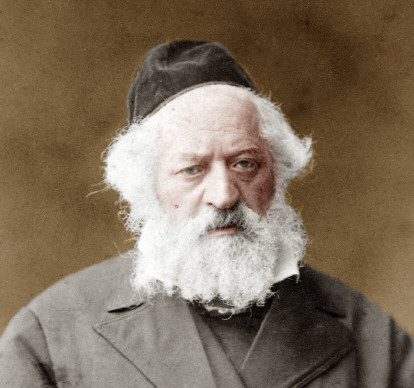
One year, before Yom Kippur, Rav Yitzchak Elchanan Spector, the Kovna Rav, traveled to St. Petersburg to advocate on behalf of the Yidden, and he was forced to remain there over Yom Kippur. Far from his kehillah and shul, the rav resigned himself to davening in a local shul, and ended up at a minyan composed of Cantonists.
The Cantonists were tragic figures, “grabbed” by the czar’s soldiers while they were still young cheder children, and forcibly drafted into the Czar’s army for life. They knew little, because they had not had a chance to learn much. They were hardened by life, having been cruelly ripped away from home and hearth.
They were tough, coarse men who lived on the road, moving from one outpost to another.
But they were Yidden, and on Yom Kippur, they davened to the best of their abilities.
Just before Ne’ilah, a strapping soldier, one of the Cantonists, walked to the front of the room and asked to lead the tzibbur in the most sacred tefillah of the year. Rav Yitzchak Elchanan watched as the soldier approached the amud and prepared to daven.
“Father in Heaven,” cried out the chazzan, “for what shall I pray? Others ask for ‘banai, chayai, u’mezonai, children, health, and livelihood.’ In the service of the Czar, sent from one place to another, I could never marry, so I cannot ask for or on behalf of my children. I will not ask for life, because what value is there in a life such as this? I will not pray for livelihood, because the Czar provides for our daily meals. There is only one prayer I have, and it is this I request…”

With that, the soldier threw his shoulders back and roared, “Yisgadal v’yiskadash Shemei rabba.”
May Your Name be glorified and sanctified…
This soldier, a simple man, a coarse man, unlearned and uncouth, pierced the heavens with his heartfelt tefillah, words that flowed from a broken heart.
This is the lesson of these korbanos, the bird and the flour. A korban is meant to bring man closer to his Creator, and it is specifically because the ani lacks that he is able to get that much closer. Karov Hashem l’nishberei lev, Hashem is close to the brokenhearted (Tehillim 34:19).
What a korban, for he, the poor man, is karov, close!
The power of a tefillah l’ani!


 The Official ArtScroll Blog