

Adapted from: The Eternal Wisdom of Pirkei Avos by Rabbi Yechiel Spero
רַבּיִ שִׁמְעוֹן אוֹמֵר: הֱוֵי זָהִיר בִּקְרִיאַת שְׁמַע וּבִתְפִלָּה
Rabbi Shimon says: Be meticulous in reading the Shema and in prayer (Avos 2:18)
The Mishnah speaks about the importance of tefillah.
Yes, prayer is crucial to our connection with Hashem, but have you ever wondered why it is necessary to daven three times every day? Shouldn’t once a day suffice?

The Maharal (Nesivos Olam, Nesiv HaAvodah, 3) explains that the tefillos of Shacharis, Minchah, and Maariv represent our shibud to Hashem via our guf, mamon, and nefesh — our body, money, and soul.
Let’s begin with Shacharis. We are lying in bed, in a very deep sleep. There is nothing quite like it. Sweet, indeed. Sleep invigorates and refreshes our body, enabling it to take on the challenges of the day. Lost in “Never Neverland,” we are suddenly awakened by the rude shrill of the alarm clock. While our body begs us to turn it off and go back to sleep, we know that we answer to a Higher Calling. And so, we muster every ounce of strength and schlep ourselves out of bed to daven Shacharis. As we rise to daven, we are meshabeid our guf, we subjugate our body, to Hashem.
Throughout the day, we dedicate ourselves to the task of parnassah. It is gratifying to make money, and every second of the day is precious. As the old adage goes, “Time is money.” When we take fifteen to twenty minutes from our work schedule to daven Minchah, we make a statement that no money in the world is more important than Hashem. Thus, with our declaration of faithfulness through our tefillah of Minchah, we are meshabeid our money, a shibud hamamon to Hashem.

Finally, after the day is over, we are exhausted and overwhelmed. We just want to sit back, relax, and unwind, as we yearn for a little bit of menuchas hanefesh. But we can’t shut down our mind just yet. There is still a Maariv to be davened. I imagine many of us have been there. We are ready to call it a day, grateful to finally catch our breath, and then we remember: Maariv. When we pick ourselves up off the comfortable couch and head out to daven Maariv, we are meshabeid our nefesh to Hashem.
And now, the three-ply cord, the Shacharis-Minchah-Maariv connection, is complete. We have successfully subjugated our guf, mamon, and nefesh to Hashem.
One day, Rav Naftali of Ropshitz watched as a fellow entered the beis midrash quite late in the morning, quickly donned his tallis and tefillin, and rushed through the entire davening. He mumbled his way through each part, barely spending more than a minute or two on Shemoneh Esrei. Shortly thereafter, he removed his tefillin with the urgency of one who is trying to rid himself of an annoying insect.

As the fellow made his way toward the exit doors, Rav Naftali called him over and asked if he could share a story with him. Unaware of Rav Naftali’s intention, the man sat down and listened to the tale.
There was once a young man who spent his days wisely. After davening, he took a quick bite and headed out to learn. Ordinarily, when he came back for lunch, his wife cooked a pot of simple grits, which didn’t take much time to prepare. It wasn’t all that tasty, but it was good enough and he didn’t complain.
One day, when he walked into his home at noon, his wife told him that she was still preparing his lunch, so he sat down to wait. As the minutes turned into hours, he imagined that she was preparing a lavish meal of stuffed duck and delicious wine. His mouth watered and he anticipated the most delicious meal of his life. The hours passed and his anticipation grew; each passing moment whetted his appetite further. Finally, his wife emerged with his lunch… a plate of grits.
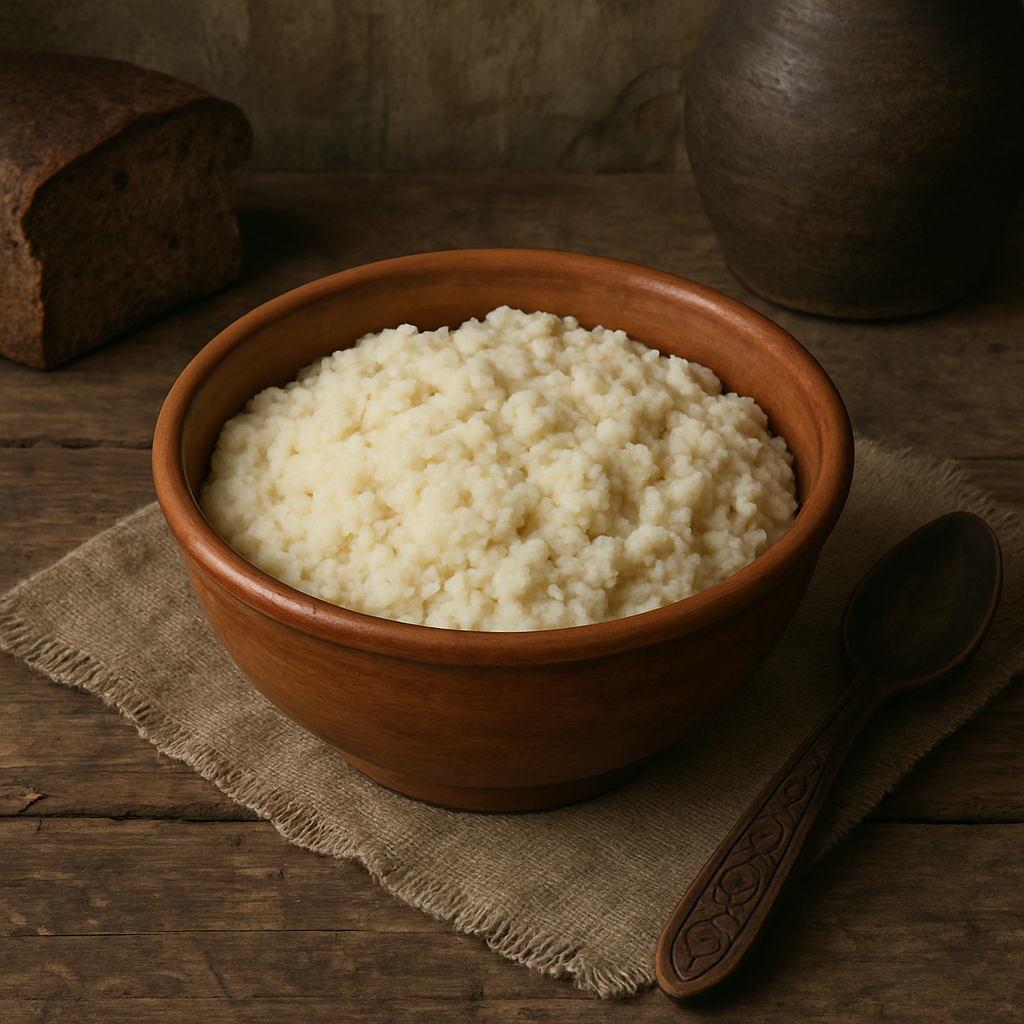
With an enormous sense of disappointment, he sighed deeply. “It is not that I mind the simplicity of the meal,” he explained to his wife. “I’m fine with grits, if that is all you have to give me. But this time, I waited a long time for the meal.
And while I waited, I grew very excited, anticipating a most delectable and sumptuous feast. When you came out with grits, I couldn’t help but mutter to myself, ‘Grits? Noch amol?’”
Rav Naftali looked at the fellow, who was starting to catch on. “The Ribbono Shel Olam understands that you may not be a ‘velt’s davener,’ highly attuned to praying earnestly. But if He waited, hoping for a sincere tefillah, being that you were late in coming to daven, then do you want Him to say, ‘Grits? Noch amol?’”



 The Official ArtScroll Blog