

Adapted from: Living the Parashah by Rabbi Shimon Finkelman

פִּינְחָס בֶּן אֶלְעָזָר בֶּן אַהֲרֹן הַכֹּהֵן …
Pinchas son of Elazar son of Aharon the Kohen … (Bamidbar 25:11)
Why did the Torah have to trace Pinchas’ lineage to his grandfather Aharon for yet a second time? Rabbi Zalman Sorotzkin writes that this is meant to highlight the greatness of Pinchas’ heroic act. As the grandson of Aharon HaKohen, Pinchas inherited a love of peace. It was against his very nature to harm anyone. Yet, when the prince of the Tribe of Shimon committed his immoral act, and thousands died as a result of this and similar sins, Pinchas went against his nature. He remembered the halachah that Moshe Rabbeinu taught and he carried it out, killing the prince and the one with whom he had sinned. For this, he received inestimable reward; he achieved the status of a Kohen and was blessed with immortality.
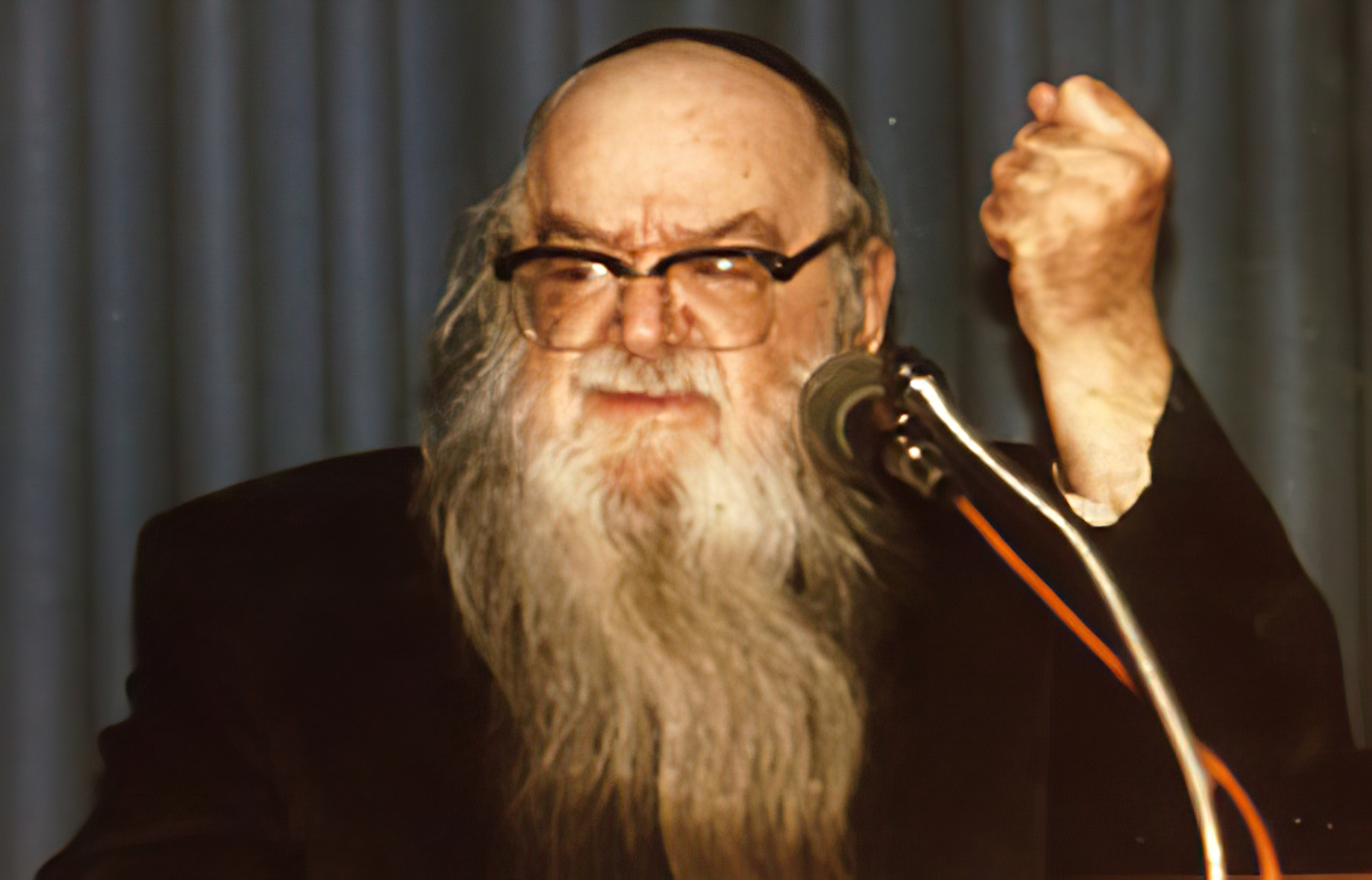
Overcoming one’s inborn nature and desires is the way to achieve true spiritual greatness in this world.
As a young man in Jerusalem, Rabbi Sholom Schwadron longed to save Jewish youths being swept up by the euphoria following the founding of the State of Israel. These were teenage boys from chareidi homes being drawn to the secular society around them — a society that scorned those devoted to Torah study.
R’ Sholom and some friends arranged night classes where neighborhood boys could voluntarily come to learn and be inspired. Many boys did — and many became true bnei Torah because of it.

One boy, who had attended nearly every class, suddenly missed a few nights. When R’ Sholom asked him why, the boy hesitated.
“All right, I’ll tell you. This week is the soccer championship. I love soccer — I have to watch it!”
“Soccer, you say? I’ve heard of it, but I don’t know how it works. Could you explain?”
“Well, there are two teams and two nets on opposite sides of the field. The team that kicks the ball into the net the most times wins. In fact, whenever the ball gets kicked into the net is a very exciting moment in the game.”

“I don’t understand,” said R’ Sholom, looking very confused. “The whole point of the game is to kick the ball into the net? For this you need to be a professional athlete? Why, anyone can do that!”
The boy laughed. “Oh, I’m sorry, I left out one important detail. There is a goalie in front of each net. His job is to keep the ball out of the net, and he is usually quite adept at this. So it’s really not that easy at all.”
“I still don’t understand,” said R’ Sholom. “I’m sure that the goalie does not stand in front of the goal 24 hours a day. He has to sleep, he has to eat. So why doesn’t the opposing team wait until the goalie leaves and then kick the ball in a thousand times!”
“But that would be pointless,” said the boy, who by now was more than a bit exasperated. “When the goalie is not there, there’s no challenge! The whole point of the game is to score goals precisely when the goalie is there!”

R’ Sholom gazed deeply into his talmid’s eyes. “Listen to what you yourself have just said. To score points when there is no challenge is meaningless. Yet you want to wait until the soccer championship is over to resume your learning. But then, there will not be much of a challenge; this great distraction, or temptation, will be gone. The challenge is now, while the championship is in progress and you have such a strong desire to watch it. If you overcome this challenge and come to learn while those games are in progress, you will have done something great.”
With a hearty handshake, R’ Sholom took leave of the boy.
The next evening, while the games were in progress, the door of the beis midrash swung open and in walked this boy. R’ Sholom stood up in respect for this budding ben Torah and what he had accomplished.




 The Official ArtScroll Blog