
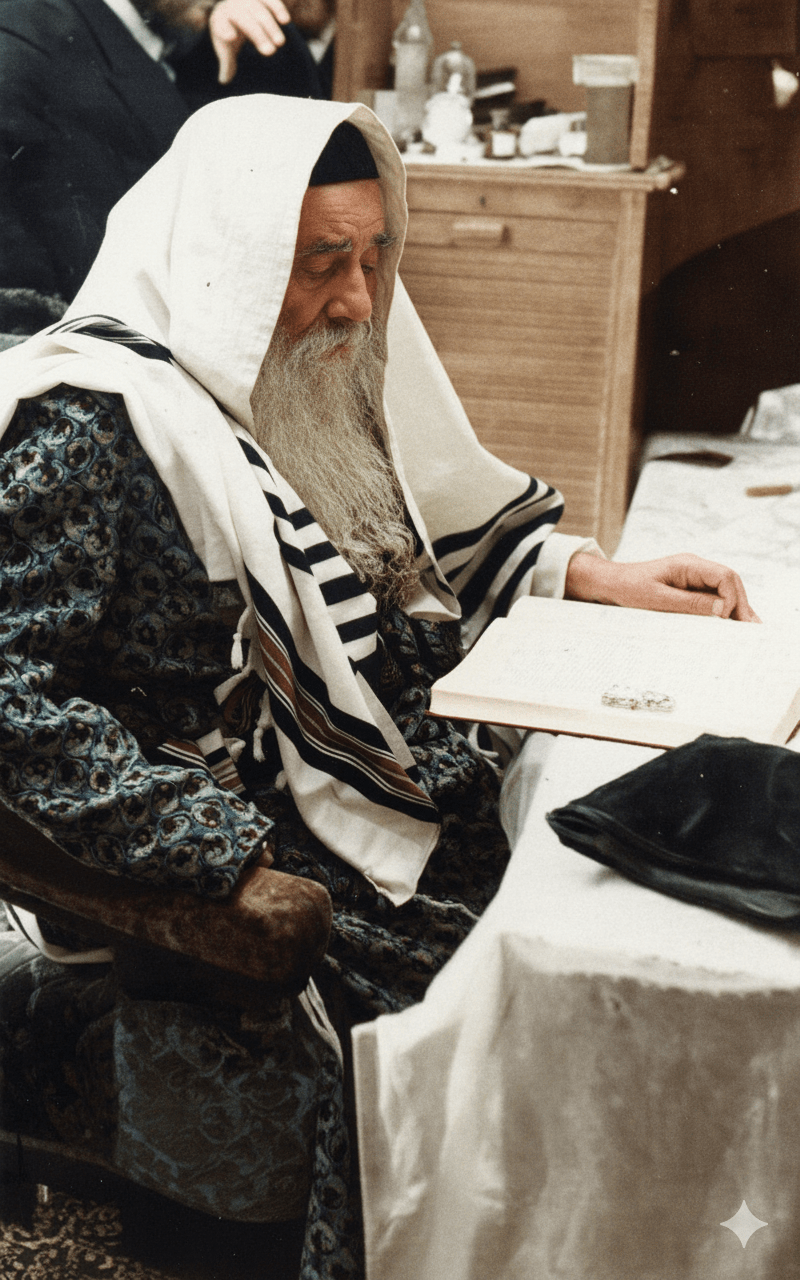

Adapted from: In The Rebbe’s Room by Yisroel Besser
In Vizhnitz, the Yamim Tovim were not just annual occurrences, great days that came and left. Rather, all twelve months of the year one could feel the awe of Rosh Hashanah and the teshuvah of Yom Kippur, the joy of Succos and the cheirus of Pesach.
If there was a reference to one of the Yamim Tovim in the weekly parashah, the Rebbe would seize the opportunity and speak about it at the tish. He might become passionate about Chanukah on a hot summer Friday night or express his longing for the Pesach matzah on an autumn Shabbos day.
The Rebbe was excited to mention any Yom Tov, but it was especially true with regard to the Yamim Noraim: Months before Tishrei, the Rebbe was already preparing for and anticipating the season.
“From my zeide, the Imrei Chaim, I learned that one can already be awaiting Rosh Hashanah months before it arrives,” the Slonimer Rebbe once told R’ Menachem Leizer. He recalled that when the Rebbe encountered a pasuk, whatever the parashah or topic being discussed, that appears in the nusach of Malchuyos, Zichronos, and Shofaros recited in the Shemoneh Esrei of Rosh Hashanah, the Rebbe would sing it in the tune of the Yamim Noraim. “And already in mid-Sivan,” the Slonimer Rebbe testified, “you could hear that it was coming from deep inside him, that he was already holding there.”
R’ Chaim Yaakov Goldwicht spent Shabbos Mevarchim for Rosh Chodesh Tammuz with the Rebbe, and throughout his spoken Torah, the Rebbe referenced the upcoming days of judgment, singing out parts of the tefillah with the proper nusach.
After the tish, the Ponevezher talmid reflected, “Some of us have to toil an entire Chodesh Elul to acquire the feeling that the Vizhnitzer Rebbe was able to instill in us during a single tish!”
In Chodesh Elul, the Rebbe was completely preoccupied with his preparations for Rosh Hashanah.
Once the days of Selichos actually arrived, the feeling in the Rebbe’s room was different. One night, the line was particularly long and the Rebbe’s door was open until late at night. The early-morning Selichos did not leave the Rebbe much time to rest, and R’ Menachem Leizer prepared a cup of coffee for the Rebbe before Shacharis. The Rebbe acknowledged the efforts of the meshamesh, but he did not drink from the coffee. “Now is not the time for this,” the Rebbe said.
On the first day of Selichos, the Rebbe would go to daven at his father’s tziyun. He was always accompanied by a large crowd of chassidim. After saying Tehillim, the Rebbe would wait for them to leave and remain in the ohel by himself, with just the meshamesh there. Then he would sing the tefillah of Heyei Im Pifiyos, a special request made by the baal tefillah at that time of year, the hope that Hashem will “be with the mouths of the emissaries” of His people.

The Rebbe explained his need for privacy to R’ Menachem Leizer: He did not want the chassidim to think that it was a Vizhnitzer minhag to sing at a kever, for it is not. Rather, it was just the Rebbe’s personal practice.
As tangible as the awe was during these days, the Rebbe himself preferred not to use the term “Yamim Noraim,” translated as Days of Awe. Instead, he referred to the period as the heilege teg, “days of holiness.”
“The focus should be purely on coronating the Ribbono shel Olam as our King,” the Rebbe explained to R’ Menachem Leizer, “and the awe is the consequence of being mamlich Him. There is certainly awe, the days are certainly nora, but that is not the goal — it is the outcome.”




 The Official ArtScroll Blog