

Adapted from: 90 Seconds for Young Readers by Libby Lazewnik
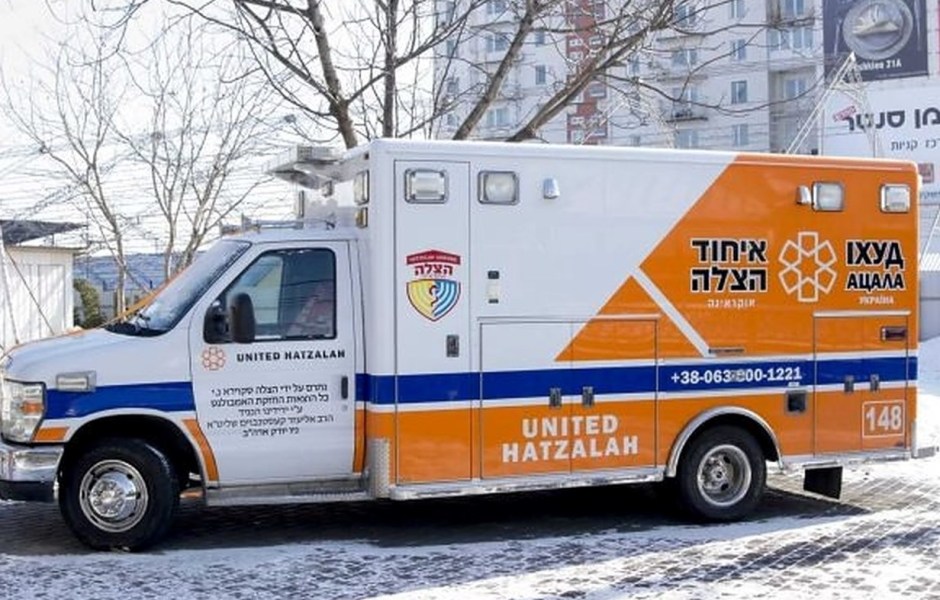
One of the greatest—and most challenging—projects Eli Beer, founder of United Hatzalah, ever faced was helping to rescue thousands of refugees who’d fled from Ukraine.
The goal: to bring them to the homeland of every Jewish refugee. To bring them to Eretz Yisrael.
But before he could bring them home, his volunteers had to treat and feed them. Eli moved heaven and earth to get El Al to rent a plane to United Hatzalah so that they could fly in tons of medical equipment and kosher meat and chickens to Moldova for the refugees.
It was the middle of the winter, and many refugees arrived at the border freezing and starving. Once they crossed the border from Ukraine into Moldova, they found United Hatzalah volunteers waiting for them with hot food. Then a bus took them to the Agudah shul, where they stayed until they could get on a plane to Israel.
The problem was that many of the refugees had run from their homes so quickly that they forgot to bring their passports. United Hatzalah planes were landing in Iasi, Romania—but Romania would not allow the refugees to cross its border without a passport.

A top United Hatzalah staff member named Linor Attias was the one who convinced Romania to agree to let their planes land there—for a price. A high price. And only United Hatzalah planes were allowed to land there. Otherwise—because of the war—the skies were closed.
By the middle of June 2022, about four months after the war started, some seven hundred volunteers had come to and from Moldova, along with tons of food and medicine, doctors, psychologists, and many others who were part of the biggest such operation ever to take place outside of Israel.
All the fathers and husbands had been forced to stay in Ukraine and fight in the war. Mothers would bring their crying, hungry children through pouring rain, walking on the hard-packed snow as the sound of bombing filled the air. United Hatzalah volunteers wearing their bright orange vests were there to greet them with warm smiles, candy for the children, and kosher food for them all. What a kiddush Hashem!
When it came to checking whether the refugees were really Jews, volunteers would ask them if they had family in Israel. If the answer was yes, the relatives would be contacted to make sure the refugee was telling the truth.
Among the endless wave of refugees were two elderly people, a brother and sister. The brother was ninety-four and his sister was ninety. Somehow, they’d managed to make their way to the border of Moldova.
“This is the second time I’m running away,” the brother told Eli when they met at the border. “I remember being on the run from the Nazis. My mother took stale bread and soaked it in rainwater, so I’d be able to eat it. Now, all these years later, I’ve been walking for three days straight to escape the Russians…”
The United Hatzalah volunteers gave him and his sister their first hot meal in days. Then, even though the brother was afraid of flying, Eli convinced him to get on a plane and fly to safety.
Paulina, another Holocaust survivor, had run away from the Russian tanks that were rumbling down her street. One of the tanks killed her husband as he was standing in line waiting for bread and water.
When Linor Attias, a top United Hatzalah staff member heard her story, she decided to make sure that Paulina made it to Israel. She sent volunteers back to Paulina’s house to get her passport and any other papers she needed. Then Linor personally flew with her on the plane back to Israel, where Paulina could be safe at last and start a new life.
Altogether, United Hatzalah brought more than thirty-five planeloads of refugees out of the war zone and into Eretz Yisrael. For Eli, it was a matter of pikuach nefesh, saving lives.





























 The Official ArtScroll Blog