A Conversation With Rabbi Avrohom Birnbaum – Author of At Any Hour: HaRav Shlomo Gissinger

AS: Rabbi Gissinger was amazing. He was a pioneering community rabbi. A medical “askan.” A fertility expert. A world-class posek. An advocate for every child who needed a school. A father figure to youth in crisis, and a trailblazer in the world of kashrut. And, as the title tells us, he was available at any hour, every single day, to any Jew in need. How do you capture such a multifaceted personality in a biography?

RAB: That is one of the primary reasons that this book was not written as a conventional biography. I chose rather to focus each section and chapter on different aspects of Rav Gissinger’s multifaceted personality. I also felt that the best method to inspire readers was through stories. Wherever I went during the writing process, I found people eager to share the remarkable personal story of how they experienced Rav Gissinger’s kindness, wisdom, and care. I tried to convey the emotion that I heard in their voices when they told me their stories.

AS: How did Rabbi Gissinger manage to do so much for the Klal and still be a devoted and caring husband, father, and friend?

RAB: The way he juggled the needs of the Klal and his family was a remarkable feat. The common denominator, I think, is the outpouring of genuine love that he had for everyone, both Klal Yisrael as a whole and his family especially. When a person is totally selfless, he is less constrained by the limitations of time and nature. I truly believe that Hashem endowed him with abilities that transcended nature, and he was able to make room in his heart and schedule for his family and friends and for all of Klal Yisrael.

AS: What takeaways will the reader get from this absorbing book?

RAB: Although Rav Gissinger is a tough act to follow, I think that everyone who reads this book will be moved to try to emulate the Rav by being a bit more empathetic, kind, and caring — and most of all, by understanding that every person has innate worthiness. Rav Gissinger fought for the underdog and for those who many in society overlooked, because he truly understood the importance of every person and every neshamah.

Order your copy TODAY on artscroll.com

The Zera Shimshon Phenomenon: How Did it Come About?

It all began with a man named Reb Yisroel Zilberberg, who established an organization called Maftei’ach Shel Banim, which focused on offering spiritual assistance to couples waiting to be blessed with children. His involvement in their lives began in a very modest way, with Reb Yisroel compiling Torah thoughts and ideas that he felt could serve as chizuk for those who were waiting for a yeshuah, segulos that he found in Chazal and other relevant Torah ideas, which he shared with those in need.

Reb Yisroel had a good friend named Yechiel who was married for over ten years and had not as yet been blessed with children. Needless to say, the couple was utterly heartbroken. Reb Yisroel saw a talented person with tremendous kochos who was suffering terribly. Although he was going through a very difficult time, Yechiel was very interested in the vertlach Reb Yisroel was working on and began helping him track down sources in Chazal pertaining to the topic of bearing children. After a while, Yechiel suggested that they begin distributing their Torah thoughts on a wider scale, so that more people could receive chizuk from their efforts.

At that time Reb Yisroel was a young man with no writing experience, but Yechiel was persistent, and in the end Reb Yisroel relented and began by distributing the Torah they had compiled in a weekly chizuk newsletter. They didn’t write about the challenges of waiting for children, focusing instead on beautiful Torah ideas that would help lift people out of their depression with thoughts of joy and hope. Their initiative succeeded and the list grew to include some seven hundred people around the world who enjoyed their writing and the words of chizuk. Some of the people were sent the newsletter in e-mail form, and others received hard copies in the mail. One friend brought another and their list grew from week to week.

This was when Reb Yisroel met a man named Reb Binyomin Paskesz from Williamsburg. Reb Binyomin came across the Torah content they were publishing, connected with what they were trying to do, and added another eighty names to their list—people whom he felt would benefit from being a part of Maftei’ach Shel Banim. Reb Binyomin is a doer and, through his efforts, they were able to reach more and more people in need in the United States.

Meanwhile, however, Reb Yechiel had still not merited a yeshuah of his own. Reb Yisroel watched with sadness as Yechiel grew more withdrawn and hurt with the passing years. His hopes dimming, they seemed increasingly like a dream that would never come true.

Throughout those early years, Reb Yisroel Zilberberg received a number of phone calls from people who wanted him to write about assorted sefarim that had been instrumental in bringing yeshuos to people.

The title of one sefer was Zera Shimshon.

“Why don’t you write about this sefer in your weekly newsletter?” they suggested, but he didn’t take them seriously. He had never heard of the sefer, he had plenty of material from other sources, and he simply didn’t get around to it.

And so while Reb Zilberberg’s organization was growing and he was helping more and more people with his work, he had still not opened a Zera Shimshon.

In the winter of 2007, a friend of Rabbi Nachman Seltzer approached him after davening on Friday night in Ramat Beit Shemesh and asked if he had time to listen to a story that had happened to his father-in-law, who lived in Manchester.  The story involved the Zera Shimshon, written by Rav Shimshon Chaim Nachmani zt”l, who authored a number of sefarim. This tzaddik had had one son, who passed away during Rav Nachmani’s lifetime. He therefore made the decision to leave behind sefarim for people to learn, and he writes in the sefer’s introduction that he promises all sorts of blessings to one who studies his sefer: “Hashem will stand by his side; the person who learns the sefer will sit at his table surrounded by his children and family; beautiful blessings, all given wholeheartedly to the person who studies his sefer. A house filled with everything good… The berachos will begin in this world and carry on in the World to

Come…

In the weeks following the story’s publication, readers reached out, trying to get hold of the sefer—only to learn that precious few copies of it were still in existence. The majority of sefarim stores didn’t carry the sefer, and those who did had them in storage. They were covered in dust and could be purchased at a low price.

Zera Shimshon, and its companion sefer Toldos Shimshon, had been written by Rav Nachmani, who was a great talmid chacham and tzaddik from the Italian city of Modina. He had served as rav in various Italian communities—Modina, Pisa, Sienna, and Rego. Not only was he revered and respected in his own town, but Rav Nachmani was appointed rav for at least five satellite towns as well.

Rav Nachmani was the grandson of Rav Yehuda Matzliach, one of the greatest of Italian rabbanim. Rav Nachmani studied under the father-in-law of the Ramchal, Rav Dovid Pinci, and was a talmid of Rav Binyomin HaKohen b’inyanei Kabbalah. He grew in Torah and was highly regarded by the greatest gedolim of his day. The Chida referred to him as “chasida kaddisha”—an extremely righteous individual, and writes, “I have heard that he was proficient in practical

Kabbalah and that he requested that all his private writings on Kabbalah be buried with him when he passed away.”

Though the Zera Shimshon was blessed with a son, he passed away in Rav Shimshon Chaim’s lifetime, and this served as a source of motivation for the promise that he penned in the introduction to his sefarim. He also called the sefarim Toldos Shimshon and Zera

Shimshon respectively, titles that indicate that he regarded his sefarim as a personal contribution to the world—they were his “children,” so to speak—and would serve to memorialize him for all time.

For years, almost no one learned the sefarim. Hardly anyone had even heard of them. They had been published in an old-fashioned font and were very difficult to read and understand. But Rabbi Seltzer’s article about the sefer in 2007 took the Torah world by storm. Suddenly, everyone wanted a copy of the sefer. It became almost impossible to acquire a Zera Shimshon because they had all been bought.

The sefer had gone from one that no one knew about to something that everyone wanted. It was incredible to see.

But it didn’t end there. Months passed, then years, and people still called Rabbi Seltzer and asking, almost begging, for details about the sefer. He told them to get in touch with a Rav Wagschal from Williamsburg, because his was the contact name and phone number provided on the flyleaf of the lone sefer Rabbi Seltzer had. The number was an old one—six digits in all—although Rav Wagschal’s Williamsburg address was included. It seemed that those who wanted to possess a copy of the Zera Shimshon would have to work that much harder to obtain it. Five years passed. Still people got in touch, wanting to know how to track down the sefer.

In 2012, Rav Yitzchok Yosef Zilberberg, one of the roshei yeshivos of Yeshivas Ohel Shimon-Erlau, and Reb Yisroel’s father visited Canada for a wedding. A chashuve rosh yeshivah, his father was closely acquainted with his son’s friend Yechiel, having taught him in yeshivah, and was looking forward to hearing good news from his former talmid. During the course of the meal, someone shared a vort with him from the Zera Shimshon.

“Who is the Zera Shimshon?” Reb Yisroel’s father wanted to know. He had never heard of the sefer, and here this person was sharing this vort with a real bren, as if the Zera Shimshon were a

famous Torah work—yet he, a prominent rosh yeshivah, had never even heard the name mentioned.

The man who had told him the vort pointed at someone else who was just passing by.

“See that man?” he said. “His name is Reb Reuven Sharf. He’s from Boro Park, and he was instrumental in the original publishing of the sefer many years ago.”

Reb Yisroel’s father approached the man and asked him about the sefer. Reb Reuven listened and began enthusiastically telling the Israeli rosh yeshivah all about the Zera Shimshon.

 “It all began about forty years ago,” Reb Reuven Scharf said, the nostalgia evident in his voice. “I was a yungerman who worked in the sefarim-printing business. One day, someone entered my store with a copy of the original version of the sefer.

“‘Look here,’ he said to me. ‘This sefer was printed only once in the lifetime of the mechaber and never printed again. But look at what the author writes in the introduction… He really, really wants people to learn his sefer…’”

“I promised to take a closer look at the sefer. If it was that important to the author that Yidden learn his sefer, I decided that I would see what I could do. However, even with the greatest of intentions I still had a problem, because it was going to take a large amount of money to publish the sefer and I had no idea if I would manage to cover the costs! Doing a chesed for the mechaber was one thing, but I didn’t want to go into major debt either! I made a calculation and realized that I would need about five thousand dollars to print the sefer. So I visited a friend of mine who had been married for a while and still didn’t have any children and I asked him for the money.

“‘Would you consider paying for the printing of this sefer?’

“He wanted to know why he should choose this sefer over any other. I told him about the mechaber’s berachah in the introduction.

“‘Perhaps in the zechus of paying for the printing of this sefer, the Zera Shimshon’s berachah will come true for you.’

“My friend agreed, gave me the money, and, indeed, was blessed with a child later on that same year!

“With the money in hand,” Reb Reuven continued, “I visited Reb Naftali Elimelech Wagschal from Williamsburg, who was also still waiting to be blessed with children, and I told him that based on what the mechaber had written it would be kedai for him to get involved. I asked him to head the team of talmidei chachamim who would review the entire sefer, make the necessary corrections, and help prepare the sefer for printing.”

Reb Naftali Elimelech consulted with the Kashau Rav of Williamsburg, who advised him to spearhead the project. He then handpicked a team of three avreichim who, in addition to being

outstanding talmidei chachamim, were all still waiting to be blessed with children. In an astonishing turn of events, all three had children even before the sefer was printed! Rav Wagschal, too, ended up with a beautiful family.

• • • • •

“Though a skeptical man by nature,” Reb Yisroel continued, “my father was convinced by what Reb Reuven told him and excited by what he had heard. On the day that he returned to Eretz Yisrael, he called me and asked me to tell my friend Yechiel to make sure to begin learning the sefer Zera Shimshon as soon as possible!”

Tatte,” Reb Yisroel told his father, “Yechiel has already been married for almost fourteen years. He has heard about all the segulos already, davened at all the kevarim in the country, done everything there is to do. He is wary. If I call him about this, he’s not going to take me seriously. However, if you, his rosh yeshivah, write him a letter advising him to start learning Zera Shimshon, I have a feeling that would convince him to take your advice.”

His father immediately sat down and wrote Reb Yechiel a letter extolling the virtues of the sefer. Reb Yisroel delivered the letter to his friend, who took his rosh yeshivah’s advice seriously and agreed to learn the sefer.

There was still a technical problem for him, however, because there were no copies of the Zera Shimshon available in Eretz Yisrael. The two of them checked all the sefarim stores up and down Meah Shearim and came up with nothing. Even the stores that normally specialized in the most obscure sefarim were unable to help them.

Reb Yisroel was finally given Rav Wagschal’s phone number in Williamsburg, and he in turn gave him the address of a sefarim store in Yerushalayim that had a few copies. He visited the store and asked the owner about the sefer.

“I have some copies of the Zera Shimshon,” the owner said, “but they are up in the storage loft, covered in dust. It will take me some time to get them down.”

“We’ll wait.”

“Okay, I’ll go look for them now.”

He found them in the back of the storage loft—about twenty sets—and both friends purchased a set. It was Kislev, and Yechiel began learning it right away. Both found themselves connecting to the sefer immediately. Reb Yisroel also told Reb Binyomin Paskesz about this new development. Reb Binyomin had never heard about the Zera Shimshon and was very excited to learn about the mechaber’s promise and how people who had taken upon themselves to help make the sefer well-known had seen yeshuos in a very short time.

• • • • •

 “Besides publishing a weekly Torah newsletter for my organization, Maftei’ach Shel Banim,” Reb Yisroel continued, “we also used to host a few parties throughout the year for the couples who were involved with our organization. Sometimes thirty couples attended, sometimes fifty couples, with the main event taking place on Tu B’Shevat, when around one hundred couples came. We felt that since Tu B’Shevat was the Rosh Hashanah for trees, it was an especially ‘fruitful’ time for chizuk. That year we were expecting one hundred couples at the Tu B’Shevat party, and Reb Binyomin and I decided that we would distribute the Zera Shimshon, hoping that this would provide an extra dose of chizuk to all the participants and a major zechus for Reb Yechiel and his wife. Wanting to give each couple the sefer was one thing, but there was still the problem of obtaining copies for all the couples who would attend. Reb Yisroel returned to the store where he had purchased the sefer and bought all there were, but there still weren’t enough. Then one day his brother called.

“Listen to this,” he said. “I was just in a shul in Bnei Brak and I overheard someone mention that he had just published the sefer Zera Shimshon.”

After a little investigation, it turned out that the man had published a similar sefer by the same author, Toldos Shimshon on Pirkei Avos, and it had just been printed a few weeks earlier. It was so fresh that it hadn’t even been distributed to the stores! Here, too, the mechaber had promised yeshuos to those who learned his sefer, though the wording of his promise in the introduction to Zera Shimshon stressed the matter of children in stronger terms. (The difference in enthusiasm between the earlier and later promises can perhaps be attributed to the fact that Toldos Shimshon had been written fifteen years before Rav Nachmani passed away, while the

Zera Shimshon had been published in the final year of his life, when he knew that he would not be leaving any children behind.)

In any event, they purchased one hundred copies of Toldos Shimshon and distributed them to the guests along with whatever copies of Zera Shimshon they could find, keeping in mind that everything they were doing with the sefarim would serve as a merit for Reb Yechiel and his wife.

• • • • •

Yechiel called his friend in the middle of Tammuz. Reb Yisroel remembers the call as though it were yesterday.

 “Yisroel,” he said to me, “I just wanted to tell you the good news. My wife and I are expecting a baby.”

Reb Yisroel stood rooted to the spot, shocked beyond measure.

“I also wanted to tell you,” Yechiel continued, “that I have been learning Zera Shimshon b’kviyus, week after week, and baruch Hashem we feel that is the reason for our good fortune!”

Yechiel and his wife had been waiting nearly fifteen years for this moment. When he’d seen his friend’s number on caller ID, Reb Yisroel had vacillated between hoping for good news and telling himself not to get excited for no reason.

“I cannot accurately describe to you how incredibly happy Yechiel’s news made me,” Reb Yisroel said. “For the last decade and a half my friend had been so down and depressed, and suddenly I could hear the newfound joy in his voice—and the lightheartedness that I’d never heard before made my heart sing!”

Almost automatically, Reb Yisroel began making calculations. The miracle had occurred right after the party they had made in Shevat, when they’d given out all the sefarim. He couldn’t believe the turn of events. Tears of happiness came to his eyes and he wiped them away in a daze.

Reb Yisroel immediately called Reb Binyomin Paskesz in the United States and related the entire chain of events. He, too, was stunned and couldn’t respond for a few minutes. Both of them stood there on opposite sides of the ocean and couldn’t get over the significance of what they had just found out. They had been waiting for this for so long, hoping beyond hope, davening with all their hearts, and when they finally heard the news, it seemed almost too good to be true.

It was at that moment that Reb Binyomin and Reb Yisroel made a resolution. There was no question in their minds that the sefer Zera Shimshon was a powerful catalyst for yeshuos.

“We have to make sure that this sefer is available for everyone who wants to learn it—no matter the expense or time it takes!”

They also saw that it was imperative that Klal Yisrael be informed about the sefer, so that everyone could learn and benefit from it.

As Reb Binyomin said at the time, “When you see something so amazing, a yeshuah so unbelievable, you have an obligation to do something about it!”

Reb Binyomin, having never really heard about the sefer, decided it was time for him to begin researching it—to find out more about the sefer and about its esteemed author, who had lived in Italy hundreds of years earlier.

• • • • •

As he began investigating the Zera Shimshon, Reb Binyomin called Rabbi Seltzer to ask him to write another article about the sefer, so that people would know about the treasure in their midst.

And so the story really began. Because that was when Reb Yisroel and Reb Binyomin started including vertlach from the Zera Shimshon in their weekly Torah newsletter. They also began working on the publication of another beautiful version of the sefer.

And more and more stories began coming their way.

After another article was published, Reb Binyomin’s phone began ringing off the hook. This would eventually lead to multiple shiurim in Zera Shimshon all over the globe, as well as a website devoted to its Torah. Today a person can listen to shiurim on the sefer in Hebrew,

Yiddish, and English. At long last, people have become aware of what has lain dormant for so many years.

Things have begun to spiral as more and more people hear about the sefer, learn the sefer, and benefit from its influence on their lives. In addition, Reb Yisroel and Reb Binyomin are constantly involved in numerous Zera Shimshon projects, such as the weekly “Zera Shimshon on the Parashah” newsletter. Now, ArtScroll is publishing a groundbreaking ten-volume set of Zera Shimshon, translated, annotated and elucidated. The excitement and anticipation surrounding this project are palpable.

“All this started,” said Reb Yisroel, “with a Tu B’ Shevat party and the miracle that occurred shortly afterward—which we couldn’t and didn’t want to ignore. Reb Yechiel’s personal yeshuah spurred us to make the sefer accessible to everyone who could benefit from it. It caused Reb Binyomin to reach out to Rabbi Wagschal and to ask him to reprint the sefer, for which Reb Binyomin raised funds. As it became more and more well known, they could feel that the mechaber of the sefer, Rav Shimshon Chaim Nachmani, was smiling down at them from Shamayim.”

• • • • •

“When one of the versions of Zera Shimshon was published,” said Reb Yisroel, “someone suggested that I send a copy of the sefer to Rav Chaim Kanievsky. I sent it with Rav Shtiglitz, who publishes sefarim under the name ‘Asicha’ and who visits the gadol on a regular basis. Rav Shtiglitz informed me that Rav Chaim looked through the sefer and gave positive feedback.

“I usually visit Rav Chaim once a month and share with him a number of questions that I encounter. I told Rav Chaim that many of the questions that I discuss come from the sefer Zera Shimshon and he seemed to enjoy them very much.

“Recently,” Reb Yisroel continued, “we published Zera Shimshon on Shir Hashirim, in which the mechaber explains the Megillah word for word. We printed the sefer in a beautiful font, clarified any point that we felt might be unclear, and provided copious sources for everything written, turning the contents into a sefer anyone can understand.”

“‘Why don’t you bring the new sefer to Rav Chaim?’ Rav Shtiglitz suggested.

“So I did.

“Rav Chaim examined the sefer and his face lit up with a glowing smile.

“‘Yasher koach, yasher koach,’ he exclaimed, leafing through the pages with obvious enjoyment.

 “Suddenly he turned to me and said, ‘The Zera Shimshon was an adam gadol.’

“From this statement, I understood that Rav Chaim was already familiar with the Torah of the Zera Shimshon and that he considered him to be a person of prominence and a talmid chacham of note.

“‘The Chida writes in Shem Hagedolim,’ I told Rav Chaim, ‘that the Zera Shimshon was a great tzaddik, and that he was an expert in Kabbalah studies, and even in practical Kabbalah.

“Rav Chaim immersed himself in the sefer, and especially enjoyed studying the introduction that we had taken from the sefer Zera Shimshon. There the mechaber shows his knowledge of the entire Torah, since every phrase in the introduction is quoted from a different source, either Chumash, Navi, or Gemara, and he ties every word together in a delightful tapestry that is extremely enjoyable to read. This is something the earlier rabbis would have done, and not usually attempted in the last few hundred years.

“For our part, we decided to provide a source for every single one of the lines in the introduction, and when you read the long list of sources—430 of them—a person can truly begin to grasp who the Zera Shimshon was and why his sefarim resonate so deeply with Klal Yisrael. He based it on the Rambam and Maseches Shabbos, Maseches Gittin, and the Shavuos morning Akdamus. The list is varied and profoundly impressive, and Rav Chaim—a man who holds the entire Torah in the palms of his hands—connected to what the Zera Shimshon had accomplished.

 “Near the end of our meeting I said to Rav Chaim, ‘There are some people who feel they have managed to discover the kever of the Zera Shimshon, but it’s not conclusive.’

“‘In that case,’ he replied, ‘we certainly have to learn his sefarim.’

“I then told him of the mechaber’s berachah to anyone who learns his sefarim and asked him for an extra berachah for those who involve themselves in the printing and publishing of the Zera

Shimshon’s Torah.

“Rav Chaim didn’t hesitate, blessing everyone involved, those who learn the sefer and those who help spread the Torah throughout Klal Yisrael.”

• • • • •

“There’s a point to consider,” said Reb Yisroel. “Many people have told me that they learn the sefer for one reason: because a tzaddik asked them to. Not because of the segulah and not because of the promises in the introduction and not because of the countless miracles that we have heard about. Just because Rav Shimshon Chaim Nachmani of Italy left a tzavaah asking Klal Yisrael to learn his sefer.

“Everything else – while a nice side benefit, perhaps – is secondary. The Zera Shimshon passed away without children. His sefarim are his children and he is filled with gratitude when we learn his Torah.

“Though there are many amazing stories about the efficacy of the Zera Shimshon for those looking for yeshuos, there is no such thing as an iron-clad segulah with guaranteed results. What is guaranteed is that you will read beautiful, profound, and inspiring divrei Torah—and fulfill the wishes of the author, a true gadol b’Yisrael.”

There is virtually nothing like the Zera Shimshon in Jewish literature. A tzaddik of this stature without any memory in this world – no children or known kever location. Just his sefarim.

And a promise and blessing to those who study his writings.

Who doesn’t want his promise and blessing?

What people have found, however, is that they may have come for the segulah, but they stay for the Torah, which is enlightening, insightful, and uplifting.


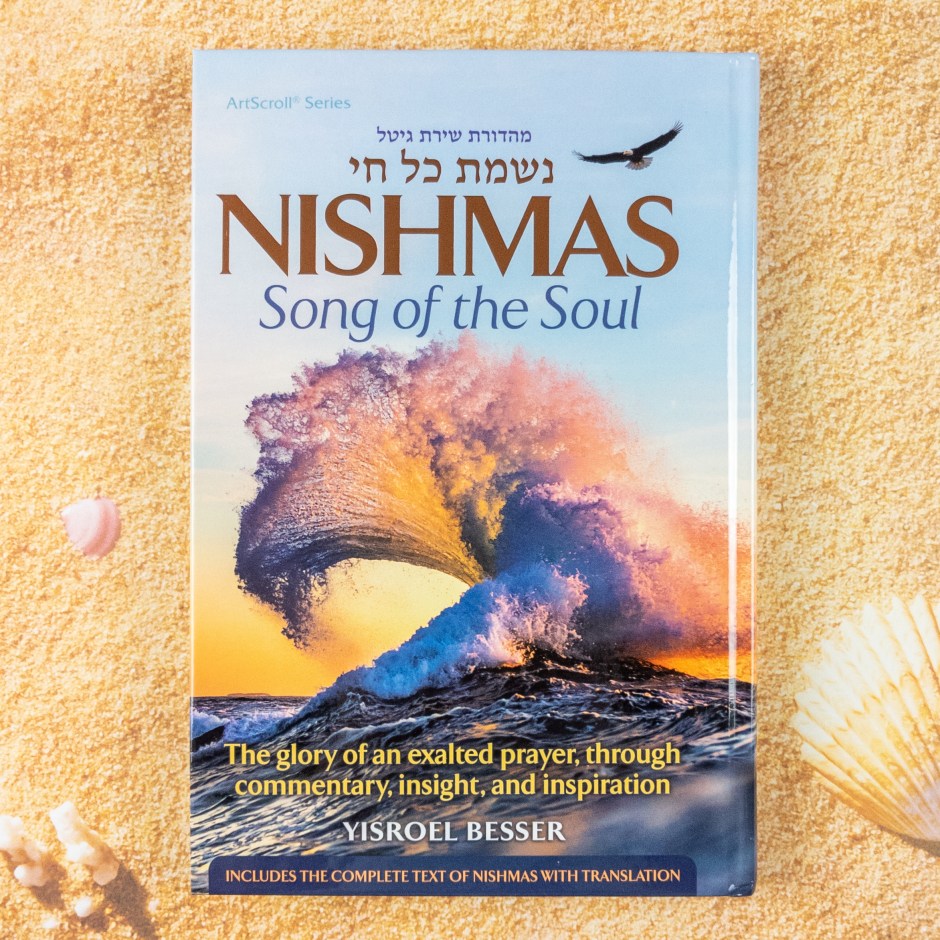
Experience the Joy. Feel the Gratitude. Nishmas: Song of the Soul, by Rabbi Yisroel Besser

In the tiny shtiebel, the beautifully appointed shul, the backyard minyan. At the Kosel in the middle of the night. In ER waiting rooms and people’s kitchens. With hearts bursting with joy or breaking with sorrow. Wherever Jews are, whatever challenges they are facing or simchahs they are celebrating, nowadays you will often find them reciting the words of Nishmas.

As Rabbi Yisroel Besser tells us in the Introduction to his new and unique book, Nishmas: Song of the Soul, this hallowed and ancient tefillah is “…the ode that somehow manages to express our deepest emotions, the gratitude and hope and simple joy of being alive, part of His magnificent world.”

In Nishmas: Song of the Soul, Rabbi Besser gives us a whole new understanding of the magnificent words of Nishmas, with a sweeping, fresh, and contemporary commentary that includes both insights and dozens of stories that illustrate the many themes of Nishmas. “During corona, people davening at home discovered new ta’am, new flavor, in tefillah,” he says. “I felt it was a good time to take the traditional sources of this tefillah and transcribe them in a way that would uplift and reach contemporary audiences, using ‘normal’ English and many stories to illustrate the concepts.”

When women — thousands of them — would come to Rebbetzin Batsheva Kanievsky a’h, looking for a berachah, an eitzah, or the simple comfort of her warm smile, they would receive all of those, and something extra: a printed card with the words of Nishmas on it. As this book was being prepared for print, ArtScroll approached Rav Chaim Kanievsky shlita and asked him for the source of reciting Nishmas. The answer of the gadol ha’dor, the Sar HaTorah? “It’s a sevara.” Simple logic.

As Rabbi Besser explains, “Because at the core of thanks is a recognition that we owe our Creator everything. That understanding essentially serves as a tefillah too, because since we have nothing without Him, we cannot go on without His kindness. And that awareness itself is a form of tefillah and brings down even more Divine chesed!”

Nishmas: Song of the Soul is a must-read for the thousands who’ve joined the “Nishmas army,” and for the many more who’ve wondered why so many are reciting this tefillah regularly. Most importantly, it is for anyone who is longing to strengthen the connection to Hashem, through the power of gratitude. Through the power of Nishmas Kal Chai.

Get your copy TODAY at artscroll.com!

ArtScroll’s Fantastic Chanukah Offers! 20% off All ArtScroll titles — and 14 brand-new books!

Here’s a super-quick peek at our new titles:  

Enjoy absorbing and inspiring biographies? This Chanukah season we’ve got two for you: Rav Kulefsky: The beloved American-born rebbi whose geshmak for Torah lit the fire in thousands, by Rabbi Yechiel Spero, and At Any Hour Harav Shlomo Gissinger, the story of Lakewood’s (and Klal Yisrael’s) amazing rav and askan, by Rabbi Avrohom Birnbaum.

Looking for terrific stories? Try Rabbi Nachman Seltzer’s unique new book: A Tiny Taste of Heaven: Amazing stories about the power of hafrashas challah.

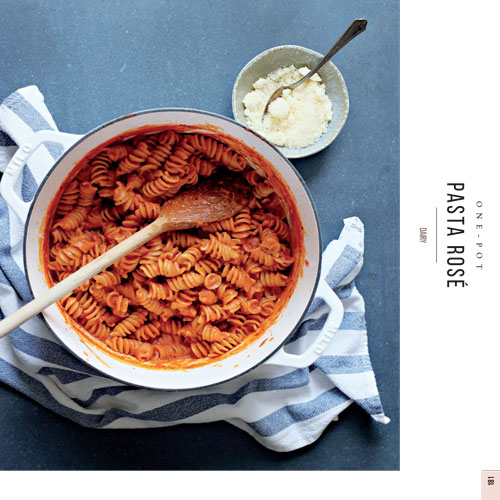
Cookbooks make fantastic gifts —and we’ve got a real winner for Chanukah! Dinner Done: Practical recipes for your busy day was created by the talented and popular Between Carpools team, and it’s already flying off the shelves and into kitchens all over the planet!

We feed our loved ones, and we feed our neshamos as well. In Nishmas: Song of the Soul, by Rabbi Yisroel Besser, we gain a wonderful new understanding of Nishmas, which is recited by tens of thousands, through stories and insights.

Rabbi Daniel Glatstein’s The Light and the Splendor shows us how to view Chanukah and Tu B’Shvat in a whole new way.

Based on the teachings of Rav Avigdor Miller, Open Your Eyes by Rabbi Dov Keilson shows us how to bring Hashem into our lives on a minute-by-minute basis, and You Revealed by Nafatali Horowitz is a Torah-based guide to success.

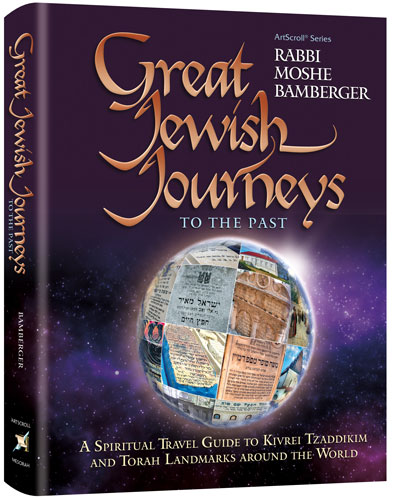
Rabbi Chaim Mintz answers your questions in Ask the Rabbi, and Rabbi Moshe Bamberger takes us on a fascinating tour of our gedolim in his full-color coffee table book, Great Jewish Journeys.

The Illustrated Tehillim is a full-color, oversized volume featuring exquisite paintings illustrating each chapter. 

The Tehillas Leah Sarah Edition Tehillim Mechulak is made up of 30 Tehillim booklets, divided by the daily chapter, perfect for Tehillim groups or to take with you every day. Both include fully vowelized Hebrew text, with the classic ArtScroll English-language translation.

Can’t forget the kids! The little ones will learn delightful lessons with Mrs. Sara Ginsburg’s Thanks to You for Everything, while for older children we’ve got The Story of Rav Belsky, a warm and personal biography written by his granddaughter, Etti Goldstein.

Happy Chanukah! And happy reading!

A Conversation with Rabbi Nachman Seltzer, Author of A Tiny Taste of Heaven

AS: Your new book focuses on amazing stories showing the power of hafrashas challah, told by Nava Ben Moshe, who has touched the lives of literally thousands through her kiruv and especially through her challah bakes. You’re a man and, I presume, not a challah baker. How do these stories speak to the lives of someone who does not bake regularly?

RNS: Now you’re making assumptions …. Just kidding, my wife is the one who does the baking. The theme in many of the stories is about the power of tefillah and finding joy in mitzvos. Those are themes for everyone, not just challah bakers. And the fact is challah is part of everyone’s life. I love seeing my wife and daughters baking challah on Thursday night. It gives the whole house an Erev Shabbos feeling, and it’s a wonderful part of preparing for Shabbos.

AS: So, tell us more about the power of hafrashas challah, and how you got involved in this project.

RNS: In all honesty, this is not my regular beat. However, the more I spoke to Mrs. Ben Moshe and heard the incredible stories that she’s witnessed, and how the mitzvah of hafrashas challah has brought so many yeshuos, the more I realized that here is a world that I am not familiar with, but which is truly powerful.

AS: So many amazing stories, each one different from the next. Any favorites?

RNS: I love the story about the former kibbutznik who finds a missing key — which convinces her to go to a challah bake and creates an unusual instance of hashgachah pratis. And the woman whose paralyzed hands are healed in a mixing bowl full of challah dough … amazing!

AS: Mrs. Ben Moshe talks about how she was just a “normal” wife and mother, and yet she became a powerhouse in kiruv. What does that tell us about our own potential?

RNS: From these stories we see that we can all rise above ourselves and do things we never believed we could. We have to be willing to leave our comfort zone. For Nava Ben Moshe, leaving the comfort zone meant agreeing to give that first shiur although she never imagined herself as a public speaker. But the more she went above and beyond what she thought she could do, the more siyata DiShmaya she merited, and that’s a major lesson for all of us.

Order your copy TODAY from artscroll.com – Now 20% off during ArtScroll’s Huge Chanukah Sale!

A Conversation with Rabbi Dov Keilson – Author of Open Your Eyes: Seeing Hashem Everywhere

AS: First things first — Can you tell us a little about Shaar HeBechinah? What exactly is “bechinah”?

RDK: Bechinah means to observe, reflect, and look into. It shares a root with the “bechinah” that students take in yeshivah, designed to help observe how well they are doing in their studies. The “bechinah” that this sefer is speaking about is our obligation to look into and observe Hashem’s Hand in all of creation. The perek in Chovos HaLevavos called Shaar HaBechinah is an in-depth analysis of this world through the eyes of the Chovos HaLevavos himself.

AS: The sefer is based on teachings of Rav Avigdor Miller zt’l. What was his connection with Shaar HaBechinah?

RDK: Rav Avigdor Miller spoke about this perek all his life. He said that its teachings were the greatest inspiration for his own personal avodas Hashem. Not only did he speak about it in almost every one of his 2500 recorded lectures, he also wrote about it at length in many of his sefarim.

AS: What happens to us when we learn to “open our eyes” to Hashem’s presence?

RD: When a person begins to follow the path of bechinah, it is life-changing in many, many ways. Among them, it brings a true sense of happiness and gratitude as one begins to truly focus on the endless good Hashem is bestowing upon him. It also brings a person to have a real and personal relationship with his Creator.

AS: The second part of the book looks at so many different aspects of our world — from the amazing human body to animals to the food chain — finding Hashem’s greatness and presence throughout. How did you go about researching this fascinating section?

RDK: The material in the second section of the sefer is collected from many different sources, but mostly from the Chovos HaLevavos himself, and from the sefarim that Rav Miller wrote on the subject. It also includes many of the things he spoke about often in his lectures, as well as many observations of my own.

Order your copy TODAY at artscroll.com for 20% off during the Huge ArtScroll Chanukah Sale!

Feel “the Geshmak”!

He didn’t come from the little town of Mir. Or from Vilna, Baranovitch, or Radin. He didn’t even come from Brooklyn! Yet as he grew up in Depression-era St. Louis, a city far from any Torah center, Yaakov Moshe Kulefsky, the future Rosh Yeshivah of Ner Yisroel, had already discovered something about Torah learning:

That Torah is “geshmak.”

(So geshmak, that when told to go out and play because he was too pale, young Yaakov Moshe slid down into the cellar of his home through a coal chute, emerging, sooty but happy, to get back to his sefarim!)

It was that geshmak in learning, that joy in poring over a page of Gemara, that characterized Rav Kulefsky all through his life. It was a “geshmak” that was contagious: In more than half a century of teaching Torah at the highest level, he tranmitted his joyous intensity in learning to literally thousands of talmidim — many of whom went on to become today’s Torah leaders.

In the newly published biography, Rav Kulefsky: The beloved American-born rebbe whose geshmak for Torah lit the fire in thousands, bestselling author Rabbi Yechiel Spero captures the geshmak, the ahavas haTorah and ahavas ha’briyos that characterized Rav Kulefsky. For this absorbing book, Rabbi Spero conducted more than 100 interviews. In story after story (so many great stories!), we meet a man to whom kavod haTorah was paramount, and whose consideration and caring for others was legendary.

As a rebbe and, eventually, Rosh Yeshivah of Ner Yisroel in Baltimore, Rav Kulefsky inspired hundreds — no, thousands — of American boys to become talmidei chachamim. “His koach of hasbarah was amazing,” says Rabbi Spero. “He spent hours preparing the shiur, and if he gave it again a few days later, he prepared it again.”

This week marks Rav Kulefsky’s twentieth yahrzeit. Though many years have passed, this towering figure of Torah and chesed is still remembered with both love and awe by generations of talmidim. And now, even those who did not merit to learn from him can be inspired and elevated by his life of ahavas Torah.

One Rosh Yeshivah said to a grandchild of Rav Kulefsky, “When one spoke in learning to your grandfather, it was like watching a kid in a candy store.” This biography helps us all to feel that sweetness.

Order your copy TODAY on artscroll.com

Meet the Five Amazing Women of Dinner Done!

A candid interview with the creators of Between Carpools and the latest cookbook sensation, Dinner Done!

With preorders already breaking sales records, everyone, it seems, is talking about Dinner Done, the fantabulous (no other word describes it!) soon-to-be-released cookbook, created by the team that brings us the uber-popular lifestyle site Between Carpools (BCP) and published by ArtScroll. Just to add to the excitement and the buzz, we decided to chat with the Between Carpools team about their lives, their accomplishments, and, of course, how they get Dinner Done!

So let’s meet and greet our BCP friends: Leah Schapira, Victoria Dwek, Renee Muller, Esti Waldman, and Shaindy Menzer.

ArtScroll: How did Between Carpools start?

Victoria: Four of us had been in the kosher food world and we had wanted to do something online together. Then Leah had an idea. She said, “It has to go beyond food. Food, yes, but also posts about kids, home, organizing, decor, baby gear, clothing … anything goes. A website that’s built around our lives.” Then she had the brilliant idea to call Shaindy ….

Shaindy: I knew Leah from my kids’ school and from the neighborhood. I got a message from her one day, asking if I would join BCP. Before she even had a chance to describe her vision, I remember telling her that I had no time for hobbies anymore. I’d join if it was something that she thought I’d be super passionate about. Of course, three minutes later I was super-excited about the idea and jumped onto the BCP team. It’s been the best decision ever.  

Esti: It went from a vague idea of a safe and interesting online place for Jewish women to a full-steam-ahead project. Somehow, with a lot of siyata di’Shmaya, people started following along, and the trust they have in us has been unbelievable. It’s definitely become more than a little “side project” by now.

ArtScroll: This isn’t the first cookbook for three of you. Did you ever think you’d get together to write a book with your Between Carpools team?

Leah: The opposite! The three of us who have written books have frequently said that we’re not writing another one. We said, “We’re tired — and we’re retired.”

Victoria: All books should be written by a team of five! I absolutely loved being able to focus on writing … without having to worry about how the food looked, because Esti and Renee were on it! What I also loved about writing with a team is that we could all focus on the types of food we actually like to prepare. For example, first Leah and Renee worked on chicken, because Renee cooks fleishigs every night. Then Leah and I tackled the dairy chapter. Finally, Renee and I brainstormed the types of fish dishes we’d need.

ArtScroll: What did you look for in recipes for Dinner Done?

Esti: We don’t want you to have to spend a ton of time in the kitchen every day preparing dinner. So, quick prep was important. Featuring recipes that use pantry ingredients was also important. We want you to be able to pull out the book when it’s time to make dinner and be able to cook without a run to the grocery store.

ArtScroll: What are your favorite recipes in the book?

Renee: It’s hard to find a favorite. I am always working with food and I am rarely tempted to eat what I’m working with. When styling Dinner Done, it was just the opposite! Every recipe was like “Yay! Lunch!” Or, “I’m so excited; another dinner idea that I KNOW my kids will love.”

ArtScroll: How do you develop the recipes?

Victoria: If you pick any random recipe in the book, we can tell you a story behind it. I think the recipe that sums it up is the very last recipe we wrote, Salmon with Silan and Garlic Slices. One day, about two weeks before the book went to print, we had a meeting at ArtScroll. At that point, the book was almost done — we just needed one more salmon recipe. It had to be simple. And we knew we wanted to include silan. During the car ride home, we had a brainstorming session, deciding just which spices would pair well with silan and salmon. When I got home, I made the recipe, just as we had discussed. And it was spot on. The give-and-take really results in great recipes. There are so many recipes in the book that are better because we have partners we can discuss them with. But not all recipes are collaborative. Leah, tell them about the process behind Crispy Chicken.

Leah:

So, basically the cookbook was all written up. And honestly, we had enough chicken recipes, but looking through the section I realized it was missing that one addictive special occasion fried sesame chicken recipe. (In my cookbook, Fresh and Easy, that recipe is iconic). Since everyone also loves takeout crispy beef, I started working on a combo: crispy sesame chicken takeout.

For the recipe to work I knew it needed a few specific elements.

1. The chicken had to be thin so that the coating would be significant enough to be crispy.

2. The coating had to have a real crisp/crunch factor.

3. The sauce had to have a good balance of sweet, to give it that addictive special occasion vibe.

Getting the chicken crispy was easy. I knew using a mix of flour and cornstarch and both baking powder and soda would give me the maximum crispy factor. And lately I love using apple juice in chicken and meat recipes, since it adds some flavor while keeping the chicken tender.

The sauce was a bit trickier. I fried up three pounds of chicken strips and tossed each half-pound with different sauces combinations, until we got the one we wanted.

In general, when writing recipes, I think of a few things:

  • What do people like to buy in restaurants and take-outs? Can we make a great version at home, sometimes healthier, sometimes with a twist and sometimes as is?
  • What recipes am I missing in my life? A new Friday-night fish, a new soup recipe that is similar enough to chicken soup so that the kids will be willing to try it?
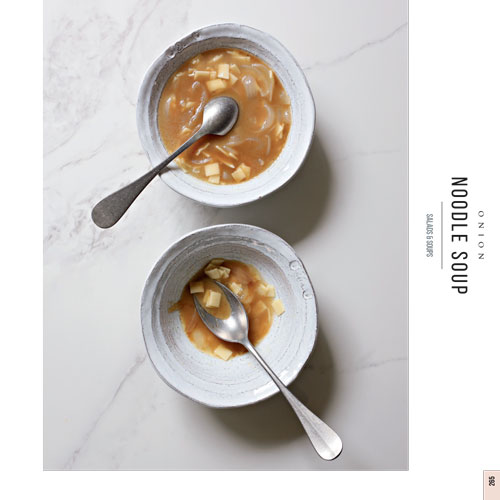
  • Can I find a new twist on an old favorite? For example, I wrote a mashup of everyone’s favorite two soups — onion soup and chicken noodle soup — so now DD has an Onion Noodle Soup!

ArtScroll: Esti and Shaindy, you have some contributions in there, too. Tell us about your own recipe testing experiences.

Esti: I’m not a recipe developer — I just take the pictures! But don’t tell that to my kids. They insist that all my food is worthy of publishing!

Shaindy: Every once in a while, Leah would try to pick my brain for recipes. “C’mon, I know you have some good stuff you’re not sharing ….”  And I’m always like, “Me? Recipes? I start dinner at 3:30 without knowing what it will be! From start to finish, my dinners usually take max an hour to prepare … trust me, you don’t want my recipes.” And Leah says, “YES! We want exactly that!” I have so many recipes that I wouldn’t even think to call recipes. Like my Maple OJ Chicken … is that even a recipe? Apparently, it is!

ArtScroll: Can you share with us a little about the design and styling processes of the book?

Shaindy: I was called in pretty early on, to come up with a layout design. First, we needed the layout for the actual recipe pages, so Victoria would know how much room will be allowed for the description and for the tips and hacks. I did a lot of cookbook browsing to get inspired and ultimately, I knew I wanted a book that would be clean, easy to read and follow, yet beautiful visually. It had to connect with the style of Between Carpools, so there had to be some sketches and we had to stick to similar fonts and the color palette from the blog. Once I came up with the layout, I presented it to the team. I’m lucky to have a team that is so easy, and they approved it right away. Then I got a little break time while they all worked tirelessly writing, styling, and shooting.

The last few weeks before print is when all the “extra pages” were designed and created. I’m a real last-minute kind of person and work really well under pressure, so that worked for me. I spotted some inspiration that was awesome — it was a combo of images and sketches. I showed it to the team and everyone loved it! There! The hard part was over — we had a “look and style” for these pages. Once the concept is there, the rest flows. You’ll see these creative pages throughout the book, especially in the divider pages and front matter. I have to say this was such a thrilling project and it was fun to use my creative cells to make it work!

Renee: I wanted the book to have a casual dinner vibe. Something achievable, familiar, and unpretentious. Like your good denim skirt. So — don’t laugh — I added denims to the palette. Denim is definitely weekday. Right? And it’s comfy. Look through the book and you’ll see denim throughout, or shades of it. At one point, when we wanted to get a specific shade of dark denim, we used an actual skirt. Yup. True story. See if you can spot the real skirt on two pages!

ArtScroll: Tell us a bit about the “9 x 13 Life”

Renee: We starting posting 9 x 13 recipes on the site — that is, meals you can make in one 9 x 13-inch pan — and they became our most popular. It’s because that’s what people need. This is real life; there are so many days when we simply don’t have time to cook or can’t manage having a mess to clean up. So we decided to begin the book with a whole chapter of 9 x 13 recipes. It’s easy to turn to when you’re in a pinch or just want a great, mess-free meal. There are lots of baked goods in the chapter too, for the time when your child comes home and says he has a siyum tomorrow and needs something to take to his class, or when you realize you need an extra dessert on a Friday … we have you covered!

ArtScroll: Who is this cookbook for?

Esti: It’s literally for everyone who has to make dinner on a regular basis.

Renee: Us. All of us. Dinner happens 6x a week. We need solutions. Quick and easy ones. Walk through the door and need dinner done in 30 minutes? It’s possible. Leave for the day and you want to have a meal cooking and waiting for you when you return? It’s in the book. We know and understand what women need these days. We put it into the book.

Victoria: This is a book that’s even for the woman who never buys cookbooks! Those who love to cook will love it, but those who simply cook to feed their family need it, too.

Shaindy: To me, a cookbook is something you pull out before Yom Tov or when making a simchah. I honestly own maybe 3 cookbooks. (I don’t own Leah’s or Victoria’s either … shhh, don’t tell them!) I’ve always said about myself, “Me? Recipes? I don’t follow instructions like that …. Like, you’re gonna tell me what to do?”

As much as we said this book is going to be simple, I never really believed them until I was called on to test some recipes. I geared myself up to go grocery shopping and I put away some extra time to prepare. And then it suddenly hit me …. “Whoa, these recipes fit right into my daily last-minute routine … I have every single one of the ingredients, and hey … this is sooo easy!” Every single recipe I tested was a hit in my home. The idea of this whole cookbook really started to get to me. I was finally getting into it. This is not just another book … this one was going to be awesome!

Now that I have the printout proofs, these recipes are all I make for dinner. Honestly, I can close my eyes and pick any page and it will work for me. It’s amazing how every single recipe is a GOOD OPTION.

Another point: These recipes were tested and approved by our (bli ayin hara, many) kids. Different households, different palates, and yes, if it wasn’t great, it didn’t make the cut. We cooked the book constantly while writing it. These recipes work for our families. And they’ll work for yours.

Pre-order your copy TODAY from artscroll.com for 20% off + Free Gifts! Use Code: DDONE20

A Conversation with Rabbi Nachman Zakon author of The Jaffa Family Edition: The Weekly Parashah

AS: You’ve been in chinuch for decades, as a rebbe and a menahel, as well as in teacher training. Did you use some of your chinuch techniques in The Jaffa Family Edition: The Weekly Parashah?

RNZ: Many, many techniques. The books are written for “kid appeal” — easy and engaging reading, exciting graphics, and great illustrations. The many sidebars are designed to stimulate the child’s interest. What’s a child’s attention span today? Tiny! Long pages of text bore them. Here, the parashah is divided into “bite sizes pieces” that are fun to read. And, very important: Each volume shows how the parashah’s lessons are relevant to their lives now. Every aspect of the series has one goal: to connect kids emotionally to Torah, to give them a love of Torah. That’s the job of every rebbe or morah, and that’s our job in this series as well.

AS: How can parents make the most effective use of the series?

RNZ:  At the Shabbos table, children or parents can ask the Q & A or share the Fascinating Facts. They can discuss the “Torah in Our Lives” section. On Shabbos or for quality time during the week, parents can just sit cozily with their kids, with everyone taking turns reading the narrative and enjoying the beautiful illustrations.

AS: Tell us a little about the team that made The Weekly Parashah such a stunning and successful series.

RNZ: For the text, I’ve drawn on my many years of chinuch experience. The illustrations are created by a gifted and experienced artist. The graphic designer makes every page a delight for children and adults. Both the artwork and the text are reviewed by a group of talmidei chachamim and educators to ensure that every word accurately reflects our mesorah and that the sources (hundreds of them, listed in the back of the book for parents and educators) are all correct. ArtScroll’s fantastic editorial staff makes sure the language is perfect for the age level. What can I say — it’s a dream team!

AS: Sefer Bereishis, Shemos, and Bamidbar are currently available. What’s the plan for the future?

RNZ: B’ezras Hashem, Sefer Vayikra and Sefer Devarim will be published in time for this year’s Torah reading, completing the set.

Order your copy TODAY at artscroll.com!

A Conversation with Rabbi David Ashear – Author of Living Emunah on the Parashah

AS: It’s been six years since Living Emunah was first published — and since then you’ve sold more than 200,000 copies in the series, in four languages. Amazing! Why do you think the Living Emunah books have been so spectacularly popular?

RDA: Emunah speaks to everyone and helps in all areas of life. When a person knows how much control Hashem really has, it allows him to deal with people in a more loving manner, knowing they are all Hashem’s messengers. When a person knows how much Hashem appreciates our sacrifices, he becomes more excited to make them. Knowing the full extent of Hashem’s hashgachah gives a person a sense of calm; he knows how much Hashem loves him and that He only want his benefit. People need emunah, and when they see its vast benefits, they want it as well.

AS: In your newest book, Living Emunah on the Parashah, you combine brief and beautiful insights on the parashah and find the treasures of emunah to be found within. Of course, you’ve got so many true-life stories to illustrate your points. And you cover the entire Chumash! What went into making such a monumental project?

RDA: It was similar to the effort put into the other books; it’s only that for this one the backdrop of the lesson was not any idea that just came to mind. It had to fit into a specific idea from the weekly parashah.

AS: What is the unbreakable connection between Chumash and emunah?

RDA: All of our emunah stems from our great ancestors, like the Avos and Moshe Rabbeinu. They taught us through their actions how Hashem expects us to respond to challenges. They taught us how to use prayer effectively and how to connect to Hashem.

AS: In these very challenging times, do you have some words of chizuk for our readers?

RDA: Hashem is calling for us to improve ourselves. We have already been humbled in so many ways. We must utilize these feelings toward spiritual growth. As well, the daily study of emunah for even just five minutes will help immensely and enable us to persevere through these difficult days.

Order your copy TODAY at: artscroll.com