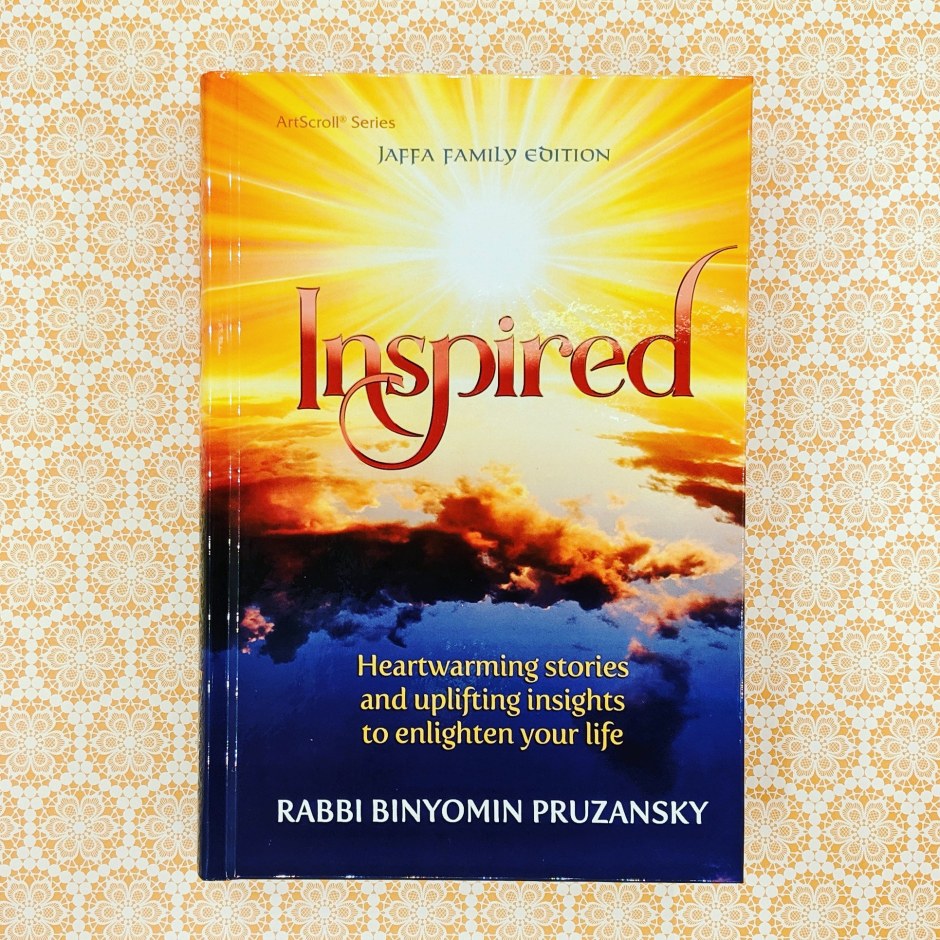
A Conversation with Rabbi Binyomin Pruzansky Author of Inspired: Heartwarming stories and uplifting insights to enlighten your life

AS: Your new book, Inspired, has three elements – an inspirational Torah insight, stories, and “takeaways.” Can you tell the readers a little about each of these three parts?

RBP: People today are looking for real inspiration in their lives. In my new book I offer an uplifting insight that really speaks to the reader, followed by a powerful story that brings home the message, and a short takeaway quote to carry the inspiration into the reader’s heart. 

AS: Your stories are so varied. They range from the normal everyday stuff (a van breaking down on a highway that teaches a lesson in tefilah and bitachon) to the poignant (the incredible emunah of a bereaved parent) to the unbelievable (a tray of gefilte fish brings unexpected healing that shocks all the doctors). Is there a common thread among the more than 70 stories in Inspired?

RBP: I searched for stories that people can relate to in their everyday lives, so that people would say, “Hey, that story really could have happened to me.” The common thread is that it is these are down to earth stories that have a positive message that speaks to every person, whatever their challenges, whatever their background.

AS: These are complicated times we live in. How can we stay upbeat and, yes, inspired?

RBP: Although life can be quite complicated, a Yid has to open his eyes and see all the incredible berachah and hashgachah pratis happening to him on a daily basis. When we focus on the positive in our lives and see the hand of Hashem constantly guiding us, we will always live inspired.

AS: With all these great stories, do you have any personal favorites – and why?

RBP: My favorite story is about a young man named Manish who really wanted to get married, but nothing was happening. After hearing about the power of davening on Seder night, he cried out to Hashem — and days later he was miraculously answered. I love the story because I met Manish myself one day while shopping in the local grocery store where he works, and heard first-hand his story. His amazing emunah peshutah left me truly inspired.

Get your copy today at artscroll.com!

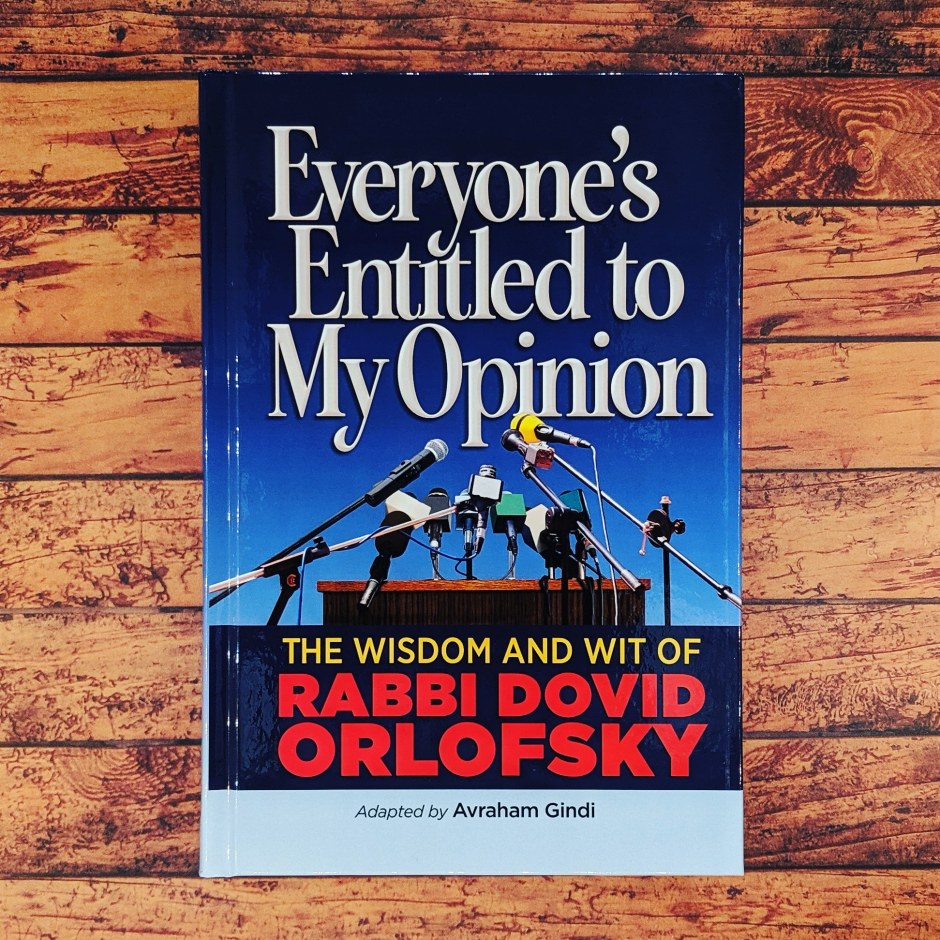
Everyone’s Entitled to My Opinion: The Wisdom and Wit of Rabbi Orlofsky

I’m looking over a manuscript, and I’m smiling. Chuckling. Laughing out loud.

My husband, working at his computer across from me, looks up, puzzled. “What are you reading?” he asks.

“An incredible mussar insight,” I say, giggling.

His eyes light up in comprehension. “Oh, must be Rabbi Orlofsky,” he says.

If you are one of the tens of thousands who have heard Rabbi Dovid Orlofsky speak, you know what I’m talking about; if you haven’t yet had the privilege and pleasure, you’re in for a real treat, as you meet Rabbi Orlofsky in this newly published collection of his selected shiurim, Everyone’s Entitled to My Opinion: The Wisdom and Wit of Rabbi Orlofsky, adapted by Avraham Gindi.

Rabbi Dovid Orlofsky is quite a phenomenon in the Torah world. A globe-trotting lecturer and beloved teacher, he is known for his unique, a- story-and-a-joke-a-minute style – and, at the same, he is also hailed for the insight and depth of his Torah teachings. In the pages of this transformative new book, Rabbi Orlofsky takes a blunt, honest, always wise and often very funny look at our lives as observant Jews.

In Everyone’s Entitled to My Opinion, we will delve into the meaning of Shabbos, and our own Shabbos will be enriched.  We will discover how to have a happier home and raise successful children, and how to live full and meaningful lives as Torah Jews. We will learn, we will change and grow – and we will laugh.

Get your copy today at artscroll.com!
Share the Excitement! The Weekly Parashah: An illustrated retelling of the Chumash with Midrash

As I write this column, The Weekly Parashah: An illustrated retelling of the Chumash with Midrash (Volume 1: Sefer Bereishis) has just reached the bookstores – and it’s already generating excitement and unprecedented buzz.

Here’s what one of our staffers had to say: “I took home a copy of the parashah book this week. It is really a beautiful book.  My kids absolutely love it!” When a well-known mechanech saw an advance copy, he called it “a game-changer, there’s never been anything like it.” And, perhaps most important, an 11-year-old reader who got to take a sneak peek had this reaction: “Wow!”

Kiruv workers have long recognized the power of the Shabbos table to touch Jewish neshamahs and open them up to a love for Torah,” says Rabbi Nachman Zakon, author of The Weekly Parashah. “In today’s world, that’s true in our own families as well. With parents and children overscheduled and overstimulated all week long, it’s at the Shabbos table that we share our mesorah with the kids, it’s the place we give over to our children a love for Torah.”

Every facet of The Weekly Parashah was designed by its creative team to make it a positive experience for the entire family. With decades of chinuch experience, Rabbi Zakon knows what youthful readers want – and need. The narrative is vivid and lively, and – a must for today’s children – broken up into short, readable sections with intriguing subheads. Every page is livened up with sidebars such as Fascinating Facts, Who’s Who in the Parashah, and Questions, Anyone?. Torah in Our Lives shows boys and girls how relevant the Torah is to their everyday challenges and concerns, and Parashah Pointers gives a super-quick review of the parashah.

Today’s children expect great graphics – and they get them! Illustrator Tova Katz has outdone herself with stunning, detailed illustrations that the kids can pore over, while designer Yonina Hartstein has made every page a masterpiece.

The Weekly Parashah also includes a detailed index to the hundreds of sources, an invaluable resource for parents and educators. The first volume, Sefer Bereishis, is now available, and Sefer Shemos will be published in time for the Torah reading. The next three volumes are in preparation.

As we prepare to begin a new parashas hashavuah cycle, let’s show all of us, children and parents and guests alike, the beauty of Hashem’s Torah, with The Jaffa Family Edition: The Weekly Parashah.

Get your copy today at artscroll.com!

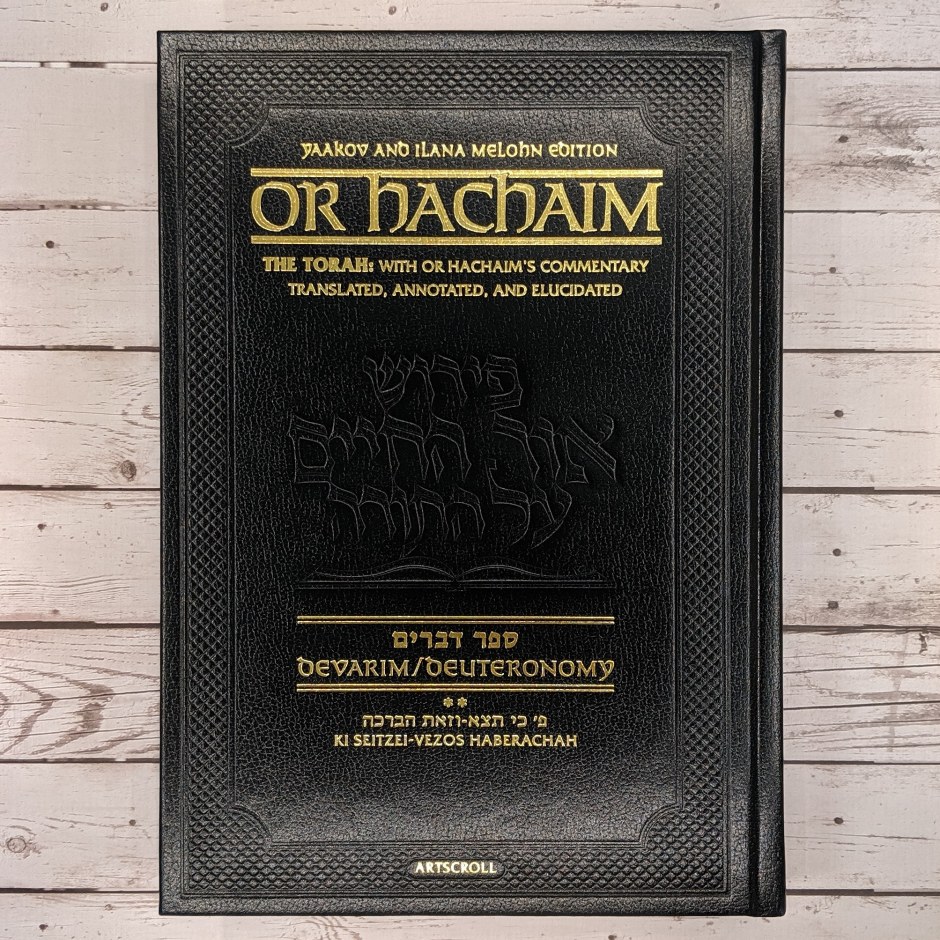
The Yaakov and Ilana Melohn Edition Or HaChaim on Chumash: Chazak, Chazak, V’Nischazeik!

About three years ago, the premiere volume of the Yaakov and Ilana Melohn Edition Or HaChaim on Chumash was published.  Now, with the publication of Devarim 2 (Parashiyos Ki Seitzei – VeZos HaBerachah) ArtScroll is proud to announce the completion of the entire ten-volume set. CHAZAK, CHAZAK, V’NISCHAZEIK!

The elucidation of the beloved Torah commentary achieved immediate success. It was hailed as an invaluable tool by those who were already learning the classic commentary. And it was joyously welcomed by those who truly wanted to study it, but were daunted by its difficulty.

And difficult it was. The commentary, written by the 18th century Torah sage R’ Chaim ben Moshe ibn Attar, the Or HaChaim HaKadosh, is so rich, so wide-ranging, so broad and deep, it has been one of the foremost and revered commentaries on Chumash for nearly three centuries. But what makes it great also makes it challenging. The Or HaChaim points out countless nuances in the Chumash text, and he blends the pshat of the Chumash with the interpretations of Chazal as well as his own scintillating comments.  Famed for his knowledge of Kabbalah, R’ Chaim weaves many Kabbalistic concepts into the commentary, and also explains many of the fundamental principles of our faith.

Using the successful format of the Schottenstein Edition Talmud, the elucidated translation enables us to gain a clear understanding of the Or HaChaim’s commentary, and the notes provide explanations, sources, and deeper insights into his words. Every volume includes the text of the Chumash, Targum, and Rashi – all fully vowelized.

This, the final volume in the set, includes an extremely useful feature: a 76 page “Master Index” to the topics covered in the entire Or HaChaim commentary. Want to know what Or HaChaim has to say on the subject of techeiles? Doing research on the nature of the Oral Torah? Looking to enrich your understanding of Shabbos? Need a vort for a sheva berachos and want to wow everyone by quoting a classic?  The Master Index opens the wisdom of the Or HaChaim to us in an entirely new way, letting us access his words and ideas easily and quickly.

With the completion of the set, the Melohn Edition of the Or HaChaim on Chumash makes an unforgettable bar mitzvah or wedding gift and a fabulous addition to your own bookshelf.

CHAZAK, CHAZAK, V’NISCHAZEIK!

Get your copy TODAY at artscroll.com!

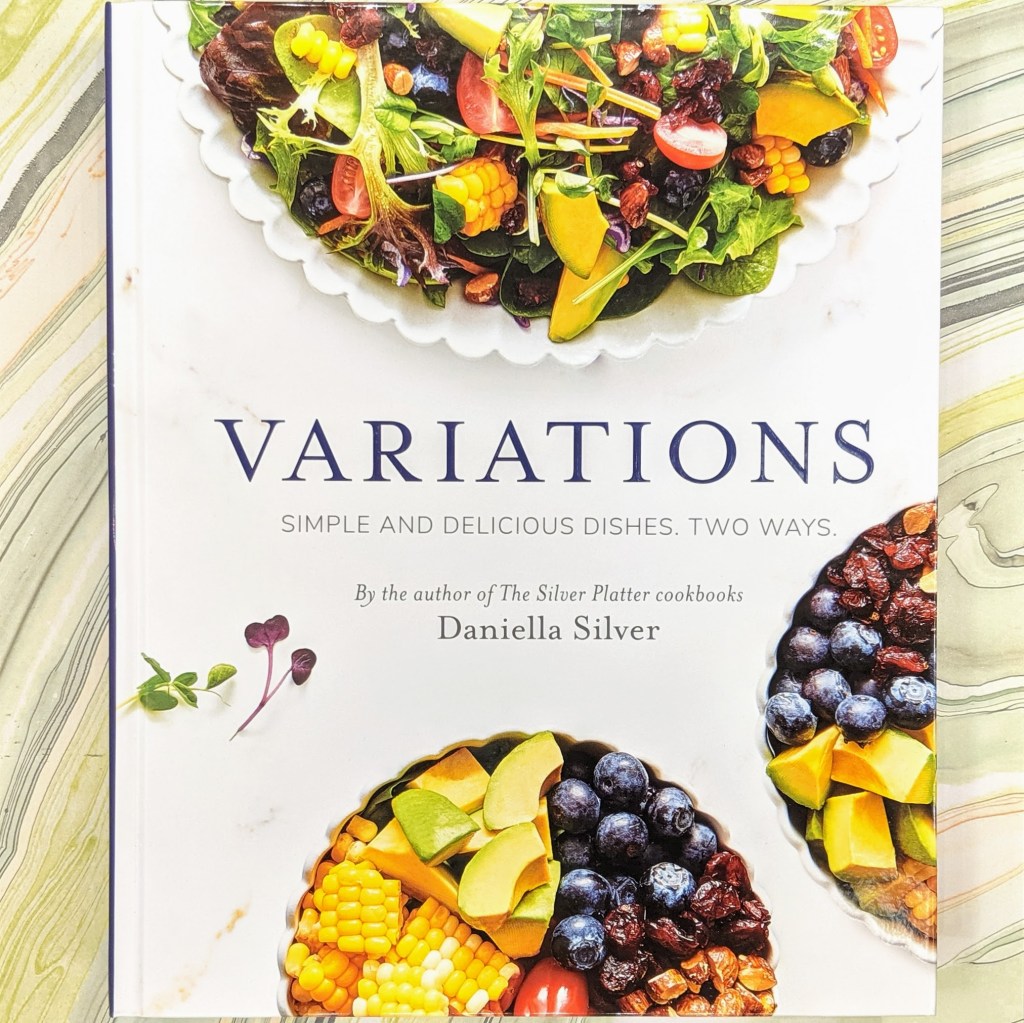
ArtScroll Talks With Daniella Silver, Author of Variations

AS: Variations. It’s an unusual title, and an unusual cookbook. Please tell our readers more about it.

DS: The idea of this cookbook is to have some fun by showing how versatile recipes can be, all the while staying true to my healthy and simple way of cooking. Each recipe showcases two different ways of either cooking or serving. We learn that recipes don’t have to stay within their original boundaries. It’s all about creativity and flair. A main dish can be recreated as an appetizer, and a batch of cookies can become a large cookie cake. The possibilities are endless! It actually took me a while to come up with the title. I wanted something that explained the two-dish concept. In the end I felt that Variations was short, to the point, and explained it in one word. It just worked!!

AS: This is your third cookbook, after The Silver Platter: Simple to Spectacular and The Silver Platter: Simple Elegance. Can you share some of the feedback you’ve gotten on those two bestsellers?

DS: I think the biggest compliment is how so many people have told me they are using my books for staple recipes in their homes. They are turning to them for easy, healthy, and reliable recipes. Hearing that is so rewarding.

AS: You use the word “simple” often in your cookbooks, and yet the photos show such gorgeous foods. What’s the secret?

DS: The only secret is simplicity. I don’t like to fuss in the kitchen and I use the word “simple” because I truly mean it. My dishes are simple to make, healthy, and quick to prepare. Simple, healthy, and quick meals can still look and taste amazing.

As: Here’s a tough one: Did you have any funny culinary disasters while developing recipes for your cookbooks?

DS: Of course! Here’s one: I had prepared my Corned Beef Biscotti for a photo shoot. My mom came over and before I told her it was meat she was about to eat, she thought the corned beef pieces were Craisins! It was pretty funny!

AS: With so many recipes — and two variations of each! — what are some of your personal favorites?

DS: No question: I love the Panko-Topped Kale Salad, Sesame Crusted London Broil, and Low-Fat Ginger Biscotti! Yum!

Get your copy TODAY at artscroll.com!

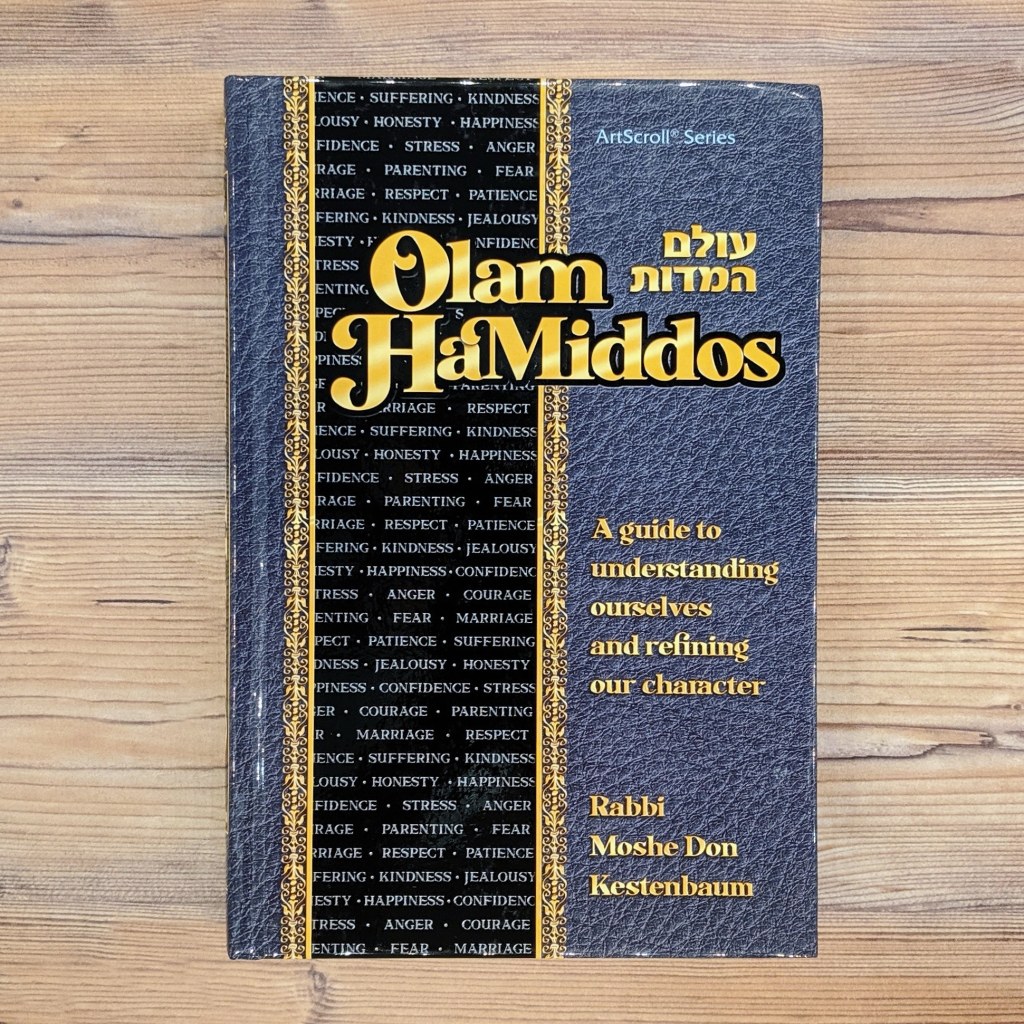
ArtScroll Speaks With Rabbi Moshe Don Kestenbaum Author of Olam HaMiddos

AS:  Your Hebrew sefer, Olam HaMiddos, is being studied enthusiastically by so many in the Torah world. Can you tell us how you came to write it, and why you think it’s been so successful?

RMDK: What perhaps makes this sefer special is that it contains thoughts and observations that were helpful for my own personal development, and were not created with the intention of committing them to writing. When I was in beis medrash in Yeshiva of Far Rockaway, my rebbi, Rav Yechiel Perr shlita, infused in us a love for mussar and I began to pay closer attention to my thoughts and feelings. I shared some of these ideas over the years, when I was teaching Orchos Tzadikim to the bochurim in the Yeshiva of Waterbury, but I never considered writing a sefer until Rav Sheya Lazenga asked me to give a weekly vaad to the yungerleit on middos. In writing notes in preparation for those vaadim, I realized, “Wow, I think I have a sefer!”  

 AS:  Why is tikkun hamiddos so important – and why is it so hard, especially today?

RMDK: Tikkun hamiddos is so important, simply, as the Vilna Gaon and others write, because that is why we are here — to perfect our character! I don’t know if it’s harder today than before, but perhaps in these times where we are used to having everything come easy to us, we are less prepared to put in the effort to fight and overcome our natural tendencies.

AS: In the sefer you discuss becoming a “ba’al middos” – someone who “owns” his middos. In these days of selfies and “fake news,” how can we learn to do that?

RMDK: Probably by taking fewer selfies! As the Mesillas Yesharim writes, the yeitzer hara’s trick is to distract us. It is easier today more than ever to become distracted by everyone and everything else, rather than looking inside ourselves. My hope be”H is that this sefer brings people to discover themselves, seeing their unique greatness and their flaws. When we understand ourselves and work to better ourselves, life becomes all that much more enjoyable and meaningful. 

Get your copy today at artscroll.com!

A Conversation with Shmuel Blitz – Author of A House Full of Love: The Story of Rebbetzin Batsheva Kanievsky

With over 300,000 copies of his children’s books in print, Shmuel Blitz is one of the premiere children’s authors of our time. We spoke to him about his newest book, A House Full of Love: The Story of Rebbetzin Batsheva Kanievsky.

AS: In an age of so many entertaining distractions, how do we get our children to love reading – and how important is it that they do?

SB: The easy answer is, to give our children great books. We saw how in the secular world, as children’s reading habits were growing worse and worse because of modern distractions, when the Harry Potter series was published, all these “non-reading” children were once again reading. And loving it. They couldn’t wait for the next volume. Give children books that they like – and they will read. That’s what I try to do. Studies have proven over and over that the more a child reads outside of school the better he will do inside of school. So it is VERY important to make sure our children are reading.

AS: There are literally hundreds, perhaps thousands, of stories about Rebbetzin Kanievsky’s greatness. Tough job choosing what to put into your book. How did you go about choosing?

SB:  It was tough, but at the same time it was easy. There was so much to choose from. Stories of her middos, stories of her devotion to her husband, Reb Chaim shlita, and so much more. I chose the stories that I felt would most relate to a child, and that a child would learn from, and that would hold their interest. And mostly stories that children could incorporate into their own life.

AS: What are some of the lessons our youngsters can learn from Rebbetzin Kanievsky?

SB: There is no end to what our children can learn from Rebbetzin Kanievsky. Every action she did, every word she spoke. Just as we learn from gedolim, such as her husband, ybl’ch, Rav Chaim, we can learn from her. Our children – and we, also – can learn from the way she took care of her own children, her neighbor’s children, her family, her community, and everyone who came to her. It made no difference if the guest was an important person, or the poorest person, or even a person with severe mental problems. Her house and heart were open to all. She was a true role model for all of us.

Get your copy today at artscroll.com!

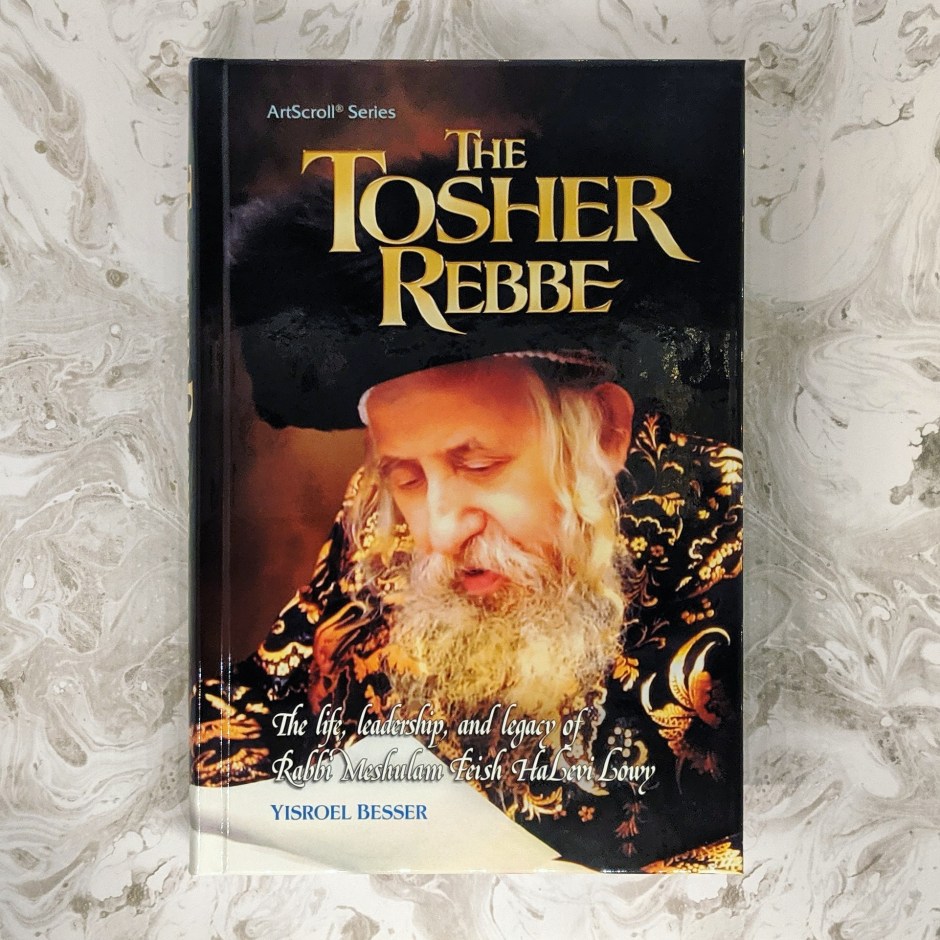
A Conversation with Rabbi Yisroel Besser, Author of The Tosher Rebbe: The life, leadership and legacy of Rabbi Meshulam Feish HaLevi Lowy

AS: You’ve captured so many facets of the Tosher Rebbe’s greatness. What went into writing this biography?

RYB: I live in Montreal, so I was able to go into the heart of Tosh, and the people close to the Rebbe opened up to me. Much of the historical material was documented, but the stories, the warmth, the heart of the book came from those close to him.

AS: The Rebbe was so saintly, yet he understood people’s everyday fears and challenges. How was he able to do that?

RYB: The Baal Shem Tov said that a neshamah comes down to this world for 70 or 80 years, just to do a tovah for another Yid. Because the Tosher Rebbe was such a chassid, all the taharah, Torah, tikun middos, perishus — they all led to helping others. He took a very pragmatic approach to shalom bayis. He was a big advocate of women having more cleaning help. He understood people’s needs davka because he was so holy, not despite being holy.

AS: There are so many stories in the book, about his chesed, his tzedakah, his vision, his berachos. Can you share one that made a strong impression on you?

RYB: Many wealthy people came and gave money to the Rebbe, because they were grateful to him for his help. But the money never stayed with him — he gave it to anyone who needed it. Once, a Yid came who was a maggid shiur; he was making a chasunah, and he didn’t have enough money. The Rebbe asked him what masechta he was learning. “Beiah.” The Rebbe asked him a question and they started speaking in learning. The gabbaim were surprised; the Rebbe didn’t usually do this. Then the Rebbe asked him about a Tosafos in Berachos that contradicted what they were discussing. As the man got up to leave, the Rebbe said, “Check the Tosafos in Berachos as soon as possible. Don’t wait, do it now. You’ll see I’m right.” There was a Shas in the waiting room. The man opened it, went to the Tosafos — and found a fat envelope full of cash! The Rebbe understood that his gabbaim wouldn’t want him give such a large amount to one person, so he found a way to use his learning and send the man the money. There are so many tzaddikim, and so many talmidei chachamim – the Rebbe merged both. 

Get your copy of this extraordinary book today at artscroll.com!

Discovering More Treasures of the Or HaChaim: The Yaakov and Ilana Melohn Edition Or HaChaim – Sefer Devarim Volume 1: Parashas Devarim – Shoftim

Wonderful news for the many thousands who have already enriched their understanding of Chumash Shemos with the Yaakov and Ilana Melohn Edition Or HaChaim. They have enjoyed the breathtaking depth, clarity, and insight of this classic Torah commentary and its masterful elucidation – and now they can continue this journey of discovery with Sefer Devarim Volume 1: Parashas Devarim – Shoftim, just in time for the Torah reading.

And if you are not yet familiar with the brilliance of Rav Chaim ben Moshe ibn Attar, the 18th century Torah sage whose commentary on the Torah is learned and loved by so many segments of Klal Yisrael, prepare to discover the treasures of one of the foremost commentaries on Chumash, the Or HaChaim HaKadosh.

Great though the commentary is, it is not simple. The Or HaChaim points out countless nuances in the Chumash text, and he blends the pshat of the Chumash with the interpretations of Chazal as well as his original comments.  R’ Chaim weaves many Kabbalistic concepts into the commentary, and also explains many of the fundamental principles of our faith.

Using the famed format of the Schottenstein Edition Talmud, the elucidated translation helps us gain a clear understanding of the Or HaChaim’s text, and the notes provide explanations, sources, and deeper insights into his words. Every volume includes the Or HaChaim commentary, the text of the Chumash, Targum, and Rashi. Or HaChaim and Rashi are both fully vowelized.

So many insights, so many fascinating ideas. How do Moshe’s words in Sefer Devarim differ from all the other words in the Torah? What are the four conditions necessary for our tefillos to be accepted, and how do we learn them from Moshe Rabbeinu’s words? Why do the Jewish People seem to suffer more than any other?

All these and so many more. Or HaChaim explains the Chumash on multiple levels, often with breathtaking originality and with lessons for life that are as relevant today as they were three centuries ago.

Get your copy today at artscroll.com!
The Groundbreaking Series Continues: The Czuker Edition Mikra’os Gedolos on Daniel / Ezra / Nechemiah

Close to 500 years ago, the revolutionary idea of Mikra’os Gedolos was introduced, in which Torah commentaries were printed on the same page as the text they discussed.  

The Czuker Edition Mikra’os Gedolos on Chumash and on Nevi’im took that concept to an entirely new level. And now that new level of excellence includes the Kesuvim, as ArtScroll announces the publication of the Czuker Edition Mikra’os Gedolos on Daniel / Ezra /Nechemiah.

Like the others in the series, the text of every commentary was intensively researched. Scholars used the most accepted edition available as their “base text” and then compared it with other editions, ensuring an unprecedented level of textual accuracy.

This volume includes the classic Mikra’os Gedolos commentaries: Targum Yonasan ben Uziel, Rashi, Radak, Rid, Ralbag, Minchas Shai, Biur HaGra, Mezudas David, Mezudas Tzion, and Malbim. In addition, it includes mefarshim that don’t usually appear on the Mikra’os Gedolos page: Mahari Kara, Maharal, Minchah Ketanah, Rishon LeTzion, Chomas Anach, Yesod VeShoresh HaAvodah. Finally, the volume also includes new, original additions: Likkutei Shas U’Medrashei HaTannaim, an original comprehensive compilation, citing relevant texts from Talmud Bavli, Yerushalmi, and major Midrashim where a verse is discussed; an original collection of comments by Baal HaTurim on Chumash explaining verses in Nevi’im and Kesuvim, and Sifsei Zekainim , an anthology of classic commentaries explaining Rashi’s commentary.

Every commentary is menukad (vowelized). All abbreviations are “opened up” and the text is punctuated. When a commentary quotes another sefer, the source citation is noted.

State-of-the-art typography ensures a wonderful learning experience. The binding is side sewn, library quality and the paper is acid-free and specially milled, to ensure the volumes will last for generations.

The Kesuvim are part of our mesorah. With this new volume, we can study and understand them on a whole new level.

Get your copy today at artscroll.com!