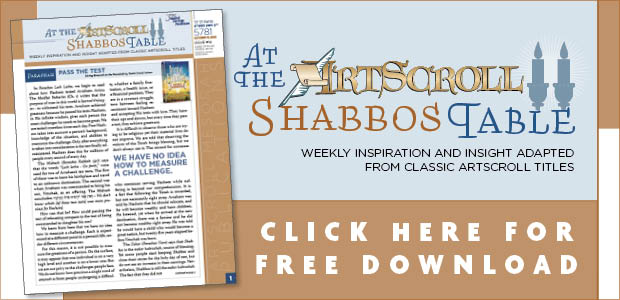
This weekly publication will contain a rich collection of stories, divrei Torah and insights that are suitable for the Shabbos table – or for anytime. We hope you enjoy and look forward to future issues, as we tap into the unparalleled treasure trove that is the ArtScroll Library, sharing the depth and beauty of our Judaic and Torah literature with you.
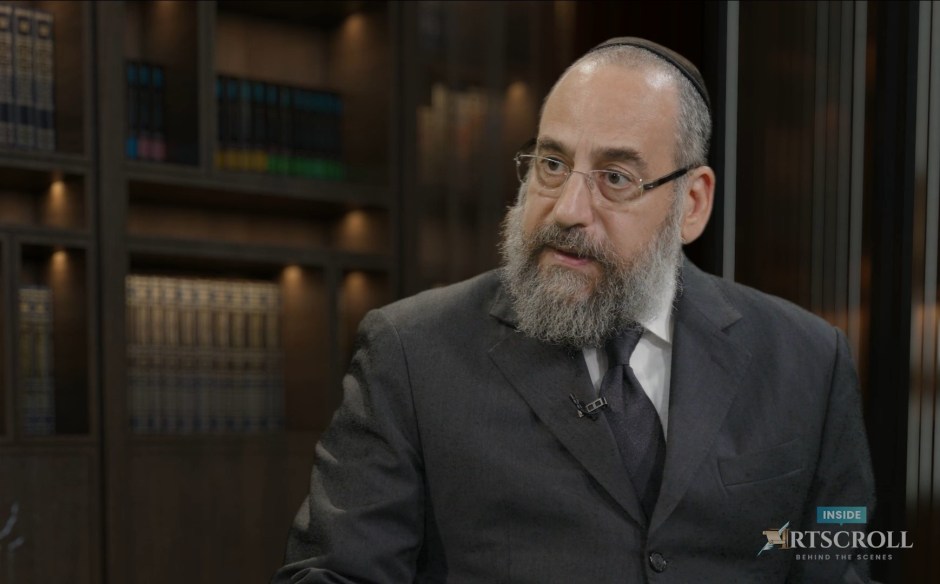
Rabbi Chaim Aryeh Zev Ginzberg is a beloved rav in Cedarhurst who has engaged thousands of readers with his incisive articles in the Torah world’s most prestigious periodicals. Rabbi Ginzberg has a genius for weaving together personal stories, Torah hashkafah, encouragement and chizuk, communal issues, and, yes, gentle and spot-on mussar.
In his book, Rays of Hope, and in this Inside ArtScroll interview, he takes us “up close and personal” with memories of his own nisyonos — including his terrifying bout with Covid, when the doctors felt there was no hope left for him, as well as the losses of his beloved daughter Sarala and his oldest grandson, Chanoch Jeger.
Rabbi Ginzberg’s courageous and uplifting responses to these losses — which include his founding of the well-known Ohel Sarala global initiative — give us chizuk and meaning to the challenges we all face. Watch and be inspired.
It began, as so many good things do, with a story.
It was the story of a great talmid chacham who, lo aleinu, lost his only son. And how he took that personal tragedy and turned it into a gift for future generations, by writing a Torah commentary in memory of his son — and including in his Introduction a promise: “… [those who learn my Torah] will see children, and children’s children … wise and discerning, and homes filled with everything good, and wealth and honor ….”
We’re talking, of course, about Rav Shimshon Chaim Nachmani, the Zera Shimshon, whose sefarim and the segulah connected with them have become household words.
But the story — and the many stories of people who were helped through this segulah — was just the beginning. Because when word of the recently rediscovered commentary came out, thousands flocked to learn it. They realized that the commentary, written in 18th-century Italy, was a hidden treasure of Torah thought. A treasure indeed, but one difficult to access, since the commentary is complex, with countless allusions to concepts and texts from all over the vastness of the Written and Oral Torah.
Again and again, we at ArtScroll heard the request: Give us an elucidated translation so that we, too, can truly understand this beautiful but difficult commentary!
And so began the Haas Family Edition Sefer Zera Shimshon — an elucidation of the Zera Shimshon on Torah, which has just celebrated the release of the final edition in the 10- volume project. (An additional three volumes cover Zera Shimshon on Megillas Esther, Rus, and Eichah. Koheles and Shir HaShirim are in advanced stages of preparation.)
It wasn’t easy. The style of the commentary often included complex reasoning and esoteric ideas, difficult to make understandable. “The very excellent staff was notfamiliar with the sefer — we all learned on the job!” says Rabbi Shmuel Kirzner, General Editor of the project. But the huge effort was successful: One who learns Zera Shimshon is immediately catapulted to the realms of Derush and Remez, usually in the framework of an exquisite tapestry of interwoven ideas. The combination of breadth and depth make the sefer truly unique — and ArtScroll’s elucidation makes it very understandable.
The story of Zera Shimshon’s author does not end. It lives on, in the eternal words of his Torah.
This weekly publication will contain a rich collection of stories, divrei Torah and insights that are suitable for the Shabbos table – or for anytime. We hope you enjoy and look forward to future issues, as we tap into the unparalleled treasure trove that is the ArtScroll Library, sharing the depth and beauty of our Judaic and Torah literature with you.
This weekly publication will contain a rich collection of stories, divrei Torah and insights that are suitable for the Shabbos table – or for anytime. We hope you enjoy and look forward to future issues, as we tap into the unparalleled treasure trove that is the ArtScroll Library, sharing the depth and beauty of our Judaic and Torah literature with you.
With over 300,000 copies in print, Rabbi David Ashear’s Living Emunah series is arguably one of the greatest forces for strengthening emunah in today’s world. Where does it get its phenomenal power? Perhaps from the insights Rabbi Ashear shares, based solidly on our Torah sources, presented in a way that resonates in our lives. And, of course, the stories, true, authentic, relatable, that show us how to incorporate emunah into every aspect of life.
Living Emunah 7, the newest in the series, discusses topics such as reward and punishment, tefillah, the importance of shalom, hashgachah pratis, and much more — all examined through the prism of emunah. We’ll discover the power of teshuvah to make things better, and why honesty really is the best policy. And we will see the profound love that Hashem has for every one of us, even when we are being tested or challenged by suffering.
And stories — so many stories to engage and inspire us. A man faces a $200,000 surgery — that unexpectedly costs nothing! A woman takes care of an orphan, who repays his debt to her four decades later. A problem finding a parking space brings a six-year search for someone to an end. In story after story, we see Hashem’s Hand, the care and compassion He has for us, and His Presence in every part of our lives.
It’s in the air, everywhere. The feelings of closeness to Hashem. The awe of the upcoming Rosh Hashanah and Yom Kippur. The excitement of Succos. The fear and the love, the teshuvah and the tefillah. The children singing songs of apples and honey; the daily sound of the shofar, awakening all of Klal Yisrael.
And, as Rabbi Yaakov Feitman tells us in his inspiring and important new book: It’s all a gift. The gift of Elul, the gift of the Yamim Noraim, the joyous gift of Succos. A gift that his new and important book, Days of Reflection, Days of Awe, will help us unwrap and enjoy.
For over twenty-five years, Rabbi Feitman, a leading talmid of Rav Hutner, has served as Rav of Kehillas Bais Yehudah Tzvi in Cedarhurst, NY, a flourishing shul with a full-time kollel. He has been featured as a speaker and scholar-in-residence in cities all over the U.S., Israel, and Europe. As a writer, Rabbi Feitman makes profound ideas relatable and practical. He weaves together stories and insights from across the spectrum of our gedolim to give us a deeper appreciation of the holy days and the unique nature and power of each. Every essay is summarized in a practical takeaway that can help readers make the most of this meaningful time of year.
What is, according to some of our greatest Torah leaders, the most important middah of Elul? What does the British monarchy have to teach us about (l’havdil) crowning Hashem as our King? Where does the joy of Succos come from, and how did Jews manage to find that simchah even in the direst situations? Here is the wisdom of so many gedolim — Ramchal, R’ Yisrael Salanter, Rav Dessler, the Chazon Ish, and Rav Hutner, to name just a few — together with stories and insights that will enrich this wonderful time of year, and our lives as well.
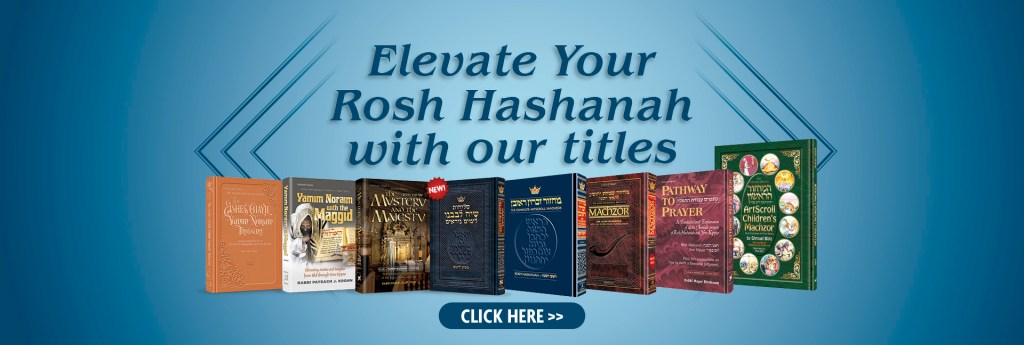
ArtScroll Welcomes the Newest Edition of Selichos:
Reb Moyshe Silk, an American attorney, writer, and former government official, is quite an accomplished individual. Much of the world knows him as Mitchell Silk, a brilliant legal mind, an authority on Chinese law and infrastructure finance, and the only Chassidic Jew ever confirmed by the Senate to one of the highest positions in the U.S. Department of the Treasury, and, for that matter, the U.S. Government.
Many people are privileged to know him as Reb Moyshe, a talmid chacham of note, a gifted writer, and a talented teacher of Torah.
Despite the many accolades he’s received, perhaps Reb Moyshe’s most notable accomplishment to date is his translation and elucidation of Kedushas Levi, one of the greatest Chassidic classics on the Torah, written by Rav Levi Yitzchak of Berditchev. Kedushas Levi has been treasured and studied for more than two centuries, and now, Reb Moyshe’s magnificent edition, published by the Mesorah Heritage Foundation in three volumes, brings Kedushas Levi to English readers in all its grandeur. We spoke to Reb Moyshe to gain his insight into the effort he invested in producing this work. [Purchase the set HERE.]
On the go? Also available to stream on all major Podcast platforms!
AS: You met with Reb Meilech before embarking on this sefer. What was it like, meeting this unique Torah personality?
YB: It wasn’t exactly like a meeting. It was more like joining him on his nightly route, as he moved quickly from a shivah house R’l, to a wedding, to the simchah of an orphan, and then on to the next simchah — while snatching conversations in between.
AS: Reb Meilech’s Torah — and stories! — speak to Jews of all types. Where does that power come from?
YB: I certainly can’t answer that, but every sort of Jew — gedolim and simple Jews whom I would never have pegged as “Reb Meilech people” — told me that Reb Meilech’s Torah carries them through the week.
AS: In Around the Year with Reb Meilech, you combine Reb Meilech’s Torah and stories with descriptions of how he transmits them — his body language, gestures, and songs. How does that enhance the reader’s experience?
YB: It’s an attempt to convey some of the magic and “chein” of his shiurim and gatherings, though of course there is a “baal peh” aspect that cannot be completely described.
AS: The sefer follows the Jewish calendar: a full year of inspiration. Since we’re at the beginning of Chodesh Elul, can you share a brief vort from Reb Meilech to take with us as we approach the Yamim Noraim?
YB: The pasuk in Tehillim (126:2-3) describes the reaction of the nations to Mashiach’s arrival: Az yomru ba’goyim, higdil Hashem laasos im eileh. They will say among the nations, the Lord has done great things with these.
When the great day will come, the Lelover Rebbe said, the nations will wonder, “Why them? What made the Jewish nation deserving?”
And our response will be: Higdil Hashem laasos imanu. Do you know why Hashem performed great deeds for us? Because hayinu se’meichim — we were happy.
We are not the only nation that is happy, but we are the only nation that toils to be happy, that makes simchah a goal, that has the courage and valor to work to be happy even when it not easy. And that zechus will give us the right to genuinely rejoice.
Teshuvah, too, should be done with simchah — joy because Hashem gives us the gift of becoming close to Him — and these days of awe should be approached with this simchah, for it is our eternal zechus.
This weekly publication will contain a rich collection of stories, divrei Torah and insights that are suitable for the Shabbos table – or for anytime. We hope you enjoy and look forward to future issues, as we tap into the unparalleled treasure trove that is the ArtScroll Library, sharing the depth and beauty of our Judaic and Torah literature with you.



















 The Official ArtScroll Blog