GREATNESS: The Million Dollar Barechu

Adapted from: Hacham Baruch by Rabbi Nachman Seltzer

The Rabbi ran the school minyan for many years,” R’ Eli Mansour said. “He might have been the rabbi of the community, but he was busy dealing with children every single day. It didn’t faze him. But then very few things did.

“It would be very difficult to find a man who is so great and yet so humble at the same time.

“He was there every day of the week, running the minyan for the sixth, seventh, and eighth grades. Even on Sundays, the rabbi was at Magen David teaching Sunday school.

“I remember one day we were nearing the end of the tefilla,” R’ Mansour recalled, “and I was talking to one of my friends — just as the hazan said ‘Barechu,’ which I missed because I was talking.

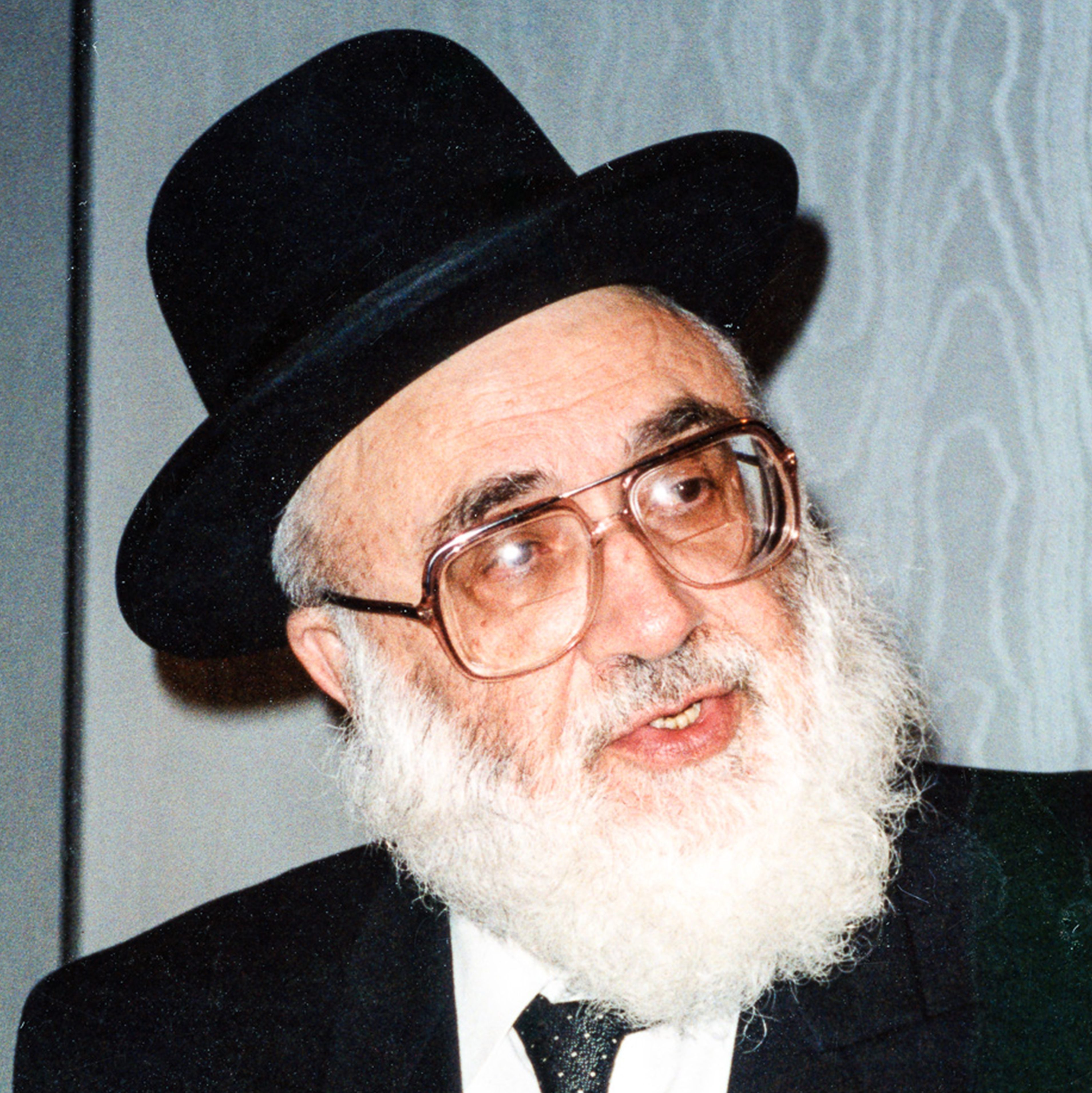
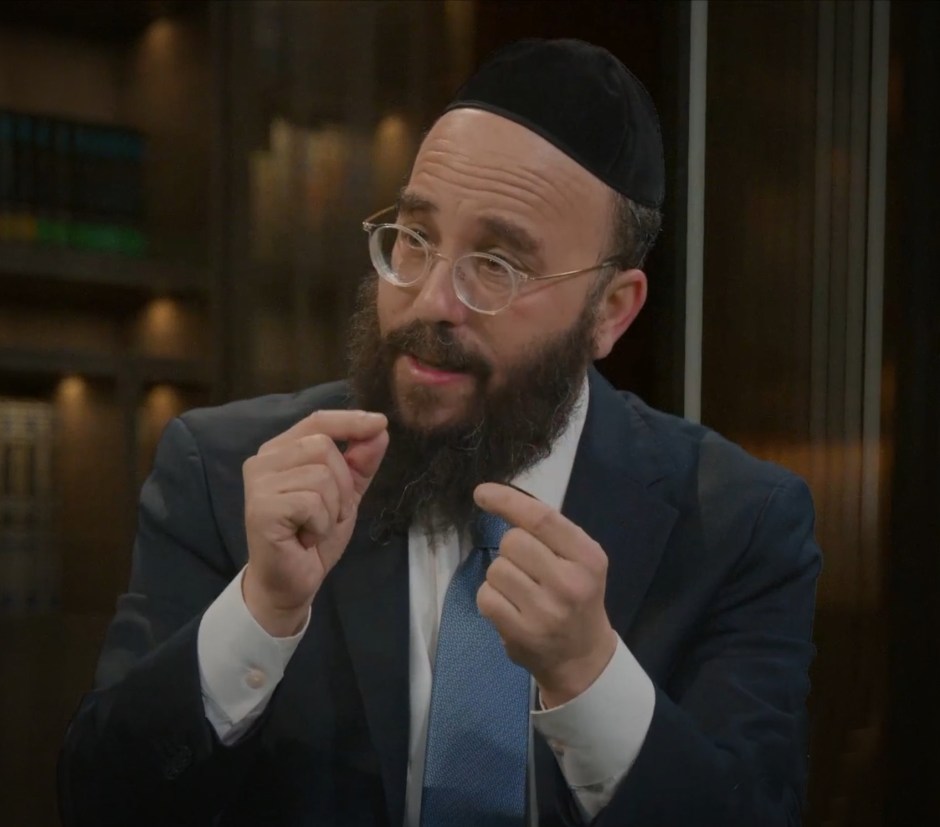
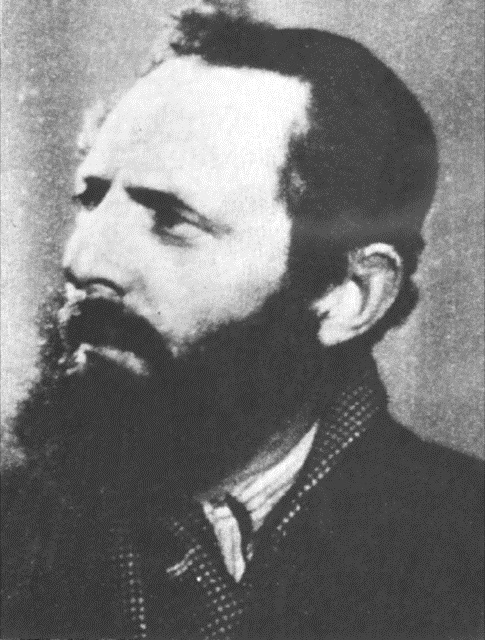
Hacham Baruch

“As always, Hacham Baruch saw everything that took place in the room. There was no question that he was going to teach me a lesson — in his unique and memorable fashion.

“Looking at the dean, R’ Moshe Greenes, the rabbi said, ‘R’ Moshe, Eliyahu Mansour just lost a million dollars!’

“R’ Greenes, who immediately understood what the Rabbi meant, caught the ball and ran a few steps further, saying, ‘At least a million dollars!’

“That was the entire interchange. But there isn’t a day that goes by when I say the words ‘Barechu et Hashem’ that I don’t think that I just deposited a million dollars in my bank account. With that one line, the Rabbi changed my life forever!

“But the story isn’t over.

“Many years later, I was learning at Mercaz HaTorah in Yerushalayim. We were praying Arbit when someone came into the bet midrash to tell me that I had a phone call from overseas. In those days, that meant that your parents had called you on the yeshiva payphone — and because back then it cost a lot of money to call Israel from the United States, when you got a call from America, you picked yourself up and you ran to the phone.

“I stood in the bet midrash, struggling with myself. I wanted to run to the phone, but I also didn’t want to miss saying Barechu. In the end, I stayed in my spot until the hazan said Barechu. Moments later, I was out the door of the bet midrash and running to the phone.

“Later that evening I was informed that the Rosh Yeshiva, R’ Rotman, wanted to see me in his office.

“‘What do you know about Barechu that I don’t know?’ the Rosh Yeshiva asked me. I didn’t understand what he was talking about.

“‘I don’t know anything about Barechu more than the Rosh Yeshiva,’ I replied in confusion.

“‘No, you must know something.’

“I didn’t know what he was talking about, and told him so.

“‘Look, I know that I am correct about this,’ he said. ‘I watched you. You got a call from the States, but you didn’t leave the bet midrash until the hazan said Barechu. So, I’m asking you the same question again. What do you know about Barechu?’

“Now I understood what he was referring to.

“I have a rabbi in America. His name is Hacham Baruch Ben-Haim. And five years ago, my rabbi told me that Barechu is worth a million dollars.”

“‘That’s a good rabbi,’ the Rosh Yeshiva said. ‘If you are still affected by something that he told you five years ago — he’s a very good rabbi!’

“That story happened forty years ago, and I’m still thinking about how every Barechu that we say is worth a million dollars! That was the power of the Rabbi and his unique ability to make the kind of comments that a person never forgot.

“For some reason, when Hacham Baruch taught you a lesson, it stuck. That is why I consider him a master mehanech. A master educator.

“If I try to analyze why his words had such an impact, I must conclude that it had to do with the fact that he had yirat Shamayim. As Hazal tell us, when someone possesses yirat Shamayim, his words make an impact.

“Above and beyond that, when you were learning with Hacham Baruch you were also learning with his rebbi, Hacham Ezra Attieh, and his havruta, Hacham Ovadia. Sitting with Hacham Baruch meant being connected to the Ben Ish Hai (whose derashot the Rabbi’s grandmother had heard) and to his mother, who inculcated him with an understanding of what awaited him in Porat Yosef (‘My dear son… you will see angels’).

“Keeping all this in mind, we can understand why a few well-chosen words from the Rabbi had the ability to change a person’s entire life.” 

PARASHAH: But Everyone Else Is Going…

Adapted from: Rabbi Frand on the Parashah 2 by Rabbi Yissocher Frand

וַיֹּאמֶר ה‘ אֶל מֹשֶׁה אֱמֹר אֶל הַכֹּהֲניִם בְּניֵ אַהֲרֹן וְאָמַרְתָּ אֲלהֵֶם לנְפֶֶשׁ לא יִטַּמָּא בְּעַמָּיו

Hashem said to Moshe: Say to the Kohanim, the sons of Aharon, and tell them: 

Each of you shall not contaminate himself to a [dead] person. (21:1)

Parashas Emor begins with a seemingly redundant phrase: “Say to the Kohanim… and tell them.” Rashi, quoting Chazal’s famous dictum of Lehazhir gedolim al haktanim (Yevamos 114a), explains that this repetition teaches the mitzvah of chinuch — that adult Kohanim must educate their children in the halachos specific to them.

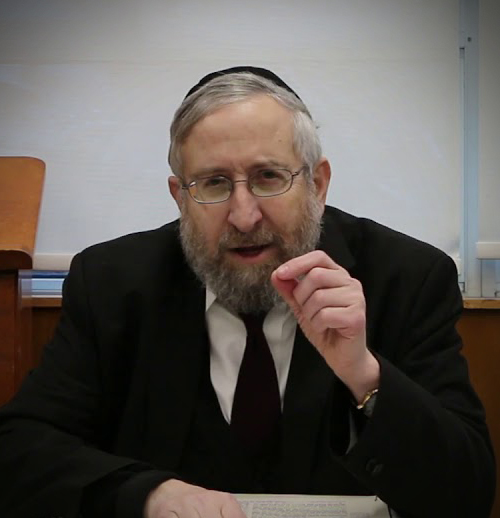
Rav Yaakov Weinberg

Chazal extend the obligation to teach one’s children to all; every parent is obligated to teach their children the relevant mitzvos. But why does the Torah choose to teach this universal lesson through a mitzvah that applies only to Kohanim? Wouldn’t a more widely applicable mitzvah, like avoiding chometz on Pesach or fasting on Yom Kippur, be a more fitting choice?

Rav Yaakov Weinberg zt”l, Rosh Yeshivah of Ner Yisrael, explained that the charge placed on Kohanim is actually a most appropriate setting for the obligation of chinuch. So much of parenting is dependent on our ability to withstand that famous personality, “Mr. Everyone Else”. Our children want to take part in activities that we feel are not appropriate for a Jew. When we disallow that activity, we face a barrage of complaining and whining. “But everyone else is going. It’s not fair. You never let me go along with everyone else. What’s wrong with it?”

Who has to deal with these complaints more than anyone? The most restrictive parents in the times of the Beis HaMikdash were undoubtedly the Kohanim. Little Aharon’l comes home from school and runs straight to get his bat and ball. 

“Where are you going?” his father asks.

“To play baseball in the empty lot at the end of town. That’s where we are supposed to meet,” Aharon’l responds.

“Ahh. Aharon’l, as far as I know, the only way to get to that field is to cut through the cemetery. We are Kohanim; we are not allowed to walk through a cemetery.”

“It’s not fair!” Aharon’l shouts indignantly. “Last week I couldn’t play in the alley in back of our house because there were dead sheratzim (creeping creatures that are a source of impurity) there and you were afraid that I would contaminate the terumah in our house, and now I can’t go play baseball with all the others. You never let me do what everyone else is doing.”

All parents know the next steps. First come the tears, then the shouting, and finally the sulking. It feels painful sometimes, but our better judgment tells us not to let them go. What should we do? How are we to teach our children the proper path of Torah without alienating them? A very important, yet vexing question. 

I think that the answer lies in the parashah in which the Torah decides to teach us about chinuch. Why is little Aharon’l not allowed to become tamei? Is his father just being mean and more restrictive than other parents? Of course not – he is simply aware of Aharon’l’s special status as a Kohen, and he wants Aharon’l to know and appreciate his role in Klal Yisrael. 

If Aharon’l’s father is wise, he will sit down and tell him, “Aharon’l, do you know how special you are? You can serve in the Beis HaMikdash!” If Aharon’l’s father then spends some time discussing the privileged status and special role of Kohanim with him, by the time he finishes, Aharon’l will – hopefully – no longer be jealous of his friends.

The same applies to every one of us. If we simply say, “Sorry, but you cannot go,” we will find ourselves fighting tooth and nail with our children. But if we take the time to discuss our special role in the world to our children; to tell them that our holy eyes cannot see things that others see; our hearts filled with kedushah can be contaminated by food that others are allowed to eat; that our holy neshamos can be tarnished by listening to music that others listen to, and what a privilege it is to be such a holy nation, we may get a respite from our difficult enemy, Mr. Everyone Else. 

TORAH: In Middle of Keren Telushah

Adapted from: Moments of Greatness by Rabbi Yitzchok Hisiger

It was after the chuppah at his daughter’s wedding and R’ Moshe Goldberg, maggid shiur at Yeshivah Gedolah Zichron Shmayahu in Toronto, sat down to eat something before family pictures were taken.

Joining him was his younger brother, R’ Yehudah Goldberg, maggid shiur at Yeshivah of Telshe Alumni of Riverdale. Immediately, R’ Moshe turned to him and began discussing a Rashba found in the sugya of keren telushah (Bava Kamma 2b) that he was learning in yeshivah. R’ Moshe, with unbridled excitement and exhilaration, discussed the words of the Rashba relating to the topic of whether negichah, the goring of an ox, refers to an animal attacking with an attached horn or to an animal striking with a detached horn that it holds between its teeth.

Oblivious to the wedding festivities around him, R’ Moshe was fully engaged in his Torah discussion, no different than if he were in a beis midrash surrounded by yeshivah bachurim.

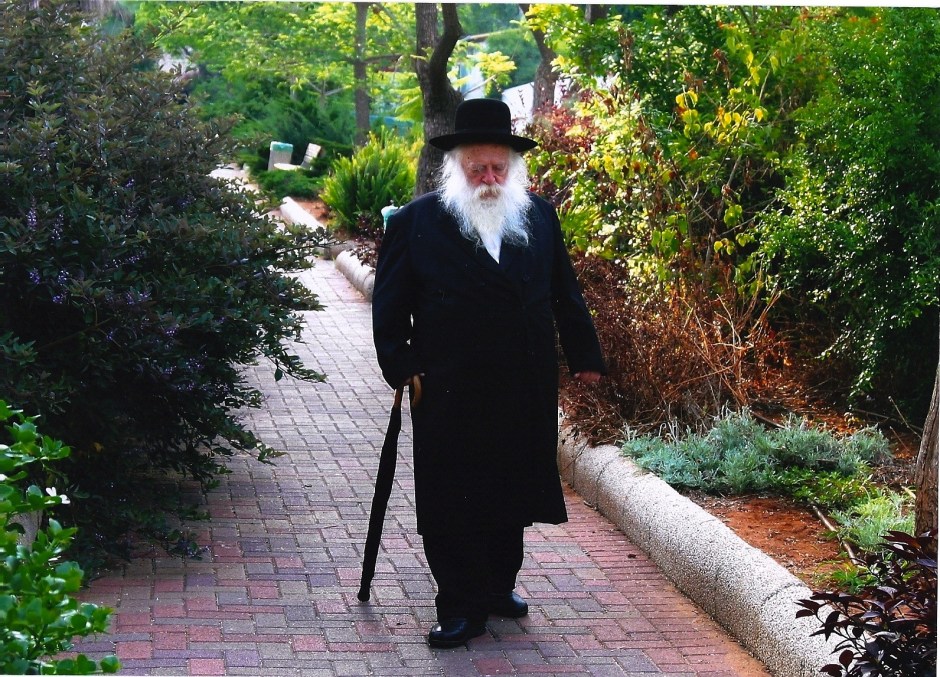
R’ Moshe Goldberg

When R’ Moshe concluded the vort, his brother gave him a hug and a kiss.

“R’ Moshe,” exclaimed R’ Yehudah. “Biz ah hundred un tzvontzig (until 120 years), I will never forget that in the middle of your own daughter’s chasunah, you told me a Rashba on keren telushah!”

R’ Moshe turned to his brother, wishing to correct him.

“In mitten mein tochter’s chasunah? In middle of my daughter’s wedding we discussed keren telushah? Nein! No! That is incorrect. Rather, in the middle of the Rashba on keren telushah we celebrated my daughter’s wedding!”

R’ Moshe wasn’t just being “cute.” In fact, he truly meant — and lived — what he said. His life was one of Torah. Everything else revolved around Torah. R’ Moshe understood what is the ikar and what is the tafel. He understood what is primary and what is secondary.
And this is a lesson for all of us.

Are we consumed with our avodas Hashem and find the necessary time to tend to our personal needs in the middle of our continuous service to our Creator, or are we always in the middle of everything else and just manage to squeeze in some obligatory time for Hashem amid our preoccupation with life?

So, what are we consumed with and what is our diversion?

Are we squeezing our spirituality into our day-to-day goings-on or do we squeeze our daily obligations into a life devoted to spirituality and chessed?

The question is: At any given time, what are we in the middle of; what is our priority?

For R’ Goldberg, the Rashba on keren telushah was his preoccupation. Everything else, even his daughter’s wedding, fit in around what to him was life itself: Torah. 

PARASHAH: Lots of Life

Adapted from: Rav Chaim Kanievsky on Chumash – Vayikra  compiled by Rabbi Shai Graucher 

אֲשֶׁר עָלָה עָלָיו הַגּוֹרָל

Designated by lot (Vayikra 16:9)

With the dozens of daily visitors from all around the world, one can think that every possible type of question has already been presented in Rav Chaim’s room. Yet there is always something new…

Four brothers appeared before Rav Chaim, with their somber faces betraying the gravity of the circumstances that had brought them there.

“Our sister is very ill,” the oldest among them began. “Both of her kidneys have failed, and she is currently forced to undergo grueling dialysis treatments on a regular basis. The doctors say that the only hope for her life is to have a kidney transplant. All of our family members eagerly went to be tested, in the hope that we could save our dear sister’s life. Each of the four of us was found to be a match, and we each want to do this great mitzvah for our sister. We could not come to a consensus as to which of us should have the right to be the donor, so we came to the Rav for a solution.”

Visibly moved by this selfless display, Rav Chaim asked a few questions, and determined that the correct method of decision was to perform a goral. He took out a Tanach, and, according to the rules passed down to him, the name Evyasar emerged. The second of the brothers bore that name, and his face beamed with inner joy that he would merit to be the one to save his sister’s life. His brothers all congratulated him, and, escorted by Rav Chaim’s warm blessings, they went on their way.

A few weeks later, three of the brothers were once again waiting outside Rav Chaim’s room. When their turn came, they added a fascinating twist to this tale:

“While undergoing tests in preparation for the kidney donation, the doctors discovered an irregularity in Evyasar’s heart! Had it gone unnoticed, it could have endangered his life, chas v’shalom, but now the doctors are confident that, with Hashem’s help, he will have a full recovery! Baruch Hashem, his having been chosen by the goral likely saved his life. Nevertheless, with his current condition, he is no longer an eligible candidate to be the kidney donor. We have therefore come to ask the Rav to please help us choose his replacement!”

Moved anew, Rav Chaim repeated the goral, and the name of one of the remaining brothers emerged. With renewed blessings, they went home again, and, a short time later, they sent word that, with Hashem’s help, all of the siblings were now hale and healthy. 

GREATNESS: The Boy from Seattle

Adapted from: Moments of Greatness by Rabbi Yitzchok Hisiger

Rav Michoel Wolpin, a Seattle native, once entered the study of Rav Shmuel Kamenetsky, rosh yeshivah of Yeshivah of Philadelphia, and was surprised that Rav Shmuel stood up for him and said, “I must thank you for saving my life!”

Rav Wolpin was taken aback, as he did not recall saving Rav Shmuel’s life. Rav Shmuel explained as follows.

In 1937, Rav Yaakov Kamenetsky, Rav Shmuel’s father, left his family in Lithuania and traveled to America, seeking a position as a rav. Through a series of events, he secured a job as an interim rav in Seattle, and during that time, he met the Wolpin brothers, who attended the local Jewish day school. Rav Yaakov spent some time speaking to them before he proceeded to test the boys on what they were learning in class. Young Michoel knew the portion of Maseches Bava Kamma that he was learning fluently, astonishing the new rav with his clear understanding of the Gemara. Rav Yaakov was very impressed.

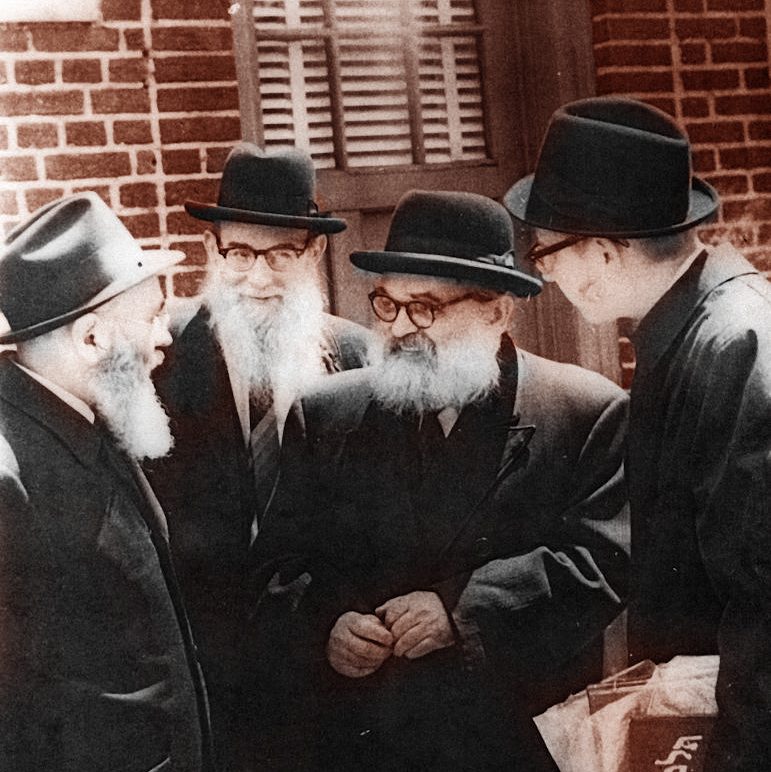
Rav Yaakov Kamenetsky

After a short time, Rav Yaakov secured a steady job in Toronto, and moved there, while trying to bring his family from Europe to Canada. One day, he received a letter from his brother-in-law, Rav Avrohom Grodzensky, who was taking care of his family in Lithuania while he was abroad. Rav Avrohom wrote that although he feels comfortable allowing the younger children and the girls to travel to America, he was hesitant to permit Rav Yaakov’s two older sons, Binyomin and Shmuel, to travel to America, as they were already studying in yeshivos in Europe. With a weak infrastructure of yeshivos in America, Rav Grodzensky was concerned about their spiritual well-being and their ability to learn Torah properly abroad.

Rav Yaakov, however, was not concerned. He explained, “If Michoel Wolpin, a young child in Seattle, can master Bava Kamma, then my children can also study Torah and master it here in America.”

With that, he insisted that his entire family, including his two older sons, travel to Canada.

Rav Shmuel explained to Rav Wolpin, “Now you know how you saved my life. So many who stayed behind in Europe perished. Your mastery of Bava Kamma gave my father the confidence to bring my brother and me to Canada just before the war broke out!”

In addition to the lesson of hakaras hatov demonstrated by Rav Shmuel – that one must appreciate something done for him, even if it was many years earlier and even if the benefactor is not aware of what he’s done – there is a remarkable message regarding the phenomenal power of an individual, even a child. Young Michoel Wolpin surely had no idea of the impact he would have through his mastery of Bava Kamma. Like any child, he probably did what he was told and devoted effort to mastering his studies. Yet, his diligence and knowledge ensured the safe passage of two brothers, both of whom would make a colossal impact on tens of thousands of Jews. 

WATCH: Rabbi Daniel Glatstein – Lag BaOmer: The Fire and The Soul

Discover why a day whose origins are shrouded in mystery has become one of the most joyous days on the Jewish calendar. In Lag Baomer: The Fire and the Soul, Rav Daniel Glatstein reveals the inner meaning of this hallowed day and why it has gained almost supernatural momentum in our times.

Enter the world of Rebbi Shimon bar Yochai and the Zohar HaKadosh, and experience an exalted realm of Torah that will bring Klal Yisrael closer to the final redemption.

Purchase your copy of Lag Baomer: The Fire and the Soul

On the go? Also available to stream on all major Podcast platforms!

PIRKEI AVOS: Before the Cradle: Where Chinuch Begins

Adapted from: Pirkei Avos: Generation to Generation by Rabbi Nosson Muller

אַשְׁרֵי יוֹלַדְתּוֹ — praiseworthy is she who bore him. (Pirkei Avos 2:11)

There can be no nicer words in the dictionary that one can tell a parent in regard to their child than these two words the mishnah states here about R’ Yehoshua. Rashi explains that these words describe a person who is highly accomplished in both his Torah learning and interpersonal abilities. Rabbeinu Yonah expounds on how we find throughout Scripture that the word “ashrei” signifies an all-encompassing title of the finest character traits man can attain. In short, R’ Yehoshua was someone any parent would be proud to call their son.

The mefarshim go on to explain that it was actually the great merits and sacrifice of R’ Yehoshua’s mother that enabled her to raise such a model child. Even before he was born she would go from beis medrash to beis medrash, pleading with the Rabbis to please pray that the child she was carrying in her womb would grow up to be a talmid chacham.

Additionally, the Yerushalmi (Yevamos 1:6) recounts that when R’ Yehoshua was a young child still in a carriage, his mother would wheel him to the study halls where the chachamim were learning so that the sounds of the holy words of Torah would enter her young child’s ears.

What a powerful lesson! Chinuch does not begin when our child displays his ability to pronounce the alef-beis for the first time. It starts way before then — even before he is born! It is only with parents’ consistent and uncompromised commitment to do everything in their power to ensure that their children are being brought up with the utmost care and kedushah that, with Hashem’s help, they will ultimately succeed in raising their children to be the best they can be.

The following few paragraphs were adapted from the sefer, Relevance, written by my dear friend, R’ Dan Roth. They are well worth the read as the penetrating message they contain is a crucial and ever-so-relevant key to creating a true Jewish home:

A young child might be unable to talk, walk, or behave appropriately, but these are all aspects of his physical immaturity. His soul, however, is not limited by these physical constraints and discerns every bit of kedushah, benefiting from even the smallest pinpoint. Similarly, it discerns every bit of impurity and is impoverished accordingly.

Hosting a shiur, learning with a chavrusah, or having father and son learn aloud together in one’s home creates an atmosphere that is literally contagious and impactful beyond the actual minutes the learning lasts. It can be life altering. Unfortunately, the opposite effect can happen as well. People really convince themselves that no harm can be done when the children see or hear things when they are very young. Yet Chazal clearly teach us otherwise, as the harmful impact that is cemented into a child during his adolescent and most crucial developmental years is immense and everlasting. Everything a child sees and hears affects him eternally.

Researchers are just beginning to discover what Chazal have known all along: that fetuses are affected by outside influences. Read on.

Anthony Casper, a psychologist at the University of North Carolina, had expectant mothers read aloud Dr. Seuss’s classic book, The Cat in the Hat, twice a day to their unborn child. A few days after their birth, the newborns were given the opportunity to hear a different Dr. Seuss story from their mothers in addition to The Cat in the Hat. The babies were outfitted with a special feeding contraption that measured their familiarity and attention through the rhythm of their sucking.

As demonstrated by their sucking speed, the newborns 1) remembered The Cat in the Hat 2) liked it better than the second story 3) adjusted their sucking upon hearing the familiar story over the newer story 4) preferred to hear the story when it was read to them by their mother 5) showed preference when it was read to them in order rather than backward.

Need we say more? 

CHESED: One at a Time

Adapted from: One for the Books by Rabbi Yechiel Spero

In the hallowed halls of Yeshivas Etz Chaim, Rav Aryeh Levin, the tzaddik of Yerushalayim, stood out — not just in Torah and chochmah, but also in his boundless care for every child. Each morning, he would stand at the yeshivah’s entrance, a warm smile upon his face, his eyes scanning the talmidim. Rav Aryeh wasn’t looking to see who had done their homework or who had arrived on time. He was looking for something more. Which child seemed burdened? Whose face was clouded with sadness? Who needed a kind word or a boost that day?

If he saw a boy with torn shoes, he discreetly ensured that money was sent home to buy new ones. If a child carried an empty knapsack, Rav Aryeh understood it meant an empty lunch bag — and an empty pantry at home. Inconspicuously, he would see to it that food arrived for the boy’s family. Rav Aryeh’s heart was so full of love for every Yiddishe neshamah that no detail escaped his attention.

The following story stands out as a shining example of genuine chesed — a moving glimpse into Rav Aryeh’s deep and constant drive to help others, regardless of how hard it may have been.

Rav Aryeh Levin

When Yehoshua was in fifth grade, the yeshivah administration decided to split the class into two groups. The brighter talmidim, referred to as baalei kishron, who were, in this case, more motivated, were placed in one class. The weaker boys, those who struggled with their learning, and who, in this case, showed less enthusiasm, were assigned to another. Included in the second group was Yehoshua.

This decision troubled Yehoshua’s mother. As the daughter of Rav Shlomo Tzvi Atik, a man whose home was filled with a reverence and love for Torah, the thought of her son being placed in the weaker class was unbearable. She feared it would affect not only his learning but also his self-worth, his future. In her mind, Yehoshua belonged in the higher class, among the boys who were thriving in their studies.

Determined to advocate for her son, Mrs. Kozlick approached Rav Aryeh Levin, the mashgiach of the yeshivah and the one responsible for these decisions. She presented her plea, describing her aspirations for Yehoshua and her desire for him to be in an environment that would challenge and motivate him.

Rav Aryeh listened intently. He didn’t interrupt, allowing her to express every concern, every hope. When she finished, he nodded thoughtfully. “Leave it to me. I will take care of it.”

Mrs. Kozlick left the meeting with hope. Surely, Rav Aryeh would move Yehoshua to the stronger class. After all, how could he refuse such a request?

Rav Aryeh had other plans, plans that no one could have anticipated.

Instead of transferring Yehoshua to the higher class, Rav Aryeh made a bold and unexpected decision. He chose to move his own grandson, Avraham Dov Levin, out of the advanced class and into the weaker one. It was an extraordinary move, one that demonstrated Rav Aryeh’s wisdom and commitment to the growth of every talmid.

By placing Avraham Dov in the weaker class, Rav Aryeh achieved something remarkable. His grandson, a capable and motivated boy, became a source of strength and inspiration for the others. His presence elevated the entire class, turning the dynamic from one of perceived inadequacy to one of potential and possibility; they no longer saw themselves as second-tier. They began to rise, their confidence growing, their learning revitalized. Rav Aryeh did not simply rearrange students, he infused the class with a sense of purpose and pride.

For Yehoshua’s mother, this decision brought reassurance and relief. Rav Aryeh’s action was a clear statement: Your son matters; his growth and success are important. And though Rav Aryeh had not done exactly what she had asked, he had found a way to address her concerns while ensuring that the entire class, including Yehoshua, would benefit.

Decades later, Yehoshua would speak about this moment with admiration. “Rav Aryeh didn’t just solve problems, he elevated people. He found ways to uplift everyone, to make each person feel valued, important, and capable of achieving greatness.”

One talmid at a time. 

BITACHON: From the Impossible

Adapted from: One for the Books by Rabbi Yechiel Spero

During World War II, Chana’s life was crushed beyond recognition. The flames consumed everything: her family, her home, her community, her very world. Everything. Gone.

She endured the seven levels of gehinnom, wandering through a world where every breath seemed more like a burden than a blessing. 

And yet, she lived. She survived Auschwitz — Auschwitz! — that place where death hovered over every corner, and life seemed like an impossibility.

How often did she wish she hadn’t lived? To survive, only to find herself in a desolate land of broken hearts and disillusionment, sometimes felt like a cruel twist of fate. But Hashem willed that she should live, and so, she was spared.

After the war, with no home, no family, she made her way to France, where she met another survivor. He, too, had lost everything, and together they tried to piece back the fragments. They married and dreamed of building a family. But Hashem had other plans, and children was not one of them.

So they continued, just the two of them, holding onto each other, holding onto their Yiddishkeit. They kept Torah and mitzvos, and they kept their faith, even as it seemed that all was taken from them. But even the strongest individuals sometimes wonder, How much more can we endure?

One Friday, as Chana prepared for Shabbos, she left her pots on the stove and rushed out to pick up a few last-minute items from the local grocer. She thought she had turned down the flames. But in her haste, she hadn’t. While she was gone, her home — the home she had so painstakingly built — went up in flames.

The neighbors watched in horror as the fire engulfed the house, despite the valiant efforts of the fire department. What now? they thought. They had seen Chana rise from the ashes once, but this? This might be too much, even for her.

Rav Mottel Pogromansky

They knew they had to act quickly. What if this fire, after all the loss Chana had endured, would be the blow that would finally break her spirit?

To whom could they turn in such a moment of desperation? They ran to the home of Rav Mottel Pogromansky, the great gaon, who was living in France at the time. They told him about the fire that was destroying Chana’s house, and how they feared for their friend. Could her soul handle any more?

Rav Mottel was silent for a moment, his eyes closed. Finally, he opened them and instructed the neighbors, “Go. Run to the store. Stop your neighbor before she gets home and sees the fire. And tell her this: If she accepts this potch, this searing pain, as yissurim shel ahavah (suffering given out of love), then I promise her she will be blessed with a child.”

One of the women mustered the courage to hint at the unspoken truth. Chana couldn’t have children; physically, it was impossible.

Rav Mottel didn’t waver. “Go!” he urged. And they ran.

The neighbors met Chana just as she was leaving the store. Gently and carefully, they told her what had happened. Before giving all the details, however, they shared Rav Mottel’s promise: If she could accept this pain, she would be blessed with a child.

Chana stood still. The strain of it all pressed down on her. She cried. Tears of anguish, of sorrow. But she didn’t fall apart. She didn’t crumble. Instead, she reached into her soul and found the faith that had carried her through so much.

She accepted.

Rav Naftali Greenzweig finished the story, his voice choked with emotion.

“Chana was blessed with a child.”

With trembling lips and eyes blurred by tears, he added, “Not only am I her son, but I was not the first, nor the second. I was the fifth child. Chana, the woman who could not have children, was blessed with five children.”

Rav Naftali then added one final thought, a truth so powerful that it leaves one breathless. “Doctors, medicine, and statistics can dictate only so much. They told my mother that children were impossible. The experts, the charts, the science… all said no. But ultimately, it is Hashem who determines everything. EVERYTHING. And as long as we hold onto Him, no matter how long the night, no matter how impossible the odds, anything can happen.”

Because with Hashem, nothing is impossible. The miraculous can emerge from the impossible, as long as we never let go.

TESHUVAH: I Am a Jew!

Adapted from: Miracles, Missiles and Mesiras Nefesh by Rabbi Nachman Seltzer

Dafna lived in Kibbutz Re’im, in the vicinity of Gaza, before the war. 

Before the war, Dafna was the type of person who fought off anyone who tried to teach the people of her kibbutz about Torah and mitzvos. When Rabbi Shlomo Raanan, who runs a kiruv organization called Ayelet HaShachar, organized a basketball game between yeshivah bachurim and people from the kibbutz, to be held on October 2, just a few days before the war broke out, Dafna ordered him to cancel the game. She believed that the only reason he was arranging such a game was because he wanted to influence the members of the kibbutz to become religious. 

“Cancel the game,” she wrote to him. “If you don’t, we will block the entrance to the kibbutz with our bodies!”

In the end, Rabbi Raanan canceled the game. 

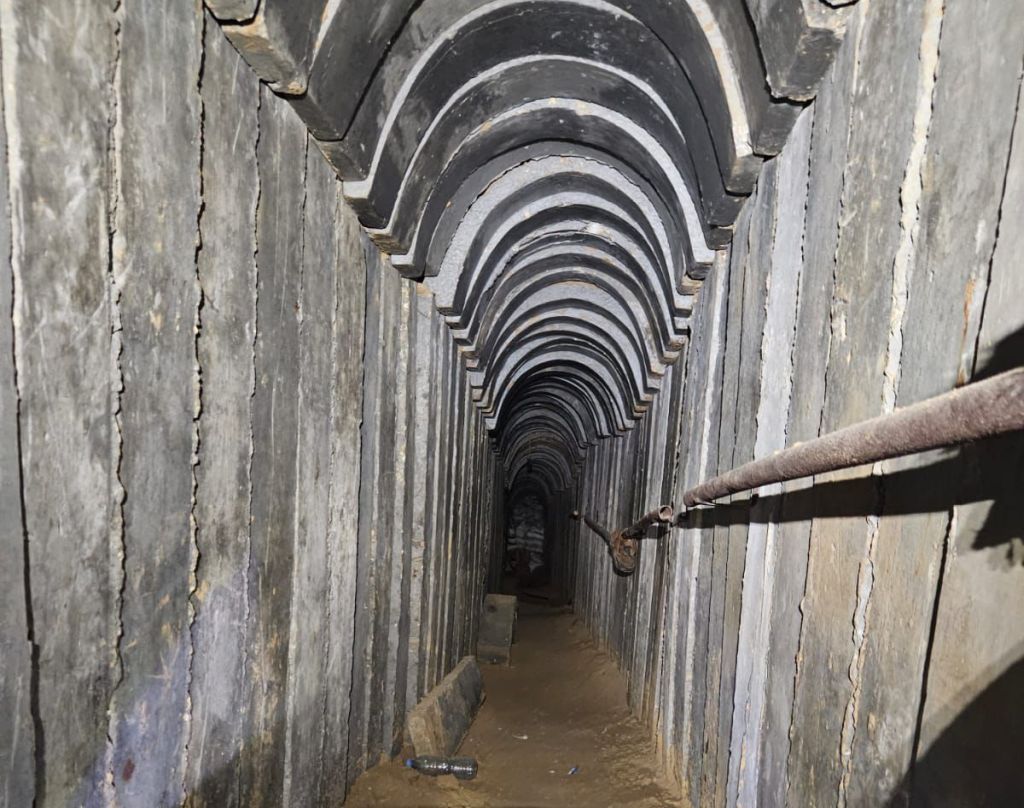
Five days later, the Arabs burst across the border and began rampaging through kibbutzim, killing, pillaging, and kidnapping Jews. Suddenly Dafna, a woman who had believed in peace between Arabs and Jews for so long, found herself a prisoner in a tunnel in Gaza. 

“Why are you torturing me?” she asked the terrorist who was guarding her. “For the last twenty years of my life, I have created programs where Arabs and Jews could spend time learning how to get along with one another. We are your cousins! Why are you doing this?”

The Arab guard was not impressed.

“You are not a child of Ibrahim,” he shouted at her. “You are not even a Jew!”

Dafna was shocked.

“What do you mean? Of course I am a Jew!”

“No. You are not a Jew. You are a European colonialist who came here to Palestine to steal our land!”

Dafna felt as if she had been struck with a blow to the heart and she experienced a moment of clarity the likes of which she had never felt in her life. Hearing those words issuing from the mouth of a terrorist, she suddenly saw herself for who she really was and how she had been living a life of denial for so long. 

“I had always defined myself as an Israeli,” she said. “Never as a Jew. I cared much more about healing the differences between Arabs and Jews than about healing the conflicts that existed among the Jews themselves. For years, whenever I traveled to different countries, if someone would ask me if I was Jewish, I would always answer, ‘I’m not Jewish, I’m Israeli.’ Now, when that Arab accused me of being a colonialist, I understood something very important. I understood that he didn’t see me as a Jew because I didn’t see myself as a Jew.

“At that moment, standing inside the tunnels of Gaza with the terrorist kidnappers, I began to shout in Arabic with all my might, “Ana Yahudiun! Ana Yahudiun! I am a Jew! I am a Jew!”

The terrorists immediately restrained Dafna and taped her mouth shut. But they couldn’t quell the stormy and emotional turnaround that was taking place within her, as Dafna suddenly understood that she had a soul and she was a Jew.

“Every Arab village has a mosque,” she would later say, “and Christians build churches where they live. In our kibbutz, we had nothing. Nothing to say that we are Jews. At that moment, I realized that if we were going to rebuild, we would need to reclaim our Jewish identity. With this realization coursing through my mind, I accepted upon myself to build a beit knesset in my kibbutz. And when we rebuild, our beit knesset will be the most beautiful structure in the kibbutz.”

In the tunnels of Gaza, where a Jewish woman lost her entire family and previous existence — she discovered another completely different one.

The existence of someone who knows what it means to be a Jew.