
CHESSED: A Ray of Light

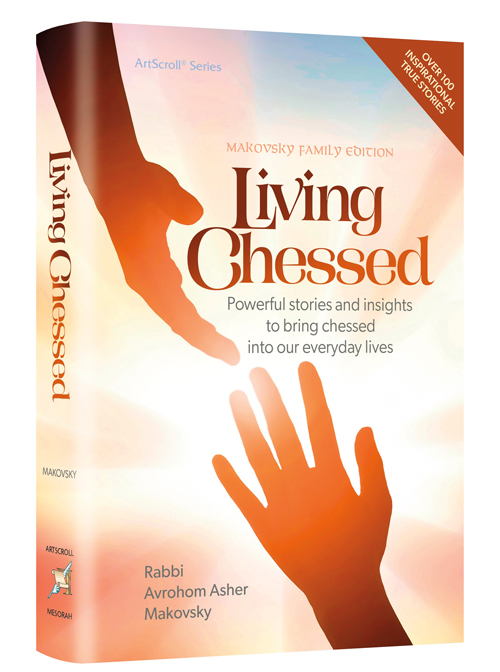
Adapted from: Living Chessed by Rabbi Avrohom Asher Makovsky

Moshe Walkin, a 21-year-old bachur from Lakewood, was learning at Yeshivas Mir in Yerushalayim. A few days before Lag B’Omer, his close friend ran to him bursting with excitement. “You’re not going to believe it!” he said. “I got a few VIP passes to pour the oil for lighting the Toldos Aharon bonfire in Meron!”

Moshe and his friends would be up-front and close to the center of the action. They would be able to pour the oil that the Toldos Aharon Rebbe would light!

The boys reserved an apartment in Meron and thought about little else but their thrilling upcoming adventure. However, Moshe got a call from his father, Rabbi Aharon Walkin, that would change the plan. Reb Aharon had been putting in a concerted effort to obtain all the permits needed during those times of Covid-restricted travel to come to Yerushalayim and pay a long overdue visit to his elderly father. He would be arriving right before Lag B’Omer and he wanted his son to come with him to visit his zeidy.

Moshe was disappointed. Instead of spending the night with his friends in Meron, he would be spending it with his father and Zeidy in Yerushalayim. However, Moshe knew what his priorities had to be. He told his father about his arrangements for Meron, adding, “But of course I’ll stay with you, Totty.”

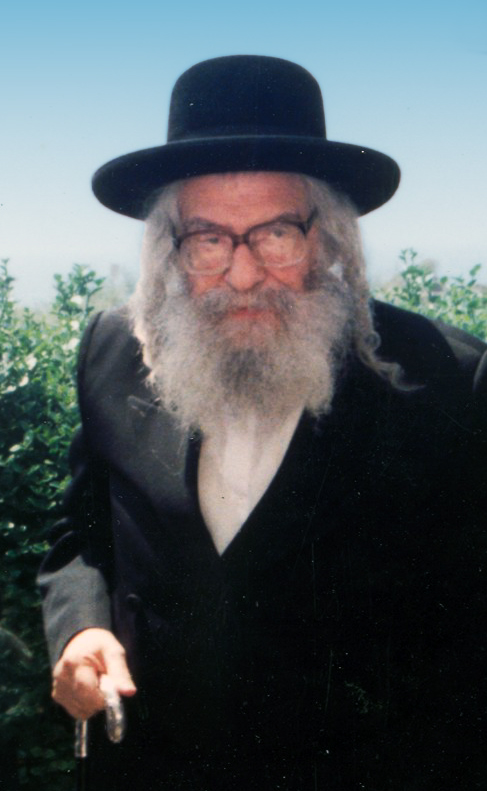
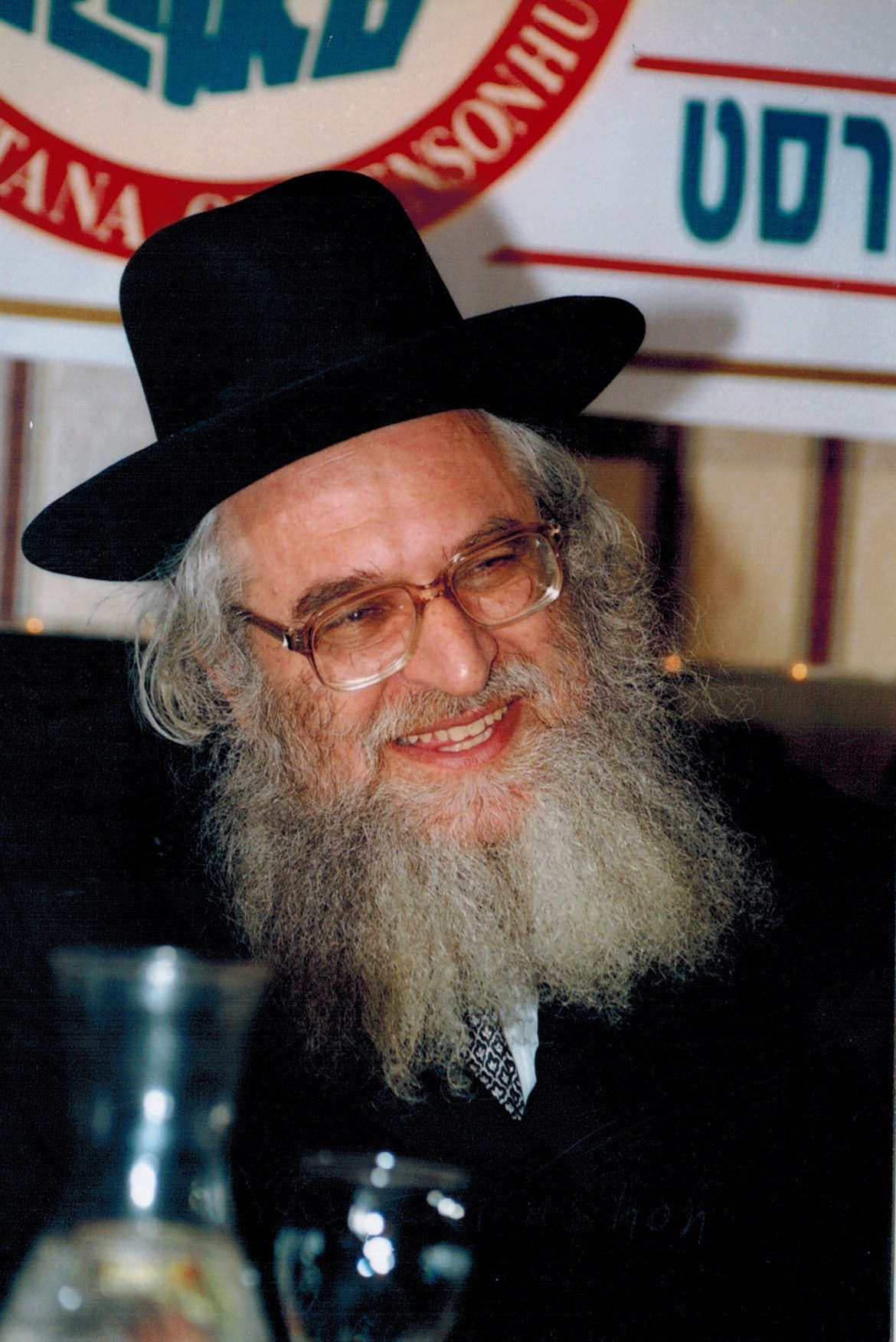
Reb Ahron and Moshe Walkin on the way to Meron

On Erev Lag B’Omer, at 5 p.m., Reb Aharon arrived at Ben Gurion airport. He took a cab directly to his father’s apartment in Yerushalayim, where he and Moshe spent several hours. At about 10 p.m., Reb Aharon told Moshe that he would drive with him to Meron to catch the remainder of the celebration.

However, by the time they arrived in Meron, several hours later, the police were stationed along the road turning everyone back. “No one is allowed into the area,” they were told. The Walkins had no choice but to return to Yerushalayim. They awoke the next morning to the shocking news. The combination of overcrowding and limited exits had resulted in causing the people to lose their balance, fall upon and crush each other. The epicenter of the tragedy was the Toldos Aharon bonfire, and the two friends with whom Moshe was supposed to share the experience — Dovi Steinmetz and Yossi Kohn— had perished in the crush.

The Torah gives us two ways to merit arichus yamim. One is the mitzvah of kibbud av v’eim. As Reb Aharon so eloquently stated, it took two hefty doses of this mitzvah to save Moshe’s life. “For me, leaving Lakewood to go visit my father in Eretz Yisrael was very hard to arrange. For my son, he had to give up this once-in-a-lifetime opportunity. It was with magnificent mesiras nefesh that he did kibbud av v’eim for me. With these two zechusim, he merited to be saved.”

No matter what happens, we have to look for the ray of light Hashem will always show us. In our present times, we often see it against the darkness, but we will soon arrive at the time when Hashem’s light will forever drive the darkness away. 

GREATNESS: Bedtime Stories

Adapted from: One for the Books by Rabbi Yechiel Spero

Little Leah was growing up in a Chassidishe mishpachah. Like most five-year-olds, she had her little routines, and when she woke up in the middle of the night, she always knew where to go—to the comforting embrace of her parents’ bedroom. That’s where the world felt safe, where she could drift back to sleep, enveloped by their presence.

One cold, dark night, Leah woke up and ran to her parents’ room, only to find it… empty. The beds were untouched, the lights were off, and there wasn’t a trace of her beloved father and mother. The house felt eerily quiet. She called out, “Mommy! Tatty!” but was answered with silence. A wave of fear gripped her. Where could they be?

She began wandering through the house, her small feet padding against the cold floor, her sobs growing louder as she searched each room. Yet her parents weren’t anywhere to be found. The house that had always been her haven now felt unfamiliar and vast. Tears streamed down her cheeks as she whispered to herself, “I just need someone… someone to help me fall asleep.”

What Leah didn’t know was that her parents had stepped out to a wedding, deciding to quickly run and say mazel tov. They had arranged for a neighbor to check in on Leah, but at this late hour, the neighbor wasn’t there. Leah was alone.

Then her eyes caught sight of a small piece of paper stuck to the fridge. On it was written a phone number. Leah had heard her parents talk about this number once. It was a number they said was only for the direst of emergencies. The kind of number you call when there’s no one else to turn to.

With trembling hands, Leah picked up the phone and dialed.

The phone rang. And rang. And rang. Each ring felt endless to the frightened little girl. Finally, just as she was about to hang up, someone picked up. A warm, calm voice came through the receiver. “Who is this?” the voice asked gently.

Leah took a shaky breath. “It’s Leah. I’m home alone, and I’m scared. My parents aren’t here.”

There was a pause on the other end. Then the voice spoke again, full of reassurance. “Don’t worry, Leah. Your parents will be home soon. You’ll be okay.”

“But I’m scared,” Leah countered. “And when I’m scared, my parents usually tell me stories. That’s what helps me fall asleep.”

The man on the other end of the line, with much sensitivity and warmth, didn’t hesitate. “Then I’ll tell you a story.”

And he did. He told her a beautiful story, weaving a world of comfort and imagination for the little girl. Her tears slowed; her breathing calmed. And then, as he began the second story, the line grew quiet. Leah was finally falling asleep, clutching the phone, her fears fading into the night. Now relaxed, she hung up the phone and went to back to bed.

The next morning, Leah ran to her parents, her face alight. “Mommy, Tatty,” she exclaimed, “I was scared, but I called the number on the fridge, and the man told me stories until I fell asleep.”

Her parents exchanged puzzled glances. “What number?” 

Leah pointed to the refrigerator, and when they saw the number, their faces went pale. That number served as a direct line to one person: their Rebbe, the Pnei Menachem, the Admor of Ger.

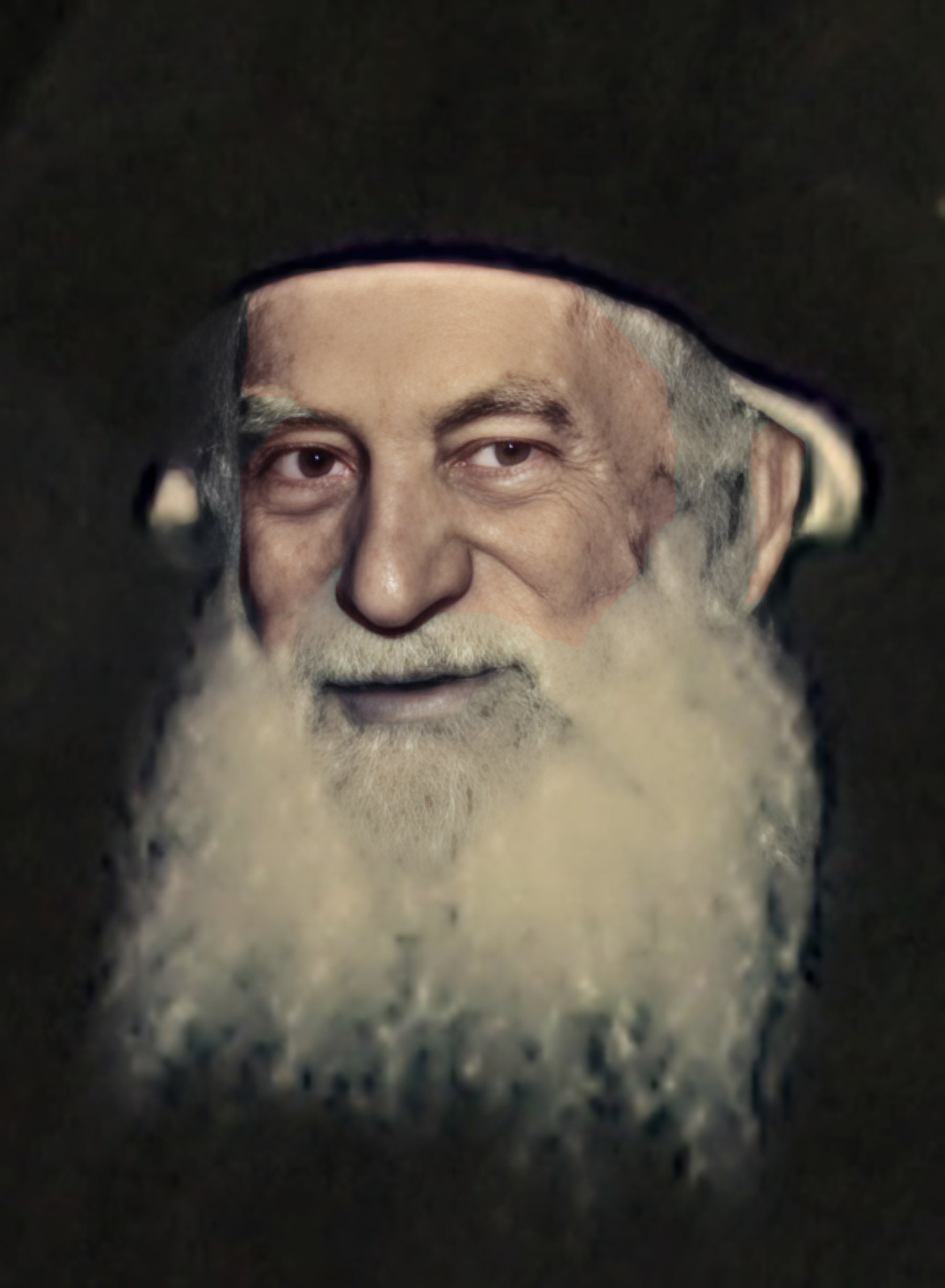
The Pnei Menachem

They asked Leah to repeat what happened, hoping it was a child’s dream. But Leah’s details were too vivid, too real. Their little daughter, in her moment of need, had called the Rebbe himself.

Overcome with a mix of awe and embarrassment, they rushed to the Rebbe’s house to apologize. How could they have allowed such a thing to happen? The Rebbe simply smiled, his face radiating joy. “There’s no need to apologize,” he said. “Baruch Hashem, the stories worked. That’s what matters.”

The Pnei Menachem taught them what it means to truly care for another Yid. Even a little girl in the middle of the night. Even when she calls unexpectedly. Because to him, every Yid mattered, no matter how small.

And Leah? She would carry that night in her heart forever, the night a tzaddik made her feel safe, simply by telling her a story.

PURIM: A Dance for the Ages

Adapted from: Living Higher by Rabbi Binyomin Pruzansky

While learning in Yeshivas Mir Yerushalayim, I witnessed firsthand how the rosh yeshivah, Rav Nosson Tzvi Finkel, who was stricken with Parkinson’s disease, would struggle to deliver his shiur as his entire body shook uncontrollably. However, although he may have been weak and in pain, he was tamid be’simchah, always happy. You heard the joy in his voice, and you felt it in his presence. The Torah he learned and taught gave him so much happiness and koach, enabling him to push above and beyond the norm.

“Ki heim chayeinu ve’orech yameinu.” When Torah is your life, it empowers your days, giving you strength and vitality.

The Ponevezher Rav, Rav Yosef Kahaneman, known as a prince of Torah, was focused on achieving his mission of building Yeshivas Ponevezh in Bnei Brak. Indeed, he merited to build one of the greatest edifices of Torah in the world. In order to accomplish his dream of rebuilding Torah after the war, he frequently traveled to America to raise funds, yet he never appeared burnt out.

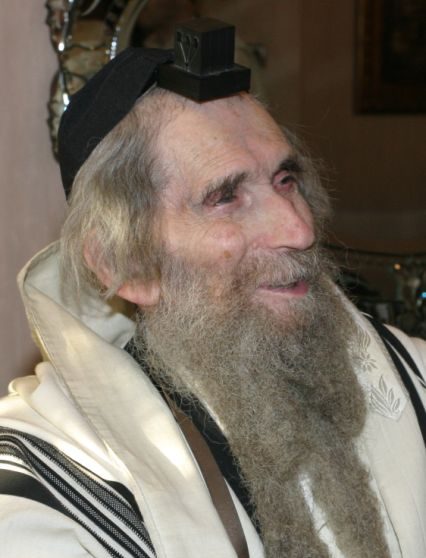
Rav Yosef Kahaneman

On one such trip abroad, he returned to the home of his host, tired and worn out. His host brought him a hot cup of coffee. “Here, this will give you some strength.”

Rav Kahaneman gratefully took the coffee, but replied, “If you really want to give me strength, please give me the number of a wealthy person who can help support my yeshivah; that would be the best thing you could do for me right now.”

The host couldn’t get over it. “How do you keep going? Where did you get this fiery passion? Where did you develop this love of Torah?”

“It all started when I was a little boy of eleven years old,” Rav Kahaneman shared:

It was Purim morning. My mother was in the kitchen baking a cake, and she exclaimed, “I am so excited to bake a cake for the rav of our town. What a zechus to give honor to a tzaddik!” My mother’s excitement affected my father, who said, “I, too, have something for the rav. A peddler recently came through the town selling Gemaros, and I bought a Maseches Bava Basra from him. I know that the rav doesn’t have a full set of Shas in his home, and he is missing a Bava Basra. Now he will have it; how happy he will be.”

My older brother and I went to the rav of the town to deliver the mishloach manos and the gift. My brother held my mother’s cake and I held the Bava Basra. I handed the rav the Bava Basra and his eyes lit up. He kissed it and called out in joy, “How lucky I am, what a treasure, a whole masechta Bava Basra!” Then he danced around the table holding the Gemara, as if it were Simchas Torah and he was dancing with the Sefer Torah.

As the Ponevezher Rav told his host the story, he danced around the table, to demonstrate how the rav had danced. Then he continued.

The rav asked his wife, “Do you also want to give me mishloach manos?”

“Yes, of course,” she answered.

“Great! Yesterday we decided that we would begin our Purim seudah at 5:00 p.m. But if you would be kind enough to push it off until 6:00 p.m., then I can learn from my new Gemara from 5:00 to 6:00, for an uninterrupted hour. That would be the greatest mishloach manos gift in the world.”

The wife agreed and the rav danced around the table again.

“I was only eleven years old when this took place. But at that moment, I was so inspired that I made up my mind to dedicate my life to Torah and put everything I have into it. That is where I derive the inner strength, determination, and drive to build Torah in Eretz Yisrael.”

Sometimes, a seemingly insignificant action can lead to big results. The rav’s simchah and dancing inspired Rav Kahaneman to dedicate his life to building Torah, and thus Yeshivas Ponevezh was born. He became a partner in Rav Kahaneman’s work of building Torah in Eretz Yisrael.

When our homes are infused with true simchah, the simchah of the Torah, it can influence not only our children, but all of Klal Yisrael. 

PURIM: The Best Mishloach Manos

Adapted from: What if on Yamim Tovim 2 Adapted by Rabbi Moshe Sherrow from the works of Rabbi Yitzchok Zilberstein

Q: One Purim, around one hundred years ago, many Yidden who were residents of the city of Saana in Yemen brought mishloach manos to Rabbi Shlomo Alkara, their beloved rav. One poor Jew also wanted to bring mishloach manos to the rav, but he had nothing in his home to offer. The only food he found was a rotten radish. He wrapped it in a pretty napkin, put it on a plate, and waited on line to give it to the rav.

When he presented his offering to the rav, the rav’s face lit up and he blessed the man warmly. When the next man in line gave the rav his mishloach manos, the rav blessed him and in return gave him as mishloach manos the package he had received from the poor man. When the man unwrapped the napkin to examine its contents, he discovered the rotten radish.

The rav spoke immediately. “Do you think that the man wanted to insult me? Chalilah v’Chas. This was the offering of a poor man who had nothing else to give. Such an offering is exceptionally precious. On this the pasuk states, v’nefesh ki sakriv korban minchah la’Hashem, When a man among you brings an offering to Hashem; he brings his nefesh (soul) with the offering. And now, if you are zealous for my honor, fill this man’s house with bounty so he will have the means to give an honorable mishloach manos.”

Everyone sent the poor man mishloach manos as per the rav’s instruction, until he was inundated with food. In this way, the townsmen fulfilled the mitzvah of mishloach manos as well as the mitzvah of matanos l’evyonim.

Could the poor man have fulfilled the mitzvah by proffering a rotten radish, had there been another food accompanying it, or, since a rotten radish is inedible, was it eligible to use for the mitzvah?

A: The Chasam Sofer explains that there are two reasons given for the mitzvah of mishloach manos. The Terumas HaDeshen maintains that it is in order to ensure that people will have the wherewithal with which to make a seudas Purim. Even if the recipient has more than enough food for his Purim feast, one has nevertheless fulfilled the mitzvah. In that way, even those who do not have enough will not be embarrassed to accept for themselves, since all Jews send each other gifts of food without discrimination. The Manos HaLevi taught that the rationale behind the mitzvah of mishloach manos is to create peace and love between Jews. This is to contradict Haman’s accusation that the Jews are dispersed and separated by machlokes (strife). Thus, we have a mitzvah to effect the exact opposite.

It would seem that a rotten radish could not be used for the seudas Purim, nor would it engender peace and friendship, so according to both reasons, it could not satisfy the requirement of mishloach manos. It must be that the radish was not completely rotten, and although a more discriminating diner might not have eaten it, most people would.

The poor man recognized the rav’s great stature, including the fact that the rav sufficed with simple fare, as the mishnah teaches us in Pirkei Avos, kach hi darkah shel Torah; pas b’melach tocheil… This is the way of Torah: Eat bread with salt ….” The rav would certainly have been satisfied to accept such a radish; hence, the man would have fulfilled the mitzvah of mishloach manos had he given another food item with it.

PURIM: The Miracle You Don’t See

Adapted from: Around the Year with Reb Meilech by Yisroel Besser

We speak of the great miracles, the makkos, the splitting of the Yam Suf, Mattan Torah. Our people live with those images before their eyes.

But Purim has none of that, not a single instance in which nature changed, no clear revelation of Hashem’s dominion.

In the first perek, Vashti is killed. It’s a big story, but not unusual.

Reb Meilech Biderman

Reb Meilech pauses to reflect, “The Chiddushei HaRim would say that if someone mentioned it in shul the next day, no doubt one of the older members would have said, ‘Nu, Reb Yid, we don’t talk politics in this beis medrash.’ ”

In the next perek, Esther becomes the queen, and again, it’s noteworthy, but not miraculous in any way.

Bigsan and Seresh are planning to kill the king, and Mordechai steps in to save his life, an unusual story to be sure — but a story just the same.

Haman rises to prominence, and one night, he comes to visit the king, who cannot sleep.

Suddenly, mighty Haman is leading the beleaguered Mordechai on a horse, their roles subtly changing.

But it started at the moment when Vashti was killed. That was the first event that set the others in motion, and it happened without fanfare, the miracle concealed under layers of teva, nature.

It was as big a miracle as Krias Yam Suf, the Chasam Sofer writes, but so well hidden. That is why we rejoice in this month, he explains, because it reminds us that the Ribbono Shel Olam’s love for us endures, and His desire to do good with us is perpetual, regardless of the layers that block us from seeing it clearly.

That’s Chodesh Adar.

You can read Megillas Esther at any time of year, the Vilna Gaon writes, and you will feel emunah when you are exposed to the precision and perfection of His plan for us.

Reb Meilech is speaking in everyday language now, pulling out terms that have the people around him nodding in recognition. “Yesterday’s phone call and today’s message and the person you will punkt meet next week, suddenly everything comes together at one moment and you realize that He is in charge.”

That brings simchah. Little children start a puzzle and they become disheartened when they can’t complete it right away… but a wise parent says, “Sheifele, stick with it, it will come together and you will be happy you persevered…”

Chodesh Adar gifts us with new eyes, a vision that perceives that even in the layers of obscurity, He is showering us with His love. The Gemara tells us that a ganav, a thief, who steals in the stealth of night so that no man will see him, pays a fine equivalent to double that which he stole, while a gazlan, who fears no one and steals brazenly, pays only the value of what he stole (Bava Kamma 79b).

The Gemara explains the reason: A gazlan has equated the honor of the Master to the honor of the servant, fearing none of them, while the ganav fears man, but not the Creator.

Now, we know that a positive force is always stronger than its negative parallel, middah tovah merubah m’middas puranus. If a person is punished for fear of being seen by man, but not by Hashem, imagine the opposite — one who sees Hashem even in the actions of man, capable of perceiving the reality that He is in charge even when it appears that humans are in charge! He will certainly receive a double reward!

With this, Rav Chuna Halperin explained the words of the Shabbos zemiros: וְאַשְׁרֵי כָּל־חוֹכֶה לְתַשְׁלוּמֵי כֵפֶל מֵאֵת כֹּל סוֹכֶה שׁוֹכֵן בָּעֲרָפֶל — Praiseworthy is everyone who awaits a double reward, from the One Who sees all but Who dwells in a dense cloud.

One who can see the existence of the Ribbono Shel Olam in the dense cloud, who sees past the veil and recognizes the true reality, gets a reward of double, the converse of the punishment of one who sees only man and not the Creator.

Purim gives us this ability, the koach to see past the screens and barriers and perceive the truth.

PARASHAS ZACHOR: Overpowering our Enemies

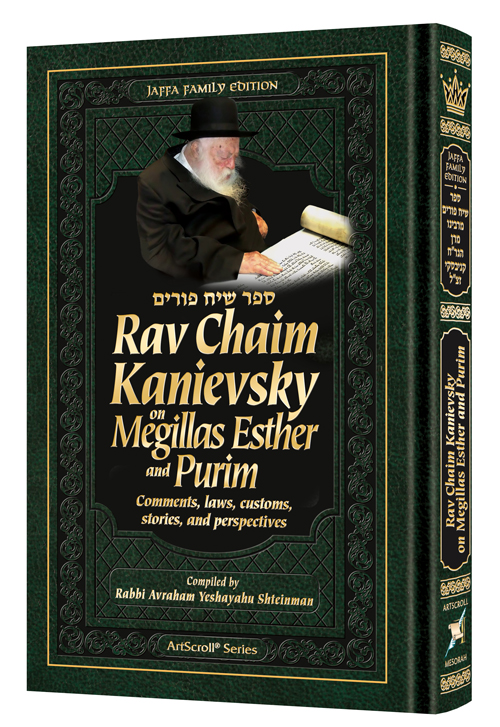
Adapted from: Rav Chaim Kanievsky on Megillas Esther and Purim compiled by Rabbi Avraham Yeshayahu Shteinman

When Rav Shteinman taught at the yeshivah in Kfar Saba, he wrote the following lecture as a bar mitzvah speech for a student of his; the bar mitzvah took place on the Shabbos before Purim (Parashas Zachor), 1947. [It is presented here in abridged form.]

The Torah commands us (Devarim 25:17): Remember what Amalek did to you. This mitzvah is one of the sheish zechiros, the six remembrances, the six matters that the Torah instructs us to remember every day [the six remembrances are found in most siddurim after Shacharis]. However, remembering what Amalek did does not seem to be at all like the other five remembrances. The other remembrances are those that apply at all times, and we are thus instructed to remember them at all times. For example, we are instructed to Remember the Shabbos day (Shemos 20:8); we do this by preparing for Shabbos the entire week. We are commanded to Remember what Hashem, your God, did to Miriam (Devarim 24:9); we do this by recalling that Miriam was punished with tzaraas when she spoke lashon hara about her brother Moshe (Bamidbar Ch. 12), and we are inspired to refrain from lashon hara. The commandment to destroy the memory of Amalek, though, is not a mitzvah that is relevant to us every day; it is a mitzvah that can be fulfilled only when we have a Jewish king who will declare war against the nation of Amalek. Why does the Torah instruct us to remember Amalek every day?

Rav Shteinman

The answer can be found in the Gemara’s description of an encounter between Mordechai and Haman. The Gemara relates (Megillah 16a) that when Haman came to Mordechai, at the behest of Achashveirosh to dress him in royal robes, Haman found Mordechai teaching his students. Haman asked Mordechai what he was teaching. Mordechai responded, “I am teaching the laws of kemitzah. When the Beis HaMikdash was standing, a person would bring a measure of flour as a minchah-offering. The Kohanim would bend the three middle fingers over his palm, scoop out flour, and burn it on the Altar; this scoop of flour, known as a kemitzah, would atone for the person bringing the offering.” Haman responded, “Your three-fingersful of flour has overpowered the 10,000 talents of silver I was willing to pay Achashveirosh to have your people annihilated.”

With this exchange, Chazal taught us how Mordechai succeeded in overpowering Haman: As Haman said, it was the three-fingersful of flour that outweighed Haman’s money. That is, it was Mordechai’s study of Torah — teaching the laws of the kemitzah — that overpowered Haman’s plot. The study of Torah was the weapon Mordechai used — the weapon that the Jews are to use — in the battle against Amalek. Of course, the fight against Amalek has a physical component as well — the obligation of destroying the people of Amalek — but that component applies only at specific times: when there is a Jewish king who declares war against Amalek. Perhaps the primary element of the fight against Amalek, though, is the spiritual aspect; that aspect of the battle applies at all times, and that is what we are commanded to remember every day.

What is this spiritual aspect? Amalek was the nation who attacked the Jews when they left Egypt, with no provocation, simply to show that it is possible to attack Hashem’s nation. Amalek thus represents the fight against Hashem. Our means of fighting this is by strengthening our service of Hashem and our trust in Hashem. This weakens the negative spiritual force that Amalek represents in the word.

In truth, without succeeding in this spiritual fight, we cannot even succeed in the physical war against Amalek. Thus, when Yehoshua led the Jewish people in their initial battle against Amalek, Moshe sat above them with his hands raised to the heaven. As long as Moshe’s hands were upraised, the Jews were victorious against Amalek (Shemos 17:11). The Mishnah (Rosh Hashanah 3:8) explains this phenomenon: Can the hands of Moshe make or break [their success in] battle? Rather [Moshe’s hands inspired the Jews to look heavenward.] When the Jews would look heavenward, they would humble their hearts to their Father in Heaven and they would be victorious. This Mishnah teaches that the Jews could not be successful in the physical battle against Amalek unless they were also succeeding in the spiritual aspect of the battle. 

TEFILLAH: The Key to Parnassah

Adapted from: Parashas HaMahn by Dov Weller

When we need help for parnassah it is so easy to look around and blame our boss, the client, the market, the political atmosphere, ourselves, our family, and everyone around us. But we need to remember that there is one gear that powers it all. That is tefillah. 

Rav Shimshon Pincus once said, “If I accomplished anything significant in my life or managed to overcome challenges, it is all because of one thing that I trained myself to do continuously: to speak to Hashem throughout the day as a person speaks to his friend. I poured my heart out to Hashem and told Him everything that was bothering me, upsetting me, making me happy… everything, good and bad.”

Rav Shimshon Pincus

In a letter addressed to a young man struggling for direction, Rav Shimshon writes:

It appears you are trying as hard as you can… and you have done all that you can. Now you are at the point where you need help from the outside, and therefore, I will give you the name and the address of someone who can help you to overcome your challenges and rise to the goals you have set for yourself.

He is called Hashem. He is very powerful, He created everything, and I know that He loves you, personally, dearly. He waits with longing for you to turn toward Him. It is not difficult to find Him or His address. He is everywhere, and even at the very moment you are reading this letter you can turn toward Him… Go directly to the One Who can truly help you, and grab onto Him and do not let go…. (Nefesh Shimshon, Letters, p. 43).

Rav Pincus relates an extremely powerful story that provides us with guidance and inspiration to tune into the awesome power of tefillah and relying on Hashem:

The ICU was in desperate need of a doctor to cover the upcoming night shift. They managed to locate a doctor who was still doing his residency. Although inexperienced, he had the necessary qualifications. The ICU was unusually full that night, and the young doctor was nervous about singlehandedly taking responsibility for each of these critically ill patients. The hospital administrator tried to allay his fears. He told him that hopefully the night would pass quietly. “But,” he said, “if you need something, if you are overwhelmed with crises, pick up the emergency line and we will make sure that a doctor from another department will come to assist you within moments.”

The night began quietly. The patients’ vital signs were all stable. Then the peace was broken; a patient needed emergency assistance. The doctor ran over and began doing what was necessary. While he was busy with that, another patient’s alarm began to ring. The doctor stabilized the patient he was with and ran to the next patient. Then three other patients needed emergency attention. The young doctor ran valiantly from patient to patient but, as night began to turn to dawn, there was a tragedy. He didn’t get to one of his patients in time, and the patient passed away.

Sometime later, the young doctor was summoned to court. He was being sued for negligence. He defended himself by saying, “I made heroic efforts to treat every single patient in the ICU that night! Why am I being sued and punished for my heroic efforts?”

The judge responded, “You were instructed to pick up the phone and call for help if you needed it. No one asked you to handle the situation alone, without help. You were given a simple instruction: Call for help in case of need. Since you did not call out in a time of need, you are being sued for negligence.”

This is exactly what Hashem tells each of us. “No one asked you to shoulder all the burden of providing for your family. Call out to Me, daven to Me, reach out to Me at any time, in any language, and I will be there to assist.” This is tefillah. We need to understand and internalize that we need Hashem and we cannot manage on our own, that we have a Father Who is capable of anything. Let us make the call, make the connection, and shift the weight from our shoulders to Hashem, Who is waiting for us to reach out to Him. 

PARASHAH: The Satmar Rebbe and the Lame Widower

Adapted from: Aleinu L’shabei’ach by Rabbi Yitzchok Zilberstein

וְיִקְחוּ לִי תְּרוּמָה — And let them take for Me a portion (Shemos 25:2)

With regard to all of the mitzvos, there is a principle that a person is not rewarded in this world, but rather in the Next World. With regard to tzedakah, however, Hashem declares, Test Me, if you will, with this (Malachi 3:10), implying that the mitzvah of tzedakah is rewarded not only in the Next World, but in this world as well. Similarly, our Sages teach that a person who tithes his produce will become rich — “Aser bishvil she’tisasher” (Taanis 9a).

The Satmar Rebbe asks: Why is the mitzvah of tzedakah and supporting talmidei chachamim different in this way from all other mitzvos?

The Satmar Rebbe

His answer is based on the halachah that a worker in a vineyard may not eat from the owner’s grapes, except during the time that he is working with them. Rashi explains that the worker is permitted to eat the grapes only when he is harvesting them and putting them into the owner’s vessels; when he is performing other types of work in the field, he is not permitted to eat the grapes.

When a person is giving tzedakah and supporting poor talmidei chachamim, says the Satmar Rebbe, he is similar to the worker who is harvesting fruits and putting them into the owner’s vessels, for poor talmidei chachamim are Hashem’s “vessels.” And when a person is putting something into the vessels of the Owner of the world, he is entitled to take some for himself as well. That is why we are rewarded for tzedakah in this world.

The Satmar Rebbe was renowned as a magnanimous baal tzedakah, and all of the money that passed through his hands was distributed to the poor on the same day. Once, a pauper came to him and poured out his tale of woe, begging for the Rebbe’s assistance. He cried to the Rebbe that he had lost his wife, and was left alone to care for his orphaned children. In addition, his leg had been amputated.

The Rebbe gave him a handsome contribution, as he did to everyone who came to him for charity.

Several minutes later, the Rebbe’s gabbai entered his chamber, very distraught. “What happened?” the Rebbe asked.

“The pauper who was just here — the one who said that his leg was amputated — is not missing a leg. I saw him leave from here and walk on two feet like a regular person,” the gabbai said indignantly.

When the Rebbe heard this, he rose from his seat, visibly stirred. The gabbai was sure that the Rebbe would tell him to run after the pauper and ask him to return the money he had received from the Rebbe. He was surprised, however, when he heard the Rebbe let out a sigh of relief and say, “What joy your words have brought me! Thank Heaven, the pauper was not lame!”

Several minutes later, the gabbai came into the Rebbe’s chamber once again, this time to inform the Rebbe that the pauper was not a widower, either. “I saw his wife outside,” he told the Rebbe.

Again, the Rebbe expressed his great joy at the news that the pauper had not been widowed after all.

A Jewish leader desires only good for Hashem’s children. 

CHODESH ADAR: Preparing for the Joy of Adar

Adapted from: Days of Gratitude Days of Triumph by Rabbi Yaakov Feitman

From the very birth of the Adar new moon we are enjoined to be happy (Taanis 26b). But what exactly does that require, and how do we do it?

R’ Gamliel Rabinowitz points out that emotions cannot be easily manufactured, and consequently, cultivating the feeling known as simchah takes a great deal of preparation. It can’t just be turned on at the molad. Yet mishenichnas Adar marbim b’simchah is a halachah, and therefore must be quite accessible to each one of us.

Rav Gamliel Rabinowitz

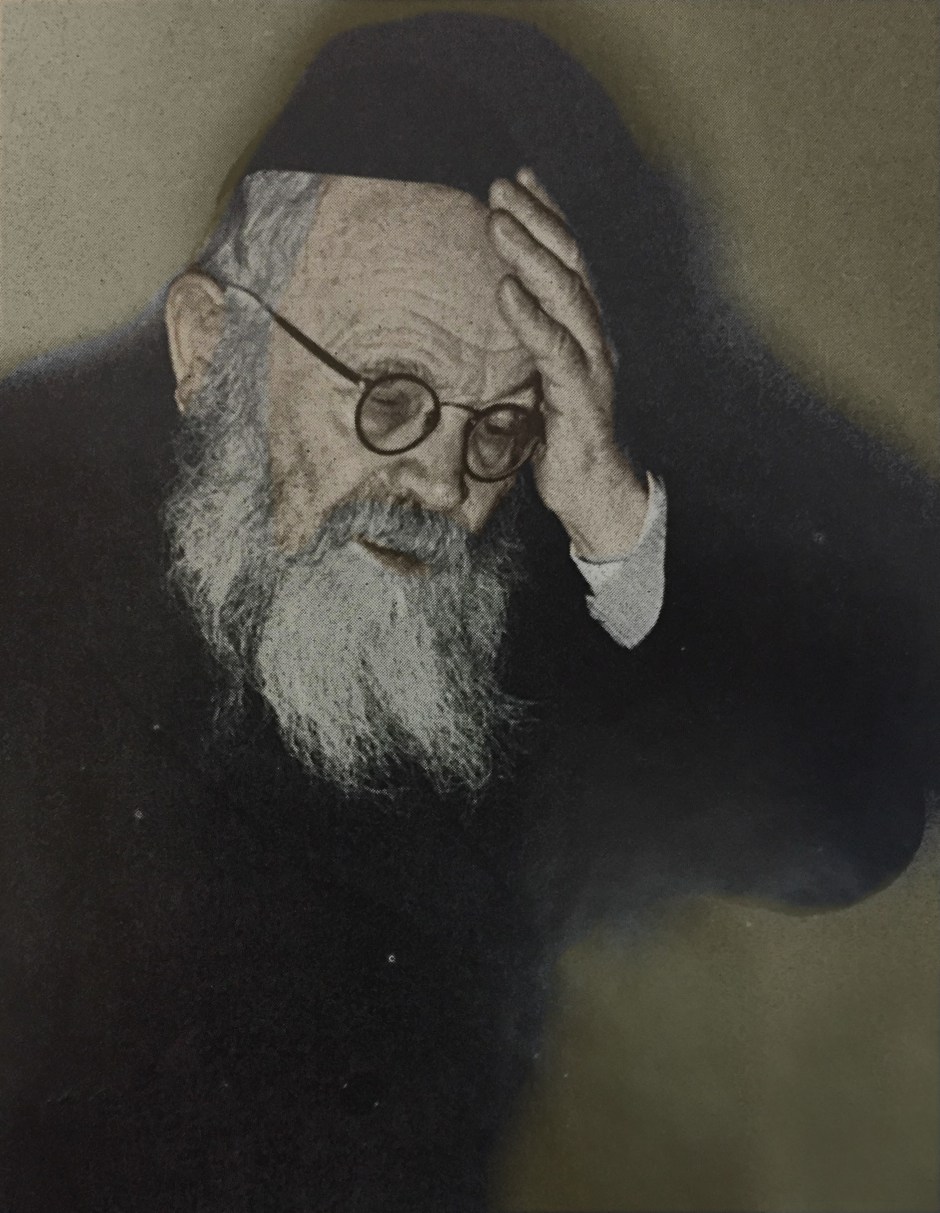
The Shulchan Aruch (551) mentions only that during the month of Av we must reduce our joy but does not record that during Adar we must increase it. This leads R’ Chaim Kanievsky to conclude that it is only “advisable” (eitzah tovah) to increase our joy during Adar, whereas in Av it is required that we diminish it. It would seem that it is not so simple to become happy even when we are supposed to do so, so how indeed do we accomplish this goal?

To be sure, R’ Eliyahu Eliezer Dessler teaches that just as during Av we slowly reduce our joy over a period of three weeks, culminating in the fasting and sorrow of Tishah B’Av, so should we calibrate our happiness during Adar to coordinate with the exultation of Purim. Yet it does not seem as clear how to achieve this ascending crescendo of elation so that by Purim we have reached the pinnacle of our joy. What are we supposed to be thinking about, and what will become the source of our cheer and exhilaration?

R’ Tzadok HaKohen of Lublin encourages us to concentrate upon Hashem’s hashgachah pratis in our lives. The very fact that Hashem is so involved in our lives, although this is usually completely hidden from us, is a source of great consolation and joy. Purim teaches us that not only is Hashem involved in our lives, caring about us in every way, but He arranges, manipulates, and controls the universe so that His people are protected and supported whenever they need Him. This is certainly one very practical and important way to prepare for Adar and Purim.

Another and perhaps even deeper aspect of this preparation is related to something called the sechok of Purim. This concept may be found in Sefer Yetzirah, Chapter 5, as quoted by R’ Dovid Cohen, Rosh Yeshivas Chevron. Although sechok is variably translated as laughter, derision, or even some kind of game or amusement, it carries a special Purim meaning. R’ Cohen quotes the famous Gemara (end of Makkos) where R’ Akiva is mesachek at the horrific scene of the Churban while his colleagues, the other holy Tannaim, are crying. Quoting the Alter of Kelm, he establishes that sechok is the ability to transform tragedy into something wondrous and positive. Where the other Tannaim see only catastrophe, R’ Akiva sees the light of geulah. This idea is also reflected in the pasuk (Tehillim 126:1-2), “…we will be like dreamers. Then our mouths will be filled with sechok (laughter).” The Alter explains that when Mashiach comes, all the suffering of the ages will seem like a dream, all our questions will be instantaneously answered, and we will be at peace. That is the ultimate laughter, which is laughing at what once brought us to tears.

In the case of Purim, all of Haman’s evil machinations — bikeish, he plotted — came to naught, for it was Hashem’s plan to turn every one of his schemes to our advantage. Thus, the tree, the banquets, the plot against the king, and Haman’s ostensible favor in the eyes of the king were all turned to our benefit. That is the sechok of Purim, as defined by v’nahafoch hu — turning all events upside down and reminding us that although we think that we see, we do not know what we are witnessing until Hashem opens our eyes.  

MIDDOS: Calm Amid the Seudah

Adapted from: Powerful Moments by Rabbi Yitzchok Hisiger

Rav Mattisyahu Salomon, mashgiach of Beth Medrash Govoha, recalled that when he was a bachur learning at Yeshivas Kfar Chassidim, the mashgiach of the yeshivah, Rav Elya Lopian, had a vaad for the talmidim during which they would take on kabbalos, resolutions. One kabbalah that he had the bachurim accept was not to get angry from Kabbalas Shabbos, at the onset of Shabbos on Friday evening, until Havdalah, at the conclusion of the holy day.

This was surely a worthy kabbalah — making sure not to get angry is always commendable — but why did Rav Elya choose that particular time frame?

Rav Elya explained, “Im yirtzeh Hashem, all of you will ultimately get married and establish families. At your Shabbos seudos each week, your children will become lively. This one will be jumping around, while another will be teasing his sibling. As chaos reigns, you may succumb to kaas, anger. By accepting upon yourself to work on not getting angry and remaining calm and serene for the duration of Shabbos Kodesh, you will have trained yourself and be properly prepared for that stage in life.”

Rav Elya Lopian

Rav Yitzchak Koslowitz, rosh chaburah at Beth Medrash Govoha, who first shared the above anecdote with me, added an enlightening comment of the Taz. In Hilchos Shabbos (296:1), the Rema states that the reason for the minhag to spill out wine from one’s kos during Havdalah is because, as the Gemara (Eruvin 65) says, “Kol she’ein yayin nishpach b’soch beiso kamayim eino bichlal berachah — Anyone in whose house wine does not flow like water is not included in the Torah’s blessing.” Thus, as a positive siman at the start of the week, we pour out some wine at Havdalah. [Note: This custom is distinct from that of spilling out wine at the conclusion of Havdalah.]

The Taz disagrees with the Rema’s source of this custom, pointing out that pouring out wine for a mere siman, in his opinion, would be forbidden because of the issur of bal tashchis. Instead, the Taz notes that in the dictum of “Kol bayis shelo nishpach bo yayin kamayim ein bo siman berachah,” the phrasing is shelo nishpach, that has not been poured, in the past tense, rather than she’ein shofchim, in the present tense. This, says the Taz, teaches that one must not get angry in his home even when damage has occurred — meaning that the “wine” has already been spilled by a member of the household.

“The way of people is to get upset about things like this,” says the Taz. “Thus, we are told, ‘Any home in which wine that is spilled [mistakenly] is not treated like water [that has been spilled], in that case there is no siman berachah in such a home.”

The Taz is instructing us to treat mishaps and accidents at home as nothing more than a spill of water.

It is imperative, indeed, that a home be an island of tranquility, peace, and serenity.

Rav Doniel Cohen, rosh yeshivah of Yeshivah Shaarei Orah of Lakewood, recalled an incident that occurred over three and a half decades ago, when he was a bachur learning at Yeshivas Brisk. It was Erev Pesach and he went to the home of his cousin, Rav Shlomo Weissman, then a yungerman residing on Rechov Sorotzkin, to assist him in filtering his homemade wine. It was a time-consuming and exasperating process that Rav Shlomo had begun many months earlier, removing sediment and unwanted particles from the wine, which would be used on Pesach. [Rav Shlomo, who still makes his own wine today, told me that he has thankfully improved and expedited the process since then.]

Finally, a significant amount of wine had been purified. Rav Shlomo and Rav Doniel were pleased to be completing the task when the unthinkable happened. One of the Weissman children walked by and knocked over a five-liter container of the painstakingly prepared wine, causing the red liquid to spill across the floor.

One would not have blamed Rav Shlomo for being infuriated, berating the child. Instead, to Rav Doniel’s astonishment, he was completely calm. He said tranquilly, “Kol bayis shelo nishpach bo yayin kamayim ein bo siman berachah.”

Months of work were now for naught, but Rav Shlomo was unfazed, a reaction that Rav Cohen recalls to this day. Indeed, to him, it was as if water had spilled on the floor.