PARSHAH INSPIRATION: The Crystal-Clear Walls of the Yam Suf

Adapted from: The Power of Shema by Rabbi Meyer Yedid

In the Va’eira issue of At The ArtScroll Shabbos Table, we mentioned that one of the definitions of the word shema is “to gather.” Ultimately, it’s all about caring for your brothers and sisters, seeking the best for each one of them in his or her uniqueness, and for Am Yisrael as a whole. There’s an interesting allusion to this in Tehillim (136:13): Le’gozer Yam Suf l’gizarim ki l’olam chasdo. When Hashem split the Yam Suf, He didn’t just split it in two; He split it so that there were twelve parallel paths, each surrounded by walls of water, standing in place. It must have been a beautiful sight, but what was the message? Why couldn’t they all go on the same path? Why did there have to be walls of water in between?

I once heard a beautiful explanation. You know that every person in life has his path, and every shevet, every tribe, has their path. And you may have noticed also, if you ever saw a drop of water sit as a blob upon a printed word, that the water acts as a magnifying glass. The letters you see through that drop of water look larger than the letters outside it. I once heard this explanation: When the Jewish people were crossing the Yam Suf, each one was walking in his own path. Each one had his own mission and his own goal that he needed to reach. But, if you’re part of Am Yisrael, you cannot just walk in your own path and be oblivious to everything else. Aren’t you worried about the guy next to you? So you have to look on the other side to make sure that he too is proceeding, and succeeding, in his path. You look and you see his needs, and how you can help. And to do that properly, you need a magnifying glass. The walls of water functioned as a magnifying glass.
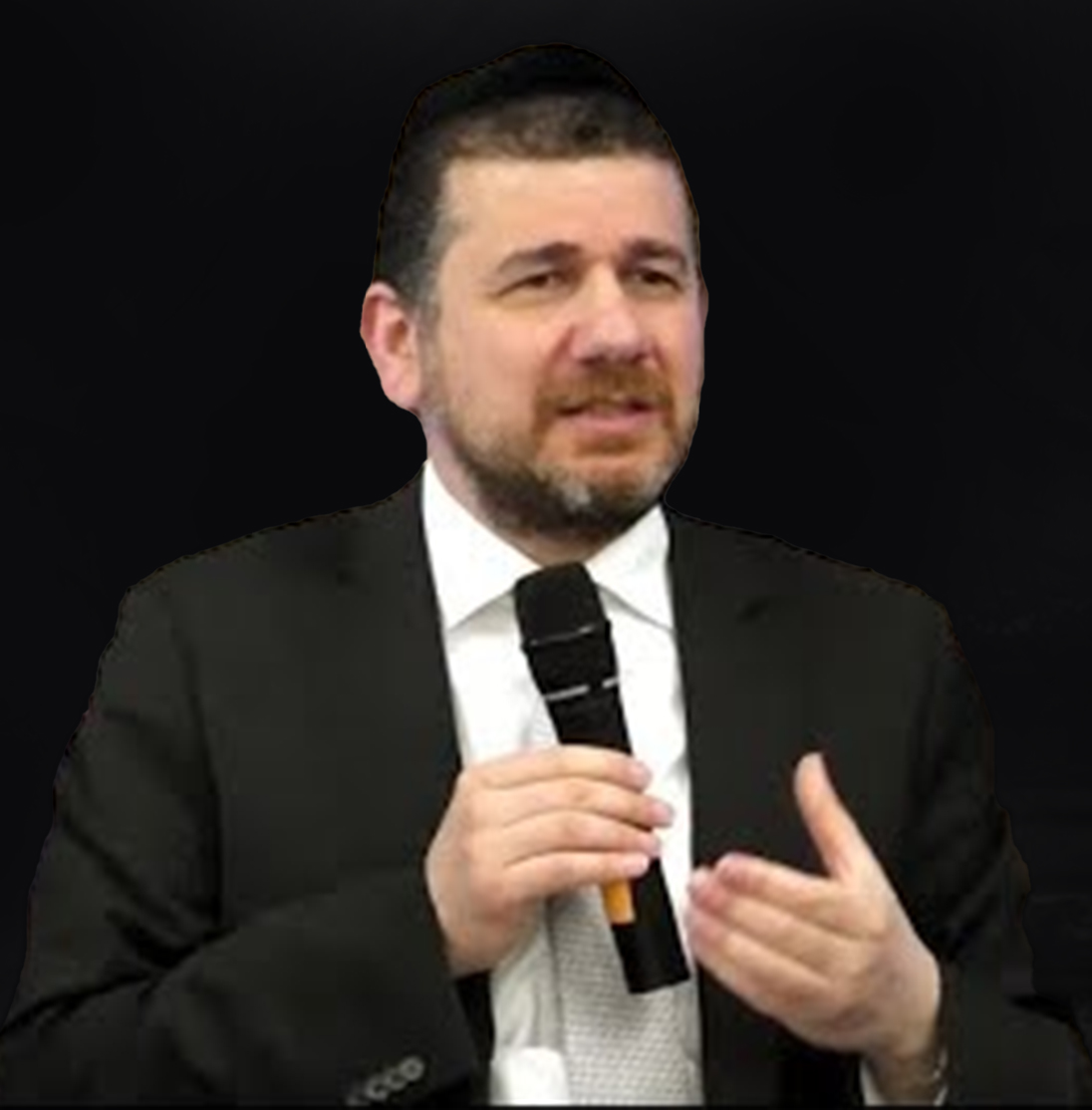
Rabbi Meyer Yedid

Kol Yisrael areivem zeh bazeh, All Jews are responsible for one another. That’s why if an unexpected guest arrives late to a Friday night meal, and the host has already made Kiddush, nevertheless, the host can make it again for the guest. If the host doesn’t need it for himself, why make it for someone else? Let the guest make Kiddush! The answer is, Kol Yisrael areivem zeh bazeh. As long as someone else didn’t make Kiddush, I also have not made Kiddush yet. My responsibility is: One is for me, and one is for you. And as long as you didn’t do it, I’m still responsible.

This is what the fourth meaning of Shema is all about. We turn to each other at the beginning of the Shema and we say, “Let’s go! Let’s do this! But let’s do this together, both as interconnected individuals and as an indivisible nation.”

Shema Yisrael says to us: When you accept Hashem as your guide, don’t forget, you are part of a much bigger group. You are not by yourself. You are part of a great nation, and we have to be responsible for that nation. All of us together. And that’s how we live together in this nation. We live, each one doing his own thing. Each one on his or her path. Each one crossing the Yam Suf. But every once in a while, we look through the magnifying glass to make sure all the other people are also walking through themselves. And whatever it is that we can do to help, we make sure to do it. That’s what we do. That’s what Shema Yisrael is. 

GREATNESS: Leaving an Imprint!

Adapted from: A Heart for Another by Rabbi Yaakov Bender

My rebbi, Rav Shmuel Berenbaum, wasn’t a featured speaker at assemblies or conferences, and his students knew that if they wanted him to be mesader kiddushin at their weddings, then they had to wait until after second seder for the chuppah to begin.

Many of our weddings took place in Aperion Manor, simply because it was close to the yeshivah. Someone else would fill in the kesubah, and the chassan and kallah would make all their preparations; the chuppah waited for the Mirrer Rosh Yeshivah to arrive just after 8:00!

He davened in yeshivah and learned mussar seder and kept sedarim like a young Torah student on the first day of the zman (semester). Physically and geographically, his footprint was very small. He lived his life within a relatively small space, traveling between yeshivah and his home.

But from his corner, he left such a huge impression. Seventy-five thousand people showed up to his levayah, each of them feeling a profound sense of mourning. They understood that with his diligence in Torah, he was creating a current of berachah and protection that flowed well beyond Ocean Parkway; his Torah elevated all of them.

Rav Shmuel Berenbaum

He was not one for lengthy meetings and activism, but somehow, with just a few conversations, he launched an international chessed organization — a fund that is active and thriving until today — benefiting young Torah scholars who, like him, make such a profound impact on the world without moving from their shtenders.

And because he lived this way, able to shake heaven and earth from his little corner, he wanted us to realize that we had that same potential.

My mother would go to the country during the summers, taking my younger siblings to the bungalow colony, but I stayed back in Brooklyn so as not to miss yeshivah.

There were no options of finding a ride upstate on Friday afternoons, so I did what most bachurim did, and left on Thursday night. On Sunday, Reb Shmuel asked where I had been Erev Shabbos, and I explained why I had left early.

He didn’t like the explanation. “This week, you will stay on Erev Shabbos too and I will pay for your car service up to the mountains,” said the Rosh Yeshivah, as if it was the most obvious solution in the world.

The Rosh Yeshivah, who did not have an extra dollar, made it clear that whatever it would cost, it was a small price to pay. He wanted me to know this secret, about the impression left by an ordinary yeshivah bachur sitting in his seat for a few hours on a summer Friday.

This Gadol, who took such splendor, such beauty, and such glory with him when he passed away, wanted all of us to realize that not only did we each have that power, but that we each bore that responsibility.

If a person can leave an imprint, they must. Now, in a media-driven world, we confuse relevance with prominence. We live in a world that is impressed by publicity, and if someone is famous or popular, their opinions are assumed to be worthwhile.

There is a Rashi — one of the most famous Rashis in the Torah — that tells us differently. And Yaakov left from Be’er Sheva and he went to Charan (Bereishis 28:10). If he went to Charan, isn’t it obvious that he left Be’er Sheva?

Rashi explains that it is obvious that he left Be’er Sheva, but the pasuk is teaching us that his leaving itself made an impact, because when a tzaddik leaves a place, its glory, splendor, and beauty depart along with him.

Yaakov did not merely go to Charan — he left Be’er Sheva, and this made a difference!

The Kli Yakar asks a question. If the impression was made by the fact that Yaakov Avinu was a tzaddik, then why did his leaving the city make such an impact: Weren’t Yitzchak and Rivkah tzaddikim? They were still there, so in their merit, that glory, splendor, and beauty should have remained!

Clearly, what we see here is that every single person has the ability to leave their own imprint, their mark of splendor and beauty, and a tzaddik epitomizes this! Yitzchak and Rivkah certainly had an effect on their surroundings, but none of them could create the unique impression that Yaakov was meant to leave.

In America, they say that no one is indispensable. They say, cynically, that the cemetery is filled with people who were considered irreplaceable.

This Rashi says differently. It says everyone is indispensable, and that people who live their lives aligned with Hashem’s Will have a unique mark that they are meant to leave on creation. 

PARSHAH INSPIRATION: Time Is Life!

Adapted from: Rav Pam on Chumash by Rabbi Sholom Smith

הַחֹדֶשׁ הַזֶּה לָכֶם רֹאשׁ חֳדָשִׁים 

This month shall be for you the beginning of the months (Shemos 12:2).

The mitzvah of Kiddush HaChodesh, the sanctification of the new moon, was the first commandment given to the Jewish people as they were about to become a nation. Kiddush HaChodesh is the manner by which Jews measure the passage of time and is the basis for the yearly cycle of Yamim Tovim.

Sforno comments on this mitzvah, ‘‘From now on, the months will be yours to do with them as you wish.’’ There is a deep significance in Kiddush HaChodesh as the first mitzvah presented to a nation of freed slaves. A slave has no time to call his own. His days and nights are controlled by his master. Freedom means the ability to use time as one wishes and not be dependent on the needs or desires of one’s master. Only when a person is in control of his time can he be a mitzuvah v’oseh to perform the mitzvos of the Torah. Therefore, as a prelude to their new obligations to uphold the Torah, Klal Yisrael was given this special mitzvah which is the key to all the other mitzvos.

It is the Beis Din’s task to sanctify the cycle of months. It is the task of every Jew to sanctify the gift of life he has been given by proper utilization of time.

Rav Pam

When a person has a sizable amount of money to invest, he doesn’t simply accept the first offer that comes his way. He will seek the advice of expert investment bankers to guide him because his financial future is at stake.

Yet while most people understand that investing money requires careful forethought, very few people realize that even more forethought, advice and planning is required in investing time — a commodity infinitely more valuable than money.

Every human being is allotted a specific amount of time on this earth and a person’s task is to make the optimum use of this priceless gift. In what should a person invest his time to yield the greatest ‘‘returns’’ in this world and the World to Come? Someday a careful reckoning of every moment of life will be made by the Heavenly Court to ascertain if this gift of time was used properly. 

The Chofetz Chaim would often repeat the following aphorism to his students: ‘‘Ihr meint az men darf zine frum? Men darf zine klug!’’ (‘‘Do you think you have to be frum? You have to be smart!’’) His intention in this remark can be explained with a statement from the Gemara (Chagigah 4a) which teaches that a shoteh is defined as someone who loses whatever is given to him. Thus, a person who is given the gift of time and life and thoughtlessly wastes it with nonsense is in the category of a fool.

Yet in America there are multi-billion-dollar industries devoted to helping people ‘‘kill time’ which, given its immense value, is essentially first-degree murder.

Let us not fall victim to their tactics by discarding our valuable time — essentially our lives — and utilize the gift of time and thereby earn the full blessings of Hashem to live our life to the very fullest. 

GREATNESS: Yiddishe Hergeishim!

Adapted from: A Heart for Another by Rabbi Yaakov Bender

It is hard to describe what it means to be an adam gadol or, for that matter, an ishah gedolah.

The secular world wrongly assumes that our leaders hold that position because they are the greatest teachers, most capable of imparting knowledge. While it is certainly true that our Gedolim generally teach Torah, what makes them great — and what inspires us when we are around them — is that they are elevated people.

Yeshiva Darchei Torah owes its existence to a baalebos who was one of the pioneering bnei Torah in Far Rockaway. A talmid of Rav Chatzkel Levenstein, Reb Yisroel Bloom burned with zeal to do, to build Torah and chessed.

His son shared a childhood recollection of how his father would bring small change to shul each morning, twenty-six cents for the pushka — one quarter and one penny.

The child wondered why his father specifically gave that amount each morning.

“Dovid,” Reb Yisroel answered his son, “it is because a Yid must give what he can — and then he should push himself to give a bit more… Twenty-five cents is the normal amount, so that extra penny represents the push to do more…”

Yiddishe tenuos. Yiddishe hergeishim. Innately Jewish feelings and gestures. There is no halachah that says anything about giving a penny above what is considered normal, but those who had the opportunity to be around great people picked up this approach of constantly striving for more.

Greatness is in the small details, and to me, it is a special zechus for our yeshivah that its founder was a Yid who lived this way, always pushing himself to do a bit more.

Rav Chatzkel Levenstein

When I had my first opportunity to visit Eretz Yisrael as a newlywed, I was eager to encounter the Gedolei Yisrael whose names and lessons had inspired me since I was a child. I davened a tefillah in the Ponevezher Yeshivah, using the opportunity to observe the conduct of the sainted Mashgiach, Rav Chatzkel Levenstein.

Every part of his tefillah was sublime, the yiras Shamayim radiating from him, but what is especially memorable is what happened when davening was over. He went to straighten the shelf of siddurim, arranging them into order and ensuring that they were given the proper kavod.

Is that the halachah? I do not know. But it is pure Yiddishe hergesh and it’s part of becoming great!

I still remember a habit of my sister, Rebbetzin Esther Epstein, and it always moved me. She lived in Boro Park, in the same house as my mother, so I was often there visiting. I noticed that whenever an ambulance passed by the house, sirens blaring, my sister would stop what she was doing and say a kappitel Tehillim.

She did not give a shmuess explaining the minhag, because she did not have to. If we are all family, then when an ambulance is heard in the neighborhood, there should be worry and concern, so this reaction is only appropriate.

The tenuos of Yiddishkeit…

I remember a Yid at whose side I merited davening Shacharis every morning. Reb Mordechai Aryeh Yosef Weinberger was a simple, ehrliche Yid from Ungvar — but there was nothing simple in the way he davened.

He slowly, lovingly unwrapped his tefillin, tefillin that had miraculously accompanied him through Auschwitz, tefillin that he had donned at some of the darkest moments of Jewish history; and in Far Rockaway of a half-century later, he wore them with pride.

This image, an older man in a windbreaker holding tefillin as if they were the greatest treasure imaginable, seared itself onto my mind. I know that there are people who have tefillin that were written with more hiddurim, but I don’t know too many people who put on their tefillin with such humility and gratitude. When he replaced them in their bag, it was with the seriousness of a person replacing a diamond in its setting.

His tefillin might have had a special history, but every pair of tefillin is just as precious. We have to remain sensitive to that, and not let ourselves be distracted and pulled away by a world that comes so fast, relentless in its push to deprive us of those feelings.

Sometimes, it is the smallest actions that tell of a person’s greatness. 


HASHGACHA PRATIS: I Get the Picture!

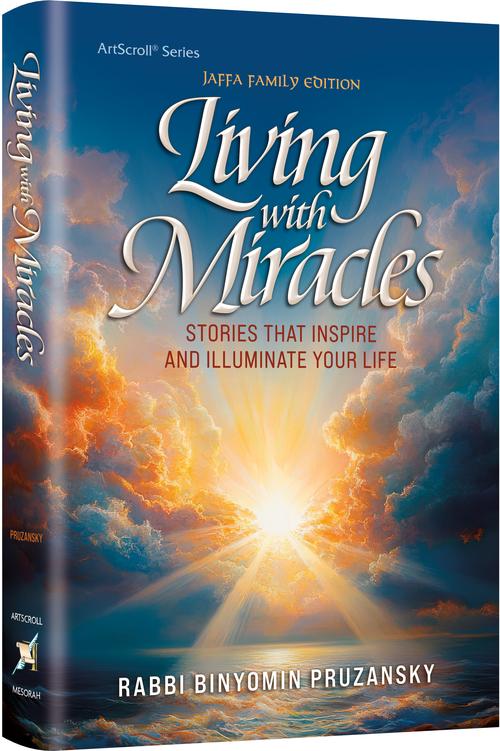
Adapted from: Living with Miracles by Rabbi Binyomin Pruzansky

The Spring Hill Times is a relatively new publication that has inspired many Jews around the world. Most newspapers carry all types of news, from happy and inspiring to sad or even tragic. Rabbi Yitzchok Kaufman of Chestnut Ridge, New York, decided that Klal Yisrael needed a publication that carried only positive, uplifting news. He fills his publication with stories and articles that inspire emunah and bitachon. It provides perfect reading for Shabbos, as it imbues readers with joy and pride in being a Jew.

On Monday morning, Parashas Behar, 2024, Rabbi Kaufman sat looking at the $3,650 bill that sat on his desk awaiting payment. If he wanted to keep the Spring Hill Times running, he had to come up with the money. He decided that as a merit for his father’s neshamah, he would dip into his own savings to cover the bill; certainly, in some way, Hashem would repay him.

That Thursday night, on arriving home, he took in the mail. One envelope was from New York State. On opening it, he found a check. The accompanying letter explained that the money was a bonus the state had granted to playgroups like the one his wife ran. It was worth more than double the amount he had paid out for the newspaper! Rabbi Kaufman knew Hashem would repay him, but so much, so fast? He could hardly believe his eyes.

On Friday, he woke up to find a message on his phone from his brother who lives in Kiryat Sefer:

“I have amazing news to share with you. I just bought a desk for my son, and he wanted to put a picture of a gadol on it. As you know, I have a lot of things in storage that you left behind when you left Eretz Yisrael, and in one of the boxes I knew there was a picture of Rav Malkiel Kotler (rosh yeshivah of Beis Medrash Govoha).

The picture frame with Rav Malkiel Kotler

“The only problem was that the frame was the kind that hangs on the wall. My son wanted the kind he could stand on his desk. So, I figured I would get him a new frame. I opened up the frame with Rav Malkiel and you’ll never guess what I found between the picture and the backing. An envelope containing $6,000 in cash! The envelope had your old Israeli phone number written on it. It’s yours!”

After hearing this message, Rabbi Kaufman began to recall what had happened fifteen years ago, before he left Eretz Yisrael. His father had sent him $6,000, and fearing that someone would steal the money, he had hidden the envelope in the picture frame. He gradually forgot all about the hidden envelope and packed the picture away with a variety of items he had left behind in his brother’s storage room. In fact, his brother once came close to giving the picture away.

Now, fifteen years later, the true purpose of the hidden envelope emerged. Hashem knew back then that there would come a time in the future when Rabbi Kaufman would launch a newspaper called the Spring Hill Times. Further, Hashem knew that on the Monday of Parashas Behar, 2024, Rabbi Kaufman would take $3,650 from his own pocket to keep the Spring Hill Times in print, spreading love for Hashem and trust in His goodness. Therefore, Hashem inspired Rabbi Kaufman’s father to send him $6,000. He wiped the memory of the money from Rabbi Kaufman’s mind, ensuring that it would remain untouched. It would lie in a storage box until it was found on Erev Shabbos of that week, repaying Rabbi Kaufman for the sacrifice he had made in his father’s merit.

Within five days of laying out the money, Rabbi Kaufman had received back more than four times what he had spent. Could there have been a clearer message that Hashem was pleased with his avodas hakodesh, and that his father was pleased with his son?

When Rabbi Kaufman was laying out the money to support his publication, he had no idea how he would be repaid. He only knew that when we do something l’sheim Shamayim, Hashem takes care of us. Within days, he saw his amazing reward. In our own lives, we too should remember that when we do our utmost for the sake of Shamayim, we can only benefit. 

PARASHAH INSPIRATION: An Attitude of Gratitude!

Adapted from: Living the Parashah by Rabbi Shimon Finkelman

וַיֹּאמֶר ה’ אֶל מֹשֶׁה, אֱמֹר אֶל אַהֲרֹן: קַח אֶת מַטְךָ וּנְטֵה אֶת יָדְךָ עַל מֵימֵי מִצְרַיִם …

Hashem said to Moshe, “Say to Aharon: ‘Take your staff and stretch out your hand over the waters of Egypt … ’ ” (Shemos 7:19).

“Say to Aharon” — Because the river protected Moshe when he was cast into it, therefore it was not stricken through his hand, neither with the plague of blood, nor with the plague of frogs; rather, it was stricken through the hand of Aharon (Rashi from Shemos Rabbah 9:10).

Later in this parashah, Rashi informs us that when the time for the plague of lice came, the soil could not be stricken through Moshe, for he had benefitted from it as well. As inanimate objects, the Nile and the soil of Egypt did not willingly assist Moshe and would not have been “offended” had he brought plagues upon them. Nevertheless, explains Rabbi Eliyahu Dessler, when a person damages something that he benefited from, this has a detrimental effect on his personality and will corrupt his own midah of hakaras hatov, gratitude.

Torah personalities have always excelled in their hakaras hatov towards those from whom they benefitted. This was certainly the case with Rabbi Sholom Eisen, one of Jerusalem’s foremost poskim.

During his final illness, R’ Sholom was attended to by yeshivah bachurim, who cared for him with true devotion. Despite the pain and other difficulties R’ Sholom strained himself to travel great distances in order to attend the weddings of these bachurim and would deliver an address in honor of the occasion.

When his illness worsened, R’ Sholom’s doctors advised that he be brought to America for treatments. The treatments were not successful and R’ Sholom returned to Jerusalem in grave condition.

Taanis Esther arrived and with it came the tragic news that the posek of the generation, Rabbi Moshe Feinstein, had passed away. His funeral was held in New York on Taanis Esther and was to take place in Jerusalem on Shushan Purim, the day on which Jerusalemites perform the mitzvos of the yom tov. A quarter of a million Jews paused in their celebration of Purim to accord final honor to R’ Moshe.

R’ Sholom wanted very badly to participate, but his family insisted that he physically was not up to it. Bedridden and pitifully weak, he accepted their position and remained at home.

Later, he called his son to his bedside and said, “I would like you to gather a minyan, go the grave of R’ Moshe, and ask forgiveness for my not having participated in the funeral.”

“But why, Tatte?” asked his son. “Weren’t you exempt because of weakness?”

R’ Sholom replied, “As far as the obligation to attend the funeral of a gadol hador, I believe that I was exempt. But when I was hospitalized in New York, R’ Moshe, zt”l, visited me. Out of hakaras hatov, I should have attended his funeral — and I do not think that my illness freed me from that obligation.”

Only after his son carried out his wish and, in the presence of a minyan, asked forgiveness at R’ Moshe’s grave, was R’ Sholom Eisen at peace.

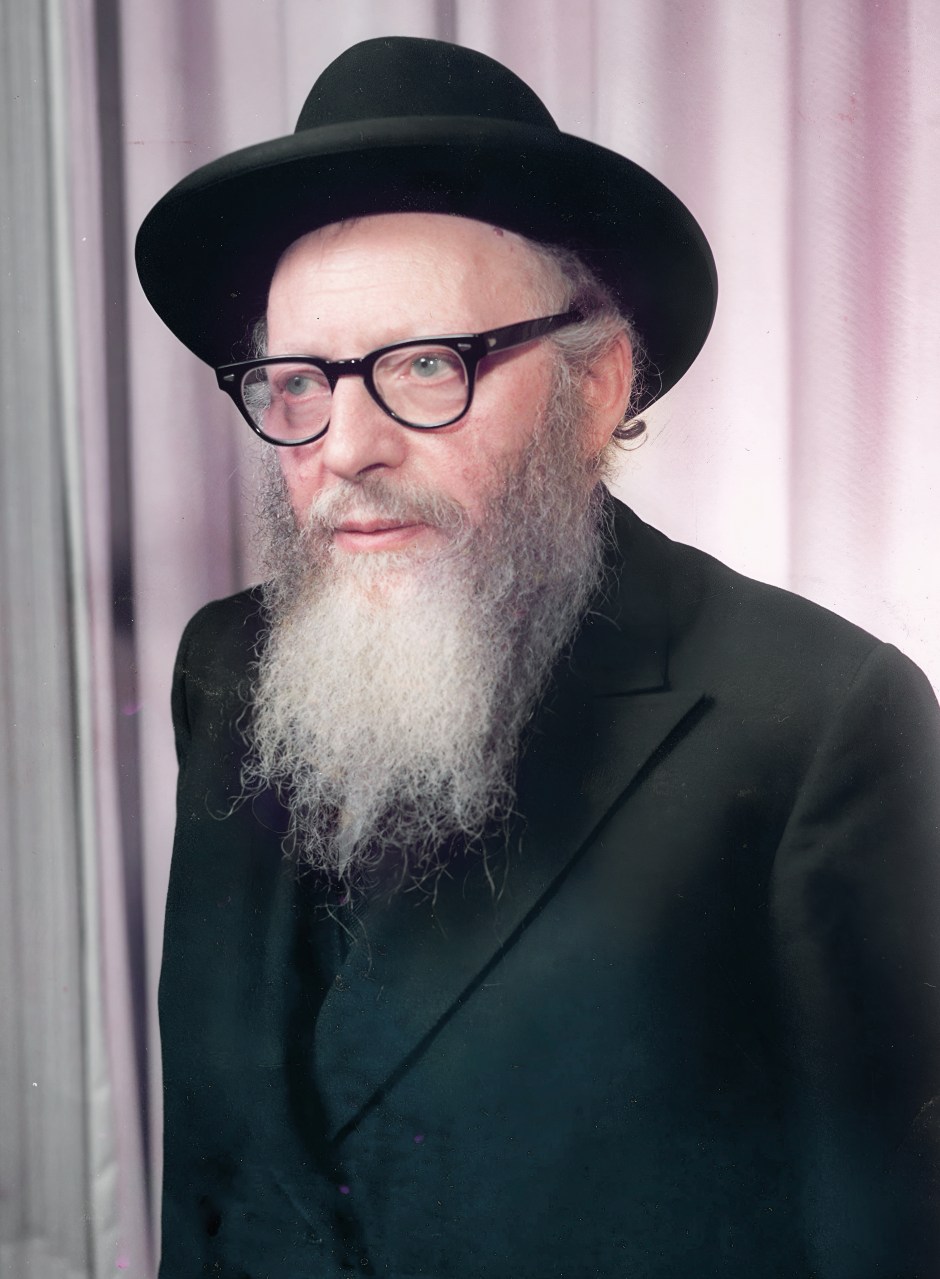
Rav Shach

Once, Rabbi Elazar Menachem Shach contacted Rabbi Chizkiyah Katzberg, a mashgiach in a Bnei Brak yeshivah and said, “In your yeshivah there is a bachur named Aron Taplin. I would like you to arrange for him to study every day with a kollel member, who will help Aron to advance in his studies. I will pay the young man for this. Please come to me each month on Rosh Chodesh to receive the young man’s payment.”
Rabbi Katzberg wondered why Rav Shach had singled out this bachur for this special arrangement and eventually found out why.

When Rav Shach was a bachur during the First World War, he endured tremendous deprivation. He was all alone, and learned in a beis midrash in Slutzk day and night, living on virtually nothing but bread and water and sleeping on a bench in the beis midrash. He had one shirt, which he washed once a week in honor of Shabbos.

One day, a Jewish woman approached him and said, “I could not help but notice that your shirt is ripped. Shouldn’t you change your shirt?”

“I have no other shirt,” he replied.

The woman soon returned with two shirts for him to keep.

After the Second World War, Rav Shach tried to find out what happened to this woman and her family and learned that her entire family was killed, except for one grandson, Aron Taplin.

Rav Shach’s helping Aron Taplin to advance in his learning was his way of expressing hakaras hatov for what his grandmother did for him. 


AHAVAS HASHEM: Body and Soul!

Adapted from: Infinite Love by Rebbetzin Tziporah Heller Gottlieb

Are you your soul? Are you your body? Rav Moshe Chaim Luzzatto, the Ramchal, says you are both.

Your body continually changes and ultimately dies. Does that mean you are your soul?

What is your soul?

It’s far easier to talk about what it is not. It’s not physical, and for that reason, it’s not drawn to physical experience. “Wait a minute,” you may find yourself saying. “If the soul is me and it’s not drawn to physical experience, who stood in line for pizza? Who diets endlessly to look better?”

You have a point. You are not only your soul. Your soul and your body are in partnership. They are like “two companions who never part.” They are like dough. You start with separate ingredients, but when you mix them, they morph into a dough and become inseparably one.

For body and soul, the partnership isn’t always a smooth one.

Your body is a constant actor in the play called Personal Reality. It is your constant companion. Hashem gave you your body to let you actualize yourself. It allows the most enduring part of you, your soul, to articulate your values concretely and express itself in this very physical place called earth. The soul realizes all this and identifies with the body enough to feel obligated to care for it, provide for it, and respect the partnership Hashem forged. Your soul was created with a strong intuitive sense of what the body needs and wants, and it’s programmed to be sensitive to its partner.

There is a bridge between body and soul. Your capacity to see more than coarse and transient reality is found there. Your love of nature, literature, art, music, are all part of both your body and your soul. The heart, the seat of emotion, uses physical imagery and experience to make the bridge real. When looking at this “bridge,” the question becomes whether these experiences use your senses to walk the bridge toward your higher self, your soul, or whether they take on a life of their own, perhaps enriching the body, but not touching the neshamah.

Your soul isn’t your body. It is the part of you that experiences Hashem both intuitively and intellectually. When your soul is exposed to inspiration, it can “forget” the body momentarily, just as the body can “forget” the soul.

The soul won’t let you forget it forever, and the body can’t let you forget it forever. The soul, by its nature, longs for a world of enduring light and ideals that have their roots in a higher plane. The body has its own needs and wants. There are people whose lives reflect their ability to see their core identity as their souls and, at the same moment, recognize that in this world, the soul needs to be in partnership with the body. Others make the mistake of thinking that the two can exist independently. They can’t. The body and soul “think” differently. The body is concerned with Now. It wants to take and make Now as rewarding as possible. The soul is concerned with being rather than having, and Now is not as important as longing for a bit of light or meaning.   

TEFILLAH INSPIRATION: One for All!

Adapted from: The Power of Shema by Rabbi Meyer Yedid

One of the definitions of the word shema is “to gather.” How does that fit into Shema Yisrael? What kavanah am I supposed to have when I say Shema Yisrael with regards to gathering? What exactly am I gathering?

Before we answer that, let’s consider another question, an oddity that many of us may have never noticed, even though it pops up in pesukim throughout the Torah. Let’s take, for example, a pasuk from Parashat Kedoshim (Vayikra 19:9): וּבְקֻצְרְכֶם אֶת קְצִיר אַרְצְכֶם לֹא תְכַלֶּה פְּאַת שָׂדְךָ לִקְצֹר.

This pasuk is talking about the mitzvah of pe’ah, the obligation to leave an end of the field unharvested for the poor to eat. The first words, וּבְקֻצְרְכֶם אֶת קְצִיר אַרְצְכֶם, When you reap the harvest of your land, are in the plural. The כֶם of קֻצְרְכֶם and the כֶם of אַרְצְכֶם both signify the plural form. But, surprisingly, the next words — in the very same pasuk — are in the singular: לֹא תְכַלֶּה פְּאַת שָׂדְךָ לִקְצֹר, You shall not complete your reaping to the end of your field. Here, both the word תְכַלֶּה and the word שָׂדְךָ indicate the singular.

What’s going on here? And there are many other examples of the Torah switching back and forth between singular and plural when addressing the Jewish people. Which way should it be? 

The Tzeror HaMor (Vayikra 19:19) from R’ Avraham Saba offers a beautiful explanation. He says that even when there are millions of Jews, they are considered one person, one neshamah. There is a neshamah called Am Yisrael, and every single Jew is a part of that one big neshamah.

The Gemara (Shevuot 39a) teaches: Kol Yisrael Areivim Zeh Bazeh. Simply, that means that all Jews are responsible for one another, but the word Areivim is related to the root Areiv, to mix. Accordingly, the Tomer Devorah teaches that Kol Yisrael Areivim Zeh Bazeh means that all Jews are intermingled. Inside of every Jew is a sliver of every other Jew. We are all areivim, responsible for one another, because we are all me’uravim, mixed together. We are one! “Love your neighbor as yourself” (Vayikra 19:18), because he is literally a part of yourself.

We are all fully invested in the success of every Jew, similar to the partners of a corporation. If one salesperson closes a huge deal, then not only does he make money, but every partner makes money. If he causes a loss, then not only does he lose money, but all the partners lose money. So, Am Yisrael is like one company; when someone does something great and lifts up his neshamah, then all of us benefit spiritually from that. And if, Heaven forbid, it’s the other way around, all of us go down because of that.

And that’s why, the Tzeror HaMor says, the Torah always talks to us in two ways: It talks to us as individuals, because we have to be responsible for ourselves. But it also talks to us as one entity, because we have to know that we are not only responsible for ourselves, but we are also responsible for every other person in our nation, represented by every other part of our neshamah.

What does Shema have to do with gathering? What is the kavanah we are supposed to have? The answer is, when someone says Shema Yisrael, he turns to the rest of the Jewish nation and says, Let’s do this together. Let’s commit together. A piece of every one of you is in me and a piece of me is in every one of you. I feel for you as I feel for myself and I am responsible for you as I am responsible for myself.

You cannot turn to Hashem as a lone individual and expect to be successful. When a Jew says the Shema, it’s not enough that he is thinking about himself. You can’t just say, Shema, Hashem, me and You. You have to think about the rest of the Jewish nation, and you have to feel a togetherness with them, and you have to feel responsible for all of them. Shema Yisrael means “Together, Yisrael!” We, the Bnei Yisrael, declare together and commit together that we serve the One and Only G-d.   

PARASHAH INSPIRATION: Insights into Rashi

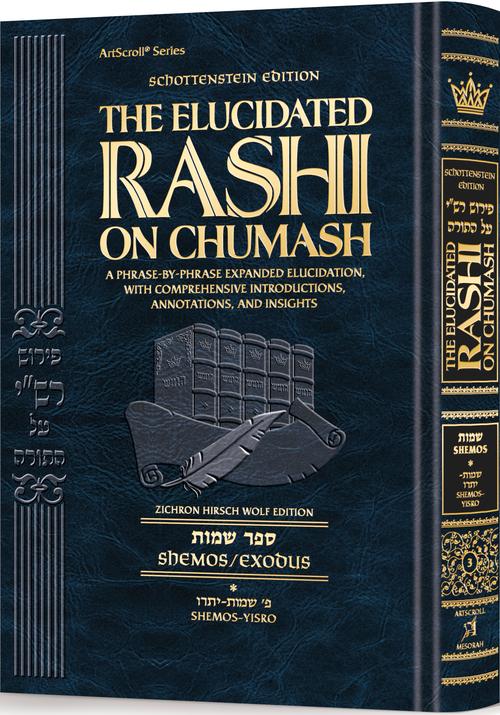
Culled from the Insight section of the recently released Elucidated Rashi on Chumash, Shemos-Yisro 

Rashi to Pasuk 3:12  ד״ה וַיֹּאמֶר כִּי אֶהְיֶה עִמָּךְ — 

And He Said, “For I Shall Be With You…”

Rashi explains that Hashem ensured Moshe that the Jewish people deserved to be taken out of Egypt because they would later accept the Torah on Mount Sinai.

INSIGHT: Future Merit 

In his commentary to Bereishis (21:17), Rashi explains that Hashem only judges a person based on his current behavior— not his future actions. Therefore, Hashem provided water for Yishmael in the desert, without considering the sins that he or his offspring would commit in the future. Similarly, the Midrash (Shemos Rabbah 3:2) teaches that Hashem redeemed the Jewish people from Egypt, despite the Sin of the Golden Calf, which He knew they would later commit, for He sees iniquity but does not consider it (Iyov 11:11), instead limiting His judgment to the present moment. However, Rashi’s comment to our verse indicates that Hashem does account for the future in judgement, for He credited the Jewish people with the merit of accepting the Torah before they had done so!

To resolve this contradiction, Parashas Derachim suggests that although Hashem does not account for our future transgressions, He does account for our future merits, for His system of justice is tempered by His great mercy and kindness. Indeed, while those very people who would later accept the Torah would also participate in the Sin of the Golden Calf, Hashem redeemed them for their future merit while simultaneously ignoring their future iniquity (Parashas Derachim §4; see Zohar, Vol. 1, 121b).

Rav Chaim Kanievsky

Rashi to Pasuk 5:20  ד״ה וַיִּפְגְּעוּ — 

They Encountered.

Rashi explains in his second approach that the “the officers of the Children of Israel” who spoke harshly to Moshe and Aharon were the wicked Dassan and Aviram (Nedarim 64b; Shemos Rabbah 5:20).

INSIGHT: Dassan and Aviram’s Conflicting Traits

While Dassan and Aviram are noted throughout the Torah for their wickedness (see Rashi above, 2:13, 15, 4:19; below, 16:20; Bamidbar 16:1, 12-14, 27), according to this approach of Rashi, they possessed an element of great virtue: They were among the officers of the Children of Israel who let themselves be beaten rather than enforce Pharaoh’s unfair work quota on their brethren! Now, Rashi explained in v. 14 that the officers who took such beatings merited to become members of the Sanhedrin and attained prophecy. This does not mean that all the officers achieved that status. There were thousands of officers (one for every ten Jewish laborers; Shemos Rabbah 1:28), and only seventy of them — the most worthy ones from each tribe — were appointed to the Sanhedrin. Dassan and Aviram surely were not on the Sanhedrin. However, the merit of taking beatings for their brethren benefited them in another way. Rashi writes below (10:22) that there were wicked Jews who did not want to leave Egypt and they died during the Plague of Darkness. Dassan and Aviram were in that evil group, but they survived, and in fact remained in Egypt when Moshe led the Jews out at the time of the Exodus (Targum Yonasan to 14:3 below). At some later time, they joined the Jews in the Wilderness and resumed their wicked behavior. Why did they not die during the Plague of Darkness? R’ Yehoshua Leib Diskin explains that it was in the merit of the beatings that they took on behalf of their brethren. Despite their evil desire to remain in Egypt, they were spared from death. But while they gave of themselves for their brethren, their behavior toward Hashem remained evil, and when the Jews left Egypt they chose to remain behind. After the Splitting of the Sea, when all the Egyptians drowned and it was evident that Egypt had no future, Dassan and Aviram joined the other Jews in the Wilderness. There they carried on their wicked ways, acting as thorns in Moshe’s side until they were swallowed up by the earth together with Korach (Maharil Diskin al HaTorah).

R’ Chaim Kanievsky would often point out a lesson to be learned from this incident. One who suffers on behalf of his fellow Jews gains enormous merit which may save him from death even if he has grave sins — but there is a limit to this merit. Once the person gets involved in dispute, as Dassan and Aviram did when they joined Korach’s rebellion, even the great merit of taking blows for other Jews will not save him (Minchas Todah [Honigsberg], p. 443). 

LEADERSHIP INSPIRATION: DON’T STOP THE MUSIC!

Adapted from: A Heart for Another by Rabbi Yaakov Bender

I remember the levayah of Rav Aharon Kotler, and how we accompanied the aron to the airport, from where it was to be flown to Eretz Yisrael for kevurah. In an unprecedented move, TWA Airlines had agreed not just to transport the aron to Eretz Yisrael in regular passage, removing several seats from the aircraft to allow for the space, but they had also consented to place a curtain around the aron and allow a group of talmidim to sit around it, continuing their shemirah until the kevurah.

It was a rare display of true kavod HaTorah for the America of those years, and the send-off from the airport was equally respectful, as befitting a levayah for a giant, a Rosh Yeshivah, a manhig, and a father to so many.

Just after the levayah, his son and successor, Reb Shneur, was sitting in the airport and accepting nechamah from people, a line forming in front of him despite the din and commotion all around.

Somehow, Reb Shneur, the bereaved son, managed to pick up a heated discussion between some of the bachurim, though they were not in front of him. He called one of them over and asked what they were talking about.

The talmid explained that there was a chasunah that night for one of their friends, but none of them felt it appropriate to go dance. They were simply too heartbroken.

Reb Shneur Kotler

Reb Shneur looked at him in surprise. “It is not even a shailah,” he said, “that just as you had a tafkid to mourn your rebbi, you now have a tafkid to be mesameiach a chassan and kallah. Why should the couple lose out on the simchah that is rightfully theirs because of what happened?”

Interestingly, I think that this might have been the first psak that Reb Shneur gave after assuming his father’s position, and it reflects his leadership. He had the unique ability to balance what sometimes appeared to be contradictory demands, to know how to fuse genuine yiras Shamayim with genuine simchah, to protect and safeguard the olam hayeshivos while radiating ahavas Yisrael and respect for each Yid.

Not long after the Second World War, Rav Michoel Ber Weissmandel met with the Satmar Rebbe.

Later, he told his talmidim, “I have never seen a Yid whose heart is as broken as that of the Satmar Rebbe… he just covers it over with his smile.”

The Satmar Rebbe carried the pain of the klal and of the yachid. He lived, as the Chovos HaLevavos tells us about tzaddikim who are constantly doing teshuvah, with “aveilo b’libo, his mourning in his heart, v’tzahalaso al panav, his joy on his face.”

That balance made him such a great leader.

During this last period of war in Eretz Yisrael, when we heard bad news day after day, I received a call from the parents of a bar mitzvah boy. They wondered if they should cancel the music they had planned for their son’s bar mitzvah as a way of commiserating with those suffering in Eretz Yisrael.

I told them that they absolutely should not cancel the music. Why should the boy lose out on something his friends had, and feel badly about it? And why should they absolve themselves with a mere external act of empathy?

Rather, I suggested, they keep the music. But instead, they should give their hearts. They should undertake to daven more and reflect more on the reality of people living under the threat of constant danger, of children whose schools are closed, parents who cannot work, fathers and brothers called away from home.

When they feel the pain and distress, they should say a perek of Tehillim, and then go dance at the bar mitzvah.

Both are possible, and that is what it means to be a Yid.