EMUNAH: You Will Always Gain

Adapted from: Living Emunah 8 by Rabbi David Ashear

A yeshivah in Israel once rented a bus to take the students on an excursion. Whoever wanted a seat on the bus had to pay in advance and was given a ticket with his seat number on it.

On the day of the trip, Binyamin* boarded the bus and found someone else sitting in his seat, the one he had paid for. This other student had not paid for a seat at all. Binyamin headed toward the person in charge to ask him to remove the boy from his seat. One of the rabbis saw what was happening. “Vatranus,” he instructed, “giving in on your rights, is a very virtuous middah.”

The boy said, “But Rabbi, I paid, and he didn’t.”

The rabbi replied, “Vatranus is not when you’re 99 percent right and the other party is 1 percent right; it’s when you are 100 percent right and you still give in.”

Although we hear many stories about the great segulah of vatranus, it’s never enough. We always need chizuk in this area, because it’s so hard to give in — especially in the heat of the moment.

R’ Bergman* told me there were two boys in his yeshivah who constantly argued with each other. It bothered him a great deal, and it was having a negative effect on the rest of the yeshivah.

One day, he called a meeting with these boys and taught them the unbelievable segulah of giving in and making peace. “Give in to each other and make shalom and then you can ask Hashem for whatever you want.” The boys were moved by the rabbi’s plea, and they agreed to make peace.

About five weeks later, one of the boys came back to the rabbi to thank him. “Hashem answered the tefillah I made that day,” he said. “I asked Hashem to bring my unmarried thirty-year-old brother his shidduch. The very next day the shidduch was suggested and now, five weeks later, we are about to celebrate the engagement!”

The following year, R’ Bergman made a bris milah for his first (and, as it turned out, only) son in the yeshivah. The second of the formerly squabbling boys came to him at the bris milah and said, “Hashem answered my tefillah.” He explained: “R’ Bergman had four girls and expressed his desire to have a boy. I prayed to Hashem that day for the rabbi to have a boy and, baruch Hashem, here we are celebrating the bris milah.” 

The power of vatranus is amazing.

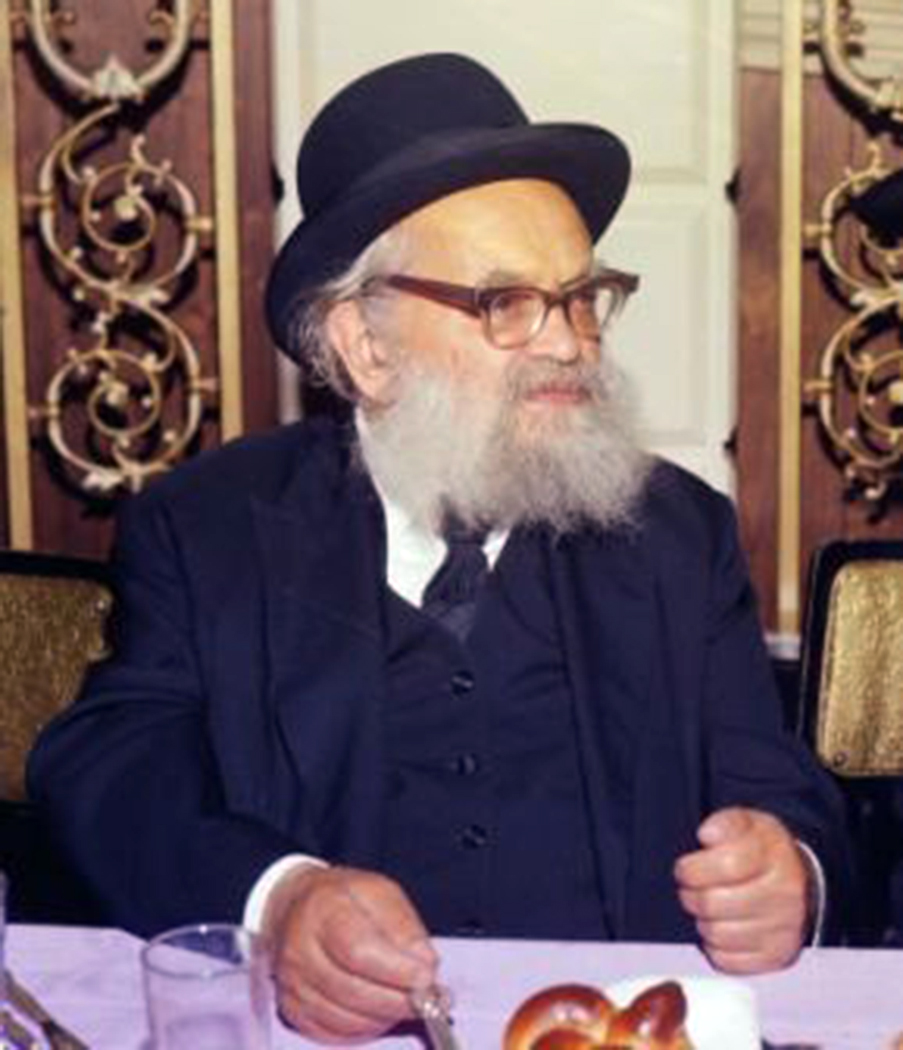
R’ Elimelech Biderman

R’ Elimelech Biderman told a story about one of his own talmidim, which took place not long ago.

The man and his wife rented a hall for a sheva berachos they were hosting on Leil Shabbos. They came on Friday to set up and saw that the venue was already prepared for a different sheva berachos. The wife told her husband, “Let’s just be mevater without telling anyone anything, and leave now. Being mevater always gains.” The husband agreed, and they found a different shul that let them use a room for their simchah.

The woman later shared that her father was scheduled to undergo surgery to remove a cancerous growth that same week. When the surgeons opened him up to remove it, they saw that it was gone!

The husband told R’ Biderman that he remembered a similar story R’ Biderman had told just a couple of weeks before, which gave him the chizuk to be mevater, and now he experienced a yeshuah as well. “However,” he added, “in your story, Rabbi, the people were already fighting and then one party gave in. In my story, we gave in before the fight even started! You see from here that the segulah of being mevater works even if there never is a confrontation.”

It is absolutely true that being mevater always gains. We don’t always get to see the immediate benefits of it, but we can rest assured that Hashem appreciates every effort we make when being mevater and He will reward it at the proper time. 
PARASHAH: Men of True Strength

Adapted from: Living the Parashah by Rabbi Shimon Finkelman

פִּינְחָס בֶּן אֶלְעָזָר בֶּן אַהֲרֹן הַכֹּהֵן …

Pinchas son of Elazar son of Aharon the Kohen … (Bamidbar 25:11)

Why did the Torah have to trace Pinchas’ lineage to his grandfather Aharon for yet a second time? Rabbi Zalman Sorotzkin writes that this is meant to highlight the greatness of Pinchas’ heroic act. As the grandson of Aharon HaKohen, Pinchas inherited a love of peace. It was against his very nature to harm anyone. Yet, when the prince of the Tribe of Shimon committed his immoral act, and thousands died as a result of this and similar sins, Pinchas went against his nature. He remembered the halachah that Moshe Rabbeinu taught and he carried it out, killing the prince and the one with whom he had sinned. For this, he received inestimable reward; he achieved the status of a Kohen and was blessed with immortality.

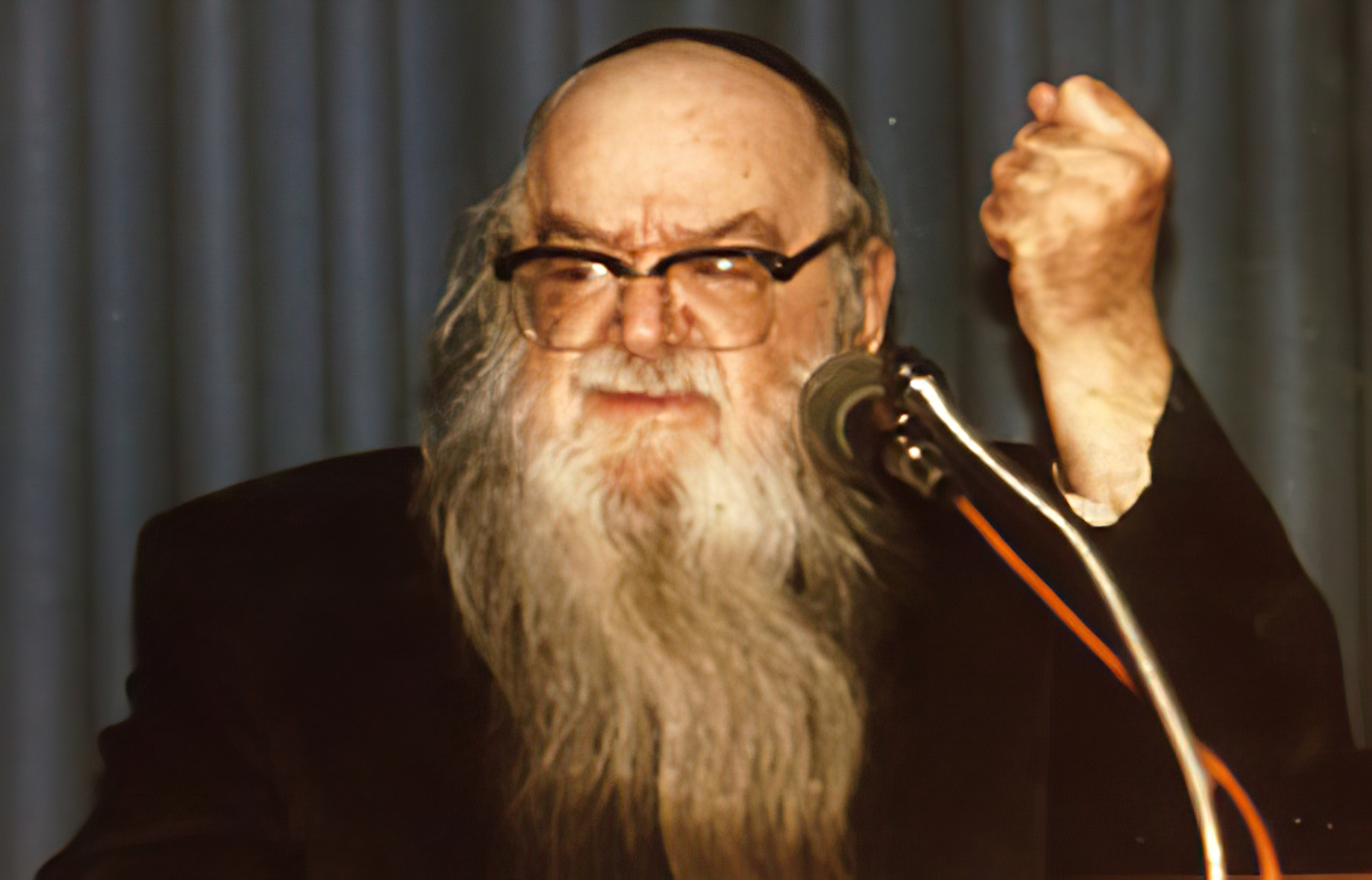
R’ Sholom Schwadron

Overcoming one’s inborn nature and desires is the way to achieve true spiritual greatness in this world.

As a young man in Jerusalem, Rabbi Sholom Schwadron longed to save Jewish youths being swept up by the euphoria following the founding of the State of Israel. These were teenage boys from chareidi homes being drawn to the secular society around them — a society that scorned those devoted to Torah study.

R’ Sholom and some friends arranged night classes where neighborhood boys could voluntarily come to learn and be inspired. Many boys did — and many became true bnei Torah because of it.

One boy, who had attended nearly every class, suddenly missed a few nights. When R’ Sholom asked him why, the boy hesitated. 

“All right, I’ll tell you. This week is the soccer championship. I love soccer — I have to watch it!”

“Soccer, you say? I’ve heard of it, but I don’t know how it works. Could you explain?”

“Well, there are two teams and two nets on opposite sides of the field. The team that kicks the ball into the net the most times wins. In fact, whenever the ball gets kicked into the net is a very exciting moment in the game.”

“I don’t understand,” said R’ Sholom, looking very confused. “The whole point of the game is to kick the ball into the net? For this you need to be a professional athlete? Why, anyone can do that!”

The boy laughed. “Oh, I’m sorry, I left out one important detail. There is a goalie in front of each net. His job is to keep the ball out of the net, and he is usually quite adept at this. So it’s really not that easy at all.”

“I still don’t understand,” said R’ Sholom. “I’m sure that the goalie does not stand in front of the goal 24 hours a day. He has to sleep, he has to eat. So why doesn’t the opposing team wait until the goalie leaves and then kick the ball in a thousand times!”

“But that would be pointless,” said the boy, who by now was more than a bit exasperated. “When the goalie is not there, there’s no challenge! The whole point of the game is to score goals precisely when the goalie is there!”

R’ Sholom gazed deeply into his talmid’s eyes. “Listen to what you yourself have just said. To score points when there is no challenge is meaningless. Yet you want to wait until the soccer championship is over to resume your learning. But then, there will not be much of a challenge; this great distraction, or temptation, will be gone. The challenge is now, while the championship is in progress and you have such a strong desire to watch it. If you overcome this challenge and come to learn while those games are in progress, you will have done something great.”

With a hearty handshake, R’ Sholom took leave of the boy.

The next evening, while the games were in progress, the door of the beis midrash swung open and in walked this boy. R’ Sholom stood up in respect for this budding ben Torah and what he had accomplished. 

PEREK SHIRAH: Song of the Deer

Adapted from: A Daily Dose of Perek Shirah by Rabbi David Sutton

צְבִי אוֹמֵר: וַאֲנִי אָשִׁיר עֻזֶּךָ וַאֲרַנֵּן לַבֹּקֶר חַסְדֶּךָ כִּי הָיִיתָ מִשְׂגָּב לִי וּמָנוֹס בְּיוֹם צַר לִי.

The deer says: But I will sing of Your might, and rejoice towards morning in Your kindness, for You have been a stronghold to me and a refuge in the day of distress (Tehillim 59:17)

These are the words of a man on the run. When Shaul HaMelech sent his men to pursue David, Hashem planted a strategy in Shaul’s mind: The men would not break into David’s house and kill him immediately; rather, they would surround his house to prevent him from escaping. The plan was completely ineffective, for David was able to flee in the middle of the night. Furthermore, by waiting outside, Shaul’s men not only gave David time to escape, but also gave him a substantial head-start in his flight.

David rejoices toward morning because when dawn begins to break, he sees that he has put a substantial distance between himself and his pursuers.

The deer sings this song to Hashem, says the Chida, because its ability to run swiftly is the survival tool Hashem endowed him with. And that ability is frequently tested, because the deer is a sought-after animal. Its hide is strong, appealing to the eye, and useful for many purposes. Its meat is tasty. In addition, people enjoy the sport of deer hunting. There are many types of traps and snares designed to catch deer. Only because Hashem saves it again and again does the species manage to survive. In this way, the deer not only represents David HaMelech, but the entire Jewish nation.

Another aspect of the deer’s speed is that it uses this gift only to defend itself. It is always the prey, never the predator. It doesn’t use its speed to fight its pursuers, nor to take food from other animals. Because the deer is content with what Hashem gives it, and relies on Him for protection, Hashem treats it with extra care, for as Koheles (3:15) says, v’ha’elokim yivakesh es nirdaf, Hashem helps the pursued one. Thus, the deer teaches us to avoid unnecessary confrontation.

A further insight emerges from the fact that this praise is sung towards morning, while it is still night. The sefer Yashir Moshe explains that although morning symbolizes salvation, David HaMelech’s trust in Hashem is so complete that just contemplating the salvation that lies ahead gives him strength. He doesn’t have to see it to believe it.

A final lesson comes from the letters of the Hebrew word for deer — צְבִי. These are the first letters of the pasuk from Chabakkuk (2:4) that states,  צַדִּיק בֶּאֱמוּנָתוֹ יִחְיֶה— The righteous person shall live through his faith. That describes the deer, who has no power to fight; he can only run. He trusts Hashem to carry him to salvation and sings his song of emunah to the world. 

PRACTICAL TAKE-AWAY

The deer teaches us that Hashem has equipped every creature, including each person, with access to the resources it needs to survive. He saves us by giving us what we need to save ourselves.

EMUNAH: Perhaps Even Double

Adapted from: Living Emunah 8 by Rabbi David Ashear

R’ Aharon Margalit was invited to speak in a shul on the topic of kibbud av va’eim. Part of his talk was about children judging their parents favorably. After the speech, an older couple was waiting to speak to him. The husband, who introduced himself as Shmuli,* took a deep breath and shared his heartbreaking story.

Shmuli’s father, a very generous and respected man, had passed away two months previously. He left nine copies of his will; each of the eight children received a copy and the final one went to the community rabbi.

After the shivah, Shmuli opened the will, which clearly detailed all his father’s possessions and assets and how they were to be distributed. When he reached the end of the list, he froze, because one of the children was not mentioned at all — and that was him, the eldest of the siblings. He was utterly shocked and bewildered and felt a terrible sense of betrayal. He had had an excellent relationship with his father throughout his entire life and did not understand why his father would do this to him.

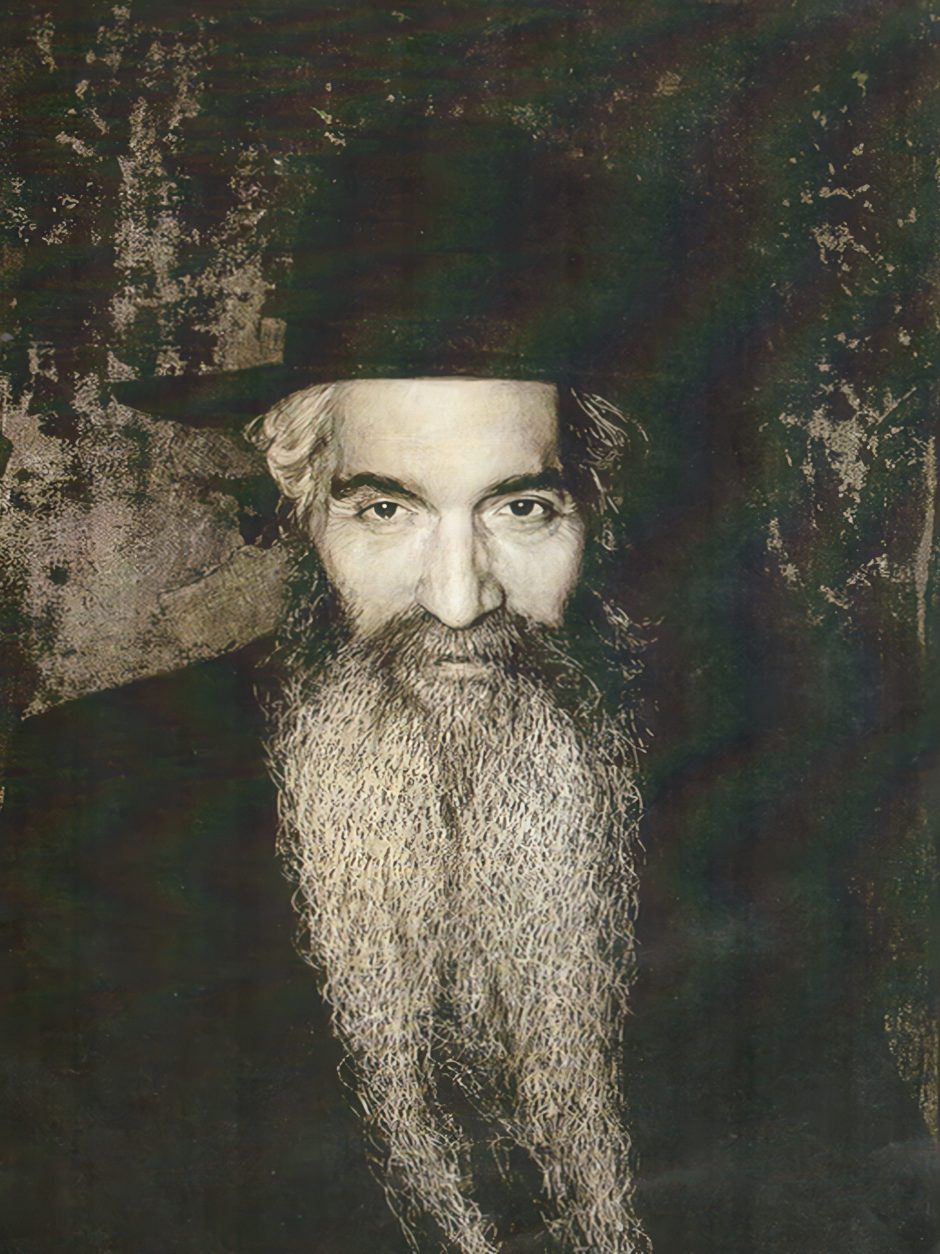
R’ Aharon Margalit

The siblings got along very well, and one of them suggested ignoring the will and redividing everything among the eight of them. Shmuli nixed the idea, saying he did not want to take anything that his father did not want him to have.

Shmuli then said, with tears in his eyes, “Even though the money would have come in handy, what really bothers me is that I can’t understand why my father did this to me. Since that awful day when we read the will, I can’t eat, I can’t sleep, I can barely function, because of all the horrible thoughts swirling through my mind. I’ve lost twenty pounds since that day. And so much of my joy and zest for life has disappeared.

Rabbi Margalit asked Shmuli if he was on good terms with his father, to which he replied that they had been extremely close. The rabbi then asked him how many children he had. He said, “Baruch Hashem, I have twelve and married them all off.” He also said that he struggled greatly with parnassah and had confided in his father about what a rough time he was having. The rabbi asked Shmuli if his father helped him at all financially. Shmuli said, “My father was very generous. He gave me $50,000 for each of my children’s weddings.”

Rabbi Margalit then said, “That means he gave you $600,000. It seems from the will here that each of your siblings received around $300,000. Not only did your father give you, but he gave you double what he gave everyone else.”

Shmuli listened to the rabbi’s words and acknowledged the truth of what he was saying. He then embraced the rabbi and said, “I have no words to thank you. You have removed a boulder from my heart. I’m only wondering why my father didn’t indicate that in the will.”

The rabbi replied, “The question is on you, not him. How did you fail to realize and appreciate all that your father has done for you throughout your life? He gave you double what he gave your siblings, and I assume he didn’t believe you could ever forget such a thing so quickly.”

Unfortunately, sometimes we make the same error that Shmuli made with our Father in Heaven. We get so upset, wondering why Hashem is not giving us what we want, and we feel so entitled to these feelings, especially when we see others getting what we would like for ourselves. But we fail to realize that Hashem has blessed us in so many ways, perhaps giving us double what He gave the people we envy. We may not understand what true blessing is until it is pointed out to us, but at the very least, we should never doubt that Hashem is always giving to us the way that a father should. 

PARASHAH: How R’ Aharon Built Lakewood

Adapted from: Aleinu L’shabei’ach by Rabbi Yitzchok Zilberstein written by Rabbi Moshe Zoren

מַה טֹּבוּ אֹהָלֶיךָ יַעֲקֹב — How goodly are your tents, O Yaakov (Bamidbar 24:5)

Rav Aharon Kotler managed to accomplish something that many other gedolei Torah did not manage to do: establish a vibrant yeshivah on the spiritually parched soil of America that would eventually become a magnet for tens of thousands of young scholars.

Much has been said about the gaon who established the glorious Lakewood Yeshivah, and many reasons have been given for his unique success. I wish to tell a story that demonstrates one of the reasons why he succeeded.

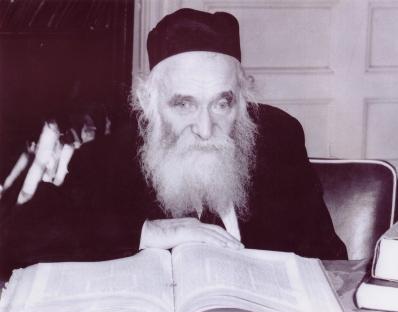
Rav Aharon Kotler

When the Lakewood Yeshivah began to grow in size and to develop a reputation as a superb makom Torah, larger facilities were required in order to house all of the students. The yeshivah’s administration had to construct an additional building, at an estimated cost of $100,000 which, 50 years ago, was a fortune.

To raise funds for the new building, the yeshivah held an elaborate dinner, which was attended by the greatest Jewish philanthropists in America. At the dais sat the Rosh Yeshivah, R’ Aharon Kotler, along with the members of the yeshivah’s board. In their speeches, the board members spoke about how the new building would contribute greatly to the flourishing of the Lakewood yeshivah and benefit American Jewry in general.

During the dinner, two great philanthropists suddenly stood up and declared that they were prepared to donate $75,000 to the building campaign, but with one condition: that another philanthropist sitting in the hall — and they gave his name — would also donate $5,000 toward the building.

When this man heard what had been said, he was incensed. “What right do you have to tell me what to do with my money?” he said angrily. “Is this how you are going to get money out of me: by forcing me to contribute?”

A short intermission was quickly announced, and as the guests at the dinner got up from their seats, the board members gathered to discuss what had just transpired. They all agreed that because donations of $75,000 were hardly an everyday occurrence, they had to do everything in their power to make sure the pledge materialized. The question was how to get the third philanthropist to agree to the condition of the first two.

The idea they came up with was as follows:

They would speak to the third philanthropist privately and tell him that there was no need for him to take $5,000 out of his own pocket. Instead, he could approach his friends and associates for donations, and since the Talmud teaches that a person who causes another person to do a mitzvah is greater than the one who actually does the mitzvah, it would be considered as though he himself had donated the entire $5,000. In that way, the condition of the two philanthropists would be fulfilled and the yeshivah would receive the promised $75,000 donation.

When R’ Aharon heard this suggestion, however, he categorically refused to have the matter handled in this way. He turned to the members of the board and said, “Torah is built only with truth. Anything that veers even slightly from the truth is not suited to the way of Torah, and will therefore not succeed. If the two philanthropists insist that their counterpart give $5,000, he has to take the money out of his pocket. We can’t fool the other two by having him raise money from his friends.”

R’ Aharon had spoken, so the plan was scrapped and the donation was forfeited. But the building was indeed constructed, and is now part of the massive Lakewood Yeshivah complex. R’ Aharon’s emes is what built the Lakewood Yeshivah, and it is that emes that formed the basis of its success. 

BITACHON: Gam Zu L’Tovah

Adapted from: Rabbi David Chai Abuchatzeira on Emunah and Bitachon

When a person has bitachon, it strengthens his heart so that he does not despair, regardless of what happens to him. Even when faced with adversity, he will strengthen himself with the confidence that whatever happens is from Hashem, Who seeks his benefit. Complete bitachon involves knowing that everything that happens to a person is true, absolute goodness; even if he cannot perceive how this is good, he should strengthen his heart to believe that this is absolute goodness. This is a fulfillment of the Mishnah’s teaching that a person is obligated to bless Hashem for the bad just as he blesses Him for the good (Berachos 54a), meaning that he must accept all that comes to pass with joy (ibid. 60b).

A wondrous story is told of the Rebbe R’ Zushe of Anipoli, brother of the Noam Elimelech. The Mezeritcher Maggid was once asked how it is possible for someone to bless Hashem for the bad exactly the same way as he blesses Him for the good, and the Maggid instructed him to present his question to R’ Zushe, who would make the answer clear. The impoverished R’ Zushe replied, “I don’t know the answer. How can I explain to you how to bless Hashem for the bad, when nothing bad has ever happened to me?” The questioner then understood how it is possible for a human being to achieve this level of contentment with his lot, for despite R’ Zushe’s dire poverty, he believed that this was surely for the good, to the extent that he could not think of anything bad in his life. Indeed, a true tzaddik does not feel that he lacks anything, even when he experiences adversity.

Even a person whose bitachon is not yet unshakable, and who is unable to strengthen himself to the point that he believes that everything that happens to him is purely good, must still have faith that the purpose of these misfortunes is to ultimately bring him good. Although matters are difficult for him now, he should know that this is all a preparation for the good that will eventually come to him. This is the meaning of the pasuk (Tehillim 107:43), Whoever is wise and guards this, will comprehend the kindnesses of Hashem. The word “guards” bears the connotation of “awaits,” as the pasuk says (Bereishis 37:11), His father guarded the matter, meaning that he awaited its fulfillment. The pasuk can therefore be understood to mean that even though what is happening to a person now seems to be negative, he should wait for the storm to pass and anticipate the time when he will be able to clearly see that everything was for his benefit. Then, he will be able to comprehend Hashem’s kindnesses, for all that Hashem does is for the best. 

CHESSED: The Lunch Break Drive

Adapted from: Moments of Greatness by Rabbi Yitzchok Hisiger

A yungerman, R’ Yitzchok Zev, visited Kiryas Yoel, the Satmar enclave in the town of Palm Tree in Orange County, New York, and shared the following with me. He was on his way out of Kiryas Yoel and wished to get a ride to the entrance of the community, from where he’d be traveling to Brooklyn.

As he stood at the curb, a car pulled up to give him a ride. R’ Yitzchok Zev immediately noticed that the car, a taxi cab, was being driven by a frum taxi driver. It was a bit awkward for a moment, as R’ Yitzchok Zev had been looking for a hitch — a free lift — and didn’t want to have to pay a taxi fare for the brief ride. He gently informed the chassidishe taxi driver that he was waiting for a hitch, not a taxi.

“No problem!” said the driver. “Come into the car.”

R’ Yitzchok Zev looked at him strangely.

“Come in,” the driver repeated. “I’m not charging you.”

As he sat down and closed the car door, R’ Yitzchok Zev asked, “But… don’t you drive a taxi for a living? What do you mean that you’re not charging me?”

The driver smiled as he pulled away from the curb. Turning to his passenger, he explained, “During the day, I drive this car as a taxi, so I have to charge money. But I don’t have an opportunity during that time to do chessed. Each day, though, I have a one-hour lunch break. During that break, I can do the mitzvah of chessed by providing rides free of charge.”

There’s something so pure and temimusdik about the response of this taxi driver.

You see, most people enjoy performing chassadim, but when it comes to what they do for a living, it’s much more difficult. After all, whatever their profession is, that’s the realm in which they earn their parnassah. Are they to perform that very service for free as a chessed?

Furthermore, say this taxi driver takes his lunch break from twelve to one each day. With his approach, at 11:55, he’s charging his regular fare, but when the clock strikes 12, he’s in chessed mode. Don’t you think there’s a yetzer hara at 12:01 to simply charge the passenger who just entered his car?

For this special driver, the answer is no. Because he’s obviously so trained in chessed, and it’s so much part of his DNA, that there’s no difficulty at all for him to transition from driving for parnassah to driving for chessed. 

MIDDOS: Berlin Is Not Yerushalayim

Adapted from: Beis HaLevi on Anavah by Rabbi David Sutton

Although Hashem told Avraham that his descendants would be in galus for 400 years, Klal Yisrael actually spent only 210 years in Egypt.

One explanation for this is that Hashem never said that the entire 400 years would be spent in Egypt specifically. Rather, the period of exile began earlier — with Yitzchak Avinu’s experience living as a stranger in a foreign land — and unfolded as a multi-step process spanning 400 years in total. 

However, we are still left with a question. If Yitzchak’s life counted as galus, why couldn’t we have spent all 400 years in Eretz Yisrael like Yitzchak Avinu did, in relative calm? 

Rav Yaakov Kamenetsky

Rav Yaakov Kamenetsky (Emes L’Yaakov, Shemos 1:1) gives an impactful answer. Galus, he states, is in the eye of the beholder. If the purpose of galus is for us to humble ourselves, then it’s up to us to become humbled by the situation. 

Yitzchak Avinu was humbled just by being in Eretz Yisrael. He was a lone man. There was no, so to say, Jewish nation. He was a stranger, and he felt it. And that was enough. Yitzchak fulfilled the words, ki ger yi’hiyeh zaracha — Your children shall be aliens, right there in Eretz Yisrael.

Then, as time went on, he gave birth to Yaakov, and Yaakov Avinu’s family grew. The setup of the family, with Yaakov surrounded by his twelve tribes, could be compared to the arrangement of the Mishkan in the Desert. There was a certain sense of belonging. They no longer felt like strangers. And so, they had to go down to Mitzrayim. They had to be b’eretz lo lahem— in a land not their own, in order to feel the galus, in order to be humbled. Initially, that was enough for them. Goshen, where they lived, was like a ghetto.

Then, as time went on, that, too, was no longer sufficient. They became too comfortable. The Jews began feeling like citizens. They were born there; their parents and grandparents had been born there. And that was when the hard work started, to fulfill the words: va’avadum— And they will serve them. At that point in time, they were sent to labor camps, where they had to work hard building pyramids.

When that was not enough to keep them humble, v’inu osam — and they will oppress them. The Egyptians tortured and tormented the Jews to humble them. 

Becoming too comfortable and not being humbled can be dangerous for our spiritual and physical existence. Decades before the Holocaust, Rav Meir Simchah of Dvinsk (Meshech Chochmah, Vayikra 26:44) wrote about the cycle of the history of the Jews, which has been recurring through the centuries. 

First, a Jew comes to a new country and feels like an immigrant. Then, slowly, he acclimates and becomes secure and comfortable until he forgets where he came from, thinks of himself as a very comfortable citizen, and starts to forget his religion. 

Speaking about the German Jews in his day, who were extremely cultured, Rav Meir Simchah declared, “They will think that Berlin is Yerushalayim.”

When that happens, he predicted: יָבוֹא רוּחַ סֹעָה וָסָעַר, יַעֲקֹר אוֹתוֹ מִגִּזְעוֹ — A gusty wind and a storm will come, uprooting him from his trunk.

As we know, history repeats itself. And this is the story of galus. As was once said, Those who cannot remember the past are condemned to repeat it. 

It’s been this way throughout the generations. Whenever we forget that we are strangers, that we are sojourners, the non-Jews come along and remind us of that fact. 

We must view ourselves as strangers, keeping a low profile, not making demands. Once we start demanding, What about my rights? I must have xyz… it’s a problem. 

Of course, we live in a democratic country, and we want to have rights, but we have to understand that deep down, this is not where we belong. As long as we have that understanding, then, until the coming of Mashiach, we can go back to a quiet, serene galus — like Yitzchak Avinu’s galus. But once we start feeling, Hey, this is mine, we are in trouble.

If we don’t want the non-Jews to remind us of our status, we must remember it on our own. We must remain in our space.

Because the purpose of galus is to make us humble. 

PIRKEI AVOS: No Time to Waste

Adapted from: Pirkei Avos: Generation to Generation by Rabbi Nosson Muller

רַבִּי חֲנִינָא בֶּן חֲכִינַאי אוֹמֵר: הַנֵּעוֹר בַּלַּֽיְלָה וְהַמְהַלֵּךְ בַּדֶּֽרֶךְ יְחִידִי, וּמְפַנֶּה לִבּוֹ לְבַטָּלָה — הֲרֵי זֶה מִתְחַיֵּב בְּנַפְשׁוֹ 

One who stays awake at night or who travels alone on the road, but turns his heart to idleness — indeed, he bears guilt for his soul. (Avos 3:5)

R’ Avraham Azoulai explains that the Tanna is discussing three different scenarios. First, one who wastes his entire night with idle matters instead of using it to rest so that his next day can be productive; secondly, one who walks alone in dangerous areas; and thirdly, one who refuses to fill his mind and heart with thoughts of meaning and significance. The common thread of all three circumstances is a person who gives no sense of importance to his life. Accordingly, the Tanna labels such a person as one who is killing his soul.

Bereishis Rabbah (Noach 3) relates that when R’ Akiva’s students would begin to doze off while he was teaching, he would ask them the following riddle in order to awaken them. “In what merit did Queen Esther reign over 127 countries? In the merit of the 127 years that her matriarch Sarah lived.” Why did R’ Akiva choose specifically this riddle and what is the meaning behind the answer?

Chiddushei HaRim explains that clearly, it was the merit of the perfect and all-encompassing 127 years of Sarah Imeinu’s life of avodas Hashem that enabled her granddaughter Esther, generations later, to reap the benefits of her good deeds. Yet the lesson here is much deeper than a simple mathematical calculation.

Imagine if one fine day, Sarah would have turned to her husband Avraham and said, “You know, it has been quite a century of hachnassas orchim! Perhaps in honor of our hundredth year, we should take a sabbatical for a year. No guests, no teaching, and no kiruv. Just a quiet and relaxing year; don’t we deserve a break? Of course, immediately thereafter, we will go right back to our vigorous and sacred work.” Would anyone be able to say Sarah was being selfish or self-centered? Of course not! But one thing would be certain; Sarah would only be credited for truly living for 126 years! Subsequently, her granddaughter Esther would have only reigned over 126 countries.

Every day of our lives is another block in the city we are building for ourselves to enjoy in the Next World. Every week that we live productively is another skyscraper in our very own town, and every hour in which we accomplish great things creates another park, flower, and shady tree in our personal paradise. It is for this reason that R’ Akiva chose this specific riddle to awaken his students from their slumber, as it illustrates so clearly the preciousness of each moment of life. He was subtly telling them, ‘Wake up, my dear children. There is no time to waste. We have empires to build.’

R’ Elyashiv gives two beautiful alternative explanations to the words of this mishnah.

“Hanei’or — One who merits being awake,” i.e. he is doing well and is secure in his life, “balaylah — yet others around him are going through times of darkness,” or a person who merits being “mehalech yechidi — one who is succeeding in the path he has taken,” yet his friends that have taken the same path have not yet seen success, “u’mefaneh libo l’vatalah — he empties his heart in disregard to the suffering of those around him,” such a person is “mischayeiv b’nafsho’” as his self-centeredness makes him a person who doesn’t deserve to live the life with which he has been blessed with!

The second explanation is based on the Gemara (Berachos 61).

The Gemara recounts that Papus ben Yehudah approached R’ Akiva and asked him why he wasn’t afraid to teach Torah in public after the Roman emperor threatened to kill anyone who would do so. R’ Akiva responded to him with a parable. “There was once a fox who was walking along the riverside and observed how the fishermen were attempting to catch the many fish swimming about.

“Seeing the desperate plight of the fish and imagining a delicious meal for himself, the fox slyly bent over and asked the fish why they were thrashing about in the water in such a panic. The fish responded, ‘Because of the nets that have been spread to catch us!’ The fox responded, ‘I have a brilliant idea that can help you! Why don’t you come on up to the dry land, far away from the fishermen’s nets, and we will live together happily ever after!’

“The fish replied to the fox, ‘Are you the animal that is considered clever? Clearly, you are a fool! If in the water — where we can survive — we are afraid, then most certainly would we need to fear for our lives if we were to go up onto dry land, where we cannot survive at all!’ So too,” said R’ Akiva to Papus, “if when learning Torah, we are in such danger, can you imagine what would become of us if we were to stop learning?”

This is what our Tanna is teaching us. “If we are a nation in the dark and alone, and we don’t fill our hearts with Torah, we cannot possibly prevail and are bound to falter!” Only when, despite our hardships, we cling to the Torah and fill our hearts and minds with its meaning, will we merit surviving the darkness and solitude of our bitter exile. 

CHESSED: The Rav’s Chocolate Cake

Adapted from: Moments of Greatness by Rabbi Yitzchok Hisiger

R’ Shlomo Gissinger was a beloved rav and posek whose yedios haTorah and leadership were matched by his remarkable compassion and sensitivity.

A bachur who was learning at Chavrei HaKollel in Lakewood became ill and a number of rebbeim took turns staying with him at Columbia Presbyterian Hospital in Manhattan.

A young Rav Gissinger with Rav Pam

One Erev Shabbos, one of the visiting rebbeim, R’ Miller, realized that if he didn’t head home from the hospital soon, there would be a risk of not getting back to Lakewood in time for Shabbos. He began a series of calls with R’ Gissinger to discuss questions about the patient and about driving home for Shabbos that late in the day. As the hours passed and the phone calls continued, R’ Gissinger finally ruled that it would be forbidden for the rebbi to travel back to Lakewood at that point. He would have to spend Shabbos at the hospital.

R’ Miller called his wife and informed her that he would be staying in the hospital with the patient over Shabbos, as R’ Gissinger had ruled that it was too late to head home.

A few minutes before Shabbos, there was a knock on the door of R’ Miller’s home in Lakewood. Mrs. Miller opened the door, shocked to see R’ Gissinger standing there, holding a chocolate cake.

“I know your husband won’t be able to be home for Shabbos,” R’ Gissinger said, “and I’m sure it won’t be easy for you and your family, so I brought you this for Shabbos.” R’ Gissinger gently handed the cake to Mrs. Miller, who stood speechless, touched to her very core by the thoughtfulness of the rav.

R’ Gissinger maintained an impossibly busy daily schedule, as he dealt with complex life-and-death questions, yet he never lost sight of the individual. In this case — and there were hundreds, perhaps thousands, of such examples — he had the presence of mind, just minutes before Shabbos, to think of the temporary discomfort of Mrs. Miller and her family.