PURIM: The Miracle You Don’t See

Adapted from: Around the Year with Reb Meilech by Yisroel Besser

We speak of the great miracles, the makkos, the splitting of the Yam Suf, Mattan Torah. Our people live with those images before their eyes.

But Purim has none of that, not a single instance in which nature changed, no clear revelation of Hashem’s dominion.

In the first perek, Vashti is killed. It’s a big story, but not unusual.

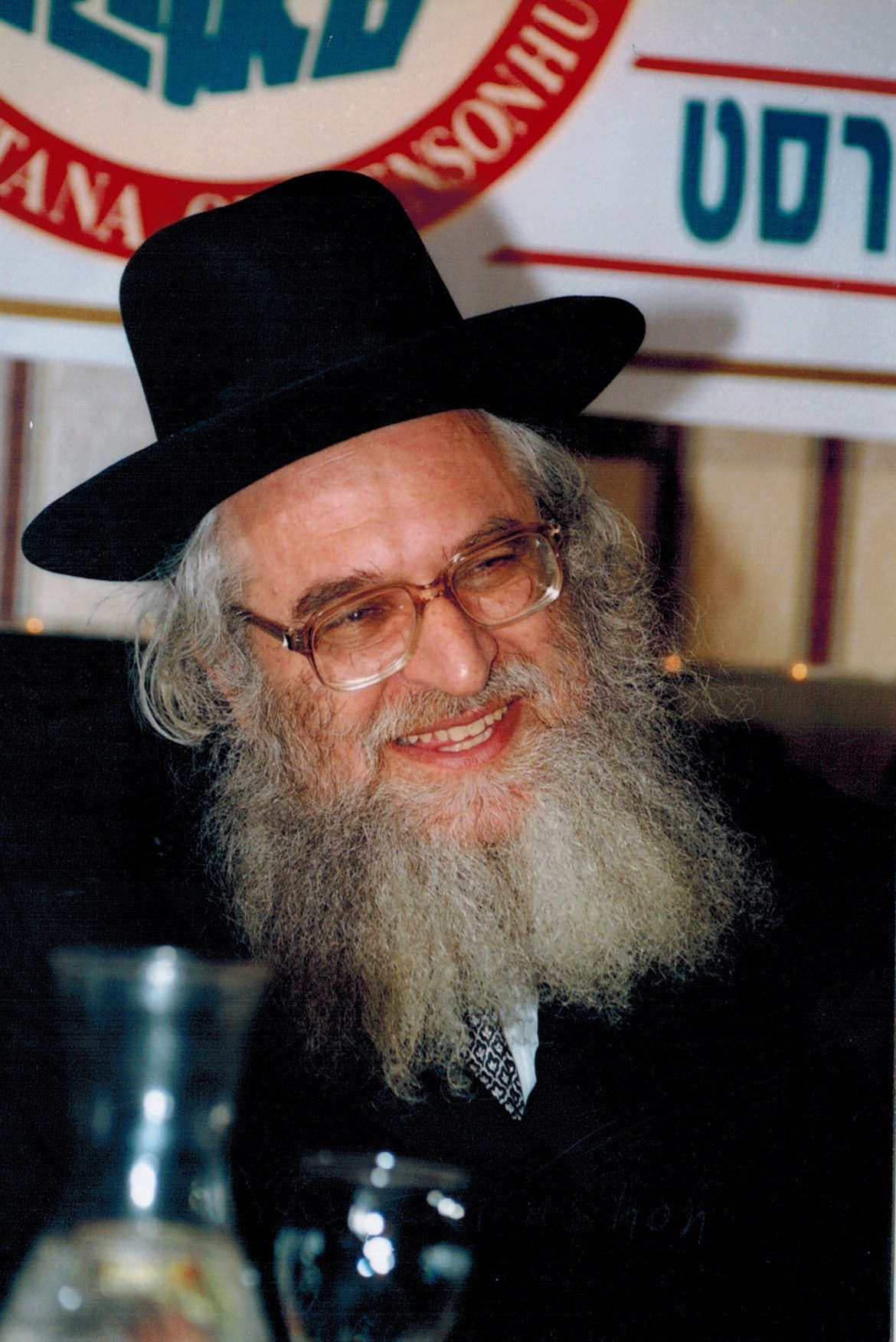
Reb Meilech Biderman

Reb Meilech pauses to reflect, “The Chiddushei HaRim would say that if someone mentioned it in shul the next day, no doubt one of the older members would have said, ‘Nu, Reb Yid, we don’t talk politics in this beis medrash.’ ”

In the next perek, Esther becomes the queen, and again, it’s noteworthy, but not miraculous in any way.

Bigsan and Seresh are planning to kill the king, and Mordechai steps in to save his life, an unusual story to be sure — but a story just the same.

Haman rises to prominence, and one night, he comes to visit the king, who cannot sleep.

Suddenly, mighty Haman is leading the beleaguered Mordechai on a horse, their roles subtly changing.

But it started at the moment when Vashti was killed. That was the first event that set the others in motion, and it happened without fanfare, the miracle concealed under layers of teva, nature.

It was as big a miracle as Krias Yam Suf, the Chasam Sofer writes, but so well hidden. That is why we rejoice in this month, he explains, because it reminds us that the Ribbono Shel Olam’s love for us endures, and His desire to do good with us is perpetual, regardless of the layers that block us from seeing it clearly.

That’s Chodesh Adar.

You can read Megillas Esther at any time of year, the Vilna Gaon writes, and you will feel emunah when you are exposed to the precision and perfection of His plan for us.

Reb Meilech is speaking in everyday language now, pulling out terms that have the people around him nodding in recognition. “Yesterday’s phone call and today’s message and the person you will punkt meet next week, suddenly everything comes together at one moment and you realize that He is in charge.”

That brings simchah. Little children start a puzzle and they become disheartened when they can’t complete it right away… but a wise parent says, “Sheifele, stick with it, it will come together and you will be happy you persevered…”

Chodesh Adar gifts us with new eyes, a vision that perceives that even in the layers of obscurity, He is showering us with His love. The Gemara tells us that a ganav, a thief, who steals in the stealth of night so that no man will see him, pays a fine equivalent to double that which he stole, while a gazlan, who fears no one and steals brazenly, pays only the value of what he stole (Bava Kamma 79b).

The Gemara explains the reason: A gazlan has equated the honor of the Master to the honor of the servant, fearing none of them, while the ganav fears man, but not the Creator.

Now, we know that a positive force is always stronger than its negative parallel, middah tovah merubah m’middas puranus. If a person is punished for fear of being seen by man, but not by Hashem, imagine the opposite — one who sees Hashem even in the actions of man, capable of perceiving the reality that He is in charge even when it appears that humans are in charge! He will certainly receive a double reward!

With this, Rav Chuna Halperin explained the words of the Shabbos zemiros: וְאַשְׁרֵי כָּל־חוֹכֶה לְתַשְׁלוּמֵי כֵפֶל מֵאֵת כֹּל סוֹכֶה שׁוֹכֵן בָּעֲרָפֶל — Praiseworthy is everyone who awaits a double reward, from the One Who sees all but Who dwells in a dense cloud.

One who can see the existence of the Ribbono Shel Olam in the dense cloud, who sees past the veil and recognizes the true reality, gets a reward of double, the converse of the punishment of one who sees only man and not the Creator.

Purim gives us this ability, the koach to see past the screens and barriers and perceive the truth.

PARASHAS ZACHOR: Overpowering our Enemies

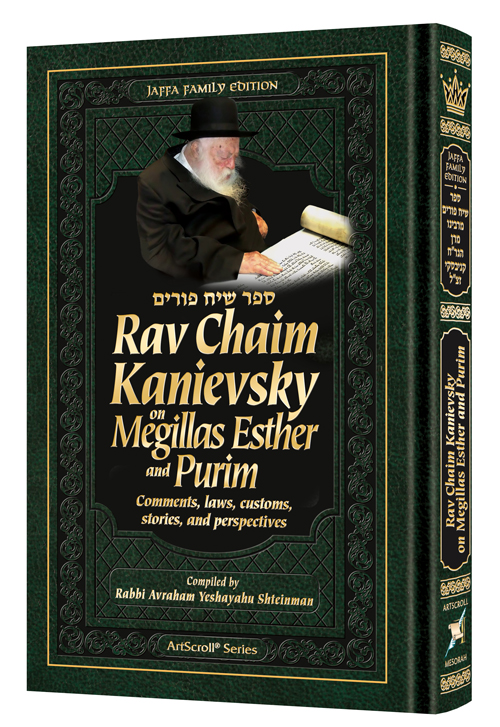
Adapted from: Rav Chaim Kanievsky on Megillas Esther and Purim compiled by Rabbi Avraham Yeshayahu Shteinman

When Rav Shteinman taught at the yeshivah in Kfar Saba, he wrote the following lecture as a bar mitzvah speech for a student of his; the bar mitzvah took place on the Shabbos before Purim (Parashas Zachor), 1947. [It is presented here in abridged form.]

The Torah commands us (Devarim 25:17): Remember what Amalek did to you. This mitzvah is one of the sheish zechiros, the six remembrances, the six matters that the Torah instructs us to remember every day [the six remembrances are found in most siddurim after Shacharis]. However, remembering what Amalek did does not seem to be at all like the other five remembrances. The other remembrances are those that apply at all times, and we are thus instructed to remember them at all times. For example, we are instructed to Remember the Shabbos day (Shemos 20:8); we do this by preparing for Shabbos the entire week. We are commanded to Remember what Hashem, your God, did to Miriam (Devarim 24:9); we do this by recalling that Miriam was punished with tzaraas when she spoke lashon hara about her brother Moshe (Bamidbar Ch. 12), and we are inspired to refrain from lashon hara. The commandment to destroy the memory of Amalek, though, is not a mitzvah that is relevant to us every day; it is a mitzvah that can be fulfilled only when we have a Jewish king who will declare war against the nation of Amalek. Why does the Torah instruct us to remember Amalek every day?

Rav Shteinman

The answer can be found in the Gemara’s description of an encounter between Mordechai and Haman. The Gemara relates (Megillah 16a) that when Haman came to Mordechai, at the behest of Achashveirosh to dress him in royal robes, Haman found Mordechai teaching his students. Haman asked Mordechai what he was teaching. Mordechai responded, “I am teaching the laws of kemitzah. When the Beis HaMikdash was standing, a person would bring a measure of flour as a minchah-offering. The Kohanim would bend the three middle fingers over his palm, scoop out flour, and burn it on the Altar; this scoop of flour, known as a kemitzah, would atone for the person bringing the offering.” Haman responded, “Your three-fingersful of flour has overpowered the 10,000 talents of silver I was willing to pay Achashveirosh to have your people annihilated.”

With this exchange, Chazal taught us how Mordechai succeeded in overpowering Haman: As Haman said, it was the three-fingersful of flour that outweighed Haman’s money. That is, it was Mordechai’s study of Torah — teaching the laws of the kemitzah — that overpowered Haman’s plot. The study of Torah was the weapon Mordechai used — the weapon that the Jews are to use — in the battle against Amalek. Of course, the fight against Amalek has a physical component as well — the obligation of destroying the people of Amalek — but that component applies only at specific times: when there is a Jewish king who declares war against Amalek. Perhaps the primary element of the fight against Amalek, though, is the spiritual aspect; that aspect of the battle applies at all times, and that is what we are commanded to remember every day.

What is this spiritual aspect? Amalek was the nation who attacked the Jews when they left Egypt, with no provocation, simply to show that it is possible to attack Hashem’s nation. Amalek thus represents the fight against Hashem. Our means of fighting this is by strengthening our service of Hashem and our trust in Hashem. This weakens the negative spiritual force that Amalek represents in the word.

In truth, without succeeding in this spiritual fight, we cannot even succeed in the physical war against Amalek. Thus, when Yehoshua led the Jewish people in their initial battle against Amalek, Moshe sat above them with his hands raised to the heaven. As long as Moshe’s hands were upraised, the Jews were victorious against Amalek (Shemos 17:11). The Mishnah (Rosh Hashanah 3:8) explains this phenomenon: Can the hands of Moshe make or break [their success in] battle? Rather [Moshe’s hands inspired the Jews to look heavenward.] When the Jews would look heavenward, they would humble their hearts to their Father in Heaven and they would be victorious. This Mishnah teaches that the Jews could not be successful in the physical battle against Amalek unless they were also succeeding in the spiritual aspect of the battle. 

TEFILLAH: The Key to Parnassah

Adapted from: Parashas HaMahn by Dov Weller

When we need help for parnassah it is so easy to look around and blame our boss, the client, the market, the political atmosphere, ourselves, our family, and everyone around us. But we need to remember that there is one gear that powers it all. That is tefillah. 

Rav Shimshon Pincus once said, “If I accomplished anything significant in my life or managed to overcome challenges, it is all because of one thing that I trained myself to do continuously: to speak to Hashem throughout the day as a person speaks to his friend. I poured my heart out to Hashem and told Him everything that was bothering me, upsetting me, making me happy… everything, good and bad.”

Rav Shimshon Pincus

In a letter addressed to a young man struggling for direction, Rav Shimshon writes:

It appears you are trying as hard as you can… and you have done all that you can. Now you are at the point where you need help from the outside, and therefore, I will give you the name and the address of someone who can help you to overcome your challenges and rise to the goals you have set for yourself.

He is called Hashem. He is very powerful, He created everything, and I know that He loves you, personally, dearly. He waits with longing for you to turn toward Him. It is not difficult to find Him or His address. He is everywhere, and even at the very moment you are reading this letter you can turn toward Him… Go directly to the One Who can truly help you, and grab onto Him and do not let go…. (Nefesh Shimshon, Letters, p. 43).

Rav Pincus relates an extremely powerful story that provides us with guidance and inspiration to tune into the awesome power of tefillah and relying on Hashem:

The ICU was in desperate need of a doctor to cover the upcoming night shift. They managed to locate a doctor who was still doing his residency. Although inexperienced, he had the necessary qualifications. The ICU was unusually full that night, and the young doctor was nervous about singlehandedly taking responsibility for each of these critically ill patients. The hospital administrator tried to allay his fears. He told him that hopefully the night would pass quietly. “But,” he said, “if you need something, if you are overwhelmed with crises, pick up the emergency line and we will make sure that a doctor from another department will come to assist you within moments.”

The night began quietly. The patients’ vital signs were all stable. Then the peace was broken; a patient needed emergency assistance. The doctor ran over and began doing what was necessary. While he was busy with that, another patient’s alarm began to ring. The doctor stabilized the patient he was with and ran to the next patient. Then three other patients needed emergency attention. The young doctor ran valiantly from patient to patient but, as night began to turn to dawn, there was a tragedy. He didn’t get to one of his patients in time, and the patient passed away.

Sometime later, the young doctor was summoned to court. He was being sued for negligence. He defended himself by saying, “I made heroic efforts to treat every single patient in the ICU that night! Why am I being sued and punished for my heroic efforts?”

The judge responded, “You were instructed to pick up the phone and call for help if you needed it. No one asked you to handle the situation alone, without help. You were given a simple instruction: Call for help in case of need. Since you did not call out in a time of need, you are being sued for negligence.”

This is exactly what Hashem tells each of us. “No one asked you to shoulder all the burden of providing for your family. Call out to Me, daven to Me, reach out to Me at any time, in any language, and I will be there to assist.” This is tefillah. We need to understand and internalize that we need Hashem and we cannot manage on our own, that we have a Father Who is capable of anything. Let us make the call, make the connection, and shift the weight from our shoulders to Hashem, Who is waiting for us to reach out to Him.