PARASHAH: The Satmar Rebbe and the Lame Widower

Adapted from: Aleinu L’shabei’ach by Rabbi Yitzchok Zilberstein

וְיִקְחוּ לִי תְּרוּמָה — And let them take for Me a portion (Shemos 25:2)

With regard to all of the mitzvos, there is a principle that a person is not rewarded in this world, but rather in the Next World. With regard to tzedakah, however, Hashem declares, Test Me, if you will, with this (Malachi 3:10), implying that the mitzvah of tzedakah is rewarded not only in the Next World, but in this world as well. Similarly, our Sages teach that a person who tithes his produce will become rich — “Aser bishvil she’tisasher” (Taanis 9a).

The Satmar Rebbe asks: Why is the mitzvah of tzedakah and supporting talmidei chachamim different in this way from all other mitzvos?

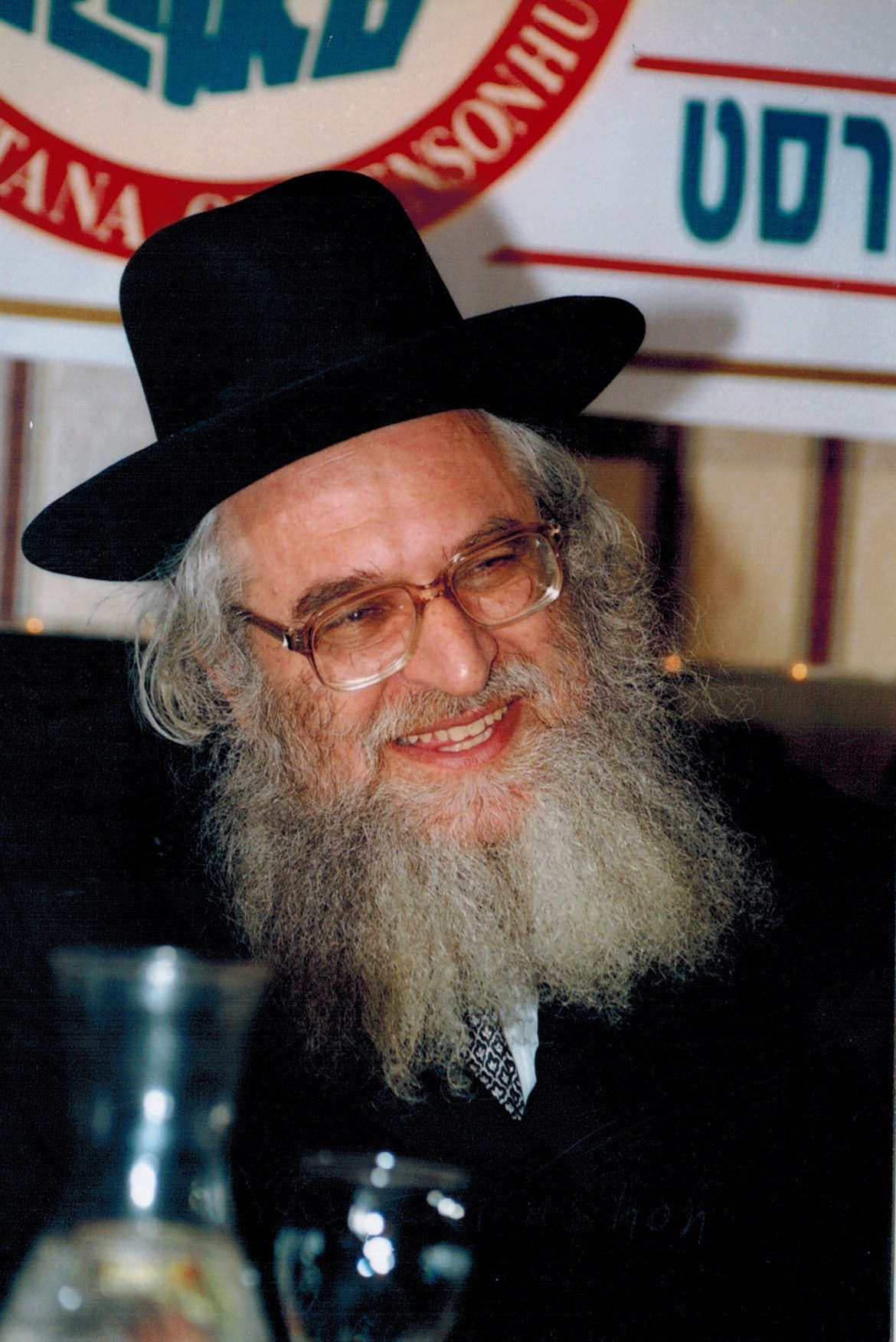
The Satmar Rebbe

His answer is based on the halachah that a worker in a vineyard may not eat from the owner’s grapes, except during the time that he is working with them. Rashi explains that the worker is permitted to eat the grapes only when he is harvesting them and putting them into the owner’s vessels; when he is performing other types of work in the field, he is not permitted to eat the grapes.

When a person is giving tzedakah and supporting poor talmidei chachamim, says the Satmar Rebbe, he is similar to the worker who is harvesting fruits and putting them into the owner’s vessels, for poor talmidei chachamim are Hashem’s “vessels.” And when a person is putting something into the vessels of the Owner of the world, he is entitled to take some for himself as well. That is why we are rewarded for tzedakah in this world.

The Satmar Rebbe was renowned as a magnanimous baal tzedakah, and all of the money that passed through his hands was distributed to the poor on the same day. Once, a pauper came to him and poured out his tale of woe, begging for the Rebbe’s assistance. He cried to the Rebbe that he had lost his wife, and was left alone to care for his orphaned children. In addition, his leg had been amputated.

The Rebbe gave him a handsome contribution, as he did to everyone who came to him for charity.

Several minutes later, the Rebbe’s gabbai entered his chamber, very distraught. “What happened?” the Rebbe asked.

“The pauper who was just here — the one who said that his leg was amputated — is not missing a leg. I saw him leave from here and walk on two feet like a regular person,” the gabbai said indignantly.

When the Rebbe heard this, he rose from his seat, visibly stirred. The gabbai was sure that the Rebbe would tell him to run after the pauper and ask him to return the money he had received from the Rebbe. He was surprised, however, when he heard the Rebbe let out a sigh of relief and say, “What joy your words have brought me! Thank Heaven, the pauper was not lame!”

Several minutes later, the gabbai came into the Rebbe’s chamber once again, this time to inform the Rebbe that the pauper was not a widower, either. “I saw his wife outside,” he told the Rebbe.

Again, the Rebbe expressed his great joy at the news that the pauper had not been widowed after all.

A Jewish leader desires only good for Hashem’s children. 

CHODESH ADAR: Preparing for the Joy of Adar

Adapted from: Days of Gratitude Days of Triumph by Rabbi Yaakov Feitman

From the very birth of the Adar new moon we are enjoined to be happy (Taanis 26b). But what exactly does that require, and how do we do it?

R’ Gamliel Rabinowitz points out that emotions cannot be easily manufactured, and consequently, cultivating the feeling known as simchah takes a great deal of preparation. It can’t just be turned on at the molad. Yet mishenichnas Adar marbim b’simchah is a halachah, and therefore must be quite accessible to each one of us.

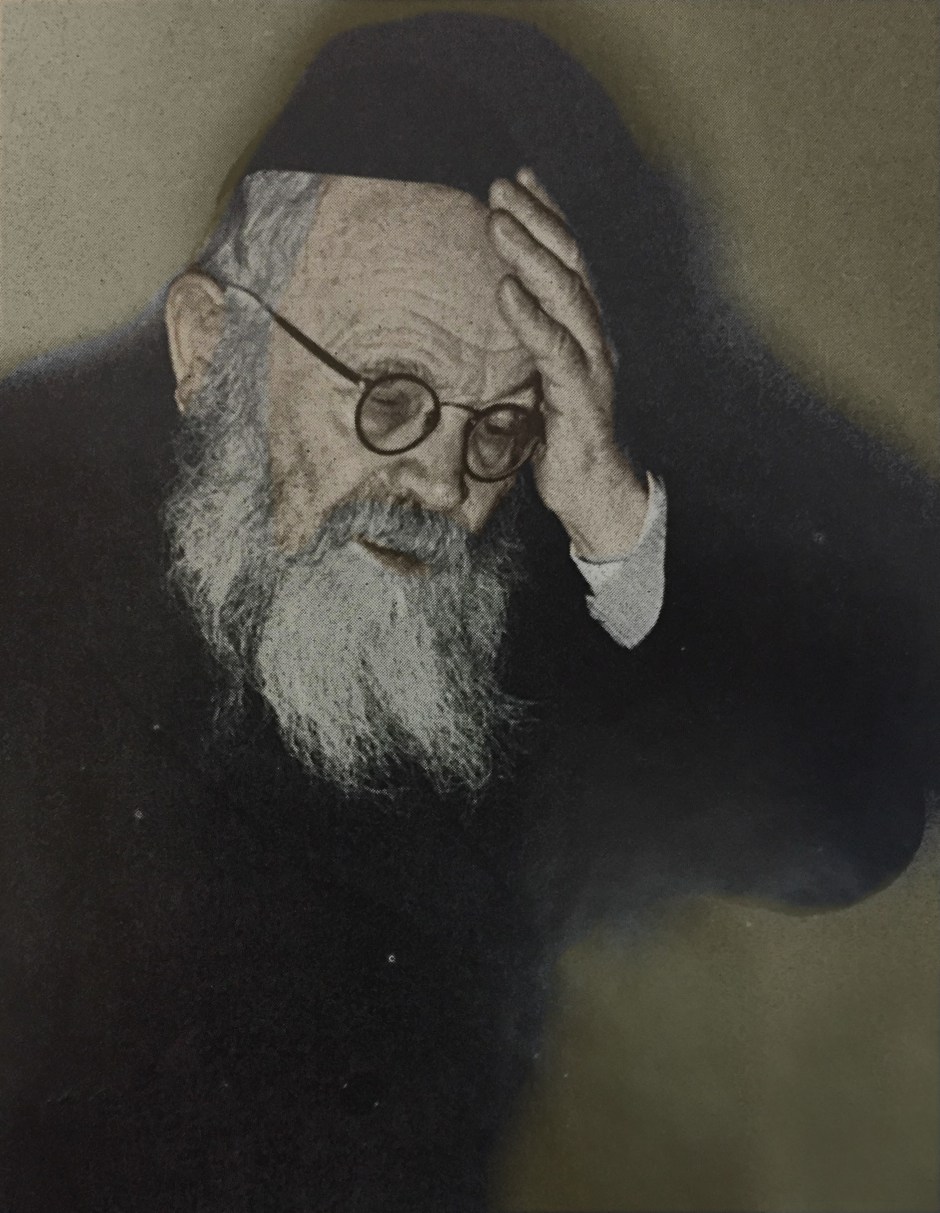
Rav Gamliel Rabinowitz

The Shulchan Aruch (551) mentions only that during the month of Av we must reduce our joy but does not record that during Adar we must increase it. This leads R’ Chaim Kanievsky to conclude that it is only “advisable” (eitzah tovah) to increase our joy during Adar, whereas in Av it is required that we diminish it. It would seem that it is not so simple to become happy even when we are supposed to do so, so how indeed do we accomplish this goal?

To be sure, R’ Eliyahu Eliezer Dessler teaches that just as during Av we slowly reduce our joy over a period of three weeks, culminating in the fasting and sorrow of Tishah B’Av, so should we calibrate our happiness during Adar to coordinate with the exultation of Purim. Yet it does not seem as clear how to achieve this ascending crescendo of elation so that by Purim we have reached the pinnacle of our joy. What are we supposed to be thinking about, and what will become the source of our cheer and exhilaration?

R’ Tzadok HaKohen of Lublin encourages us to concentrate upon Hashem’s hashgachah pratis in our lives. The very fact that Hashem is so involved in our lives, although this is usually completely hidden from us, is a source of great consolation and joy. Purim teaches us that not only is Hashem involved in our lives, caring about us in every way, but He arranges, manipulates, and controls the universe so that His people are protected and supported whenever they need Him. This is certainly one very practical and important way to prepare for Adar and Purim.

Another and perhaps even deeper aspect of this preparation is related to something called the sechok of Purim. This concept may be found in Sefer Yetzirah, Chapter 5, as quoted by R’ Dovid Cohen, Rosh Yeshivas Chevron. Although sechok is variably translated as laughter, derision, or even some kind of game or amusement, it carries a special Purim meaning. R’ Cohen quotes the famous Gemara (end of Makkos) where R’ Akiva is mesachek at the horrific scene of the Churban while his colleagues, the other holy Tannaim, are crying. Quoting the Alter of Kelm, he establishes that sechok is the ability to transform tragedy into something wondrous and positive. Where the other Tannaim see only catastrophe, R’ Akiva sees the light of geulah. This idea is also reflected in the pasuk (Tehillim 126:1-2), “…we will be like dreamers. Then our mouths will be filled with sechok (laughter).” The Alter explains that when Mashiach comes, all the suffering of the ages will seem like a dream, all our questions will be instantaneously answered, and we will be at peace. That is the ultimate laughter, which is laughing at what once brought us to tears.

In the case of Purim, all of Haman’s evil machinations — bikeish, he plotted — came to naught, for it was Hashem’s plan to turn every one of his schemes to our advantage. Thus, the tree, the banquets, the plot against the king, and Haman’s ostensible favor in the eyes of the king were all turned to our benefit. That is the sechok of Purim, as defined by v’nahafoch hu — turning all events upside down and reminding us that although we think that we see, we do not know what we are witnessing until Hashem opens our eyes.  

DOWNLOAD + PRINT At The ArtScroll Shabbos Table – Parashas Mishpatim!

Dear Friends,

Below please find the latest edition of At The ArtScroll Shabbos Table, containing inspiration and insight from classic ArtScroll titles.

This weekly publication will contain a rich collection of stories, divrei Torah and insights that are suitable for the Shabbos table – or for anytime. We hope you enjoy and look forward to future issues, as we tap into the unparalleled treasure trove that is the ArtScroll Library, sharing the depth and beauty of our Judaic and Torah literature with you.

Read it. Be uplifted. And share the inspiration.

Have a good Shabbos.

Click HERE to view, download At The ArtScroll Shabbos Table – Mishpatim

MIDDOS: Calm Amid the Seudah

Adapted from: Powerful Moments by Rabbi Yitzchok Hisiger

Rav Mattisyahu Salomon, mashgiach of Beth Medrash Govoha, recalled that when he was a bachur learning at Yeshivas Kfar Chassidim, the mashgiach of the yeshivah, Rav Elya Lopian, had a vaad for the talmidim during which they would take on kabbalos, resolutions. One kabbalah that he had the bachurim accept was not to get angry from Kabbalas Shabbos, at the onset of Shabbos on Friday evening, until Havdalah, at the conclusion of the holy day.

This was surely a worthy kabbalah — making sure not to get angry is always commendable — but why did Rav Elya choose that particular time frame?

Rav Elya explained, “Im yirtzeh Hashem, all of you will ultimately get married and establish families. At your Shabbos seudos each week, your children will become lively. This one will be jumping around, while another will be teasing his sibling. As chaos reigns, you may succumb to kaas, anger. By accepting upon yourself to work on not getting angry and remaining calm and serene for the duration of Shabbos Kodesh, you will have trained yourself and be properly prepared for that stage in life.”

Rav Elya Lopian

Rav Yitzchak Koslowitz, rosh chaburah at Beth Medrash Govoha, who first shared the above anecdote with me, added an enlightening comment of the Taz. In Hilchos Shabbos (296:1), the Rema states that the reason for the minhag to spill out wine from one’s kos during Havdalah is because, as the Gemara (Eruvin 65) says, “Kol she’ein yayin nishpach b’soch beiso kamayim eino bichlal berachah — Anyone in whose house wine does not flow like water is not included in the Torah’s blessing.” Thus, as a positive siman at the start of the week, we pour out some wine at Havdalah. [Note: This custom is distinct from that of spilling out wine at the conclusion of Havdalah.]

The Taz disagrees with the Rema’s source of this custom, pointing out that pouring out wine for a mere siman, in his opinion, would be forbidden because of the issur of bal tashchis. Instead, the Taz notes that in the dictum of “Kol bayis shelo nishpach bo yayin kamayim ein bo siman berachah,” the phrasing is shelo nishpach, that has not been poured, in the past tense, rather than she’ein shofchim, in the present tense. This, says the Taz, teaches that one must not get angry in his home even when damage has occurred — meaning that the “wine” has already been spilled by a member of the household.

“The way of people is to get upset about things like this,” says the Taz. “Thus, we are told, ‘Any home in which wine that is spilled [mistakenly] is not treated like water [that has been spilled], in that case there is no siman berachah in such a home.”

The Taz is instructing us to treat mishaps and accidents at home as nothing more than a spill of water.

It is imperative, indeed, that a home be an island of tranquility, peace, and serenity.

Rav Doniel Cohen, rosh yeshivah of Yeshivah Shaarei Orah of Lakewood, recalled an incident that occurred over three and a half decades ago, when he was a bachur learning at Yeshivas Brisk. It was Erev Pesach and he went to the home of his cousin, Rav Shlomo Weissman, then a yungerman residing on Rechov Sorotzkin, to assist him in filtering his homemade wine. It was a time-consuming and exasperating process that Rav Shlomo had begun many months earlier, removing sediment and unwanted particles from the wine, which would be used on Pesach. [Rav Shlomo, who still makes his own wine today, told me that he has thankfully improved and expedited the process since then.]

Finally, a significant amount of wine had been purified. Rav Shlomo and Rav Doniel were pleased to be completing the task when the unthinkable happened. One of the Weissman children walked by and knocked over a five-liter container of the painstakingly prepared wine, causing the red liquid to spill across the floor.

One would not have blamed Rav Shlomo for being infuriated, berating the child. Instead, to Rav Doniel’s astonishment, he was completely calm. He said tranquilly, “Kol bayis shelo nishpach bo yayin kamayim ein bo siman berachah.”

Months of work were now for naught, but Rav Shlomo was unfazed, a reaction that Rav Cohen recalls to this day. Indeed, to him, it was as if water had spilled on the floor.

MIDDOS: INDEBTED FOREVER!

Adapted from: A Heart for Another by Rabbi Yaakov Bender

I have been privileged to be exposed to giants of the spirit throughout my life, wise men and women, and I have tried to observe and learn.

If there is a common denominator, a single middah that connects all of them, it might be this one: hakaras hatov. It goes beyond gratitude, however. It reflects not just humility, but also the determination to remember, to never lose sight of a chessed performed, and to live with that recognition.

People trained to see Hashgachah pratis appreciate that each action has significance. They are aware that if a person was sent by Shamayim to help them, then part of seeing the chasdei Hashem involves seeing the role played by the Divine messenger.

Rav Don Ungarisher

Marrying off a daughter is special. The night of my daughter’s chasunah, in the summer of 2011, remains etched in my memory. During the dancing, at the peak of the joy, I noticed an older man being helped into the hall, and it took me a moment to realize who it was. It was Rav Don Ungarisher, Rosh Yeshivah of Beis Medrash Elyon in Monsey, and it was difficult for him to walk.

I was astonished that he would make the effort, and I reasoned that it was because of a familial connection he had with my mother-in-law, but he told me differently. “I came out of hakaras hatov,” the Rosh Yeshivah said to me.

In 1940, Reb Don and his two siblings had left Vienna for America, their parents planning to follow on the next boat. That next boat did not make it out, however, and their parents were murdered, Rachmana litzlan, leaving the three children on their own in a strange country.

Although Yeshiva Torah Vodaath accepted the two boys into the yeshivah and dormitory, giving them some semblance of a home, the sister was on her own — that is, until my mother became involved. She welcomed the young girl into our family. My mother helped her acclimate to America and succeed in Bais Yaakov. Eventually, she married Rav Manis Mandel, and enjoyed nachas from a beautiful Torah family.

This had taken place in 1940, over seventy years before my daughter’s wedding. My mother was gone and Reb Don’s sister was gone, but he lived with that memory before him, along with the obligation to acknowledge it. Later, his driver told me that the Rosh Yeshivah — who was niftar just two months later — was feeling weak that day, but he insisted on going to the chasunah just the same.

The Rosh Yeshivah would not let himself forget. 

DOWNLOAD + PRINT At The ArtScroll Shabbos Table – Parashas Yisro!

Dear Friends,

Below please find the latest edition of At The ArtScroll Shabbos Table, containing inspiration and insight from classic ArtScroll titles.

This weekly publication will contain a rich collection of stories, divrei Torah and insights that are suitable for the Shabbos table – or for anytime. We hope you enjoy and look forward to future issues, as we tap into the unparalleled treasure trove that is the ArtScroll Library, sharing the depth and beauty of our Judaic and Torah literature with you.

Read it. Be uplifted. And share the inspiration.

Have a good Shabbos.

Click HERE to view, download At The ArtScroll Shabbos Table – Yisro

HASHKAFA: Life Success: A Roadmap

Adapted from: The Power of Shema by Rabbi Meyer Yedid

We want to succeed at everything we do in our lives. If we thought that we couldn’t succeed at something, then we probably wouldn’t do it.

If so, how does a person guarantee that he will be successful? Is there some formula we can use to know that we are on our way to success?

And not only success, but pleasure too?

Let me pause to make myself perfectly clear: To the American mind, “success and pleasure” describes easy street, a life of leisure with nothing to do. That’s not what I’m talking about. I am not saying that life will be easy. Life wasn’t meant to be easy. But even if it is not easy, you can still live a successful and enjoyable life.

So, again, is there a way to make sure that, when I get involved with something, I am going to succeed and I am going to enjoy it?

I’m going to give you a rule. The rule is:

If you do it lishmah, then you will succeed and you will love it.

When I say lishmah, I mean doing it for the right reason. Whatever you involve yourself with in life, if you do it for the right reason, then you will succeed. And you will love it.

Let me state the rule the other way around: Whatever you’re involved with, if you do it for the pleasure, then (A) you will probably not succeed, and (B) you will probably not enjoy it.

I’ll give you an example.

Let’s talk about going to school. When you go to class lishmah, it’s a different class. It’s a different school experience. But you might ask: What does that mean? How would I go to school lishmah?

Lishmah in school means that I’m going to school because I realize I need to learn. I need wisdom to succeed in life. I realize that, in order to become successful, I have to know many things in many areas. So I am going to school to get that.

Imagine a seventh- or eighth-grader, or a high school student, whether a boy or a girl, going to school lishmah. Do you have any idea what going to school lishmah would be like as opposed to shelo lishmah? When you go to school lishmah, you become a great student, you succeed. No matter what level you’re on, you succeed and you love it. You love going to school.

If you do it shelo lishmah — you’re going to school because your parents told you to go, or because you have no choice — then your rate of success will plummet and you won’t enjoy it either. You won’t like it because you’re not lishmah.

I once told a group of students that they would enjoy their school experience much more if they were lishmah.

And they said, “But we don’t see the value in school. How can we be lishmah?”

So, before I continued, I asked for their forgiveness in advance. And then I said, “I’m going to argue with you. I can prove to you that you see the value in school.”

I then asked them, “Do you plan to get married and have children one day?”

“Yes.”

“When you have children, will you send them to school?”

“Yes.”

“That’s not nice,” I said. “If you are suffering by going to school, why would you make your kids suffer?” I asked them, “Would you send them to, like, a camp type of school, or a real school with real work?”

“No, no; the best school.”

“Would you want your children to do well in school?”

“Of course.”

“But you said you see no value in school. It’s not true. Of course, you see value in school!”

A great man told me something years ago that he said changed his life. In many ways, it changed my life too. He said that, at a young age, someone told him that when you have to make a decision in life, especially an important one, make believe you’re making this decision for your children. Don’t decide for yourself. When you decide for your children, you will realize, all of a sudden, how much clarity you really have. When it comes to yourself — because you’re lazy, because you have certain things that block or bias you — you don’t see straight.

Think about your children. That’s how you should make decisions. The option which is truly lishmah will then be clear and no longer clouded by your personal limitations and biases, and your chances to succeed and enjoy the journey will be so much greater.