This weekly publication will contain a rich collection of stories, divrei Torah and insights that are suitable for the Shabbos table – or for anytime. We hope you enjoy and look forward to future issues, as we tap into the unparalleled treasure trove that is the ArtScroll Library, sharing the depth and beauty of our Judaic and Torah literature with you.
Everyone knows that money can’t buy happiness, but sometimes we can’t stop ourselves from feeling that it can. We live in a physical world where money is a vital necessity, but true happiness is an internal feeling of contentment. We need inner strength to realize that, as Pirkei Avos tells us, the rich person is one who is happy with his lot. The following story related by Rabbi Eytan Feiner portrays this strength.
Rabbi Lipa Yisraelson, a grandson of Rav Yosef Shalom Elyashiv, lived in Bnei Brak, in the same apartment building as Rav Aharon Leib Shteinman, the gadol hador. One day, Reb Lipa met Rav Aharon Leib in the hallway, and Rav Aharon Leib asked him to come into his apartment. When they entered, Rav Aharon Leib led him into his small kitchen.
“Look, I’m so fortunate,” said Rav Aharon Leib. “I have a refrigerator.” Opening the refrigerator door, he said, “Look at all this food. I’m not hungry. I have all the food I need, even for tomorrow. I’m so lucky. Look, I have a fork and a spoon and a knife and a cup and a plate. I have everything I need to eat.”
Then he led Reb Lipa into his study. Pointing to his sefarim shrank he said, “I have so many sefarim to learn from. More than I could ever imagine owning.”
Reb Lipa didn’t know what Rav Aharon Leib was trying to tell him. Why, he wondered, was the rosh yeshivah proudly showing him around his modest home?
The tour continued. Rav Aharon Leib led Reb Lipa into his bedroom and told him, “Look at these comfortable beds.” In reality, they were the beds he had acquired sixty years earlier when he got married. They were old and rickety, covered with thin mattresses that could hardly have been described as comfortable.
Next, Rav Aharon Leib showed Reb Lipa the chair on which he sat when he learned Torah. It had no upholstery and no back, but Rav Aharon Leib praised his comfortable chair and the table on which he learned. “I have it all!” he proclaimed with a bright smile.
At last, Rav Aharon Leib disclosed his reason for sharing all his “treasures” with Reb Lipa. “I called you in because I know you are going to America soon,” he explained. “I’m sure you’re going to meet many wealthy people there. I want you to look at the wealthy people around you, and if you find someone who is happier than me, then come to me afterward and I will give you $1 million. It’s no risk for me, because I truly believe I am the happiest person in the world.”
When Reb Lipa returned to Eretz Yisrael after his stay in America, he came to Rav Aharon Leib and told him, “The Rosh Yeshivah was right. I met many wealthy people, but I didn’t find anyone happier than the Rosh Yeshivah.”
Sometime later, Reb Lipa met Rabbi Uri Zohar and related the story. “What do you mean?” Rabbi Zohar countered. “I’m happier than Rav Shteinman.”
Rabbi Zohar lived in a simple apartment that was far from the luxurious surroundings he had enjoyed when he was a popular Israeli entertainer. He had given up everything from his past life to learn and teach Torah in utter simplicity.
“Please tell the rosh yeshivah that he owes you $1 million because I am happier than he is. I am also living in a tiny apartment with peeling paint and very little furniture, but I’m the happiest person in the world because I have everything I need. And I have one up on Rav Aharon Leib because I am a baal teshuvah, and Chazal say that a baal teshuvah is on a higher madreigah than a talmid chacham.”
But then Rabbi Zohar rethought the statement. “I take it back,” he said. “The rosh yeshivah doesn’t owe you $1 million because he has something much greater than I have. He has all of Torah in his mind and that is the greatest madreigah a person can reach. So, he must be happier than I am.”
Regardless of who won the “happiness contest,” Reb Lipa acquired a priceless life lesson: A person can have next to nothing in material belongings, and yet, he can feel like the richest man in the world.
When we recognize and value all the gifts Hashem has given us, we discover that we are all millionaires.
The Gemara tells us that the mitzvah of ner Chanukah is ner ish u’beiso, a candle for each man and his house. The primary obligation is that in each house a ner, candle, should be lit. Regardless of how many people reside in a specific home, one candle suffices for all of them. The obligation, in essence, is on the house; it is a chiyuv habayis.
When it comes to most other mitzvos, however, it is not so.
Pirsumei – For example, hearing the Megillah on Purim is similar to ner Chanukah in that it, too, has the objective of parsumei nisa, publicizing the miracles that occurred, yet each individual must hear the Megillah in its entirety. The obligation can never be discharged by one person in the house hearing the Megillah. Why is the mitzvah of ner Chanukah different?
I heard from Rav Isaac Bernstein in the name of one of the Roshei Yeshivah of Yeshivas Kol Torah a breathtaking insight that sheds light on this unique aspect of ner Chanukah.
Iggeres HaShmad, a letter authored by the Rambam, discusses the gezeiros that the Yevanim had enacted toward Klal Yisrael in order to sever their connection to Hashem. The Yevanim declared it illegal to learn Torah, keep Shabbos, observe Rosh Chodesh, or perform bris milah. The Rambam then introduces an additional, lesser-known gezeirah that had also been enacted.
The Rambam tells us that the Yevanim decreed that no Jew was permitted to close the door to his home. They knew that as much as they could prevent us from performing mitzvos publicly, we would still continue to perform mitzvos in the privacy of our own home. To prevent this, they outlawed closing the door. Open front doors, they felt, could prevent us from doing any mitzvah.
The Midrash L’Chanukah states that the Yevanim decreed that any Jew who locked his door would receive the death penalty. A closed door provides security, dignity, privacy, modesty, and a sense of freedom. The Yevanim wanted to deprive us of all of these. Without a door, any passerby is welcome to enter uninvited at any time. The Midrash states that any house that has no door has no dignity or modesty.
When this decree went into effect, the Jews removed all their doors. They were unable to eat or drink, out of fear of Yevanim who could enter at any time. They did not sleep at all, concerned that Yevanim thieves would rob them while they slept.
We can now fully appreciate why Chazal decreed that the mitzvah of ner Chanukah should be on the home rather than on the individual. In addition to trying to abolish Torah and mitzvos, the Yevanim waged an all-out assault on kedushas habayis, the dignity of the Jewish home. Therefore, through the mitzvah of ner Chanukah, it is incumbent on each person to restore the sanctity of the Jewish home.
Furthermore, the mitzvah was originally designed to place the menorah at the doorpost, in the home’s entryway. The Yevanim sought to destroy the sanctity of our homes, which is preserved by the door and our ability to lock it to block entry of that which is antithetical to our faith. On Chanukah, we therefore demonstrate restoration of the kedushah by placing the menorah right next to our front doors, the very doors that they had prevented us from locking.
Chazal say that the Yevanim wanted to eradicate two mitzvos — that of bikkurim, and that of preparing the atzei hamaarachah, the wood used for the fire on the Mizbei’ach. These are important mitzvos, for sure, but what about them is unique enough to have provoked the Yevanim? Why these two mitzvos?
Bikkurim was a mitzvah performed with great joy. It was a matzav! The new crop was starting to grow after months of prayer and toil, and the farmers would travel to Yerushalayim amid singing and dancing, joining with other laborers as they ascended as one, a joyous group, to the Holy City.
The Gemara describes the great joy of those involved in cutting and preparing the wood that would be used on the fires of the Mizbei’ach.
Yavan saw that. It wasn’t the performance of the mitzvah that infuriated them, but the inherent joy, and they went to war against that feeling.
The Rambam calls these days yemei simchah v’hallel, days of joy and praise. The Chavos Yair writes that the ikkar, the main thing, is to be joyous during these days.
That’s how we triumph over Yavan. They knew that this would lead us to victory, and they tried to resist it. But we win, we win by being joyous when we perform the mitzvos.
Someone once quipped that there are so many beautiful niggunim for the words of Yevanim nikbetzu alai that we sing after hadlakas neiros; you can choose, Boyan or Vizhnitz or Ger or Chevron, but you know what Yavan wants you to sing?
Yavan wants you to sing with no real heart or energy, just being yotzei.
Reb Meilech leans forward, as if nodding off, and mumbles the words, “Yevanim, yevanim.”
Reb Meilech Biderman
No, that’s not the way! Sing Yevanim! Sing it with simchah and enthusiasm, with the realization that these lechtelach, the flames you light tonight, have never before been in the world and will never be here again. They’re new, your mitzvah, and this is your moment — so sing!
Chazal teach that “al korchacha, against your will, you will have to give a din v’cheshbon, a final reckoning” (Avos 4:29). Tzaddikim explain that this means we will have to give an accounting of why we performed mitzvos with the attitude of “al korchacha,” as if we were forced: I have to go daven, I have to go learn… There is no greater delight, and this mitzvah, hadlakas ner Chanukah, calls for special joyfulness.
When Chazal make a promise, that’s a guarantee. They tell us (Shabbos 23b) that someone who is careful with the ner — which Rashi says means not just ner Shabbos, but also neiros Chanukah — will merit learned children. Now, everyone lights Chanukah lecht, so where are all the geonim? Where are all those accomplished children? What happened?
The Meiri on that Gemara adds a few words. “One who lights the candles, derech chibuv mitzvah v’he’arah mefursemes, with love and obvious passion.” He needs to make a matzav. He needs to celebrate and show that he’s celebrating — then we have a guarantee!
Rav Chaim Ozer Grodzenski was visiting Krakow and went to a tailor to repair his jacket. It was after shekiah, and Rav Chaim Ozer had already lit the Chanukah candles, but the tailor, a chassid, excused himself to light. After that, he said, he would fix the garment.
As Rav Chaim Ozer waited, this tailor went to change his work clothing for Shabbos clothes, and then gathered his family around him with great excitement. The berachos were said with obvious feeling, the actual lighting treated like a major event. Rav Chaim Ozer looked on, then remarked that he now understood how it was that the Yidden of Krakow had produced so many great talmidei chachamim.
Torah came forth from this Polish city because simple Jews remembered precisely that which Yavan wanted them to forget, that the simchah is part of the goal — and the best way to merit the fulfillment of Chazal’s promise.
Revolutionize the Way You Look at Chanukah and Tu B’Shevat (and your life)!
Chanukah – a time of joyous celebration — the radiance of menorahs glimmering in the darkness, the family gatherings, the traditional foods and songs … Yet there is so much more depth and meaning to the holiday, so many rich and inspiring lessons it has to elevate our lives. And though Tu B’Shevat is often almost overlooked, or simply marked by a few moments of eating dried fruit, it, too, is a day of profound spiritual awakening and significance.
The unexplored depths of Chanukah and Tu B’Shevat beckon the thoughtful and perceptive Jew to discover the treasures that lie beneath the surface. In this collection of wide-ranging, stimulating, and original essays, Rabbi Daniel Glatstein draws upon a vast array of sources, many of them rare and some almost unknown, to show us the deep inner dimensions of these two holidays, and how they relate to contemporary times.
What makes the mitzvah of Chanukah candles “beloved to Hashem” — and why is the mitzvah so hard to fulfill properly? Why did we need the miracle of the oil at all … and what does it tell us about our own daily lives? Why was the miracle of Chanukah not recorded in Tanach? What is the connection between Tu B’Shevat and repentance — and what is the difference between the teshuvah of Rosh HaShanah and that of Tu B’Shevat?
Rav and Founder of Machon Maggid Harakiah in Cedarhurst, New York, Rabbi Glatstein is one of the contemporary Jewish world’s most popular speakers and respected maggidei shiur. As you read these brilliant and illuminating essays, you will understand why his more than 5,000 shiurim have garnered literally millions of views and downloads on Torahanytime.com and other venues, while his Hebrew-language sefarim, too, have been acclaimed throughout the Torah world.
Like the glowing flames of the Menorah, The Light and the Splendor brings us a luminous new understanding of Chanukah and Tu B’Shevat, an important contribution to Torah Literature and a precious gift to us all.
This weekly publication will contain a rich collection of stories, divrei Torah and insights that are suitable for the Shabbos table – or for anytime. We hope you enjoy and look forward to future issues, as we tap into the unparalleled treasure trove that is the ArtScroll Library, sharing the depth and beauty of our Judaic and Torah literature with you.
Now Yisrael loved Yosef more than all his sons since he was a child of his old age (Bereishis 37:3).
Targum Onkelos as well as the Midrash explain that Yaakov loved Yosef because the two learned together. He was the son who was taught all the Torah that Yaakov had learned in the beis midrash of Shem and Eiver.
Interestingly, though, Yosef’s status as one of the founding figures of Klal Yisrael is not his role as the wise son of Yaakov who absorbed all that his father taught, but as Yosef HaTzaddik, for overcoming the nisayon with Potiphar’s wife.
Perhaps this is because the advantage of being the wise son was not something he had worked on himself; he was merely the recipient of what his father taught him. But when he was all alone, without the support or assistance of his father, and he himself worked to achieve greatness in serving Hashem, he earned his eternal and defining title — tzaddik. This title was given to Yosef when he passed the nisyonos placed before him in Mitzrayim, and it is how he is known for all eternity. Yosef shows us that we too can overcome the challenges we face and live lives of kedushah.
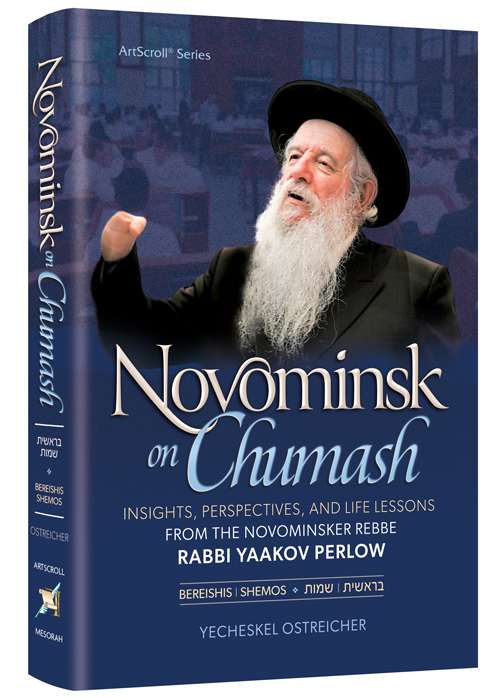
The Novominsker Rebbe
By serving as our light in the galus, Yosef rose above the other Shevatim, becoming a quasi-Av, as the pasuk (Tehillim 77:16) says of Bnei Yisrael, bnei Yaakov v’Yosef selah, the sons of Yaakov and Yosef, selah. The Gemara (Sanhedrin 19b) derives from here that Bnei Yisrael are considered the children of Yosef; Yosef serves as a father for us all, guiding us through galus.
These two distinct roles of Yosef are highlighted in the difference between Nusach Sefard and Nusach Ashkenaz regarding the order of the Ushpizin. In Nusach Ashkenaz, Yosef comes after Yaakov — in chronological order; in Nusach Sefard he comes between Aharon HaKohen and Dovid HaMelech — in the order of the Sefiros (spheres of holiness) that each of the Ushpizin exemplifies. Yosef’s, Yesod [lit., foundation], representing kedushah, is the sixth, followed by Malchus, that of Dovid HaMelech.
Perhaps there is something deeper here as well. Yosef had two qualities: He learned Torah from Yaakov, and he served as a bridge between Yaakov and the rest of the Shevatim. This avodah lasted only as long as Yosef was in his father’s home. When he was taken down to Mitzrayim and faced the impurity of that land all alone, he became a tzaddik, the one who illuminates the way for us in galus.
Thus, while Nusach Ashkenaz places Yosef as the son of Yaakov, the one who inherited Yaakov’s Torah and passed it on to his brothers, Nusach Sefard focuses on the aspect of his being a tzaddik, the one who assists us in our preparation for the arrival of Mashiach ben Dovid.
The coffin holding Yosef’s remains was carried through the Midbar as Bnei Yisrael wandered from place to place. Yosef was with them, and the example of his life inspired them to overcome the struggles of galus until they entered Eretz Yisrael. That is why in Nusach Sefard Yosef is placed after Moshe and Aharon: Even with the benefit of the greatness of Moshe and Aharon, Bnei Yisrael still needed support to guide them into the land of geulah, the land where Dovid’s malchus would eventually shine forth.
Shortly before Yaakov passed away, he called for Yosef, and an interesting encounter ensued. וַיַּרְא יִשְׂרָאֵל אֶת־בְּנֵי יוֹסֵף וַיֹּאמֶר מִי־אֵלֶּה. וַיֹּאמֶר יוֹסֵף אֶל אָבִיו בָּנַי הֵם אֲשֶׁר נָתַן לִי אֱלֹקִים בָּזֶה וַיֹּאמַר קָחֶם נָא אֵלַי וַאֲבָרֲכֵם — Then Yaakov saw Yosef’s sons and he said, “Who are these?” And Yosef said to his father, “They are my sons whom Hashem has given me here.” He said, “Bring them to me, if you please, and I will bless them” (Bereishis 48:20).
It seems that something that Yosef said stimulated Yaakov to bless Menashe and Efraim with a special berachah. What was it? One word: בָּזֶה [lit., in this] — in this decadent land, in this seemingly hopeless situation. Yosef was telling his father that these children of his were born in the land of Egypt, far from any connection to ruchniyus, and yet they retained their kedushah. For this they earned a special berachah. The Gemara (Avodah Zarah 17b) says that when someone defeats his yetzer hara he receives extra reward; the berachah of Menashe and Efraim was Yosef’s reward for maintaining his kedushah in a land so far removed from anything holy.
The merit and memory of Yosef HaTzaddik empowers us to forge through and gives us the strength to overcome wave after wave of tumah that life in galus sends our way.
Simchah is great medicine. It infuses us with energy and the ability to tackle life’s tasks. Nothing is too hard when we’re happy and positive, but when we’re down, the smallest task seems like too much. The tzaddikim say that there is no greater way to serve Hashem than with simchah.
At Camp Simcha, children whose lives have been upended by illness, hospital stays, and medical treatments have a chance to get back their childhood. The camp exists for one simple purpose — to give these children the time of their lives.
When Reuven signed up to be a counselor, he knew he would have to throw himself into the job, heart and soul. Reuven was assigned to a camper named Dovi, and he made it his mission to ensure that Dovi had an incredible summer. Day by day, the counselor and camper bonded with each other and shared many moments of laughter. Besides this aspect of the job, Reuven had one other important responsibility: to make sure Dovi went to the infirmary every day to receive his medications.
When the last day of camp approached, Reuven helped Dovi pack his belongings. He took the suitcase out of storage and opened it up to begin the job. But then he stopped in his tracks and the blood drained from his face. There, staring at him from inside the otherwise empty suitcase, was a large bottle filled with pills, labeled with instructions to take one twice a day. Dovi hadn’t taken it once in the entire time he was in camp!
Camp Simcha
“Oh no!” How could I have missed this?” Reuven thought. He immediately took the medicine and ran at full speed to the infirmary to show the doctor the pills. He feared that because he missed giving this medication, Dovi’s health would be compromised, and it would be all his fault.
When he walked into the infirmary, his face was tense with fear. He handed the bottle of pills to the nurse. “Here, look at this,” he told her. “I just found it in Dovi’s suitcase, and he hasn’t taken it all summer!”
The nurse read the label and appeared confused. “This is impossible,” she said. “Let me show this to the doctor.”
Reuven waited with a sick feeling inside. Had he harmed this little boy he had tried so hard to help? The doctor came out of his office and looked at the bottle.
“Wow, I can’t believe this,” he said.
“I know. I’m sorry. I really messed up!” said Reuven. “Is Dovi going to be alright?”
“Don’t worry,” said the doctor. “You didn’t mess up. Actually, you did an amazing job. You see, this medicine is a powerful painkiller. When Dovi came to camp, he was in so much pain that he needed high doses of this medication. You did such a good job and made him so happy that he didn’t feel the pain and never complained about it all summer long! He never asked for his pain medicine.”
Reuven was relieved. He marveled at the power of simchah to free a young boy from the burden of pain and let him experience pure happiness.
The prescription is the same for everyone. The more we focus on the good in our lives, the happier we are. The power is in our hands.
Ramp up the simchah in your life by being mindful of the many gifts you enjoy: A pleasant, sunny day. A good meal. A warm greeting from a friend. The world overflows with evidence of Hashem’s kindness!
Even though Kotzk was a place of seriousness, intensity, and introspection, the general atmosphere in the beis medrash in Kotzk was one of simchah: Chassidim tasted the joy of a life in which every mitzvah had meaning, delighted in the comfort of being surrounded by brothers, and experienced the exhilaration that comes with hard work.
Simchah was not just viewed as a means to spiritual elevation, but as a goal on its own. The Rebbe would quote R’ Simcha Bunim of Peshischa, who understood the pasuk of “Ki v’simchah seitzei’u — For with joy shall you go forth” (Yeshayah 55:12), to be saying that with the middah of simchah, one can “go out,” climb out of any difficulty or challenge.
Sometimes, they danced. In Kotzk, dancing was seen not just as the expression of joy, but as a way to rise a bit hecher, to leave the earth behind for a moment, a symbol of man’s quest to touch the heavens.
Each evening, at the end of a long day of work and before a long night of learning, the members of the chaburah sat down for the evening meal. Those meals did not feature meat, or even fish, but the chassidim lining the worn tables found the bread and vegetables to be more pleasurable than any banquet or feast, and the mood was joyous.
The Ohel of the Kotzker Rebbe, as it appears today
Without simchah, the Rebbe taught, all the blessings in the world are meaningless, but to a happy person, a bit of bread and some shmaltz can be a feast.
The Rebbe would quote the words of the pasuk: “Vayava’u Marasah, velo yachlu lishtos mayim miMarah ki marim heim — They came to Marah, but they could not drink water from Marah because it was bitter” (Shemos 15:23), and explain it in a novel way. The people could not drink the water of Marah, ki marim heim — they themselves were bitter! Their own misery prevented them from being able to enjoy the simple pleasure that comes with a sip of refreshing water!
In Kotzk, the chassidim would speak with admiration about one particular chassid named R’ Mottel, in whom the middah of simchah was ingrained. Not only could he derive joy from the simplest meal, he could even find happiness in the meal of another!
R’ Mottel was impoverished, like most of the chaburah in Kotzk, and one Erev Shabbos, he could not find money with which to buy fish for Shabbos. R’ Mottel’s wife accepted this reality, but she felt bad for her husband, knowing how much the honor of Shabbos meant to him.
R’ Mottel came home from shul on Leil Shabbos, his spirits as high as on every other Friday night, and he recited Kiddush with enthusiasm. They sat down for the seudah, which consisted primarily of challah.
Suddenly, R’ Mottel started to speak about R’ Yankel, the wealthiest man in town, describing what the Shabbos table must look like at the home of the wealthy merchant: the elegant table covered in dishes, the aroma of delicious food filling the air.
R’ Mottel’s wife was puzzled, because it was not her husband’s sort to be preoccupied with the money, home, or table of another. Her husband kept speaking, with obvious excitement, about the large platter of fish that R’ Yankel was enjoying, but she could not understand this unexpected interest in R’ Yankel. Sitting in his rundown little house, at a table that was pitifully bare of Shabbos delicacies, R’ Mottel’s joy kept growing as he seemed to be visualizing R’ Yankel’s every bite of fish — and then, his wife understood.
Her husband did not have fish for Shabbos, but he reasoned that even if he himself could not celebrate the day in the way he would have liked to, there were other Yidden who could, and so he worked to awaken feelings of love within himself for that Yid. The wealthy R’ Yankel was eating fish in honor of Shabbos, and this made R’ Mottel happy for him — and for the Shabbos itself, the day being accorded its due honor.
This, the chassidim said, was the essence of Kotzk.
This weekly publication will contain a rich collection of stories, divrei Torah and insights that are suitable for the Shabbos table – or for anytime. We hope you enjoy and look forward to future issues, as we tap into the unparalleled treasure trove that is the ArtScroll Library, sharing the depth and beauty of our Judaic and Torah literature with you.
























 The Official ArtScroll Blog