This weekly publication will contain a rich collection of stories, divrei Torah and insights that are suitable for the Shabbos table – or for anytime. We hope you enjoy and look forward to future issues, as we tap into the unparalleled treasure trove that is the ArtScroll Library, sharing the depth and beauty of our Judaic and Torah literature with you.
This weekly publication will contain a rich collection of stories, divrei Torah and insights that are suitable for the Shabbos table – or for anytime. We hope you enjoy and look forward to future issues, as we tap into the unparalleled treasure trove that is the ArtScroll Library, sharing the depth and beauty of our Judaic and Torah literature with you.
Sometimes people wish they could turn back the clock and do certain things differently. With teshuvah, Hashem allows us to change the past. A person who spent the entire year ignoring certain mitzvos and doing different aveiros can correct it all with a few moments of teshuvah. Whatever he has done can be completely erased. And if a person comes to realize the greatness of Hashem and how much He does for him, and therefore regrets his sins, that’s called teshuvah out of love, and transforms the sins into mitzvos.
During the Aseres Yemei Teshuvah, our teshuvah is easily accepted. At the time we need it most, while our judgment is hanging in the balance, Hashem makes it the easiest to accomplish. At the time of judgment, a person can eradicate all his crimes and make the judgment the most favorable possible. It is very simple: All the person must do is admit what he did wrong, regret it, and accept to improve going forward. One should never feel that what he did is beyond teshuvah. Hashem specifically took us to be His nation while we were on the forty-ninth level of tumah. The Jewish People at that time were on the lowest level possible, and just seven weeks later they were as close to Hashem as possible.
Regarding teshuvah, the Rambam writes (Hilchos Teshuvah 7:6) that whereas before teshuvah the person was very distant from Hashem, after teshuvah he is beloved, desirable, close, and dear to Hashem. Chazal (Berachos 34b) say: b’makom shebaalei teshuvah omdim ein tzadikim gemurim yecholim laamod. The Kedushas Levi writes in Parashas Shemini explaining this Chazal that Hashem derives more pleasure from a sinner who did teshuvah than from a completely righteous individual. The reason he says this is because the baal teshuvah had to fight off his strong evil inclination to stop his wrongdoings. It is so special to Hashem when we fight the yetzer hara to do His will.
The Kedushas Levi writes there that if we contemplate the fact that we are so insignificant in comparison to Hashem, yet we can bring Him pleasure with our avodah, that should ignite our hearts to be filled with joy and excitement to serve Him. We can’t imagine how much He enjoys every little thing we do, and therefore, we shouldn’t underestimate it.
Rav Yitzchak Zilberstein told of a man who would always come to shul about seven minutes late, no matter what time the minyan started. If it was a 7:00 minyan, he would get there at 7:07. If it was an 8:00 minyan, 8:07. One day, the rabbi asked him about it and the man said, “What’s the big deal? A few minutes here, a few minutes there, the main thing is that I come.”
Rav Yitzchak Zilberstein
This practice continued for quite some time until one day this man walked in exactly on time. The rabbi asked him what changed. He said that Hashem taught him a very powerful lesson.
He explained that the day before, one of his warehouses caught fire. He was there at the time. He called the fire department and waited anxiously for help to arrive. Every minute that went by, another part of his warehouse was consumed in flames. By the time the firefighters finally got there, they were only able to salvage a very small section.
“What took you so long?” he demanded.
“We were only delayed a few minutes,” one of the firefighters replied defensively. “The main thing is that we got here. What’s a few minutes, anyway?”
Those words struck him like a lightning bolt. They were the same words he used when telling the rabbi about coming to shul late. He realized the value of every minute and accepted upon himself, going forward, to be on time to shul.
Hashem has nachas from everything we do in the spiritual realms. Every second is valuable. If we haven’t performed as well as we are capable of until now, we can easily do teshuvah, erase the past, and start afresh.
This weekly publication will contain a rich collection of stories, divrei Torah and insights that are suitable for the Shabbos table – or for anytime. We hope you enjoy and look forward to future issues, as we tap into the unparalleled treasure trove that is the ArtScroll Library, sharing the depth and beauty of our Judaic and Torah literature with you.
A man inspired to do teshuvah, as so many of us are on Erev Rosh Hashanah, aspires to immediate perfection. He sets lofty goals in every area of Jewish life, and promises himself that at this time next year, his slate will be impeccably clean.
The baalei mussar advised us against such an approach. It is impossible to fix everything overnight. Jumping too high and too fast will only lead to failure and frustration. Instead, they recommend a more measured process of teshuvah.
Make smaller resolutions, but make them ironclad. Setting realistically attainable goals gives a person a chance to actually follow through. One concrete step forward will lead to another. Climbing the ladder rung by rung turns inspiration into reality.
The sefer Sass B’imrasecha illustrates the benefit of a gradual approach to teshuvah with a humorous parable.
Yankel was a simpleton, and to pass the long winter nights, the residents of his town would play a game with his mind.
Everyone took a seat around the table, with Yankel at the head. A row of bills was laid out — hundreds, fifties, twenties, and tens. Alongside the bills, they placed a shiny silver half-dollar coin.
“Choose one, dear Yankel,” the men said with glee. “Whichever you take is yours to keep.”
To everyone’s great amusement, he picked the shiny coin, night after night.
After a few weeks, someone called Yankel over to the side.
“I know you aren’t the world’s brightest fellow,” the man said, “but at this point, even you should realize what’s happening here. Can’t you see that everyone is laughing at you, that the choice you keep making is the wrong one to make?”
“I’m not as big a fool as you think,” Yankel replied with a smile. “Let me ask you a question, my friend. If I choose the hundred dollar bill, will there be a game the next night? Of course not! The men would never play with me again! Let the men have their fun, but every night, I get to add another half-dollar to my growing stash!”
Moving too fast at the outset of teshuvah is like choosing that hundred-dollar bill. Alarm bells sound, and the yetzer hara immediately enters the fray. He will do everything he possibly can to stop the inspired Jew in his tracks.
Go slowly!
It will allow your progress to fly under the radar. Your evil inclination will let you stay in the game, and every day, another half-dollar will be added to your growing pile.
Eventually, your net gains will far outweigh the value of a solitary one-hundred-dollar bill.
But there is a caveat.
A person who is impure is forbidden to enter the Beis HaMikdash. What if such a man sticks his finger into the airspace of the Temple courtyard while his body remains outside? Has he transgressed this commandment?
In Talmudical terms, this is called bi’ah b’miktzas, partial entry, and is the subject of extensive discussion as to whether it is forbidden. To avoid possibly transgressing this prohibition, many have the custom to refrain from placing their hands in the gaps between the stones of the Kosel HaMaaravi.
However, the Rebbe of Lublin, in his sefer Toras Chessed, disagrees with this custom. He writes that although partially entering a doorway is indeed forbidden, that is because a door’s intended use is to allow people to enter the area it opens into. Just standing in the doorway itself is enough to be considered as if they have already arrived.
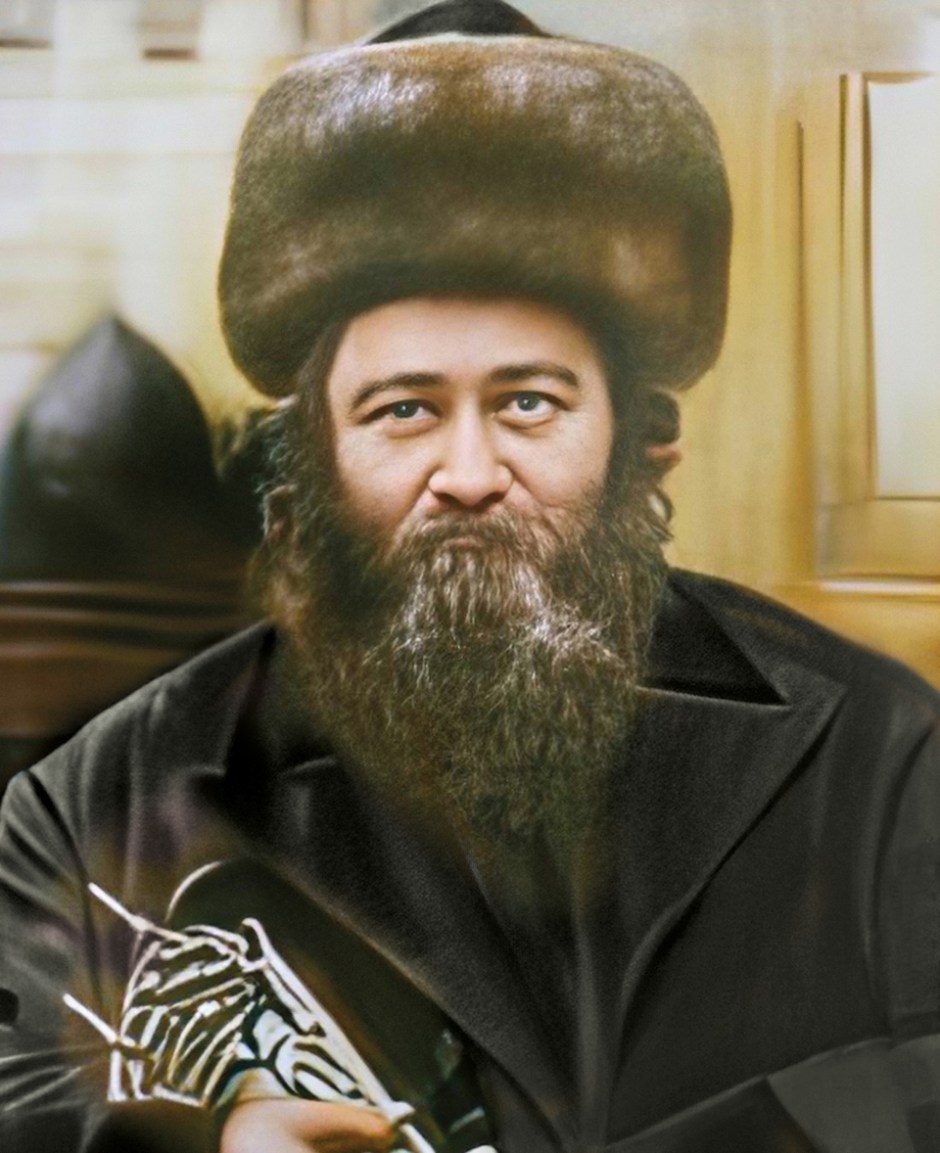
The Lubliner Rav
A small gap, though, leads to nowhere. Merely placing a hand inside the tiny gap in the wall doesn’t reflect entry into the room behind it at all. The man remains entirely outside, and the law of partial entry does not apply.
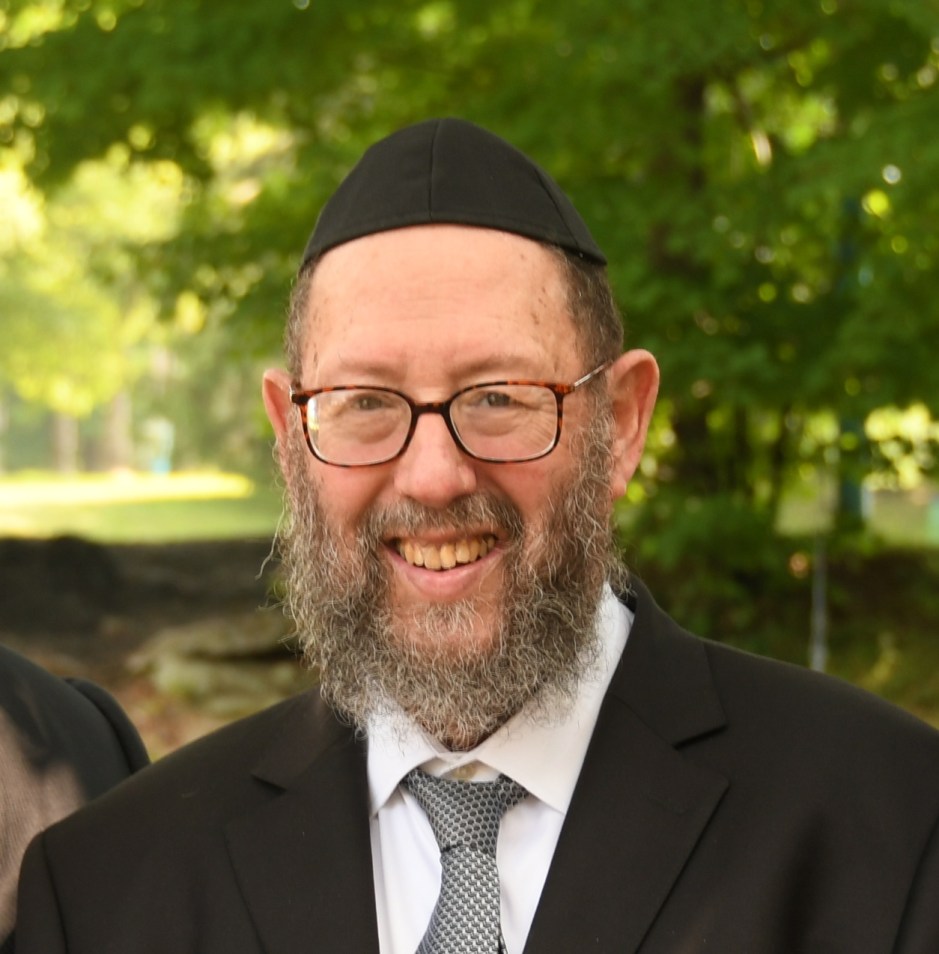
A powerful message lies in this halachic distinction of the Lubliner Rebbe, says R’ Shaul Alter.
Everyone understands that complete repentance is not achieved overnight. It is a long journey, and begins with small and incremental improvements. However, this reality cannot change the overall goal.
If we are satisfied with just our small initial repairs, without any intention of continuing on as we grow, our spiritual location won’t change. When a partial entry is made without the intention of eventually going inside, we remain standing in the same place we were standing before. It will not be considered an entrance at all!
When a Jew undertakes small steps of teshuvah, he has partially entered the holy place he truly wishes to be. When the steps are taken with the goal of an eventual full entry in mind, it is immediately considered as if he has already arrived.
The Chiddushei HaRim’s very first address upon assuming leadership took place during the days of Selichos, a week before Rosh Hashanah. He illustrated a Jew’s obligation during this exalted time of year with a powerful parable.
When someone moves to a new home, he said, he doesn’t bring everything from his previous dwelling with him. Much of the old stuff is disposed of. His furniture has taken a beating over the years. They won’t fit with the fresh new look. He carefully chooses what to take along and what to throw in the trash.
When we move from one year to the next, we should view the transition as if we are changing our residence. In twelve months, it is natural for junk to accumulate. As we move on and start over, we should take a hard look at our stuff and decide what is worth holding onto, and what not.
Moving day is just a week away. Sift through your possessions. Be ready to enter your beautiful new home!
The Dubno Maggid brings a similar parable, with a more humorous bent. He tells of the simple villager in the big city, who decides to be fitted for a beautiful new suit at the best tailor in town. When it is ready, he comes to try it on, and is unhappy with the finished product.
“You aren’t that great at your job, after all,” he says to the tailor. “Everyone told me to come specifically here, but after all the measurements you made me stand for, you can’t make a suit that properly fits. What a waste of money and time!”
“You really aren’t used to getting new clothes, are you,” responded the amused craftsman. “I know what I am doing. Your suit is perfectly made, and it fits perfectly. However, you didn’t remove your old and bulky clothing before you put it on. Of course it is uncomfortable and tight!”
Before Rosh Hashanah, every Jew must first shed his “old outfit.” It is torn, soiled, and just takes up space. Without taking it off, the beautiful new suit waiting for you will make for a ridiculously odd look.
It won’t fit!
My rebbi, the Novominsker Rebbe, used to liken this idea to a diamond placed in a setting filled with particles of dirt. As beautiful as the diamond is, it won’t fit into its setting.
If you don’t properly clean out the crevices of your neshamah with teshuvah, the diamonds you insert with your Torah, tefillah, and avodas Hashem will never settle correctly in place.
The Novominsker Rebbe
— — —
With tefillah playing such a central role during the days of Selichos and the entire Yomim Noraim, prayer is something that should be analyzed carefully during this time of year.
For a believing Jew, the point of tefillah raises a foundational question. If we are supposed to have something, if we have earned it, Hashem gives it to us. That is unquestionable!
If we aren’t, will our prayer change Hashem’s mind? He knows what is coming to us better than we ever will. If we deserved what we are asking for, would we not have already received it?
What exactly are we doing when we stand before Him and beseech? What is its purpose?
This fundamental question has been raised by countless commentators. The answer of the Sefer HaIkkarim is foundational as to how every Jew must approach tefillah. Davening, he says, does not change Hashem’s mind. Of course not. It changes us!
There is a submission inherent in prayer. When one prays properly, he grows in his understanding of servitude to Hashem. A renewed awareness that he lives completely under His benevolent control makes him an entirely different kind of person.
Earnest prayer is guaranteed to produce a changed man. Before we davened, we were indeed undeserving. But now we have davened and now we have changed! The situation is different because we are different!
With the very act of prayer, the Jew reaches new levels and earns merits previously beyond his reach.
This weekly publication will contain a rich collection of stories, divrei Torah and insights that are suitable for the Shabbos table – or for anytime. We hope you enjoy and look forward to future issues, as we tap into the unparalleled treasure trove that is the ArtScroll Library, sharing the depth and beauty of our Judaic and Torah literature with you.
אַתֶּם נִצָּבִים הַיּוֹם כֻּלְּכֶם — You are all standing here today. (Devarim 29:9)
Immediately after enumerating the long litany of ninety-eight curses they would face if they disobeyed Hashem, Moshe called together the Jewish people and said, “You are all standing here today.” What is the significance of this sequence of events?
The Midrash, quoted by Rashi, explains that when the Jewish people heard the curses they turned green. “Who can withstand all these curses?” they moaned despondently. “What will become of us?” Therefore, Moshe called them together to calm them down. “Don’t be so worried,” he said. “You are all standing here today. After forty turbulent years in the desert, after angering Hashem so many times — with the Golden Calf, the Meraglim, the complainers — you are still here today. Hashem has not destroyed you. So you see, you do not need to despair.”
The commentators are puzzled. Moshe seems to be taking the wind out of his own sails. First, he read off all the horrible curses to scare the Jewish people into obedience, to put “the fear of the Lord” into them. The threat of the curses accomplished their purpose. The people were terrified. Then, all of sudden, he relented and told them that it’s not so bad. They don’t have to be so terrified. Wasn’t he defeating his whole purpose by taking the sting out of the Tochachah?
Rabbi Yissocher Frand
The answer is that there is a vast difference between healthy fear and hopelessness. It is a good thing to be realistically apprehensive about the future. It is unhealthy to live in a fool’s paradise, believing you can do as you please without suffering any consequences. But hopelessness is destructive. It demoralizes, debilitates and reduces a person to a bowl of quaking jelly.
Moshe saw that the Jewish people had gone beyond fear when they heard the curses. They lost hope and threw in the towel. Therefore, he had to calm them down until they recovered their hope and all they felt was a healthy fear.
Our Sages tell us (Bava Metzia 59a) that after the destruction of the Temple “all the gates of prayer were closed, except for the Gates of Tears.” The Gates of Tears are the channel of last resort for prayers, and they are never closed.
But if they are never closed, asks Reb Bunim of Peshis’cha, why is there a need for gates at all? Why not remove the gates and leave the entranceway wide open?
There are some tears that do not get through, says Reb Bunim of Peshis’cha. The gates screen out tears that don’t sincerely cry out to Hashem for help; tears that simply express despair and hopelessness. Yet if a person in a state of helplessness then turns to Hashem as his sole hope, wringing out the perspiration of his heart and soul and sending his hope-laden tears heavenward, there are no barriers in Heaven to a prayer of this sort. It travels directly to the Heavenly Throne.
The Izhbitzer Rebbe explains that this is the reason why all Jews are called Yehudim, specifically after Yehuda. Because when the brothers stood accused of theft before Yosef in Egypt, the Torah tells us that Yehudah “stepped up” to argue in their defense. When all seemed to be lost, when faced with the overwhelming weight of evidence against them, Yehudah never gave up hope. That is the definition of a Jew, a person who knows that the Almighty will never abandon him. A person who never gives up hope.
As we take steps to improve ourselves during the glorious month of Elul, we must remind ourselves of the value of every single improvement we make, no matter how small it may seem. Whatever we do is very precious to Hashem and will benefit us at some point in the future.
Rabbi David Ashear
Rabbi Silver’s* daughter Esther was diagnosed in 2019 with spinal muscular atrophy (SMA), a life-threatening condition which, until then, had no known cure. The doctor told the young rabbi that the FDA had just approved a new prescription gene therapy called Zolgensma, but the cost for a one-time infusion was a staggering $2.2 million. Furthermore, it was only approved for children under the age of two, and Esther was just a month shy of her second birthday.
The Silvers immediately tried to get the medication through their insurance plan, but it was denied. They hired a lawyer to fight the insurance company on their behalf but lost the case. With just a week remaining before her second birthday, little Esther’s life was on the line. Rabbi Silver had to come up with a plan — fast.
“Can we pay for the medication out of pocket?” he asked the doctor.
“Of course — but how would you get the money to do that?”
“I have a very rich Father,” Rabbi Silver replied. “Hashem is my Father, and He can do anything.”
Many family members took upon themselves life-changing kabbalos, and the next day, they launched a chesed campaign online. Amazingly, in just five days, they collected the full $2.2 million. Ashreichem Yisrael! However, the actual cash would not be available for at least another few days, and they didn’t have time to wait.
A certain wealthy gentleman heard about the urgent situation and offered to lay out the $2.2 million from his own pocket. The Silvers took the money and managed to get the medication and have it administered in the hospital the same day — July 19, 2019 — the day before Esther’s birthday.
Baruch Hashem, today Esther is doing well.
When the Silvers went to repay the kind benefactor who laid out the money, he refused to take it. “It was my zechus to give it,” he insisted, overwhelming them with his generosity.
The next task was to inform the more than 20,000 donors on the chesed page that the family no longer needed their money. Most of the people said they still wanted their donations to be used for charitable purposes. Rabbi Silver used the $2 million to start a new fund to provide for children with special medical needs.
Our people are amazing! Their desire to help others knows no bounds.
From the time Esther was diagnosed until she actually got the medication was an emotional roller coaster for the family. They have so much hakaras hatov to Hashem for bringing about their salvation. When the young rabbi had a chance to reflect on and contemplate all the events that had taken place, he had a striking revelation. Eight years previously, when he was not yet religious, he was faced with a very big test. His friends were going out to party on the night of Tishah B’Av and were urging him to come along. Deep down, he knew how wrong that was. He managed to fight the peer pressure and stayed home.
“That night was the turning point in my life,” he later said. Overcoming the challenge gave him the strength to grow in religious observance — and eventually become a rabbi.
The night of Tishah B’Av when he passed his test was July 19, the exact same date on which, several years later, he was able to almost miraculously get the medication, give it to his daughter, and save her life.
Everything we do for Hashem is precious to Him. He remembers everything and uses it to help us. Everyone has their own tests, on their own level. The common denominator is that no deed is ever considered small by Hashem. The sacrifices we make to do His will will be used to help us both in this world and the Next.





























 The Official ArtScroll Blog