A Conversation with the Chofetz Chaim Heritage Foundation (CCHF) about their new book, Live the Blessing: Daily wisdom on how to live in peace with family, friends, and yourself

AS: The Chofetz Chaim Heritage Foundation created a revolution in our shemiras ha’lashon. Your new book, Live the Blessing, explores making peace between people. Why shalom? Why now?

CCHF: Without shalom, shemiras ha’lashon will last only so long. People who are involved in personal disputes might try not to speak negatively about each other, but it often is just a matter of time before someone’s feelings leach out into the words they say. In addition, without shemiras ha’lashon, shalom doesn’t have a chance. Even if a dispute starts off as a reasonable difference of opinion, once the parties begin talking about each other it will turn into a machlokes. When we focus on shalom, we are not tempted to denigrate other people. This book is meant to show people what shalom and machlokes look like in real life, and to give them tools to choose the right path.

AS: Does making shalom mean we all have to think alike?

CCHF: Not at all. It means making space in our world for other people’s thoughts and perspectives. It doesn’t mean agreeing all the time, but rather, learning to disagree without personal animosity. We need only look at the Twelve Shevatim to know that Hashem had no intention of creating a nation that was all of a kind.

AS: There are chapters about peace between husband and wife, parents and children, neighbors and friends, even between divorced couples. Can we really make peace with everyone in our lives?

CCHF: The chapters give readers a peek at what happens to people’s lives when they stoke conflict and what happens when they work to resolve it or at least cool it down. In any situation, whether it’s family life, marriage, friendships, business relationships, or divorce, shalom brings blessing and machlokes brings destruction. Once we’re convinced of this, we still have much work to do to change our reactions and reframe what we tell ourselves about the people in our lives. We hope the book’s daily readings will spur people to realize that this is the right path — and to take it.

AS: Each chapter also contains advice from prominent rabbanim, therapists, and educators. They are very varied in their perspectives, but is there a theme that unites them?

CCHF: The most prominent common thread in their advice is this: Nobody has ever gained by stoking machlokes and nobody has ever regretted seeking shalom.

Get your copy today! From artscroll.com

WATCH: Inside ArtScroll Episode 2 – Interview with Rabbi Meyer Yedid, Author of The Power of Tranquility

Inside ArtScroll: Bringing the books you read, and the people who write them, to life!

In the newest episode of Inside Artscroll, we are treated to an interview with Rabbi Meyer Yedid, author of The Power of Tranquility.

As the rosh yeshivah of YDE, rabbi of Brooklyn’s Congregation Shaarei Zion, and a renowned speaker, Rabbi Yedid has educated, guided and inspired thousands of people of all ages.

In this compelling interview, you will learn about Rabbi Yedid’s fascinating background and experience his deep love of people and keen understanding of human nature.

WATCH NOW “The Power of Tranquility” An interview with Rabbi Meyer Yedid.

The New ArtScroll Shabbos Newsletter Issue #4 – Parashas Re’eh!

Dear Friends,

Below please find the fourth edition of the ArtScroll Shabbos Newsletter, containing inspiration and insight from classic ArtScroll titles.

Click Here to view and download The ArtScroll Shabbos Newsletter – Re’eh.

This weekly publication will contain a rich collection of stories, divrei Torah and insights that are suitable for the Shabbos table – or for anytime. We hope you enjoy and look forward to future issues, as we tap into the unparalleled treasure trove that is the ArtScroll Library, sharing the depth and beauty of our Judaic and Torah literature with you.

Read it. Be uplifted. And share the inspiration.

Have a good Shabbos.

WATCH THE INAUGURAL EPISODE OF “INSIDE ARTSCROLL”- JUST LOVE THEM!

Inside ArtScroll: Bringing the books you read, and the people who write them, to life!

A brand new show recorded on-site at ArtScroll Studios and hosted by Rabbi Yitzchok Hisiger, Inside ArtScroll features fascinating interviews with bestselling ArtScroll authors, as well as ArtScroll’s talented staff, the people who have been bringing you quality Torah literature for over four decades.

WATCH THE INAUGURAL EPISODE “Just Love Them” An interview with Rabbi Yisroel Besser, author, and Rabbi Gedaliah Zlotowitz, President of Artscroll.

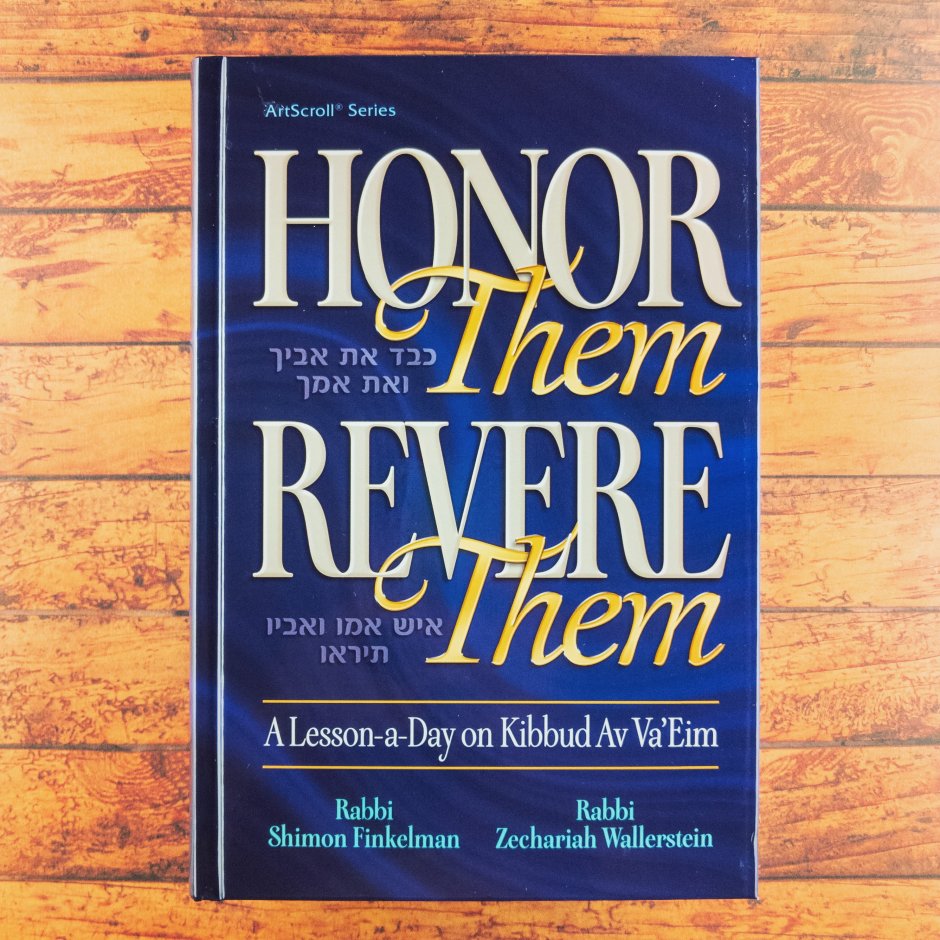
ArtScroll Speaks with Rabbi Shimon Finkelman Co-Author – with Rabbi Rabbi Zechariah Wallerstein – of Honor Them, Revere Them: A Lesson a Day on Kibbud Av Va’Eim

AS: Why did you and Rabbi Wallerstein decide to take on the topic of kibbud av va’eim for your newest collaboration?

RSF: Three years ago, Rabbi Wallerstein contacted me. He said that in his dealings with scores of teenage boys and girls, he found that many were simply unaware both of the centrality of kibbud av va’eim in Jewish life and of many of the halachos of this mitzvah. We had already collaborated on Let There Be Rain, our book on hakaras hatov, which, baruch Hashem, was very well received, so he wanted to do a similar book on kibbud av va’eim.

AS: Why did you choose the format of daily readings?

RSF: The two-page spread lesson-a-day format makes it possible for the reader to read a complete concept each day, along with a story, in five minutes or less. People find that by reading about a mitzvah daily, they maintain a subconscious awareness regarding that mitzvah. In this case, it reminds them to seek opportunities to honor their parents and to interact with them in the right way.

AS: You offer us many stories to illustrate the importance of kibbud av va’eim. What is one story that made a deep impression on you?

RSF: Rabbi Wallerstein’s father, a”h was vacationing in Florida, while his mother, Rabbi Wallerstein’s grandmother, was going to leave for Eretz Yisrael from Kennedy Airport in New York. Mr. Wallerstein flew in from Florida, met his mother in the airport, requested her berachah (as he did every Friday), bade her farewell, then immediately got on a plane and headed back to Florida. He took a round-trip flight just to see his mother for a few minutes and wish her well.

AS: Briefly — why is kibbud av va’eim so hard? And why is it so vital?

RSF: Talmud Yerushalmi says that kibbud av va’eim is one of the most difficult and most serious mitzvos. Rav Moshe Feinstein zt”l writes that one reason it’s so difficult is because of our closeness and familiarity with our parents. Because we feel so close to them, we are liable to treat them like friends, and that can lead to unintentional disrespect. Kibbud av va’eim is one of the most important mitzvos because our relationship with our parents is intertwined with our relationship with Hashem. And our connection to Torah and mesorah all the way back to Matan Torah is primarily through our parents.

Get your copy today here: artscroll.com

The New ArtScroll Shabbos Newsletter Issue #3!

Dear Friends,

Below please find the third edition of the ArtScroll Shabbos Newsletter, containing inspiration and insight from classic ArtScroll titles.

Click Here to view and download The ArtScroll Shabbos Newsletter – Eikev.

This weekly publication will contain a rich collection of stories, divrei Torah and insights that are suitable for the Shabbos table – or for anytime. We hope you enjoy and look forward to future issues, as we tap into the unparalleled treasure trove that is the ArtScroll Library, sharing the depth and beauty of our Judaic and Torah literature with you.

Read it. Be uplifted. And share the inspiration.

Have a good Shabbos.

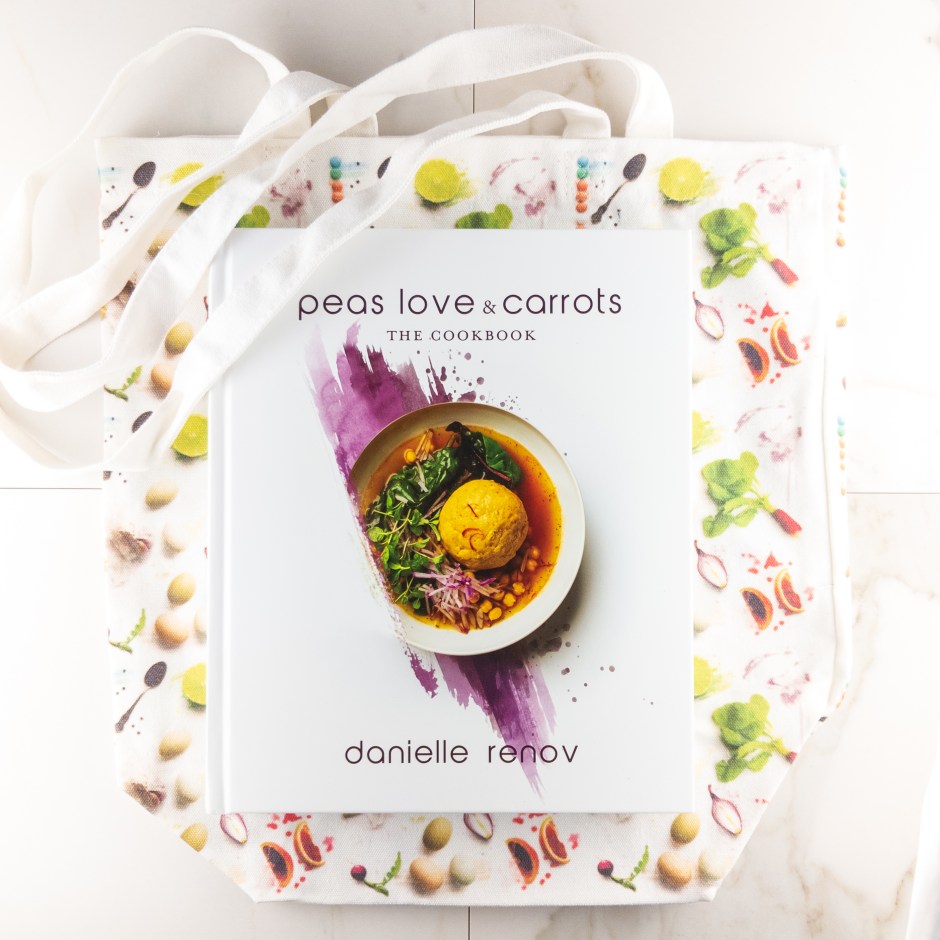
A Conversation with Danielle Renov author of Peas Love and Carrots: The Cookbook

AS: The buzz about Peas Love and Carrots: The Cookbook is extraordinary, with over 25,000 (!) copies pre-sold before it’s even been released! Where did all the excitement come from?

DR: I’ve developed a really close relationship with my community, and they’ve been with me as I collected and developed the recipes and narrowed them down to the ones that work the best. The community — tens of thousands of us, and growing every day! — worked with me to create this, and we’re all very excited about it.  We’re a very diverse group: Sephardim and Ashkenazim. Chassidim, yeshivah people, modern Orthodox, secular Jews. We’re all people who like to put beautiful food on the table, who enjoy eating, and serving, different, interesting foods. I bring them fantastic recipes and share techniques to make their cooking better.

AS: Tell us something about those recipes.

DR: They are very approachable. Most are budget-friendly, quick and simple to follow, but there are also the exotic, unusual recipes that need more preparation, for holidays, entertaining, or when you’re in the mood for cooking something really exciting. There is so much here: More than 250 recipes! About two-thirds of the recipes are for everyday meals, particularly dinner, which is always a challenge. The other third are designed for Shabbos and Yamim Tovim.

AS: How do you go about developing and taste testing your recipes?

DR: I wake up in the morning and see what kind of cuisine I’m in the mood for!  My kids are my guinea pigs, and I don’t know anyone who is a pickier eater than my husband. If a dish gets everyone’s approval, I make it a second time to tweak it to perfection, and then I make it a third time to make sure the results are consistent.

AS:  With so many recipes to choose from, what are your personal favorites?

DR: The ones that are meaningful for me, the foods that bring me back to my childhood and elicit memories of my grandmother, bring me to a special place and time. For me, food is so much more than sustenance. It is what ties our future to our past. It is what brought me to the table growing up in my parents’ home and what brings my own children to the table today.

Get your copy TODAY on artscroll.com!