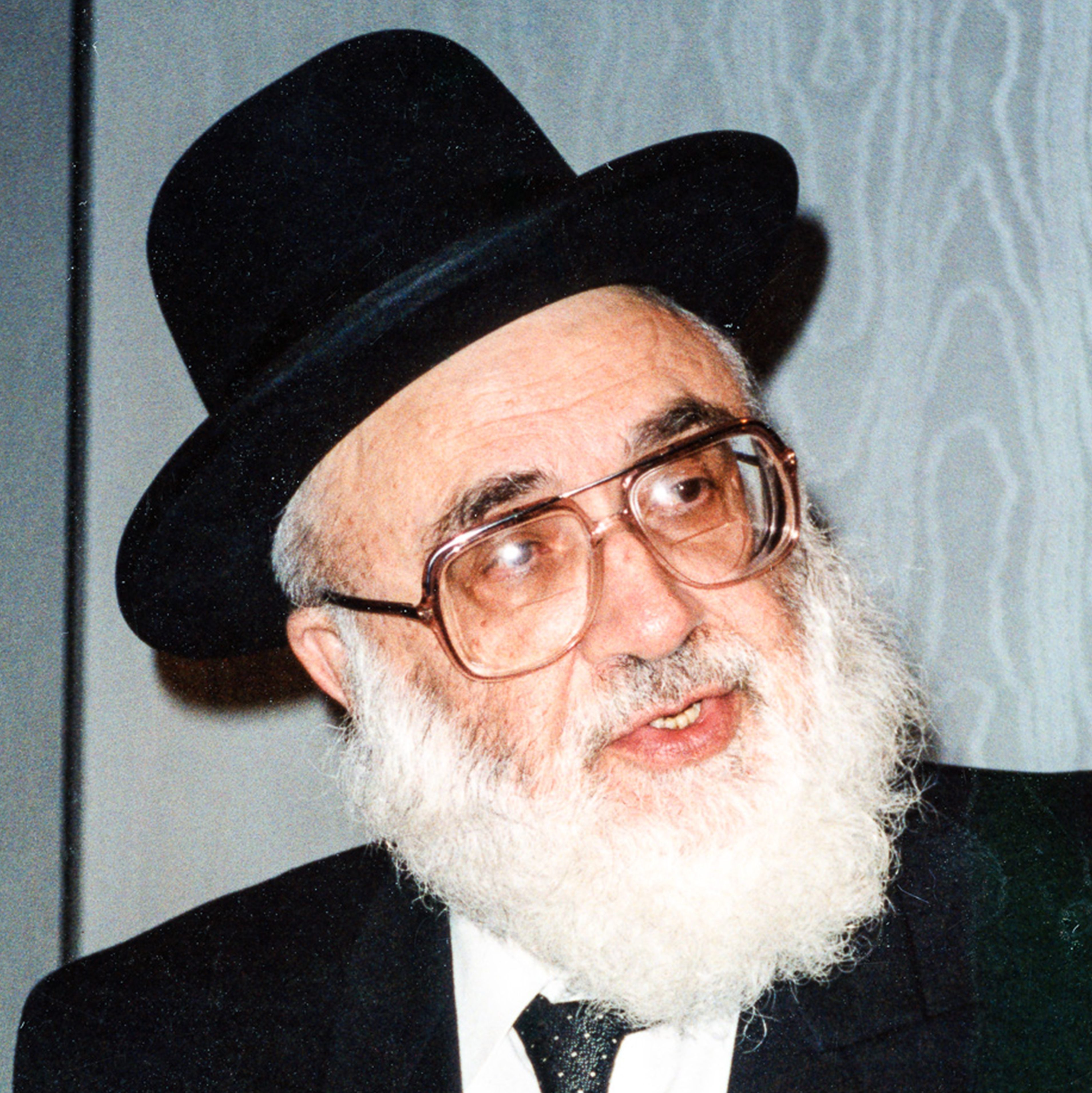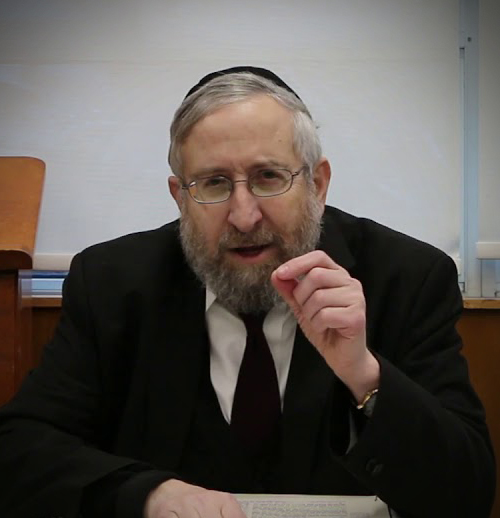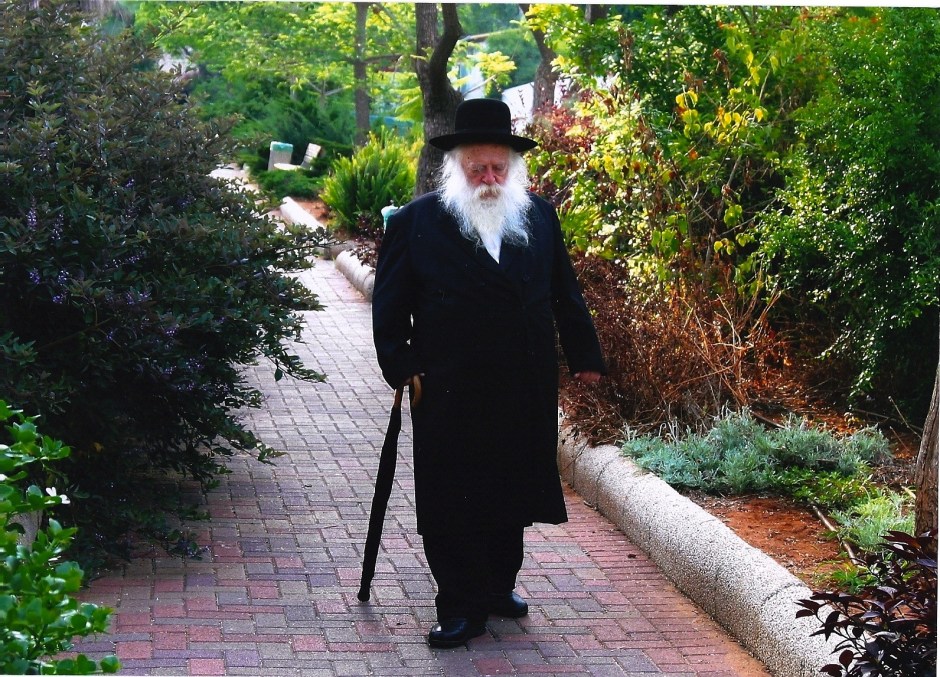
He was a towering leader, a brilliant orator, a beloved rebbi, and a visionary builder of Torah life in America. He was the Rabbi’s Rabbi. He was Hacham Baruch Ben-Haim zt”l.
In this unforgettable episode, Rabbi Shlomo Landau sits down with two people who knew Hacham Baruch best: his son, Yaacov Ben-Haim, and Rabbi Raymond Beyda, a close student who became a respected educator and leader in his own right.
Together, they share personal memories, powerful insights, and moving stories about a man who changed the face of the Syrian Jewish community in America. From his decades of leadership on Brooklyn’s Ocean Parkway to his role as the spiritual heart of an entire generation, Hacham Baruch’s life was one of quiet greatness and enduring impact.
R’ Moshe Gobioff, today of Lakewood, New Jersey, was a bachur living in Monsey, New York, years ago when this story occurred. He had davened Shacharis at the Vizhnitzer Beis Medrash in Kaser Village, one of the most popular minyan factories — forgive the term — in Monsey. Upon returning to his car, he was chagrined to find a parking ticket on his windshield.
Parking near Vizhnitz is not for the faint of heart, and arriving mispallelim often have a difficult time finding a vacancy, sometimes parking in areas that aren’t clearly marked. R’ Moshe had apparently parked illegally, and now he was going to pay for it.
The ticket sat in his room at home for weeks, almost a forgotten memory. By the time R’ Moshe remembered about the ticket, it was long past the due date and he was sure he’d have to pay some sort of penalty on top of the fine. He went down to the Rockland County courthouse to settle the ticket.
Vizhnitzer Beis Medrash in Kaser Village
Upon arriving at the courthouse, R’ Moshe greeted the hawkeyed guard at the door and then headed to the clerk, giving her his ticket number and explaining that he’d like to pay his summons.
“Sir,” the clerk said, “this summons has already been paid.”
“Madam, I’m certain that I never paid.”
“What can I tell you?” said the clerk, pointing to her screen. “I’m telling you, it’s been paid.”
R’ Moshe thanked the clerk and headed home, confused.
Upon seeing his bewildered expression as he walked through the door, R’ Moshe’s mother knew something was up.
“What’s going on?” she asked.
R’ Moshe explained that he had gone to pay his summons but was told it was paid.
Putting the pieces together, along with a strange phone call Mrs. Gobioff received some weeks prior from a man who said he’s paying for a parking ticket of which she had no knowledge, the full story emerged:
The morning R’ Moshe had gotten his ticket, traffic outside the Vizhnitzer Beis Medrash was at a standstill. There was total gridlock and no one was moving. One well-meaning observer felt that there was no choice but to have the police come down simply to clear up the bottleneck and direct the motorists out of the vehicular quagmire. However, once the police were present, they wasted no time writing out summonses to those vehicles that they felt were not parked legally.
The well-meaning Yid who had contacted the police now felt terrible, having caused the summonses to be given out. He had merely wanted to clear up the traffic, not have people be paying parking tickets, even if the tickets were warranted, but that was what happened.
The man immediately walked over to each car and took down the ticket and license plate information. Then, he contacted the police department and paid every ticket, not wanting to be the cause of any loss to a fellow Yid.
R’ Moshe now understood why and how, indeed, his summons had already been paid.
When R’ Moshe told me this story some twenty years after it happened, he was still inspired by the compassion and understanding of this special Jew, who demonstrated once again why there’s no nation like ours.
The Rabbi ran the school minyan for many years,” R’ Eli Mansour said. “He might have been the rabbi of the community, but he was busy dealing with children every single day. It didn’t faze him. But then very few things did.
“It would be very difficult to find a man who is so great and yet so humble at the same time.
“He was there every day of the week, running the minyan for the sixth, seventh, and eighth grades. Even on Sundays, the rabbi was at Magen David teaching Sunday school.
“I remember one day we were nearing the end of the tefilla,” R’ Mansour recalled, “and I was talking to one of my friends — just as the hazan said ‘Barechu,’ which I missed because I was talking.
Hacham Baruch
“As always, Hacham Baruch saw everything that took place in the room. There was no question that he was going to teach me a lesson — in his unique and memorable fashion.
“Looking at the dean, R’ Moshe Greenes, the rabbi said, ‘R’ Moshe, Eliyahu Mansour just lost a million dollars!’
“R’ Greenes, who immediately understood what the Rabbi meant, caught the ball and ran a few steps further, saying, ‘At least a million dollars!’
“That was the entire interchange. But there isn’t a day that goes by when I say the words ‘Barechu et Hashem’ that I don’t think that I just deposited a million dollars in my bank account. With that one line, the Rabbi changed my life forever!
“But the story isn’t over.
“Many years later, I was learning at Mercaz HaTorah in Yerushalayim. We were praying Arbit when someone came into the bet midrash to tell me that I had a phone call from overseas. In those days, that meant that your parents had called you on the yeshiva payphone — and because back then it cost a lot of money to call Israel from the United States, when you got a call from America, you picked yourself up and you ran to the phone.
“I stood in the bet midrash, struggling with myself. I wanted to run to the phone, but I also didn’t want to miss saying Barechu. In the end, I stayed in my spot until the hazan said Barechu. Moments later, I was out the door of the bet midrash and running to the phone.
“Later that evening I was informed that the Rosh Yeshiva, R’ Rotman, wanted to see me in his office.
“‘What do you know about Barechu that I don’t know?’ the Rosh Yeshiva asked me. I didn’t understand what he was talking about.
“‘I don’t know anything about Barechu more than the Rosh Yeshiva,’ I replied in confusion.
“‘No, you must know something.’
“I didn’t know what he was talking about, and told him so.
“‘Look, I know that I am correct about this,’ he said. ‘I watched you. You got a call from the States, but you didn’t leave the bet midrash until the hazan said Barechu. So, I’m asking you the same question again. What do you know about Barechu?’
“Now I understood what he was referring to.
“I have a rabbi in America. His name is Hacham Baruch Ben-Haim. And five years ago, my rabbi told me that Barechu is worth a million dollars.”
“‘That’s a good rabbi,’ the Rosh Yeshiva said. ‘If you are still affected by something that he told you five years ago — he’s a very good rabbi!’
“That story happened forty years ago, and I’m still thinking about how every Barechu that we say is worth a million dollars! That was the power of the Rabbi and his unique ability to make the kind of comments that a person never forgot.
“For some reason, when Hacham Baruch taught you a lesson, it stuck. That is why I consider him a master mehanech. A master educator.
“If I try to analyze why his words had such an impact, I must conclude that it had to do with the fact that he had yirat Shamayim. As Hazal tell us, when someone possesses yirat Shamayim, his words make an impact.
“Above and beyond that, when you were learning with Hacham Baruch you were also learning with his rebbi, Hacham Ezra Attieh, and his havruta, Hacham Ovadia. Sitting with Hacham Baruch meant being connected to the Ben Ish Hai (whose derashot the Rabbi’s grandmother had heard) and to his mother, who inculcated him with an understanding of what awaited him in Porat Yosef (‘My dear son… you will see angels’).
“Keeping all this in mind, we can understand why a few well-chosen words from the Rabbi had the ability to change a person’s entire life.”
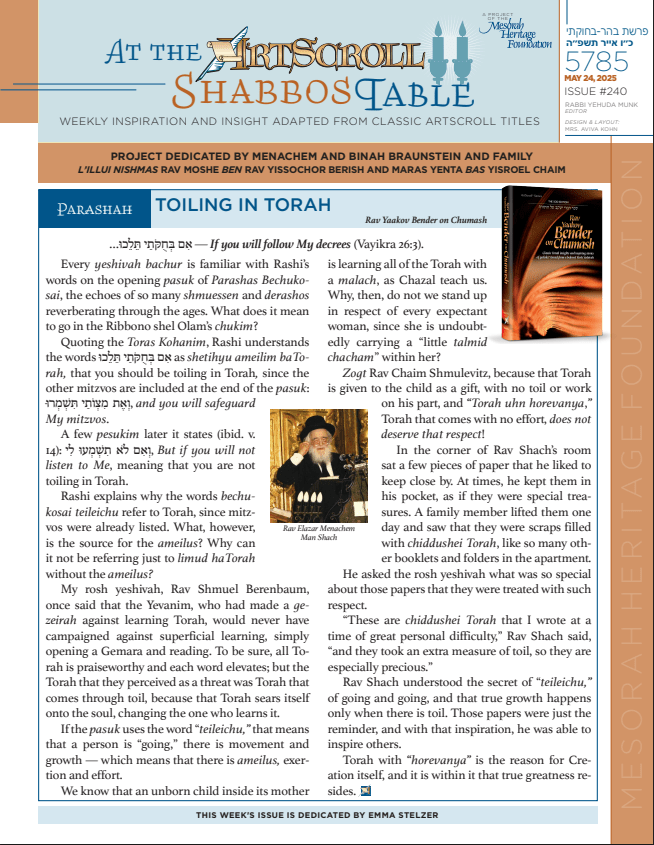
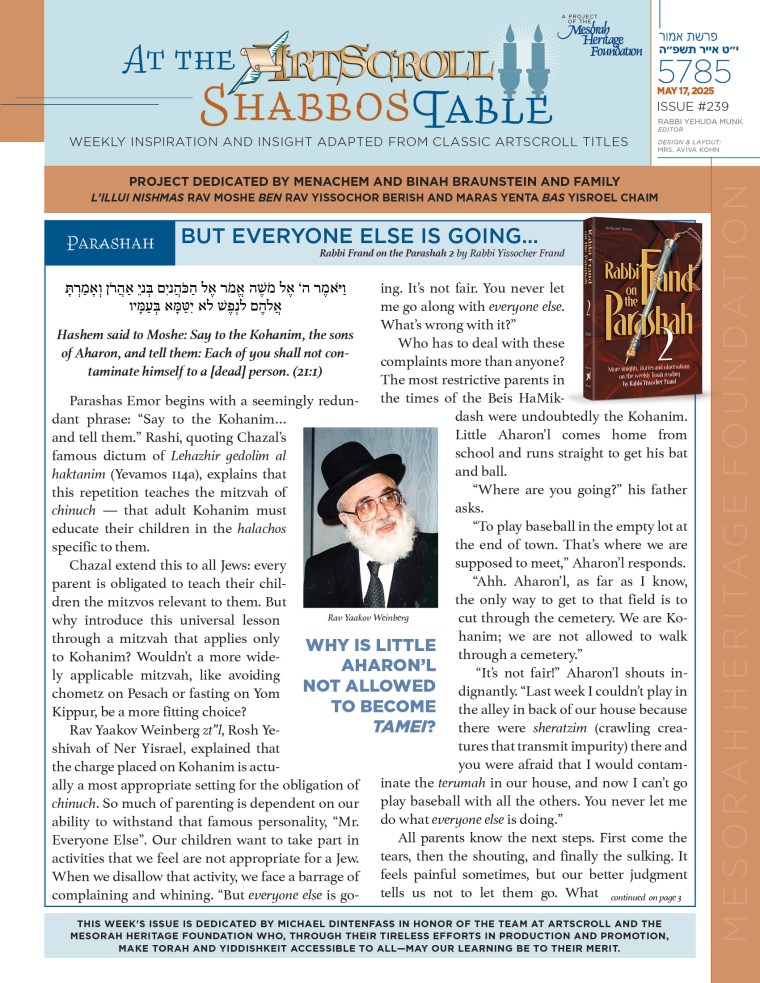
Below please find the latest edition of At The ArtScroll Shabbos Table, containing inspiration and insight from classic ArtScroll titles.
This weekly publication will contain a rich collection of stories, divrei Torah and insights that are suitable for the Shabbos table – or for anytime. We hope you enjoy and look forward to future issues, as we tap into the unparalleled treasure trove that is the ArtScroll Library, sharing the depth and beauty of our Judaic and Torah literature with you.
Hashem said to Moshe: Say to the Kohanim, the sons of Aharon, and tell them:
Each of you shall not contaminate himself to a [dead] person. (21:1)
Parashas Emor begins with a seemingly redundant phrase: “Say to the Kohanim… and tell them.” Rashi, quoting Chazal’s famous dictum of Lehazhir gedolim al haktanim (Yevamos 114a), explains that this repetition teaches the mitzvah of chinuch — that adult Kohanim must educate their children in the halachos specific to them.
Rav Yaakov Weinberg
Chazal extend the obligation to teach one’s children to all; every parent is obligated to teach their children the relevant mitzvos. But why does the Torah choose to teach this universal lesson through a mitzvah that applies only to Kohanim? Wouldn’t a more widely applicable mitzvah, like avoiding chometz on Pesach or fasting on Yom Kippur, be a more fitting choice?
Rav Yaakov Weinberg zt”l, Rosh Yeshivah of Ner Yisrael, explained that the charge placed on Kohanim is actually a most appropriate setting for the obligation of chinuch. So much of parenting is dependent on our ability to withstand that famous personality, “Mr. Everyone Else”. Our children want to take part in activities that we feel are not appropriate for a Jew. When we disallow that activity, we face a barrage of complaining and whining. “But everyone else is going. It’s not fair. You never let me go along with everyone else. What’s wrong with it?”
Who has to deal with these complaints more than anyone? The most restrictive parents in the times of the Beis HaMikdash were undoubtedly the Kohanim. Little Aharon’l comes home from school and runs straight to get his bat and ball.
“Where are you going?” his father asks.
“To play baseball in the empty lot at the end of town. That’s where we are supposed to meet,” Aharon’l responds.
“Ahh. Aharon’l, as far as I know, the only way to get to that field is to cut through the cemetery. We are Kohanim; we are not allowed to walk through a cemetery.”
“It’s not fair!” Aharon’l shouts indignantly. “Last week I couldn’t play in the alley in back of our house because there were dead sheratzim (creeping creatures that are a source of impurity) there and you were afraid that I would contaminate the terumah in our house, and now I can’t go play baseball with all the others. You never let me do what everyone else is doing.”
All parents know the next steps. First come the tears, then the shouting, and finally the sulking. It feels painful sometimes, but our better judgment tells us not to let them go. What should we do? How are we to teach our children the proper path of Torah without alienating them? A very important, yet vexing question.
I think that the answer lies in the parashah in which the Torah decides to teach us about chinuch. Why is little Aharon’l not allowed to become tamei? Is his father just being mean and more restrictive than other parents? Of course not – he is simply aware of Aharon’l’s special status as a Kohen, and he wants Aharon’l to know and appreciate his role in Klal Yisrael.
If Aharon’l’s father is wise, he will sit down and tell him, “Aharon’l, do you know how special you are? You can serve in the Beis HaMikdash!” If Aharon’l’s father then spends some time discussing the privileged status and special role of Kohanim with him, by the time he finishes, Aharon’l will – hopefully – no longer be jealous of his friends.
The same applies to every one of us. If we simply say, “Sorry, but you cannot go,” we will find ourselves fighting tooth and nail with our children. But if we take the time to discuss our special role in the world to our children; to tell them that our holy eyes cannot see things that others see; our hearts filled with kedushah can be contaminated by food that others are allowed to eat; that our holy neshamos can be tarnished by listening to music that others listen to, and what a privilege it is to be such a holy nation, we may get a respite from our difficult enemy, Mr. Everyone Else.
It was after the chuppah at his daughter’s wedding and R’ Moshe Goldberg, maggid shiur at Yeshivah Gedolah Zichron Shmayahu in Toronto, sat down to eat something before family pictures were taken.
Joining him was his younger brother, R’ Yehudah Goldberg, maggid shiur at Yeshivah of Telshe Alumni of Riverdale. Immediately, R’ Moshe turned to him and began discussing a Rashba found in the sugya of keren telushah (Bava Kamma 2b) that he was learning in yeshivah. R’ Moshe, with unbridled excitement and exhilaration, discussed the words of the Rashba relating to the topic of whether negichah, the goring of an ox, refers to an animal attacking with an attached horn or to an animal striking with a detached horn that it holds between its teeth.
Oblivious to the wedding festivities around him, R’ Moshe was fully engaged in his Torah discussion, no different than if he were in a beis midrash surrounded by yeshivah bachurim.
R’ Moshe Goldberg
When R’ Moshe concluded the vort, his brother gave him a hug and a kiss.
“R’ Moshe,” exclaimed R’ Yehudah. “Biz ah hundred un tzvontzig (until 120 years), I will never forget that in the middle of your own daughter’s chasunah, you told me a Rashba on keren telushah!”
R’ Moshe turned to his brother, wishing to correct him.
“In mitten mein tochter’s chasunah? In middle of my daughter’s wedding we discussed keren telushah? Nein! No! That is incorrect. Rather, in the middle of the Rashba on keren telushah we celebrated my daughter’s wedding!”
R’ Moshe wasn’t just being “cute.” In fact, he truly meant — and lived — what he said. His life was one of Torah. Everything else revolved around Torah. R’ Moshe understood what is the ikar and what is the tafel. He understood what is primary and what is secondary.
And this is a lesson for all of us.
Are we consumed with our avodas Hashem and find the necessary time to tend to our personal needs in the middle of our continuous service to our Creator, or are we always in the middle of everything else and just manage to squeeze in some obligatory time for Hashem amid our preoccupation with life?
So, what are we consumed with and what is our diversion?
Are we squeezing our spirituality into our day-to-day goings-on or do we squeeze our daily obligations into a life devoted to spirituality and chessed?
The question is: At any given time, what are we in the middle of; what is our priority?
For R’ Goldberg, the Rashba on keren telushah was his preoccupation. Everything else, even his daughter’s wedding, fit in around what to him was life itself: Torah.
Below please find the latest edition of At The ArtScroll Shabbos Table, containing inspiration and insight from classic ArtScroll titles.
This weekly publication will contain a rich collection of stories, divrei Torah and insights that are suitable for the Shabbos table – or for anytime. We hope you enjoy and look forward to future issues, as we tap into the unparalleled treasure trove that is the ArtScroll Library, sharing the depth and beauty of our Judaic and Torah literature with you.
With the dozens of daily visitors from all around the world, one can think that every possible type of question has already been presented in Rav Chaim’s room. Yet there is always something new…
Four brothers appeared before Rav Chaim, with their somber faces betraying the gravity of the circumstances that had brought them there.
“Our sister is very ill,” the oldest among them began. “Both of her kidneys have failed, and she is currently forced to undergo grueling dialysis treatments on a regular basis. The doctors say that the only hope for her life is to have a kidney transplant. All of our family members eagerly went to be tested, in the hope that we could save our dear sister’s life. Each of the four of us was found to be a match, and we each want to do this great mitzvah for our sister. We could not come to a consensus as to which of us should have the right to be the donor, so we came to the Rav for a solution.”
Visibly moved by this selfless display, Rav Chaim asked a few questions, and determined that the correct method of decision was to perform a goral. He took out a Tanach, and, according to the rules passed down to him, the name Evyasar emerged. The second of the brothers bore that name, and his face beamed with inner joy that he would merit to be the one to save his sister’s life. His brothers all congratulated him, and, escorted by Rav Chaim’s warm blessings, they went on their way.
A few weeks later, three of the brothers were once again waiting outside Rav Chaim’s room. When their turn came, they added a fascinating twist to this tale:
“While undergoing tests in preparation for the kidney donation, the doctors discovered an irregularity in Evyasar’s heart! Had it gone unnoticed, it could have endangered his life, chas v’shalom, but now the doctors are confident that, with Hashem’s help, he will have a full recovery! Baruch Hashem, his having been chosen by the goral likely saved his life. Nevertheless, with his current condition, he is no longer an eligible candidate to be the kidney donor. We have therefore come to ask the Rav to please help us choose his replacement!”
Moved anew, Rav Chaim repeated the goral, and the name of one of the remaining brothers emerged. With renewed blessings, they went home again, and, a short time later, they sent word that, with Hashem’s help, all of the siblings were now hale and healthy.
Rav Michoel Wolpin, a Seattle native, once entered the study of Rav Shmuel Kamenetsky, rosh yeshivah of Yeshivah of Philadelphia, and was surprised that Rav Shmuel stood up for him and said, “I must thank you for saving my life!”
Rav Wolpin was taken aback, as he did not recall saving Rav Shmuel’s life. Rav Shmuel explained as follows.
In 1937, Rav Yaakov Kamenetsky, Rav Shmuel’s father, left his family in Lithuania and traveled to America, seeking a position as a rav. Through a series of events, he secured a job as an interim rav in Seattle, and during that time, he met the Wolpin brothers, who attended the local Jewish day school. Rav Yaakov spent some time speaking to them before he proceeded to test the boys on what they were learning in class. Young Michoel knew the portion of Maseches Bava Kamma that he was learning fluently, astonishing the new rav with his clear understanding of the Gemara. Rav Yaakov was very impressed.
Rav Yaakov Kamenetsky
After a short time, Rav Yaakov secured a steady job in Toronto, and moved there, while trying to bring his family from Europe to Canada. One day, he received a letter from his brother-in-law, Rav Avrohom Grodzensky, who was taking care of his family in Lithuania while he was abroad. Rav Avrohom wrote that although he feels comfortable allowing the younger children and the girls to travel to America, he was hesitant to permit Rav Yaakov’s two older sons, Binyomin and Shmuel, to travel to America, as they were already studying in yeshivos in Europe. With a weak infrastructure of yeshivos in America, Rav Grodzensky was concerned about their spiritual well-being and their ability to learn Torah properly abroad.
Rav Yaakov, however, was not concerned. He explained, “If Michoel Wolpin, a young child in Seattle, can master Bava Kamma, then my children can also study Torah and master it here in America.”
With that, he insisted that his entire family, including his two older sons, travel to Canada.
Rav Shmuel explained to Rav Wolpin, “Now you know how you saved my life. So many who stayed behind in Europe perished. Your mastery of Bava Kamma gave my father the confidence to bring my brother and me to Canada just before the war broke out!”
In addition to the lesson of hakaras hatov demonstrated by Rav Shmuel – that one must appreciate something done for him, even if it was many years earlier and even if the benefactor is not aware of what he’s done – there is a remarkable message regarding the phenomenal power of an individual, even a child. Young Michoel Wolpin surely had no idea of the impact he would have through his mastery of Bava Kamma. Like any child, he probably did what he was told and devoted effort to mastering his studies. Yet, his diligence and knowledge ensured the safe passage of two brothers, both of whom would make a colossal impact on tens of thousands of Jews.
Discover why a day whose origins are shrouded in mystery has become one of the most joyous days on the Jewish calendar. In Lag Baomer: The Fire and the Soul, Rav Daniel Glatstein reveals the inner meaning of this hallowed day and why it has gained almost supernatural momentum in our times.
Enter the world of Rebbi Shimon bar Yochai and the Zohar HaKadosh, and experience an exalted realm of Torah that will bring Klal Yisrael closer to the final redemption.