TORAH: Honoring Torah

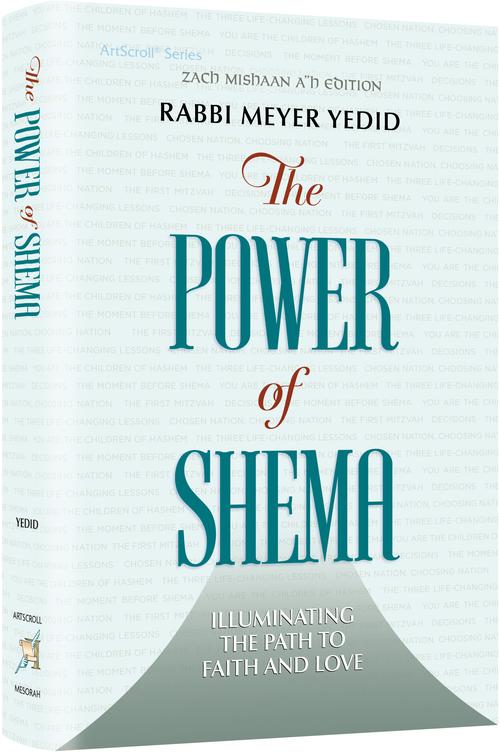
Adapted from: The Power of Shema by Rabbi Meyer Yedid

Torah brings so many benefits and Torah itself is so beautiful, so enjoyable, so great to be around as much as we can. But, like everything else in life, if you don’t give it the proper kavod, respect, you will not realize that potential.

We see this principle with regard to David HaMelech: When he was older, he no longer derived warmth from his clothing. Chazal tell us that this was because, on one occasion, David did not show respect to clothing the way he should have, at his level. On that occasion, he cut off a piece of Shaul HaMelech’s robe. He did it for a good reason. But again, Chazal saw in that a bit of disrespect for clothing. As a result, clothing was no longer able to benefit him.

And we learn a rule from that. The rule is that if you give honor to something, it will give you something back, and if you disrespect something, it will give you little, if anything, back. Whatever you respect in life will reciprocate. If we expect to have the Torah light up our life and light up our insides and outsides and light up our relationships and light up our middot, we first have to show it kavod. We have to respect it.

How do you respect Torah study? I saw a beautiful story about R’ Moshe Shmuel Shapiro. Somebody invited him to be the sandak at a bris taking place in a city nearby in Eretz Yisrael and he declined. One of the people who were close to him questioned why he declined. R’ Shapiro explained, “It’s true that when you go to a brit milah you meet Eliyahu HaNavi, but when I go to the Gemara, I meet the Ribbono Shel Olam! How can I leave the Ribbono Shel Olam in the Gemara in order to meet Eliyahu HaNavi?”

R’ Shapiro’s attitude was: When I’m learning, I’m learning with Hashem.

Is that the attitude we have when we open a Gemara, when we open a Chumash? Do we say to ourselves: We’re with Hashem? Do we give kavod to the Torah in that way?

That’s what we need to do.
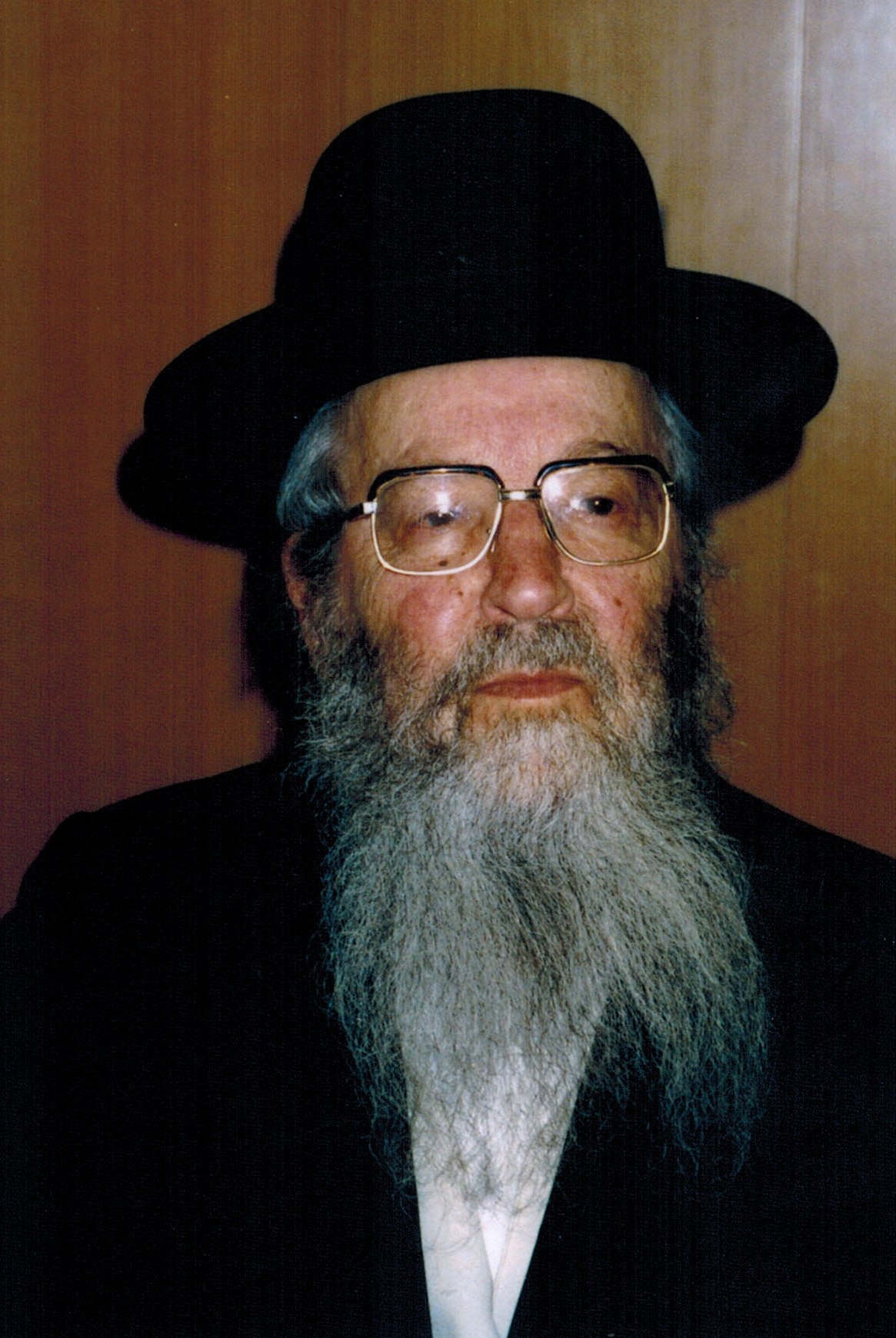
R’ Moshe Shmuel Shapiro

We need to understand where the Torah comes from and Who we’re with when we learn it.

A person who loves the Torah makes sure he has time to learn it, whatever he’s capable of doing. Some people are capable of learning only twenty minutes a day. That’s it. They’re only capable of twenty minutes. But if they make sure to use those twenty minutes for learning, they’re giving kavod to the Torah. And some people can learn an hour and some people can learn two hours and some can learn ten hours. Whatever a person can do. The point is not how much; the point is to be mechabed the Torah, to honor it and recognize its value.

When you are mechabed the Torah, the Torah is mechabed you. It gives you all the benefits that you need.
How else are you mechabed the Torah? When you clarify things, when you try to understand things, when you do chazarah (review). Recently, I saw someone sit down and write notes on something he had just learned. That’s called kavod haTorah. When you see someone writing notes as he reviews, that’s called honoring the Torah: I didn’t come here just to show my face. I didn’t come here to check in and check out. I’m doing chazarah because it’s actually important to me. I want to understand it. I don’t want to forget it. That’s called kavod haTorah.

When you are mechabed the talmidei chachamim, when you are mechabed those who learn the Torah, that’s also called kavod haTorah. When you buy beautiful sefarim, when you don’t throw them around, when you have your own Gemara that you take with you — do you know how precious it is when someone brings his own Gemara from home and proceeds to learn with it? There’s nothing wrong with finding a Gemara on a shelf and using that, but when you bring your own, that’s kavod haTorah!

The more kavod haTorah we have, the more we will be able to learn and enjoy the Torah. 


PARASHAH: Round Trip Greatness

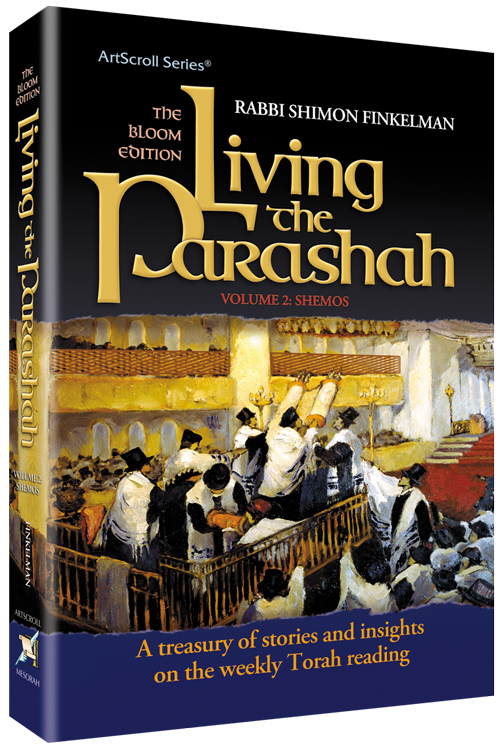
Adapted from: Living the Parashah — Shemos by Rabbi Shimon Finkelman

וַיֹּאמְרוּ אֶל מֹשֶה לֵאמֹר מַרְבִּים הָעָם לְהָבִיא … וַיְצַו מֹשֶׁה … אִישׁ וְאִשָּׁה אַל יַעֲשֹוּ עוֹד מְלָאכָה לִתְרוּמַת הַקֹּדֶשׁ

They said to Moshe as follows: “The people are bringing more than enough … [Therefore] Moshe commanded … “Man and woman shall not do more work toward the gift for the Sanctuary” (Shemos 36:5-6).

The builders and artisans informed Moshe that there were more than enough materials for the construction of the Mishkan, its vessels and the making of the Kohanim’s vestments. Moshe therefore issued a call which brought the preparation of materials to an end.

Why did Moshe say, “Man and woman shall not do more work”? Why didn’t he say, “Man and woman shall not bring any more materials”? Sefer Kli Chemdah suggests the following:

Picture a person who had prepared materials for the Mishkan, was getting ready to transport them to where the construction was taking place, and then heard the announcement that nothing more was needed. Surely, he would be hurt to see that his efforts were for naught. Moshe Rabbeinu did not want this to happen. Therefore, he announced that no more “work,” meaning preparation of materials, was needed. However, if someone had already prepared the materials, he was asked to bring them. They could be used for future repairs or to make additional vessels.

It is upsetting and frustrating for a person to see that his efforts were fruitless. Great people are careful to recognize the efforts of others on their behalf and to make them feel appreciated.

For Yonason Goldberg, it was a moment for which he had been waiting for a long time. He had traveled from Queens to Monsey to seek advice on an important matter from one of the generation’s luminaries, Rabbi Yaakov Kamenetsky.

Rabbi Yaakov Kamenetsky

The discussion did not last as long as Yonason had expected. With his keen insight and unparalleled wisdom, R’ Yaakov quickly cut through to the heart of the matter, resolving it clearly and succinctly. With the discussion apparently over, the sage asked his visitor, “Are you returning from here to Queens?”

Yonason nodded in the affirmative.

“Well, then,” R’ Yaakov went on, “I have a favor to ask of you. Our grandchild has been staying with us and needs to go to the airport in Queens. We already arranged for a neighbor of ours to undertake this mitzvah. But for whatever reason, he is not comfortable driving alone. My rebbetzin and I had said that we would accompany him on the round trip. However, if you can take our grandchild, there will be no need for us to go along.”

Yonason was only too happy to save R’ Yaakov and his rebbetzin from having to make such a trip. However, he was not ready to leave just yet. He had waited so long for this opportunity; there were other questions, none of them terribly urgent or important, that he wanted to ask R’ Yaakov. He proceeded to ask his questions, one by one. As soon as R’ Yaakov answered a question, Yonason had something else to ask. Only later did he realize that R’ Yaakov had been trying, in his very polite and friendly way, to draw the visit to a close.

Then the doorbell rang. It was R’ Yaakov’s neighbor, who had come to make the trip to the airport. R’ Yaakov had been unable to reach him at home and cell phones did not yet exist. “We’ll be with you shortly,” R’ Yaakov told his neighbor with a smile.

Then he said quietly to Yonason, “We will have to go with my neighbor. Had you left before he came, I would have explained to him that we found a ride that made it unnecessary for my rebbetzin and me to come along — and he certainly would have understood. But now that my grandchild is still here and the neighbor is ready and eager to make the trip, I think that he will feel bad if we tell him that we have found a different ride.”

And so, to avoid hurting the feelings of their neighbor, R’ Yaakov and his rebbetzin made the trip to Queens and back. 

CHESSED: A Ray of Light

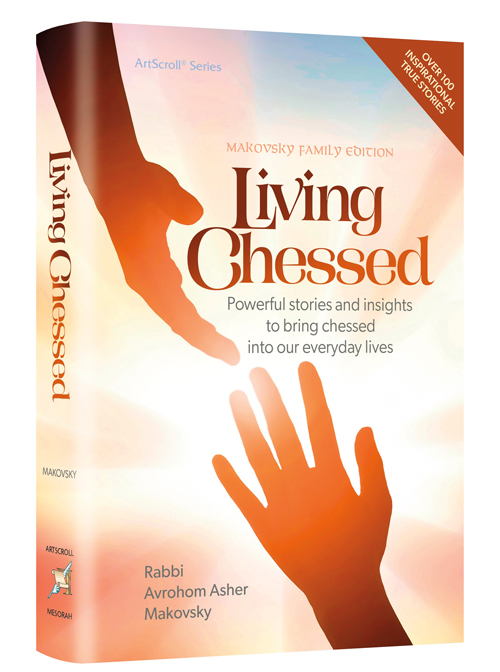
Adapted from: Living Chessed by Rabbi Avrohom Asher Makovsky

Moshe Walkin, a 21-year-old bachur from Lakewood, was learning at Yeshivas Mir in Yerushalayim. A few days before Lag B’Omer, his close friend ran to him bursting with excitement. “You’re not going to believe it!” he said. “I got a few VIP passes to pour the oil for lighting the Toldos Aharon bonfire in Meron!”

Moshe and his friends would be up-front and close to the center of the action. They would be able to pour the oil that the Toldos Aharon Rebbe would light!

The boys reserved an apartment in Meron and thought about little else but their thrilling upcoming adventure. However, Moshe got a call from his father, Rabbi Aharon Walkin, that would change the plan. Reb Aharon had been putting in a concerted effort to obtain all the permits needed during those times of Covid-restricted travel to come to Yerushalayim and pay a long overdue visit to his elderly father. He would be arriving right before Lag B’Omer and he wanted his son to come with him to visit his zeidy.

Moshe was disappointed. Instead of spending the night with his friends in Meron, he would be spending it with his father and Zeidy in Yerushalayim. However, Moshe knew what his priorities had to be. He told his father about his arrangements for Meron, adding, “But of course I’ll stay with you, Totty.”

Reb Ahron and Moshe Walkin on the way to Meron

On Erev Lag B’Omer, at 5 p.m., Reb Aharon arrived at Ben Gurion airport. He took a cab directly to his father’s apartment in Yerushalayim, where he and Moshe spent several hours. At about 10 p.m., Reb Aharon told Moshe that he would drive with him to Meron to catch the remainder of the celebration.

However, by the time they arrived in Meron, several hours later, the police were stationed along the road turning everyone back. “No one is allowed into the area,” they were told. The Walkins had no choice but to return to Yerushalayim. They awoke the next morning to the shocking news. The combination of overcrowding and limited exits had resulted in causing the people to lose their balance, fall upon and crush each other. The epicenter of the tragedy was the Toldos Aharon bonfire, and the two friends with whom Moshe was supposed to share the experience — Dovi Steinmetz and Yossi Kohn— had perished in the crush.

The Torah gives us two ways to merit arichus yamim. One is the mitzvah of kibbud av v’eim. As Reb Aharon so eloquently stated, it took two hefty doses of this mitzvah to save Moshe’s life. “For me, leaving Lakewood to go visit my father in Eretz Yisrael was very hard to arrange. For my son, he had to give up this once-in-a-lifetime opportunity. It was with magnificent mesiras nefesh that he did kibbud av v’eim for me. With these two zechusim, he merited to be saved.”

No matter what happens, we have to look for the ray of light Hashem will always show us. In our present times, we often see it against the darkness, but we will soon arrive at the time when Hashem’s light will forever drive the darkness away. 

Watch what we are doing together for Am Yisrael

Dear Friend,

We are living in historic times. Our brothers and sisters throughout the world are responding to these challenging times by turning to Torah and Tefillah.

We are there for them when they need us, now more than ever.

Watch what the Mesorah Heritage Foundation is doing for Am Yisrael in Israel and throughout the world.

May Hashem repay your generosity with success in everything you do.

Mesorah Heritage Foundation


Please note the following unique opportunities to honor the memory of a loved one in one of our ongoing projects.

English Daf Yomi Yerushalmi Volume Dedication: A compact edition is being published in conjunction with the newly started Daf Yomi Yerushalmi cycle. This dedication includes a full dedication page and a listing in every volume in the series. $50,000

Tosafos Associate: Support the in-depth study of Talmud afforded by Tosafos. This unprecedented edition comprehensively elucidates this fundamental commentary. Your dedication will appear in every volume as it is printed. $36,000 payable over 6 years

Ein Yaakov Associate: Open the depths of the fascinating world of aggadah – the non-halachic passages of the Talmud – as never before in any language. Your dedication will appear in every volume as it is printed. $18,000 payable over 4 years

Daf Yomi Yerushalmi Associate: Your dedication will appear in every volume as it is printed. $24,000 payable over 4 years

Tosafos Pillar: Your dedication will appear in a forthcoming volume. $1,000

Ein Yaakov Pillar: Your dedication will appear in a forthcoming volume. $1,000

To discuss these and other opportunities, please call 718-921-9000, ext 5. or Donate Here.

You can also mail your tax-deductible donation to:

Mesorah Heritage Foundation
313 Regina Avenue, Unit A
Rahway, NJ 07065

* Contribute $180 or more and receive 20% off all book purchases for a year.

Beautiful Article About the Candle Lighting Treasury and the 2017 Shabbos Project

The Shabbos Project: When One Candle Inspires Another

by Ariela Davis – October 26, 2017

The Shabbos Project. Ever since I saw the video about how the South African Jewish community, most of whom are not observant, came together to try out a Shabbos, I’ve been gripped by the idea. The pictures of hundreds of Jewish women baking challah on the streets of Johannesburg and the thousands that attended the Havdala concert, brought tears to my eyes. I loved the opportunity this initiative offered of a community coming together to try one Shabbos. Living in a community where Shabbos observance is far from the norm, the success of this project brought me hope that one day, maybe my community would be ready to try this.

But although we’ve tried to bring this project to Charleston and some have participated, we have not experienced the success that South Africa was blessed with. While many non-observant Jews are starting to see the appeal of powering down for 25 hours in order to focus on family and spirituality, it seems that for most, it is daunting to keep one whole Shabbos. Most Jews in our community do not have a background and learning all of the information Shabbos entails is overwhelming. And since very few families in Charleston keep Shabbos, it is hard to be different, especially when many kids’ activities and events take place on a Saturday.

I never quite comprehended this last point, until Fay-Novit Grabin (otherwise known as Bubbie Fay) told me her story. A legendary figure in Charleston, Bubbie Fay is in her 80’s and has more energy and passion for Judaism than anyone I know. In years gone by, she was the driving force in keeping our day school going; fundraising to keep the doors open and finding the Head of School who set our school on its track of excellence. She planned event after event for our shul in order to keep it vibrant; volunteered on the Chevra Kaddisha when that meant she had to sew the tachrichim (burial shrouds), and to this day, everyone knows you don’t mess with Bubbie Fay’s (actually, the shul’s) kitchen.

This woman who literally lives to strengthen Judaism in Charleston, was raised in Denmark, South Carolina, with no Jewish education, and aside from the presence of her grandmother’s candlesticks which her mother lit every week, little Jewish observance. When she got married and moved to Charleston, she slowly embraced yiddishkeit and together, she and her husband took on one mitzvah after the next until they were not only observant, but one of the backbones of the Jewish community.

Meeting this firebrand of a woman, no one would ever think she could be insecure about her Judaism, but she recently confided in me how difficult it was to be one of the only observant Jews among her friends. Many would go out to non-kosher restaurants while she was left behind; she was one of the few who was Shomer Shabbos, which cast her aside as “different”. A half century later, despite all that she’s accomplished, she still remembers how isolated she sometimes felt, and how painful it was.

Not everyone has the strength of a Bubbie Fay and hearing her story, I understand why it is so difficult for Jews in Charleston to try one Shabbos, no matter how intriguing an idea they may find it to be.  But as much as I get it, every year as The Shabbos Project rolls around and I see pictures on Facebook of communities that were able to pull it off, I feel inspired but also a little sad that our community is not among them.

And so this year, for the International Shabbos Project, we’ve decided to participate but try something different.

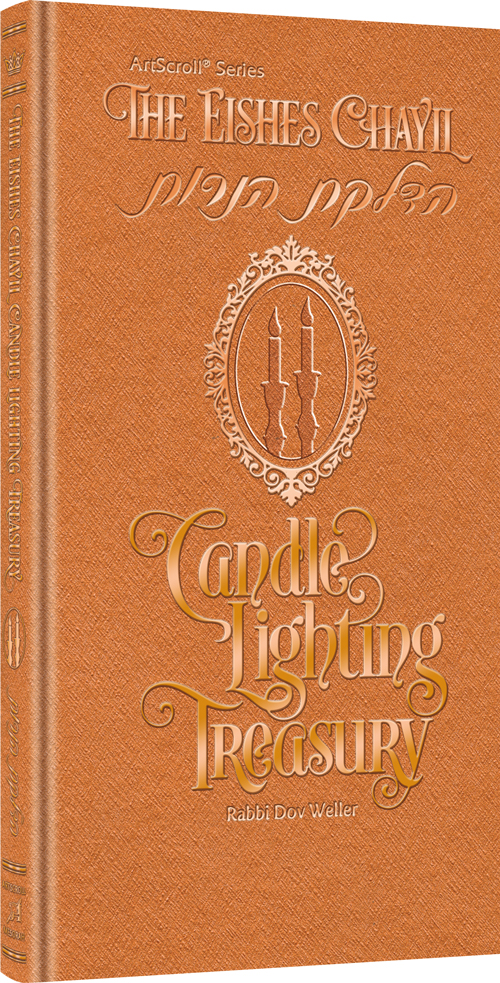
Sometime around Rosh Hashana, I received the Eishes Chayil Candle Lighting Treasury in the mail and after picking it up to read, I soon found myself unable to put the book down. The author, Rabbi Dov Weller, takes a mitzvah that I have always taken for granted and makes it fresh and meaningful by going into explanations about the customs and sharing moving stories.

Fifty years ago, most Jewish women, no matter how far removed they were from Judaism, lit Shabbos candles, which is perhaps why many conjure the image of a woman lighting candles as the emblem of Judaism. Nowadays, for whatever reason, many Jewish women do not light. But inspired by the book, this week, we are daring to attempt something tremendous: to encourage every Jewish household in Charleston to light Shabbos candles in honor of the Shabbos Project.

Despite the simplicity of the idea, I’ve feared that like other Shabbos initiatives we’ve tried to encourage, it won’t catch on. I was pleasantly surprised when many of the other Jewish organizations and synagogues in town agreed to encourage their congregants to join in. I was even more excited when a group of women came up to me in shul to tell me they had decided to join our initiative and bring in Shabbos with candles. A number of them admitted they had lit many years ago but for whatever reason, had stopped lighting. One woman told me she would need to dust off her grandmother’s candlesticks, but she was excited to bring this mitzvah to her home once more. Many spoke with nostalgia about watching their grandmothers light and the beauty it had brought to the home. These women were from across the spectrum of the Jewish community- Reform, Conservative, Orthodox, unaffiliated and their messages have infused me with hope that maybe we can really bring candle lighting back to our community, even if it is just for one week.

But ironically, there is one woman in our Jewish community who will not be lighting Shabbos candles this Friday: Fay Novit- Grabin. This Friday, Bubbie Fay will be having heart surgery and will be unable to light. And so many in our community have decided to dedicate the community candle lighting initiative in the merit of her refuah shlaima.

Nothing could be more fitting. Because there is a piece of Bubbie Fay’s story that I did not share. When women light Shabbos candles, the Tefilla we whisper is for us to merit to raise children and grandchildren who love and fear G-d, who illuminate the world with Torah and ma’asim tovim (good deeds). With all the of the challenges that Bubbie Fay endured to be frum, she was rewarded for her years of mesiras nefesh, (self-sacrifice) with the fruition of this Tefilla, in a way that is truly an anomaly in Charleston. This woman from Denmark, South Carolina is the proud grandmother of seven grandchildren, all frum and eighteen frum great-grandchildren. One of her grandchildren is Rabbi Dov Weller, author of the Candle Lighting Treasury, who has illuminated the world, with his insights on candle lighting, and who was the inspiration for the candle lighting initiative.

And so with the light that Bubbie Fay inspired within her own family and community, and through the powerful words of her grandson, may the light of the Jewish women’s candles in Charleston this week, be a merit for her complete recovery.

Please join the Charleston community and daven for Fayge Rochel bas Chaya Bayla at candle lighting.

Article reposted with permission from OU.org

To order your own copy of the amazing Eishes Chayil Candle Lighting Treasury by Rabbi Dov Weller, please click here!

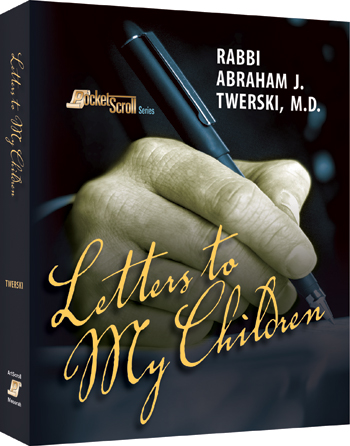
Free Download: Sample Chapters from Letters to my Children

ltmcpRabbi Dr. Abraham J. Twerski, whose many books have transformed and enriched the lives of tens of thousands of readers, now distills a lifetime of wisdom, experience, and ahavas Yisrael into this poignant, warm and personal collection of letters.

In letters sent to grandchildren standing on the cusp of marriage, he shares his insights on building relationships and keeping them strong and fresh. To his great-grandson, on the occasion of his bar mitzvah, Rabbi Dr. Twerski gives a wealth of advice on the best way for a Torah Jew to live and reach his G-d-given potential. He imagines, rather wistfully, the letter he would have liked to send to his parents, and in it offers us his profound understanding of hakaras ha’tov, gratitude. He even writes a letter to his great-great-grandchild, who has not yet been born, showing him that no matter what changes the world will undergo, some things – the most vital things – are changeless and immortal. The letters are spiced with personal case histories from Rabbi Dr. Twerski’s career as a psychiatrist, as well as wonderful stories from Chassidic lore.

By sharing his personal correspondence, Rabbi Dr. Twerski makes us a part of his family. And what a “zeide” he is to us all!

Compact, paperback, Pocket Scroll book.

Click here to view, print or download sample chapters from Letters to My Children

Click here to purchase Letters to My Children

Free Download: Heavenprints

New release from the best-selling author of Holy Woman:

Heavenprints: Stories of finding Hashem in our lives, and living our lives with Hashem

Sara Yoheved Rigler, one of the leading lights of Torah literature and the author of the bestselling biography Holy Woman, opens our eyes to Hashem’s boundless love and caring as we uncover His “heavenprints” in these unusual, captivating true stories and essays. With deep insight into both our human nature and our Divine gifts, the author gently shows us how to look for “heavenprints” in our own lives and challenges.

Click here to download a free sample story from Heavenprints

Click here to purchase Heavenprints and save 20%

Click here to shop all titles by Sara Yocheved Rigler

Don’t forger: ArtScroll’s June Sale continues: save 20% on all books!