


The Nine Days are so much more than milchig meals and no swimming. They are the time given to us to mourn the Churban — and, as Chazal tell us, to earn the right to see the Beis HaMikdash rebuilt.
Here are two ArtScroll books that help put the meaning into our mourning:
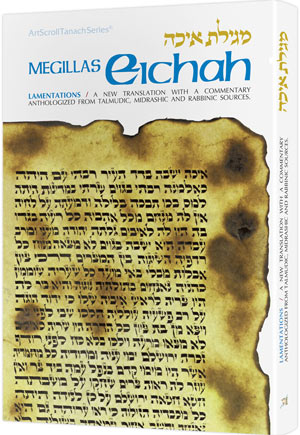
The newest volume in the Zera Shimshon series, Zera Shimshon on Megillas Eichah, gives us a fascinating and deep understanding of Megillas Eichah and of the Churban itself. Rav Shimshon Chaim Nachmani, author of the Zera Shimshon, was one of the greatest rabbanim and Kabbalists in 18th-century Italy. His works — and the powerful segulah connected to their study — were recently rediscovered. There are many treasures to be found in the Hebrew original, but they are not easily uncovered. The writing is complex, with countless allusions to concepts and texts from all over the Written and Oral Torah.
The Haas Family Edition Zera Shimshon on Megillas Eichah brings us the full text of the Zera Shimshon’s commentary on Megillas Eichah, with an elucidated translation that enables the reader follow and understand it. It includes an introduction to each derush and explanations to increase our understanding of the Zera Shimshon text; it also provides summaries and notes that offer important background material.
How did Avraham Avinu argue with Hashem about the Destruction — and how did Hashem best him in the argument? What is the connection between orphans and widows, the Churban, and the rebuilding of Yerushalayim? These are just two of the many fascinating questions — and their eye-opening answers — in this important new volume.
What more appropriate way to spend the Nine Days and Tishah B’Av, than to study the tragic events leading up to the Churban through the eyes of Chazal? The story of Kamtza and Bar Kamtza, a seemingly small incident, was the catalyst for great tragedy. The Schottenstein Edition of Ein Yaakov, Orlofsky Family Edition of Seder Nashim — Tishah B’Av Excerpts from Tractate Gittin: Kamtza and Bar Kamtza offers us a new understanding of the well-known aggadata and the events that followed. Available in a convenient softcover volume, it includes a new, flowing translation, notes based on the primary commentaries and other sources, and “Insights” drawn from a vast range of commentaries.
It’s been a long, long galus. Let’s start to truly feel the Churban — so we can merit to see the rebuilding.




 The Official ArtScroll Blog