This weekly publication will contain a rich collection of stories, divrei Torah and insights that are suitable for the Shabbos table – or for anytime. We hope you enjoy and look forward to future issues, as we tap into the unparalleled treasure trove that is the ArtScroll Library, sharing the depth and beauty of our Judaic and Torah literature with you.
If someone were to ask me whether I would choose life in this world or life in the next, I would answer that I choose life in Olam Haba — but when we say this, our mouths and our hearts frequently do not correspond. It is virtually impossible to choose the path leading to Olam Haba to the exclusion of all else, without desiring at least a small taste of Olam Hazeh. Therefore, while we face two diverging roads, each one leading in a different direction, it is hard for us to make a definitive choice. Instead, many of us seem to opt for life in this world as well as life in Olam Haba. If we were given the opportunity to choose only Olam Hazeh or Olam Haba, would we actually choose the latter?
The world today abounds with material pleasures and indulgences, offering an endless array of food, clothing, and devices. When I first came to yeshivah in Eretz Yisrael, there was nothing to be had! Many homes didn’t have gas or even a refrigerator. All everyone had equally was poverty! Even in chutz la’aretz, where the economic situation was far better, people struggled to earn a living.
Under such circumstances, the choice of a glittering Olam Haba over a wearying, poverty-stricken Olam Hazeh is self-understood.
Today, we live in a world of plenty, showered as we are with both spiritual and material bounty. Everyone has a home and every device necessary for a home. In the past, someone who owned even one of these gadgets was considered wealthy. Today, anyone who doesn’t own a cell phone is regarded as practically barefoot. How, then, are we expected to choose between Olam Hazeh and Olam Haba?
Every Yid in every generation has the choice to dwell in the tent of Shem, like Yaakov, or set out into the big world to hunt game, like Eisav. Is it possible that in this generation, we no longer have to choose between the two worlds, and we can choose a third course that encompasses both? I once heard that a person who knows how to differentiate between the ikar and tafel, the core versus its external trappings, and to seize that core has great potential to succeed in life. Even if he also acquires the tafel along the way, he will succeed, as long as his primary focus is on the ikar. In our world today, it is virtually impossible to live without any grasp on Olam Hazeh, for even luxuries have become necessities.
“The principle of the matter,” writes the Mesillas Yesharim (Ch. 1), “is that man wasn’t created for his circumstances in Olam Hazeh, but for… Olam Haba, although his circumstances in Olam Hazeh are the means for his Olam Haba, which is his ultimate purpose.” Here, the Mesillas Yesharim expresses that the function of the bounty that we enjoy in Olam Hazeh is to enhance our avodas Hashem. Olam Hazeh, then, is the tool that enables us to attain our ultimate goal in life.
Our task is to distinguish between ikar and tafel, to appreciate our essence and role in this world — and this is the manifestation of bechirah in our generation. Do we regard limud Torah as fundamental and everything else in life as the tools and external trappings that enable us to acquire it? Or does the endless gashmiyus surrounding us constitute the focus of our lives?
This is the essence of bechirah — the choice to follow Yaakov’s path to Olam Haba or to traverse Eisav’s path as an ish yodei’a tzayid. Two people may dress identically and learn shoulder-to-shoulder in the same beis midrash; they may live in the same type of home, and their lives may follow similar courses. Yet one may be following the path of Yaakov, and the other, the path of Eisav — since the former considers Torah the ikar and views everything else merely as a means of acquiring Torah, while his friend’s aspirations revolve around Olam Hazeh, and he regards limud Torah merely as another task in life.
וַיֹּאמֶר בָּא אָחִיךָ בְּמִרְמָה — — But he said, “Your brother came with cleverness” (Bereishis 27:35)
Q: Nachum is a very successful businessman who received a tip as to where he could purchase very special matzos for Pesach. Not only were the matzos baked by an expert team of bakers to ensure their kashrus for Pesach, but they were also unusually crisp and delicious. When Nachum asked the owner of the bakery how much the matzos cost per pound, the man quoted him an exceptionally high price. Nachum understood that the price had been set according to what the man assumed Nachum could afford, and Nachum refused to be the victim of extortion.
Nachum decided that he would send someone else in his place to purchase the matzos he needed. When Shmerel, one of Nachum’s workers, trudged into the bakery in his worn-out, faded suit, the owner sold him the matzos for half the price he had quoted Nachum.
The next day, Nachum wondered if he had acted properly, since had the bakery owner known that the matzos were really for Nachum, he never would have agreed to sell them at the lower price.
Rav Yitzchok Zilberstein
A: Rabbi Aharon Dovid Dunner was asked a similar question, and he responded that the wealthy man was entitled to act as he did, as is evidenced from the following halachah:
The Shulchan Aruch discusses the case of someone who wanted to buy a certain property, so he consulted one of the neighbors who owned an adjacent property. The neighbor advised him to make the purchase. After the purchase, the neighbor may claim that since he owns the adjacent property he has first rights to buy it, and the purchaser would have to sell it to him. This is despite the fact that the neighbor himself advised the purchaser to buy the property.
The Sma explains that the neighbor did not lose his right to buy the field, because he can clarify that the reason he counseled the purchaser to buy the field is because he wanted the field to be sold for a fair price. Had he attempted to buy it himself, the seller would have hiked up the price, because the field is really worth more to the neighbor than to anyone else.
Just as the neighbor is permitted to orchestrate matters so that someone else will purchase the property for a fair price and thus avoid having the seller take advantage of him, Nachum could send Shmerel to purchase the matzos at a fair price and avoid having the seller charge him excessively.
Rav Zilberstein humbly argued with the comparison. In the case of a bar metzra (the owner of an adjacent property), there is a halachic obligation to offer the property for sale to one’s neighbors before offering it for sale to others, for the same price that he would sell it to anyone else. Thus a neighbor may “send” someone else to buy it for him if he fears that the seller may try to take advantage of the situation. That halachah would not apply to the owner of the bakery, who is not obligated to sell his matzos to Nachum. Perhaps in such a case Nachum cannot send an indigent to buy the matzos in his stead.
It would seem that the answer to the question would be dependent on whether the baker is trying to take advantage of wealthy customers, in which case he is guilty of an aveirah. The Gemara in Succah relates that Shmuel would threaten the merchants who sold hadassim for Succos to lower their prices so that the mitzvah would be available to all. In such a situation, Nachum could send Shmerel to purchase the matzos on his behalf. If, however, the baker sells to wealthy people for a fair price, but he sells to poor people for a discounted price, it would be forbidden for Nachum to ask Shmerel to buy matzos for him.
One day a gentleman in his fifties walked into a baal teshuvah yeshivah in Eretz Yisrael, approached one of the rabbis, and said, “I am finally here, and I am ready. Please teach me Torah.” The rabbi welcomed him and said that he was thrilled to have the man join the yeshivah, but what did he mean when he said that he was “finally here”? In addition, it wasn’t every day that a gentleman in his fifties would suddenly decide to join a yeshivah. “Please, tell me your story,” the rabbi requested.
The gentleman asked the rabbi if they could sit down, and he shared his remarkable story.
My mother was a Holocaust survivor who lost everything and everyone in her family. Forlorn and alone, she eventually made her way to Eretz Yisrael, where she met my father and finally experienced her first feelings of happiness and belonging. After they married, they moved to Tel Aviv. Shortly thereafter, they had me, and it seemed like my mother’s life was finally beginning to get back on track. But one day, out of the blue, my father passed away. Once again, my broken mother was left alone in the world, but this time with a young child to care for. Sadly, she did not have the emotional ability to care for me properly, and she also lacked the financial resources to provide for me, so she made the difficult decision to send me to an orphanage. The nearest one was in Bnei Brak, and although she did not know it at the time, she had sent me to the Ponevezh Batei Avos under the auspices of the tireless Ponevezher Rav.
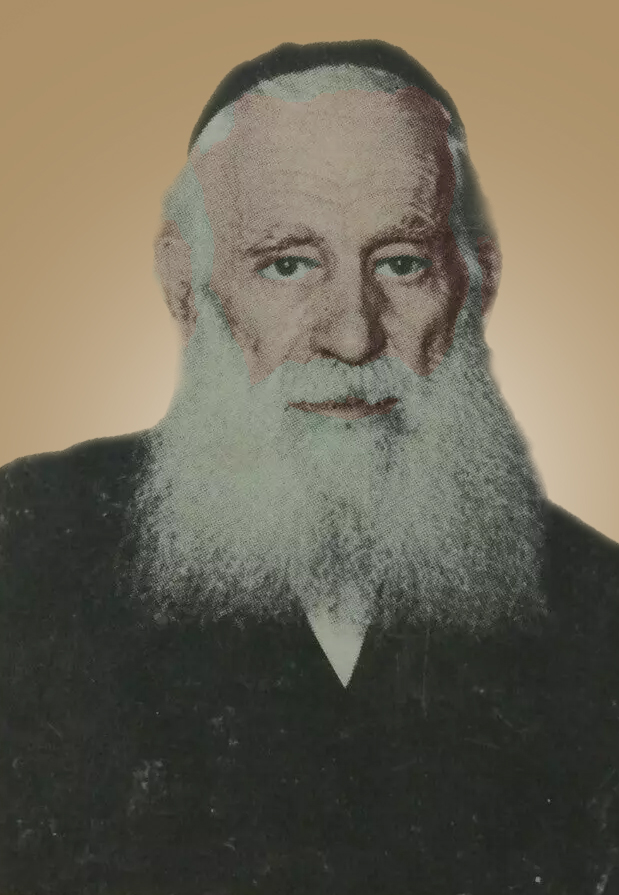
The Ponevezher Rav
I was immediately put under the charge of a loving and caring staff, and I thrived both emotionally and spiritually. For the first few months, my mother did not come to visit me; she must have been dealing with her own grief. But several months into my stay, she traveled to Bnei Brak to visit me and was horrified when she realized that she had sent me to a religious institution.
On the spot, she informed the staff that she was taking me out, as she would never want to have her child exposed to any form of Yiddishkeit.
The orphanage staff begged and pleaded and shared how wonderfully I had been doing, but she was adamant, and that very day she brought me back to her apartment in Tel Aviv.
When the Ponevezher Rav heard what had transpired, he was devastated. He had been following my progress and knew how well I had been advancing, and he also realized how counterproductive a move back home would be for me.
The very next day, the esteemed Ponevezher Rav traveled to Tel Aviv and knocked at our door. My mother was quite taken aback to see this saintly-looking rav on her threshold, and to her credit, she welcomed him into our small apartment and offered him a seat in our tiny kitchen. The Rav tried his hardest to convince my mother that my return to the orphanage was the best path for me and that while it was indeed a religious institution, the religion was what drove the warmth and care and high quality of the facility. My mother was unmoved and adamantly insisted that there was no way in the world that I was going back.
The Ponevezher Rav was crestfallen. And then he did something that I will never ever forget for as long as I live. He put his head down on the kitchen table and began to sob uncontrollably. For ten long minutes the Rav wept unabashedly, his entire being shaking from his deep sadness. After ten minutes, he wiped his eyes, straightened his hat and frock, and calmly and politely walked out the front door.
“For close to fifty years, those tears and those sobs have never left me, and they have accompanied me at every step of my life. I always knew in my heart of hearts that those tears would one day lead me back to everything that the Ponevezher Rav and the Batei Avos stood for.” The man concluded, “My journey has been long and complicated, but I am finally ready to come back home!”
This weekly publication will contain a rich collection of stories, divrei Torah and insights that are suitable for the Shabbos table – or for anytime. We hope you enjoy and look forward to future issues, as we tap into the unparalleled treasure trove that is the ArtScroll Library, sharing the depth and beauty of our Judaic and Torah literature with you.
One of the most enjoyable and amazing places for a child and teen is Camp Agudah, lovingly known as “Ruach Country,” located in Ferndale, New York. With Hashem’s help, that camp has grown exponentially, and there is a long waiting list to get in. I was privileged to be at the camp during a particularly remarkable summer.
One of the most memorable camp experiences is the seventh-grade Niagara trip. It is a twenty-four-hour whirlwind of excitement, entertainment, and inspiration. It includes a water park, Niagara Falls attractions, davening outdoors, a kumzitz, a trampoline park, and so much more. Upon their return to camp, the kids eventually drift into a deep sleep with smiles on their faces.
In general, the camp closes registration early in the season and, sadly, has to turn away many aspiring campers who would have loved to be a part of the Agudah summer magic.
One summer, well after registration had closed, the camp was able to open five additional slots in the seventh-grade division. The camp reached out to five lucky kids on the waiting list and offered them a coveted spot. There was, however, one caveat. They would not be able to join the Niagara trip. The logic was simple: The camp traveled to Niagara on coach buses, which were incredibly costly. Adding five additional campers to the trip would require the camp to charter an additional bus, an expense of thousands of dollars.
The camp communicated this detail to each of the five campers, and they arrived at camp with the full understanding and agreement that they would be part of the entire amazing Agudah experience sans the Niagara trip. The camp also asked these campers not to talk about this detail, as it would surely not lead to a productive conversation.
A few days before the Niagara trip, the head staff decided to break out a seventh-grade-exclusive one-day Olympics-style competition. On a whim, one of the head staff members thought of a “cute” breakout idea. He gathered the entire seventh-grade division into the beis medrash and publicly shared that five anonymous boys would not be joining the Niagara trip due to the prohibitive cost of chartering an additional coach bus. He then proposed the following potential solution. He explained that while coach buses definitely were the more comfortable way to go, as they had air conditioning, reclining seats, bathrooms, etc., there was a much more cost-efficient way to travel, and that was via school buses. He added that he had done the math and that if the camp took school buses for the full trip, including the six-hour drive each way, then the cost of the additional bus would be similar to the usual cost of transportation, and it would afford these five boys the opportunity to be part of the fabulous trip.
However, he added that he did not feel that it was right for him to make a unilateral decision to switch to school buses as, in truth, it would impact the comfort level of the campers in a very real way. Instead, he would hand out ballots to every seventh-grade camper and they would decide on the mode of transportation. All they had to do was write either “coach bus” or “school bus” on the blank ballots. Choosing “coach bus” would indicate that they had elected to put their personal comfort, which they were certainly entitled to do, over the ability for their friends to be a part of the trip. The words “school bus” would signal that they were willing to put their friends’ needs before their own. The majority would decide!
Immediately, staff members circulated through the room, handing out blank ballots and pencils to each camper. The tension in the room was palpable as each camper internally debated their comfort versus their friends’ feelings. Finally, the ballots were all completed, and the votes were quickly tallied.
The outcome was staggering! Over 100 of the 145 boys had written the two beautiful words: school bus! Over two-thirds of these remarkable young campers had made a clear and conscious decision to put their friends’ feelings before their personal comfort!
I remember approaching the various head staff members in a very emotional state and saying to them, “We should probably just stop everything and take this unique opportunity to daven to Hashem for all those things that we really need.” I shared that we had just been privy to a special example of the deep beauty of ahavas chinam, and that the merit created by these beautiful young Jewish souls surely had the power to redeem and to rectify!
This weekly publication will contain a rich collection of stories, divrei Torah and insights that are suitable for the Shabbos table – or for anytime. We hope you enjoy and look forward to future issues, as we tap into the unparalleled treasure trove that is the ArtScroll Library, sharing the depth and beauty of our Judaic and Torah literature with you.
This weekly publication will contain a rich collection of stories, divrei Torah and insights that are suitable for the Shabbos table – or for anytime. We hope you enjoy and look forward to future issues, as we tap into the unparalleled treasure trove that is the ArtScroll Library, sharing the depth and beauty of our Judaic and Torah literature with you.
This weekly publication will contain a rich collection of stories, divrei Torah and insights that are suitable for the Shabbos table – or for anytime. We hope you enjoy and look forward to future issues, as we tap into the unparalleled treasure trove that is the ArtScroll Library, sharing the depth and beauty of our Judaic and Torah literature with you.
Sometimes people wish they could turn back the clock and do certain things differently. With teshuvah, Hashem allows us to change the past. A person who spent the entire year ignoring certain mitzvos and doing different aveiros can correct it all with a few moments of teshuvah. Whatever he has done can be completely erased. And if a person comes to realize the greatness of Hashem and how much He does for him, and therefore regrets his sins, that’s called teshuvah out of love, and transforms the sins into mitzvos.
During the Aseres Yemei Teshuvah, our teshuvah is easily accepted. At the time we need it most, while our judgment is hanging in the balance, Hashem makes it the easiest to accomplish. At the time of judgment, a person can eradicate all his crimes and make the judgment the most favorable possible. It is very simple: All the person must do is admit what he did wrong, regret it, and accept to improve going forward. One should never feel that what he did is beyond teshuvah. Hashem specifically took us to be His nation while we were on the forty-ninth level of tumah. The Jewish People at that time were on the lowest level possible, and just seven weeks later they were as close to Hashem as possible.
Regarding teshuvah, the Rambam writes (Hilchos Teshuvah 7:6) that whereas before teshuvah the person was very distant from Hashem, after teshuvah he is beloved, desirable, close, and dear to Hashem. Chazal (Berachos 34b) say: b’makom shebaalei teshuvah omdim ein tzadikim gemurim yecholim laamod. The Kedushas Levi writes in Parashas Shemini explaining this Chazal that Hashem derives more pleasure from a sinner who did teshuvah than from a completely righteous individual. The reason he says this is because the baal teshuvah had to fight off his strong evil inclination to stop his wrongdoings. It is so special to Hashem when we fight the yetzer hara to do His will.
The Kedushas Levi writes there that if we contemplate the fact that we are so insignificant in comparison to Hashem, yet we can bring Him pleasure with our avodah, that should ignite our hearts to be filled with joy and excitement to serve Him. We can’t imagine how much He enjoys every little thing we do, and therefore, we shouldn’t underestimate it.
Rav Yitzchak Zilberstein told of a man who would always come to shul about seven minutes late, no matter what time the minyan started. If it was a 7:00 minyan, he would get there at 7:07. If it was an 8:00 minyan, 8:07. One day, the rabbi asked him about it and the man said, “What’s the big deal? A few minutes here, a few minutes there, the main thing is that I come.”
Rav Yitzchak Zilberstein
This practice continued for quite some time until one day this man walked in exactly on time. The rabbi asked him what changed. He said that Hashem taught him a very powerful lesson.
He explained that the day before, one of his warehouses caught fire. He was there at the time. He called the fire department and waited anxiously for help to arrive. Every minute that went by, another part of his warehouse was consumed in flames. By the time the firefighters finally got there, they were only able to salvage a very small section.
“What took you so long?” he demanded.
“We were only delayed a few minutes,” one of the firefighters replied defensively. “The main thing is that we got here. What’s a few minutes, anyway?”
Those words struck him like a lightning bolt. They were the same words he used when telling the rabbi about coming to shul late. He realized the value of every minute and accepted upon himself, going forward, to be on time to shul.
Hashem has nachas from everything we do in the spiritual realms. Every second is valuable. If we haven’t performed as well as we are capable of until now, we can easily do teshuvah, erase the past, and start afresh.
































 The Official ArtScroll Blog