
TISHAH B’AV: Tears on Tishah B’Av

Adapted from: The Darkness and the Dawn by Rabbi Daniel Glatstein

On Tishah B’Av, all our hearts are in pain. Rav Moshe Wolfson writes that even ordinary people who may not fully grasp the gravity of having lost the Beis HaMikdash are able to weep genuine tears on Tishah B’Av. From where does this originate? How can every single Jew feel the pain of the Churban so acutely on this specific day?

An incredible phenomenon is articulated by the Haflaah, the rebbi of the Chasam Sofer: The neshamah of every single Jew is connected and in sync with how the Ribbono Shel Olam is feeling toward us.

David HaMelech writes, צָמְאָה נַפְשִׁי לֵאלֹקִים לְקֵל חָי, My heart thirsts for Hashem, for the Living God (Tehillim 42:3). What does David mean by the phrase, “the Living G-d”?

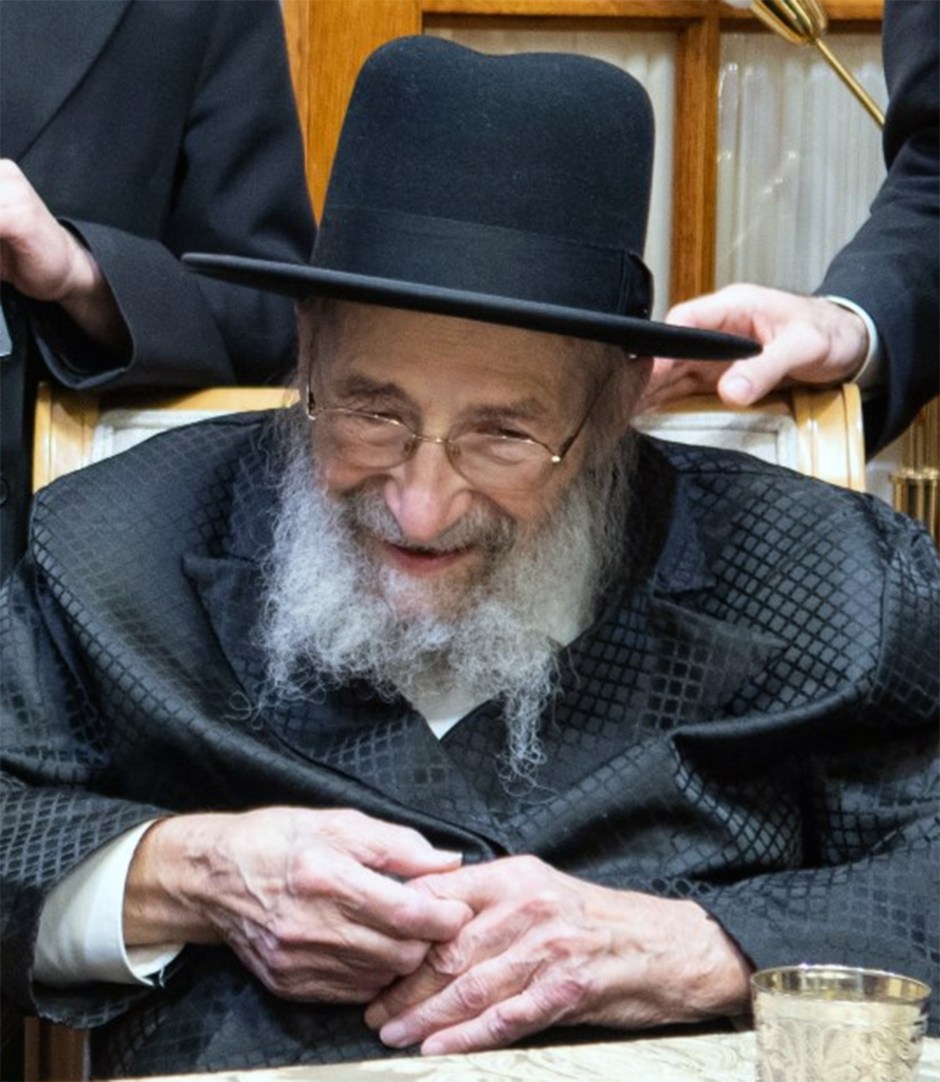
Rav Moshe Wolfson

The Haflaah explains: When David HaMelech refers to Hashem as the living G-d, he is referring to the fact that Hashem actively has, at it were, feelings of deep longing and love toward us. The natural human emotion is to then respond in kind, to reciprocate these emotions. The way you feel toward others is a direct reflection of how they feel toward you. As the pasuk states, כַּמַּיִם הַפָּנִים לַפָּנִים כֵּן לֵב הָאָדָם לָאָדָם, As water reflects a face back to a face, so one’s heart is reflected back to him by another (Mishlei 27:19).

Hashem is a living G-d, actively loving and yearning toward each and every one of us. We then mirror these emotions, and our souls thirst for Hashem, for a relationship with Him.

We learn a very important principle: The neshamah of a Jew is in tune with the Ribbono Shel Olam.

The Midrash on Eichah tells us that when a human king is in mourning, he sits and cries. So too, says Hashem, do I cry in mourning over the loss of the Beis HaMikdash. As the pasuk in Yeshayah (22:12) states, וַיִּקְרָא ה’ אֱלֹקִים צְבָקוֹת בַּיּוֹם הַהוּא לִבְכִי וּלְמִסְפֵּד וּלְקָרְחָה וְלַחֲגֹר שָׂק, My Lord Hashem/Elokim, Master of Legions, declared that day to be for crying and lamenting, for baldness and for the donning of sackcloth. Hashem designated that day as a day of crying and tears.

Were we to ascend to Shamayim and witness how Hashem is spending His time on Tishah B’Av, so to speak, we would find Hashem and His entire entourage weeping bitter tears, mourning over the Beis HaMikdash and Klal Yisrael going into exile. But we don’t have to see it to know that this is what is happening.

Our neshamos feel it; we sense the mourning taking place On High, and we respond in kind; we join Hashem in weeping and mourning. We cry, says Rav Wolfson, because our neshamos perceive the crying of Hashem and His court. Hashem is crying for us, and we reciprocate by shedding genuine tears, pining and yearning for Him.

The Midrash later describes how Hashem mirrors the mourning of a human king. A melech basar vadam, king of flesh and blood, would sit on the floor in silent reflection. Similarly, Hashem sits on the floor in mournful silence, grieving for Klal Yisrael.

We join Hashem on the floor, mourning along with Him. ‘שִׁפְכִי כַמַּיִם לִבֵּךְ נֹכַח פְּנֵי ה, Pour out your heart like water in the presence of the Lord (Eichah 2:19); we pour out our hearts directly opposite Hashem. We don’t have to send our tefillos, our cries, our tears, all the way up to Shamayim. Hashem is right there on the floor with us.

Even the simplest of Jews is able to cry on Tishah B’Av because he senses Hashem crying, and he cries along with Him.

עַל נַהֲרוֹת בָּבֶל שָׁם יָשַׁבְנוּ גַּם בָּכִינוּ בְּזָכְרֵנוּ אֶת צִיּוֹן, By the rivers of Babylon, there we sat and also wept when we remembered Tzion (Tehillim 137:1). What does the pasuk mean by saying, גַּם בָּכִינוּ, we also wept? Who besides us was weeping? Rav Wolfson explains that in addition to our crying, Hashem, too, is also weeping. The “also” refers to the Ribbono Shel Olam crying along with us.

A Nechamah for Klal Yisrael

The fact that the Ribbono Shel Olam is still crying for us after more than two thousand years have passed provides us with some degree of nechamah. He has not forgotten about us. If we are able to shed bitter tears over the Churban, it is only because Hashem still cries desperately for us, longing for us to return to Yerushalayim. His love and yearning for us have not waned even an iota over the millennia.

A further source of consolation rests in the fact that our souls are attuned to Hashem’s crying. However sullied, dirtied, and covered over our neshamos may be, whatever sins we may have committed, and whatever distance has been created between us and Hashem because of our aveiros, we still remain connected to Hashem. Our neshamos are far from perfect, yet we remain tethered to Hashem, and His emotions are reflected by us. We remain forever connected to Avinu she’baShamayim, our Father in Heaven.

We continue to feel toward Hashem what He feels toward us. This bond has not broken or diminished at all. This, too, is a nechamah to us, as we cry and mourn for the Beis HaMikdash.

May we be zocheh to feel the full outpouring of love, the ahavah rabbah and the ahavas olam that the Ribbono Shel Olam has for us, and may it be manifest with the rebuilding of the Beis HaMikdash, may it happen imminently.  

WATCH: Inside ArtScroll: Rabbi Daniel Glatstein – Tzipisa L’Yeshuah, Yearning for Redemption

In this compelling episode of Inside ArtScroll, Rabbi Shlomo Landau sits down with Rabbi Daniel Glatstein to explore his deeply moving new sefer, Tziphisa L’Yeshuah (Yearning for Redemption). 

Together they journey into the hearts and minds of giants—starting with the Chofetz Chaim—unpacking what it truly means to yearn for the Geulah.

Rabbi Glatstein reveals why longing for redemption isn’t merely hopeful—it’s a foundational mitzvah and spiritual catalyst and shares stirring anecdotes from the Chofetz Chaim’s life that illuminate how his unwavering hope elevated his generation.

Rabbi Landau’s thoughtful questions guide Rabbi Glatstein in painting a portrait of what yearning for redemption looks like in our daily lives—from prayer to pursuit of spiritual purpose.

📖 Order your copy today at ArtScroll.com: https://www.artscroll.com/Books/TZIPH.html

DOWNLOAD + PRINT At The ArtScroll Shabbos Table – Parashas Matos-Maasei!

Dear Friends,

Below please find the latest edition of At The ArtScroll Shabbos Table, containing inspiration and insight from classic ArtScroll titles.

This weekly publication will contain a rich collection of stories, divrei Torah and insights that are suitable for the Shabbos table – or for anytime. We hope you enjoy and look forward to future issues, as we tap into the unparalleled treasure trove that is the ArtScroll Library, sharing the depth and beauty of our Judaic and Torah literature with you.

Read it. Be uplifted. And share the inspiration.

Have a good Shabbos.

Click HERE to view, download At The ArtScroll Shabbos Table – Matos-Maasei

PARASHAH: Driven to Learn

Adapted from: Rav Yaakov Bender on Chumash 2

וַיָּבֹאוּ בְנֵי גָד וּבְנֵי רְאוּבֵן. . . עֲטָרוֹת וְדִיבֹן וְיַעְזֵר וְנִמְרָה וְחֶשְׁבּוֹן וְאֶלְעָלֵה וּשְׂבָם וּנְבוֹ וּבְעֹן.

The children of Gad and the children of Reuven came… Ataros, and Divon, and Yazer, and Nimrah, and Cheshbon, and Elalei, and Sevam, and Nevo, and Beon (Bamidbar 32:2-3).

In listing the lands in Eiver HaYarden, the areas chosen by the Bnei Gad, Bnei Reuven, and half of Shevet Menasheh, the Targum Onkelos provides details on the towns listed.

Cheshbon, he says, was Beis Chushbena, a place inhabited by those who made calculations, while the town of Elalei was Baal Devava, a place of fighters. Nevo, Targum says, was beis kvurta d’Moshe, the kever of Moshe.

The fact that it was Moshe Rabbeinu’s resting place is important, but identifying the town this way and this way only would seem to be in marked contrast to the other places, in which the Targum either translated the words, such as Ataros as Machlelta, or tells us a detail about the people who lived there. Moshe Rabbeinu’s burial place, however, was a feature that would eventually mark the place, but it did not the define the town and it had not yet happened. Why does Onkelos switch his description of this one place?

The Chofetz Chaim famously commented that the largest cities on the map, Warsaw, Krakow, Vilna, Moscow, or St. Petersburg, had stars near their names, their letter bolded so that travelers could easily identify them. Smaller towns appeared on the map, but without any star. The smallest towns did not even appear on the map with anything more than a tiny dot.

“But even if Radin has no star on the government-issued map,” he said, “in Shamayim, there is a big star on the map near Radin, because we have a yeshivah where bachurim learn Torah.”

R’ Yitzchak Hutner told a story about a Yid who came to Vilna for the first time. He hired a coachman to drive him, and he sat in the carriage, learning from his Gemara.

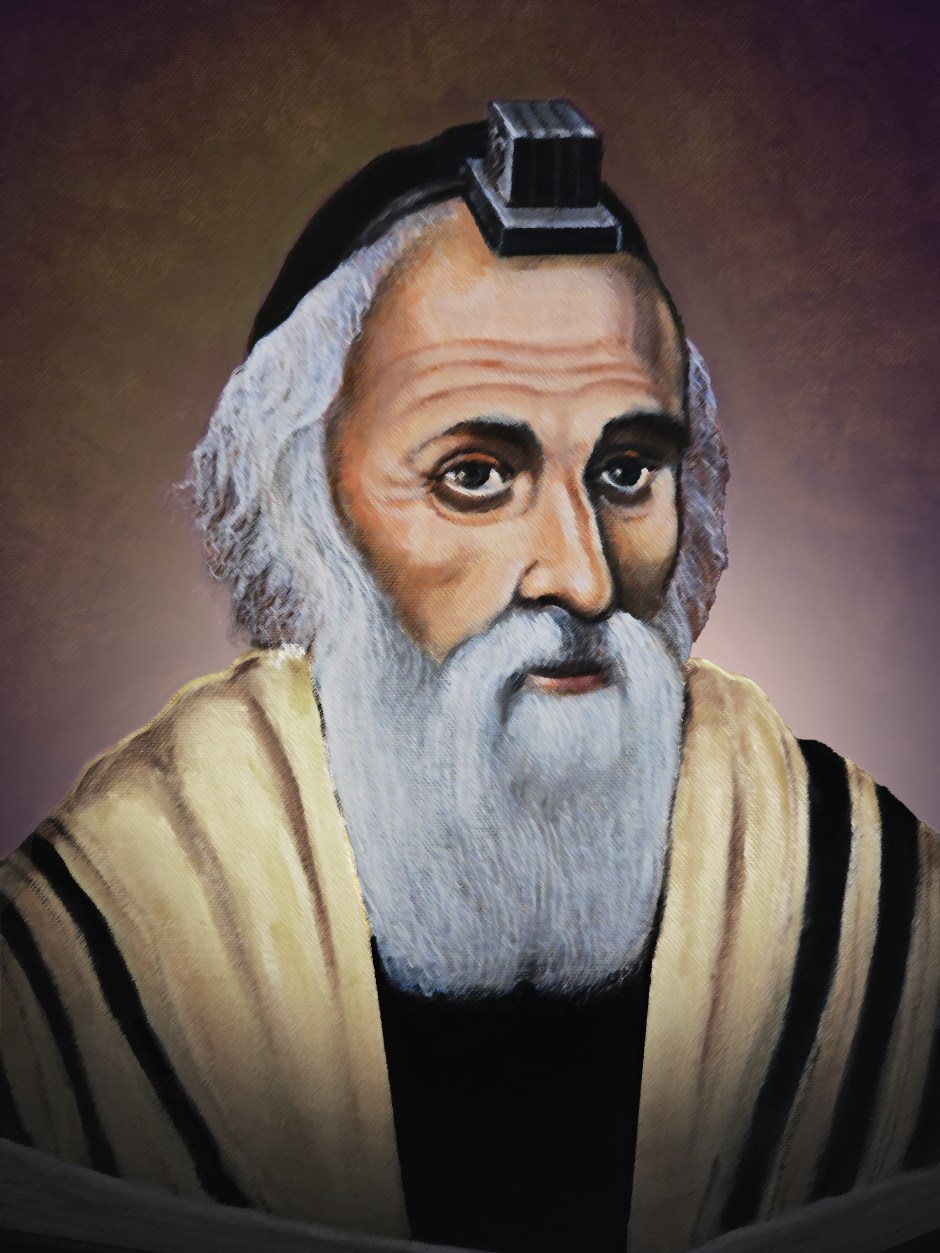
The Vilna Gaon

The wagon driver turned to ask him what he was learning. The passenger, assuming the driver to be unlearned, gave a polite, curt answer.

The wagon driver was intimately familiar with the topic, and he engaged the passenger in a conversation on the sugya. The passenger was impressed and shared a question of his own. The driver had an answer, and a learned discussion ensued.

Finally, the passenger could not contain his curiosity, and he asked the question on his mind.

“In any town, you would be the rav. How is it that in Vilna you drive a wagon?”

The coachman explained that Vilna was a town filled with great talmidei chachamim and he was not unique just because he knew how to learn. This, he explained, was because of the Vilna Gaon.

“Is he the rav of the city?” asked the passenger.

“No,” said the wagon driver, “he is not the rav.”

“Is he the maggid meisharim?”

“No,” came the reply.

“Is he the rosh yeshivah?” the passenger persisted.

“He was none of those things, and he is not even alive. He was niftar over a hundred years ago,” said the driver.

“So how did he make you a talmid chacham?” asked the scholarly passenger.

“Veil ehr iz duh gevehn! Because he was here!” said the driver emphatically.

There are features in the history of a town that are so monumental, so immense, that they mark the town forever and the place lives on, forever bound up with that event or personality. Vilna will forever be associated with the man who learned Torah in a room with the shutters drawn. It is his city, and no other detail means as much to a Torah Jew. 

PEREK SHIRAH: Song of the Unkosher Domesticated Animal

Adapted from: A Daily Dose of Perek Shirah by Rabbi David Sutton

בְּהֵמָה גַּסָּה טְמֵאָה אוֹמֶרֶת: יְגִיעַ כַּפֶּיךָ כִּי תֹאכֵל אַשְׁרֶיךָ וְטוֹב לָךְ.

The large unkosher animal says: When you eat of the labor of your hands, you are praiseworthy (Tehillim 128:2).

Wild animals do not have to “work for a living.” The sefer Birkas HaShir explains that they dwell in the fields and forests, and they are created with the instincts they need to survive. However, when the winter comes and the prey is not as abundant, wild animals suffer from hunger. As the pasuk says (Tehillim 34:11), kfirim rashu v’ra’eivu, Young lions may want and hunger.

However, the docile unkosher farm animals work hard for their owners, and in return, their owners feed them. They never lack. As Yirmiyah (17:7) tells us, Baruch hagever asher yivtach b’Hashem v’hayah Hashem mivtacho, Blessed is the man who trusts in Hashem, then Hashem will be his security. The animals entrust their survival to their owners, and we learn from them to trust our survival to our Owner, Hashem, Who will always take care of our needs.

Yeshayah (1:3), speaking for Hashem, rebukes the Jewish people for not recognizing this, yoda shor koneihu vachamor avus ba’alav Yisrael lo yada ami lo hisbinen יָדַע שׁוֹר קֹנֵהוּ וַחֲמוֹר אֵבוּס בְּעָלָיו יִשְׂרָאֵל לֹא יָדַע עַמִּי לֹא הִתְבּוֹנָן, An ox knows its owner and a donkey its master’s trough; but Israel does not know. My nation does not comprehend. Therefore, says the donkey, “Learn from me. Work for your Master and He will take care of you.”

The sefer Yeshuah V’Rachamim by R’ Yehoshua Sofer discusses the fate of the non-kosher animals in contrast to the kosher animals. It seems that the kosher animals have a much more elevated destiny: they are slaughtered, cooked and eaten according to the Torah’s laws. A blessing is said over them. They are digested by a Jew, imbuing him with health and energy to serve Hashem. The non-kosher animal’s lot appears to be dismal by comparison. However, it too plays a role in the picture of avodas Hashem. It serves as a mode of transportation, carries burdens, ploughs the fields and performs many other functions that enable man to serve Hashem. This teaches us that every person, as well, has a part in Hashem’s plan. Each of us is created to fulfill our own personal mission, and when we do it to the best of our ability, we find our unique fulfillment in life.

There is a fable about two cows that noticed an eagle flying high in the sky. One of the cows longed to do the same. His companion told him he was being foolish; cows can’t fly. Nevertheless, the cow decided that he would give it a try. He went up a mountain and jumped off, quickly ending his experiment and his life. The other cow absorbed the lesson: “I’m not made to fly. But I can do things an eagle cannot. I can run, I can pull wagons, I can plough the earth. And that’s what I will do.”

The horse and the donkey cannot be a meal for a Jew. They cannot ascend to Hashem as a korban. Rather, they live a workaday life and are rewarded with their daily meal from their owner’s hand. But they, too, have something to sing about — When you eat of the labor of your hands, you are praiseworthy. Furthermore, the Gemara (Berachos 8a) says of the person who works for his living, “It is good for you in this world and good for you in the next world.”

The large farm animal tells us not to become focused on status, fame, or great accomplishments. Some people are in the world to acquire those things and some people are not. But we’re all here to serve our Master in the way He designates for us. That’s what makes us worthy of praise.

PRACTICAL TAKE-AWAY

What are the roles you play in life that no one else could fulfill as you do?

EMUNAH: You Will Always Gain

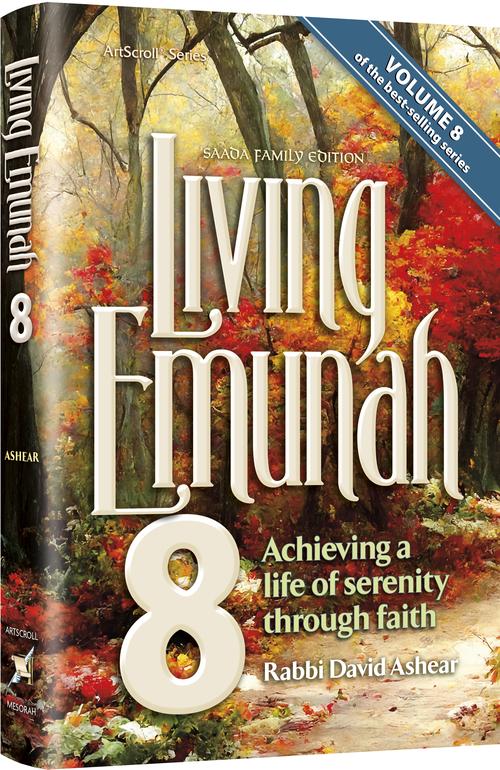
Adapted from: Living Emunah 8 by Rabbi David Ashear

A yeshivah in Israel once rented a bus to take the students on an excursion. Whoever wanted a seat on the bus had to pay in advance and was given a ticket with his seat number on it.

On the day of the trip, Binyamin* boarded the bus and found someone else sitting in his seat, the one he had paid for. This other student had not paid for a seat at all. Binyamin headed toward the person in charge to ask him to remove the boy from his seat. One of the rabbis saw what was happening. “Vatranus,” he instructed, “giving in on your rights, is a very virtuous middah.”

The boy said, “But Rabbi, I paid, and he didn’t.”

The rabbi replied, “Vatranus is not when you’re 99 percent right and the other party is 1 percent right; it’s when you are 100 percent right and you still give in.”

Although we hear many stories about the great segulah of vatranus, it’s never enough. We always need chizuk in this area, because it’s so hard to give in — especially in the heat of the moment.

R’ Bergman* told me there were two boys in his yeshivah who constantly argued with each other. It bothered him a great deal, and it was having a negative effect on the rest of the yeshivah.

One day, he called a meeting with these boys and taught them the unbelievable segulah of giving in and making peace. “Give in to each other and make shalom and then you can ask Hashem for whatever you want.” The boys were moved by the rabbi’s plea, and they agreed to make peace.

About five weeks later, one of the boys came back to the rabbi to thank him. “Hashem answered the tefillah I made that day,” he said. “I asked Hashem to bring my unmarried thirty-year-old brother his shidduch. The very next day the shidduch was suggested and now, five weeks later, we are about to celebrate the engagement!”

The following year, R’ Bergman made a bris milah for his first (and, as it turned out, only) son in the yeshivah. The second of the formerly squabbling boys came to him at the bris milah and said, “Hashem answered my tefillah.” He explained: “R’ Bergman had four girls and expressed his desire to have a boy. I prayed to Hashem that day for the rabbi to have a boy and, baruch Hashem, here we are celebrating the bris milah.” 

The power of vatranus is amazing.

R’ Elimelech Biderman

R’ Elimelech Biderman told a story about one of his own talmidim, which took place not long ago.

The man and his wife rented a hall for a sheva berachos they were hosting on Leil Shabbos. They came on Friday to set up and saw that the venue was already prepared for a different sheva berachos. The wife told her husband, “Let’s just be mevater without telling anyone anything, and leave now. Being mevater always gains.” The husband agreed, and they found a different shul that let them use a room for their simchah.

The woman later shared that her father was scheduled to undergo surgery to remove a cancerous growth that same week. When the surgeons opened him up to remove it, they saw that it was gone!

The husband told R’ Biderman that he remembered a similar story R’ Biderman had told just a couple of weeks before, which gave him the chizuk to be mevater, and now he experienced a yeshuah as well. “However,” he added, “in your story, Rabbi, the people were already fighting and then one party gave in. In my story, we gave in before the fight even started! You see from here that the segulah of being mevater works even if there never is a confrontation.”

It is absolutely true that being mevater always gains. We don’t always get to see the immediate benefits of it, but we can rest assured that Hashem appreciates every effort we make when being mevater and He will reward it at the proper time. 

DOWNLOAD + PRINT At The ArtScroll Shabbos Table – Parashas Pinchas!

Dear Friends,

Below please find the latest edition of At The ArtScroll Shabbos Table, containing inspiration and insight from classic ArtScroll titles.

This weekly publication will contain a rich collection of stories, divrei Torah and insights that are suitable for the Shabbos table – or for anytime. We hope you enjoy and look forward to future issues, as we tap into the unparalleled treasure trove that is the ArtScroll Library, sharing the depth and beauty of our Judaic and Torah literature with you.

Read it. Be uplifted. And share the inspiration.

Have a good Shabbos.

Click HERE to view, download At The ArtScroll Shabbos Table – Pinchas

PARASHAH: Men of True Strength

Adapted from: Living the Parashah by Rabbi Shimon Finkelman

פִּינְחָס בֶּן אֶלְעָזָר בֶּן אַהֲרֹן הַכֹּהֵן …

Pinchas son of Elazar son of Aharon the Kohen … (Bamidbar 25:11)

Why did the Torah have to trace Pinchas’ lineage to his grandfather Aharon for yet a second time? Rabbi Zalman Sorotzkin writes that this is meant to highlight the greatness of Pinchas’ heroic act. As the grandson of Aharon HaKohen, Pinchas inherited a love of peace. It was against his very nature to harm anyone. Yet, when the prince of the Tribe of Shimon committed his immoral act, and thousands died as a result of this and similar sins, Pinchas went against his nature. He remembered the halachah that Moshe Rabbeinu taught and he carried it out, killing the prince and the one with whom he had sinned. For this, he received inestimable reward; he achieved the status of a Kohen and was blessed with immortality.

R’ Sholom Schwadron

Overcoming one’s inborn nature and desires is the way to achieve true spiritual greatness in this world.

As a young man in Jerusalem, Rabbi Sholom Schwadron longed to save Jewish youths being swept up by the euphoria following the founding of the State of Israel. These were teenage boys from chareidi homes being drawn to the secular society around them — a society that scorned those devoted to Torah study.

R’ Sholom and some friends arranged night classes where neighborhood boys could voluntarily come to learn and be inspired. Many boys did — and many became true bnei Torah because of it.

One boy, who had attended nearly every class, suddenly missed a few nights. When R’ Sholom asked him why, the boy hesitated. 

“All right, I’ll tell you. This week is the soccer championship. I love soccer — I have to watch it!”

“Soccer, you say? I’ve heard of it, but I don’t know how it works. Could you explain?”

“Well, there are two teams and two nets on opposite sides of the field. The team that kicks the ball into the net the most times wins. In fact, whenever the ball gets kicked into the net is a very exciting moment in the game.”

“I don’t understand,” said R’ Sholom, looking very confused. “The whole point of the game is to kick the ball into the net? For this you need to be a professional athlete? Why, anyone can do that!”

The boy laughed. “Oh, I’m sorry, I left out one important detail. There is a goalie in front of each net. His job is to keep the ball out of the net, and he is usually quite adept at this. So it’s really not that easy at all.”

“I still don’t understand,” said R’ Sholom. “I’m sure that the goalie does not stand in front of the goal 24 hours a day. He has to sleep, he has to eat. So why doesn’t the opposing team wait until the goalie leaves and then kick the ball in a thousand times!”

“But that would be pointless,” said the boy, who by now was more than a bit exasperated. “When the goalie is not there, there’s no challenge! The whole point of the game is to score goals precisely when the goalie is there!”

R’ Sholom gazed deeply into his talmid’s eyes. “Listen to what you yourself have just said. To score points when there is no challenge is meaningless. Yet you want to wait until the soccer championship is over to resume your learning. But then, there will not be much of a challenge; this great distraction, or temptation, will be gone. The challenge is now, while the championship is in progress and you have such a strong desire to watch it. If you overcome this challenge and come to learn while those games are in progress, you will have done something great.”

With a hearty handshake, R’ Sholom took leave of the boy.

The next evening, while the games were in progress, the door of the beis midrash swung open and in walked this boy. R’ Sholom stood up in respect for this budding ben Torah and what he had accomplished. 

PEREK SHIRAH: Song of the Deer

Adapted from: A Daily Dose of Perek Shirah by Rabbi David Sutton

צְבִי אוֹמֵר: וַאֲנִי אָשִׁיר עֻזֶּךָ וַאֲרַנֵּן לַבֹּקֶר חַסְדֶּךָ כִּי הָיִיתָ מִשְׂגָּב לִי וּמָנוֹס בְּיוֹם צַר לִי.

The deer says: But I will sing of Your might, and rejoice towards morning in Your kindness, for You have been a stronghold to me and a refuge in the day of distress (Tehillim 59:17)

These are the words of a man on the run. When Shaul HaMelech sent his men to pursue David, Hashem planted a strategy in Shaul’s mind: The men would not break into David’s house and kill him immediately; rather, they would surround his house to prevent him from escaping. The plan was completely ineffective, for David was able to flee in the middle of the night. Furthermore, by waiting outside, Shaul’s men not only gave David time to escape, but also gave him a substantial head-start in his flight.

David rejoices toward morning because when dawn begins to break, he sees that he has put a substantial distance between himself and his pursuers.

The deer sings this song to Hashem, says the Chida, because its ability to run swiftly is the survival tool Hashem endowed him with. And that ability is frequently tested, because the deer is a sought-after animal. Its hide is strong, appealing to the eye, and useful for many purposes. Its meat is tasty. In addition, people enjoy the sport of deer hunting. There are many types of traps and snares designed to catch deer. Only because Hashem saves it again and again does the species manage to survive. In this way, the deer not only represents David HaMelech, but the entire Jewish nation.

Another aspect of the deer’s speed is that it uses this gift only to defend itself. It is always the prey, never the predator. It doesn’t use its speed to fight its pursuers, nor to take food from other animals. Because the deer is content with what Hashem gives it, and relies on Him for protection, Hashem treats it with extra care, for as Koheles (3:15) says, v’ha’elokim yivakesh es nirdaf, Hashem helps the pursued one. Thus, the deer teaches us to avoid unnecessary confrontation.

A further insight emerges from the fact that this praise is sung towards morning, while it is still night. The sefer Yashir Moshe explains that although morning symbolizes salvation, David HaMelech’s trust in Hashem is so complete that just contemplating the salvation that lies ahead gives him strength. He doesn’t have to see it to believe it.

A final lesson comes from the letters of the Hebrew word for deer — צְבִי. These are the first letters of the pasuk from Chabakkuk (2:4) that states,  צַדִּיק בֶּאֱמוּנָתוֹ יִחְיֶה— The righteous person shall live through his faith. That describes the deer, who has no power to fight; he can only run. He trusts Hashem to carry him to salvation and sings his song of emunah to the world. 

PRACTICAL TAKE-AWAY

The deer teaches us that Hashem has equipped every creature, including each person, with access to the resources it needs to survive. He saves us by giving us what we need to save ourselves.