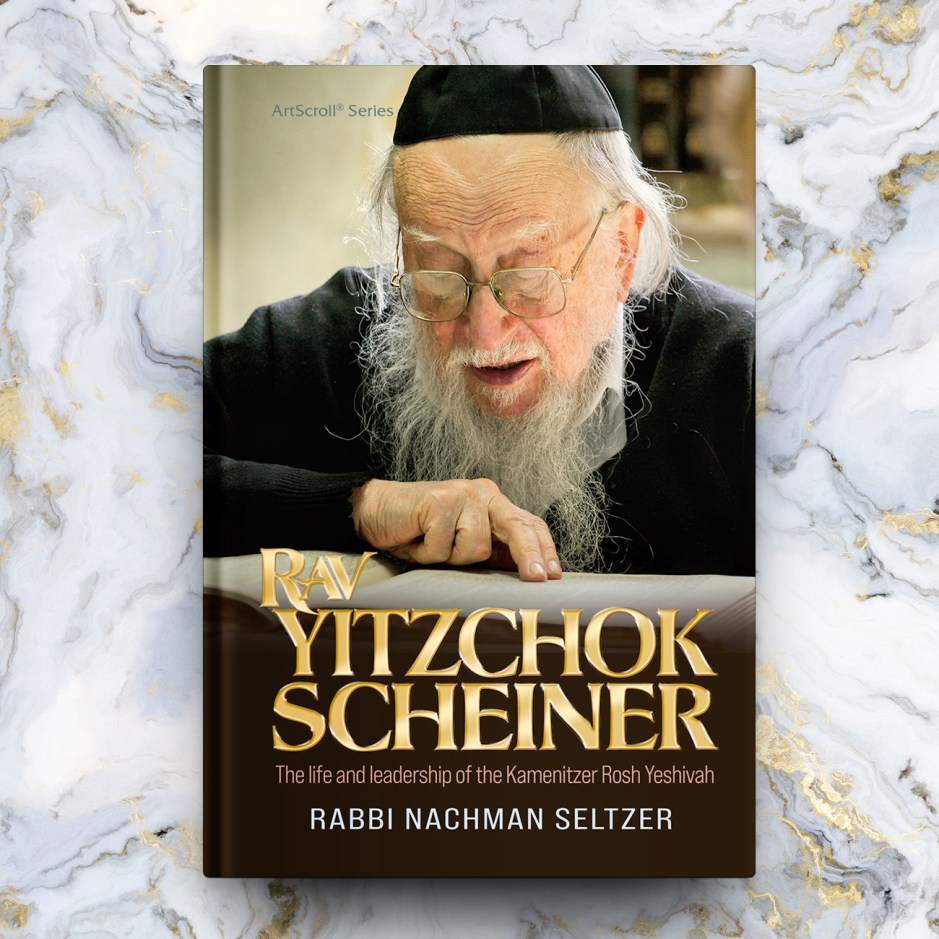
A Conversation with Rabbi Nachman Seltzer Author of Rav Yitzchok Scheiner: The Life and Leadership of the Kamenitzer Rosh Yeshivah

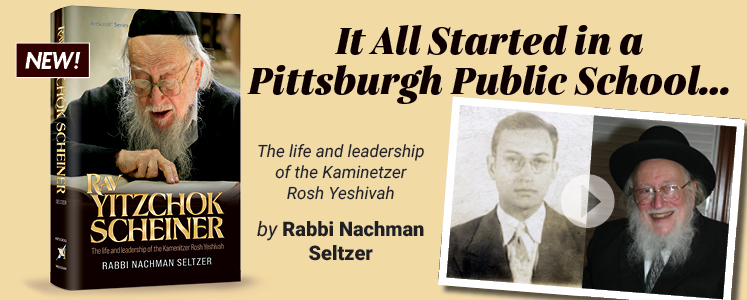
AS: Rav Yitzchok Scheiner is known as the “Yerushalmi gadol who went to a Pittsburgh high school.” Tell us a little about his journey — and what his unusual background means to American readers.

RNS: Rav Yitzchok was a “regular” American boy who planned on becoming a math professor. But there was a chance meeting with Rabbi Avrohom Bender, who informed Rav Yitzchok’s surprised parents that there were real yeshivos in America, too and that led to yeshivah in New York, and later, to its summer camp in the mountains, where he was introduced to the Torah of Reb Shloime Heiman and the greatness of Reb Shraga Feivel Mendlowitz. There was really no reason this American boy should have been able to marry the Israeli granddaughter of Reb Boruch Ber. But he did because that was Hashem’s plan. Which means that in life anything can happen and anything is possible ….

AS: The biography is full of stories told by some of his thousands of talmidim. Can you share, briefly, one of your favorite stories?

RNS: One of my favorite stories involves a boy who had a very dangerous encounter while going mountain climbing. When he returned to yeshivah he was sure that Rav Yitzchok was going to be furious with him for his carelessness, but Rav Yitzchok’s response and the way he took care of the boy, dressing his wounds, taking him home and feeding him soup, spoon after spoon, and putting him to bed, because the boy was too exhausted even to feed himself without a word of rebuke made a great impression on the young talmid. In my mind that story was the epitome of compassionate chinuch.

AS: Here’s an unusual question. If Rav Yitzchok could read this biography, how do you think he would react?

RNS: Of course, I can’t know how he would react, but I think he would probably say that if it will help American youth understand what they can become and what their infinite potential is, then it is completely worthwhile. After all, on many occasions he told the story of how he went from a public high school to yeshivah. Obviously, he felt that this would influence American boys and help them comprehend that the sky is the limit. So overall, I would have to say that he would be happy though his deep humility would object to all the talk about his gadlus….
Two Fascinating New Torah Works!

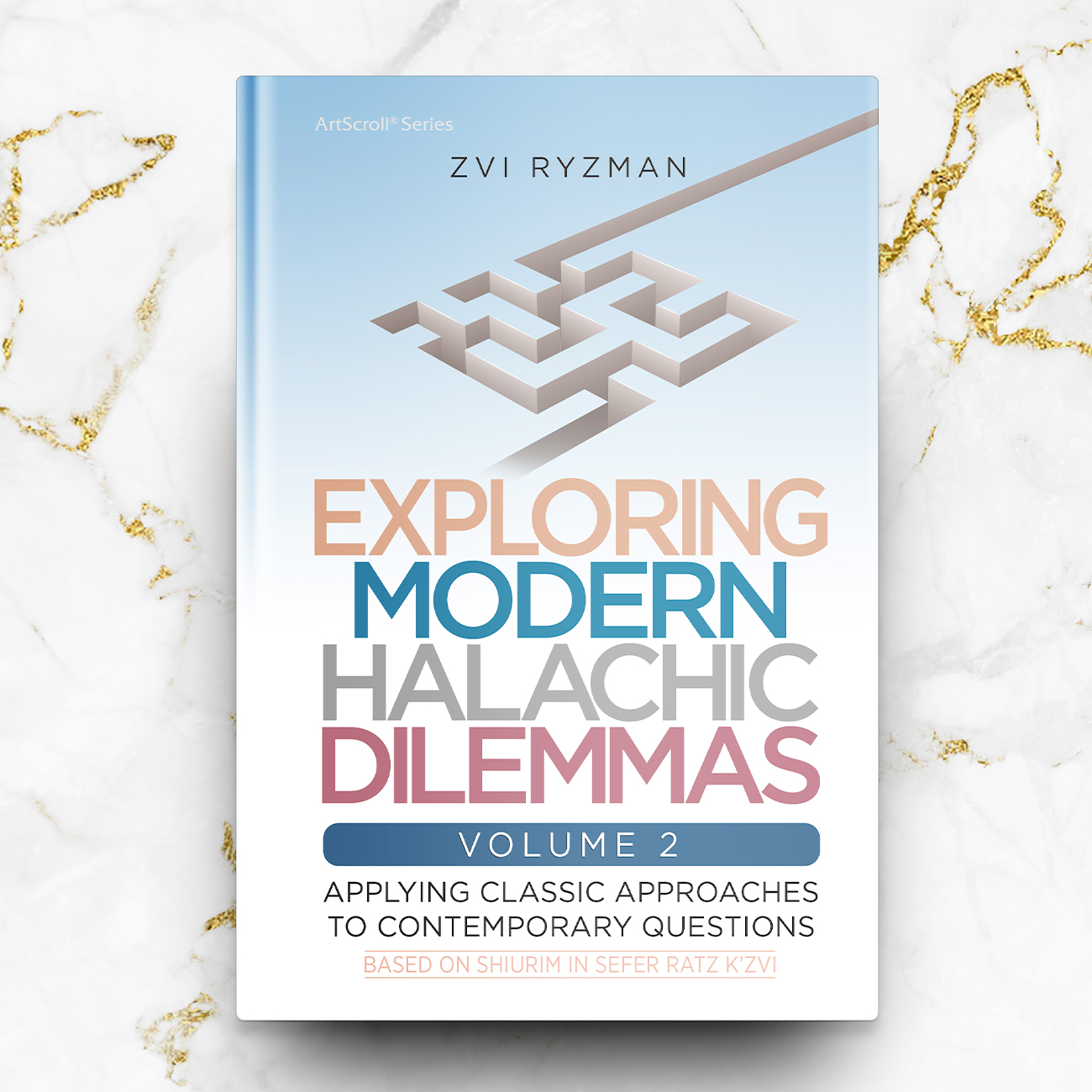
This week, we’ll look at two new ArtScroll sefarim that seem so very different from each other. The first, the newest volume in The Schottenstein Edition Ein Yaakov, is ArtScroll’s elucidation of the centuries-old Torah classic that delves into the beauty and mysteries of the Aggadah portions of the Talmud. The second, Rabbi Tzvi Ryzman’s Exploring Modern Halachic Dilemmas Volume 2,looks at the fascinating halachic ramifications of today’s cutting-edge technology and contemporary life.

Two very different sefarim but … also the same. The same in their search for the emes l’amita of Torah. And the same in the quality and clarity that we’ve come to expect from all ArtScroll sefarim.

Like the others in this popular, ongoing series, The Schottenstein Edition Ein Yaakov on Moed Katan and Chagigah is designed to enhance our understanding of Aggadata. The work combines accuracy, depth, and readability. There is a wealth of information in the notes, based on the primary commentaries on Ein Yaakov and other sources. The “Insights” section illuminates various points in the Aggadata, and it brings out many lessons and principles that are relevant in our daily lives. These Insights are drawn from a vast selection of commentaries and Torah works, ranging from the Rishonim to the masters of Chassidus and Mussar.

Rabbi Tzvi Ryzman brings us the eagerly awaited second volume in the Exploring Modern Halachic Dilemmas series. He refers to himself as “a businessman,” which he is, but he is also a scholar, teacher, lecturer, author, and philanthropist. He is a winner of the Jerusalem Prize for his many Hebrew volumes of Ratz KaTzvi, and his halachah shiurim in Israel and America are attended and acclaimed by renowned rabbinic leaders.

May a Jew daven in an “interfaith room” in a hospital or airport? What are the Shabbos issues in a “smart home”? Is a tattooed Kohen allowed to duchen? May someone ride in a self-driving car on Shabbos? What are some of the halachic implications of organ transplants? Rabbi Ryzman explores these and other halachic questions, guiding us with remarkable clarity through the issues and the piskei halachah of the greatest poskim of our time.

So there you have it. Two sefarim, one based on an ancient text, the other on current issues. Both fascinating, and both important to living our lives as Torah Jews.

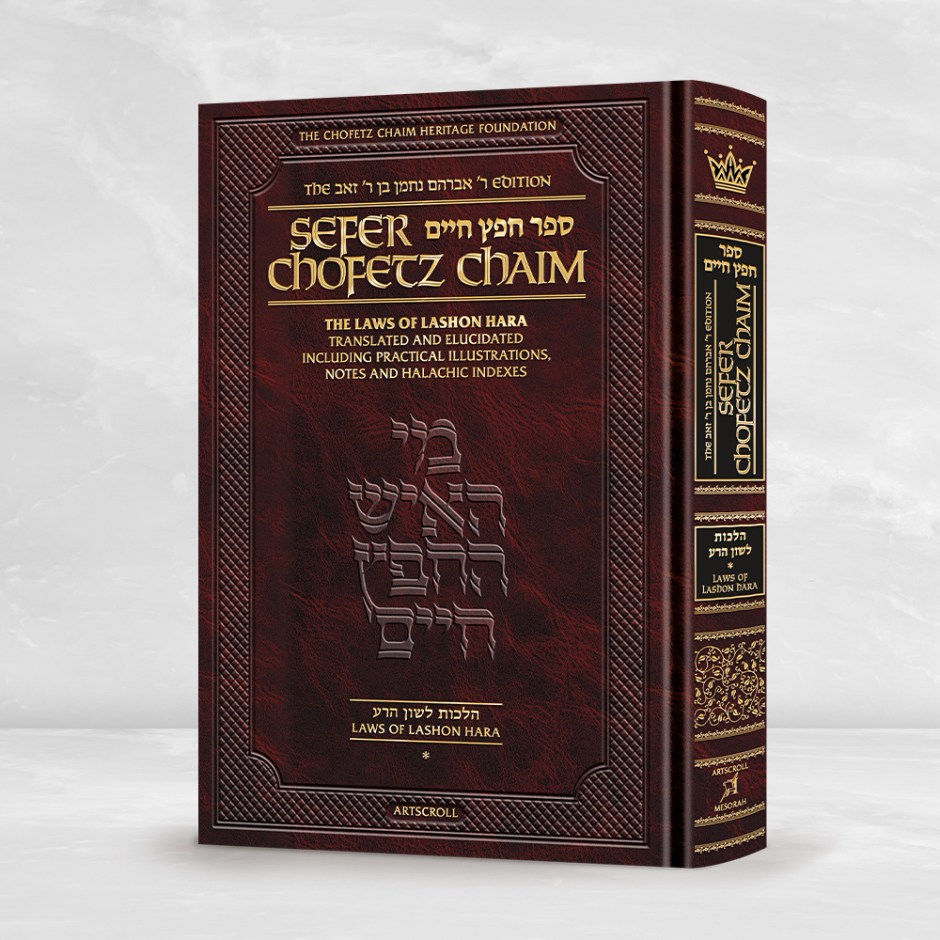
The New Elucidated Sefer Chofetz Chaim: A Game-Changer, a Life-Changer!

From a small wooden house in a small Eastern European village came a sefer so huge, so holy, and so amazingly relevant to every single person that it changed the lives of generations of Jews, including our own: The way we think, the way we behave — and, most of all, the way we speak.

That sefer, of course, is Sefer Chofetz Chaim.

One of the most influential sefarim of the modern era, Rav Yisrael Meir Kagan’s Sefer Chofetz Chaim was the foundation of the “shemiras ha’lashon revolution.” Tens of thousands now follow the counsel of Rav Yehudah Zev Segal, the Manchester Rosh Yeshivah, to learn two halachos daily from the sefer, improving their lives and relationships immeasurably, and often seeing extraordinary yeshuos in many different aspects of their lives.

Many guidebooks based on the Chofetz Chaim are available, but now we can gain a new understanding of the depth and richness of the original Sefer Chofetz Chaim in the new elucidated and annotated edition published by ArtScroll in conjunction with the Chofetz Chaim Heritage Foundation.

This masterful work is a game-changer, a life-changer! The product of thousands of hours of research and writing by a dedicated and talented team, it follows the ultra-successful format of ArtScroll’s Schottenstein Edition Talmud and other Torah classics, with a flowing phrase-by-phrase translation and elucidation, introductions to each new topic, and in-depth notes that add important information and background.

Another fantastic feature is the “Scenarios” that show the real-life application of the halachah, helping the reader apply each halachah to daily life. We read the Chofetz Chaim’s words, and then we see how they might play out in our contemporary world. You discover your co-worker has a gambling addiction — how should you deal with that? Someone asks you for shidduch information — are you allowed to provide negative information? You told a neighbor something that reflects badly on another person, and now you regret it — how should you make up for what you did? These are just a few of the realistic scenarios that accompany the halachos. And for the convenience of those following the “Shemiras Halashon Yomi” program, each halachah includes the relevant dates for learning.

We all want to improve our lives through shemiras halashon. The elucidated Sefer Chofetz Chaim is an important new tool to help us be successful.

Order your copy TODAY at artscroll.com

“Anyone Can Be A Gourmet” A Conversation with Rivky Kleiman, author of Simply!

AS: This book is about “Simply Gourmet Every Day.” With our uber-crowded days, how can we manage gourmet?

RK: My cooking philosophy is — do things simply, but the result shouldn’t be typical.  It’s going to be delicious, but without extra sweat. How to do it? The key is that the steps are all easy. I’m working on a recipe and I say, “No, you’re not pulling out a second pot. Who wants to dirty a second pot?” Nothing  labor intensive. I use simplified techniques to make the prep as user friendly and quick as possible.

AS: All through Simply!  some recipes feature a “Simple Supper” icon – and there’s an entire “Simple Supper” section as well. Tell us about them.

RK: Here’s the criteria for Simple Suppers: No more than 10 minutes prep. If chopping the veggies takes over 10 minutes, it’s not a Simple Supper.  And it’s on your table – prepped and cooked – in under an hour. You came home from work, you need start to finish supper on the table in half an hour. You see the Simple Supper icon, you know it will work. The chapter on Simple Suppers includes tips and tricks and variations. How to double, how to freeze. And prep ahead – a working mom needs to know what she can make the night before.

AS: Winter’s coming – let’s talk soup.

RK: I call them “Dump and go soups” – and they are off the charts delicious. What gave me the idea?  One erev Shabbos, it’s 32 minutes before candle lighting and I forgot to put up my chicken soup!  I ran to my fridge, found some shallots, onion, and celery, and cauliflower in the freezer. I literally dumped everything in with a little salt and pepper and a touch of lemon juice.  I went to shower, and the soup — which I called a “dump and go cauliflower bisque” — came out great!

AS: Some people (me, included!) are, to be honest, intimidated by the idea of gourmet cooking. Got any encouraging words for us non-foodies? RK: That’s what this book is about. Anyone can be a gourmet. It’s not about spending hours. It’s about working with flavors, using creativity and following directions. Anyone – starter cook or someone really seasoned — should be able to walk away and say “I’m a gourmet.”  Anybody can do it. It’s really not scary.

A Conversation With C.B.Weinfeld – Author of Front Row Seats

AS: This is your seventh collection of stories — all of them major bestsellers. How do you keep the stories so fresh and exciting?

CBW: Real life ­­is always more fascinating than fiction — davka because it’s real. I love connecting with people from all over the world who share their challenges, their struggles, their triumphs, and, yes, even their failures, and I am gratified to be able to connect with so many wonderful individuals. It’s a privilege I don’t take for granted.

AS: Tell us about how you find so many stories, each one compelling and each one different.

CBW: It’s uncanny how I can sometimes go through a frustrating “dry spell,” without any good stories. And then, just hours before my deadline, I invariably receive a phone call, an email, or a text from someone who knows someone who heard of someone who wants to share their story. 

At times it takes detective work, and a bit of phone tag, but not always. Once in a while a winning story falls into my lap without too much effort, and it is such a pleasure to write. I think of these “easy” jobs as little “love pats” from Hashem.

AS: What a variety! There are stories of plane hijackings and plumbers, shidduchim and prisoners of war, even a boat adrift in the Caribbean. There are happy endings, tragic endings, and surprise endings that leave us open-mouthed. Is there a common denominator, something that every “C.B. Weinfeld story” must have?

CBW: Not really. Any story that is heartfelt, honest, and atypical will usually make the cut. And no, they don’t need to have perfectly happy endings, though that is always a nice bonus. Ultimately, a successful story is one where we find ourselves nodding and identifying with the narrator and his or her dilemma long after we turn the page.

AS: So, what, exactly, is a “front row seat experience”?

CBW: I invite you to open the book and answer that question yourself. Happy reading!

Order your copy today on ArtScroll.com!

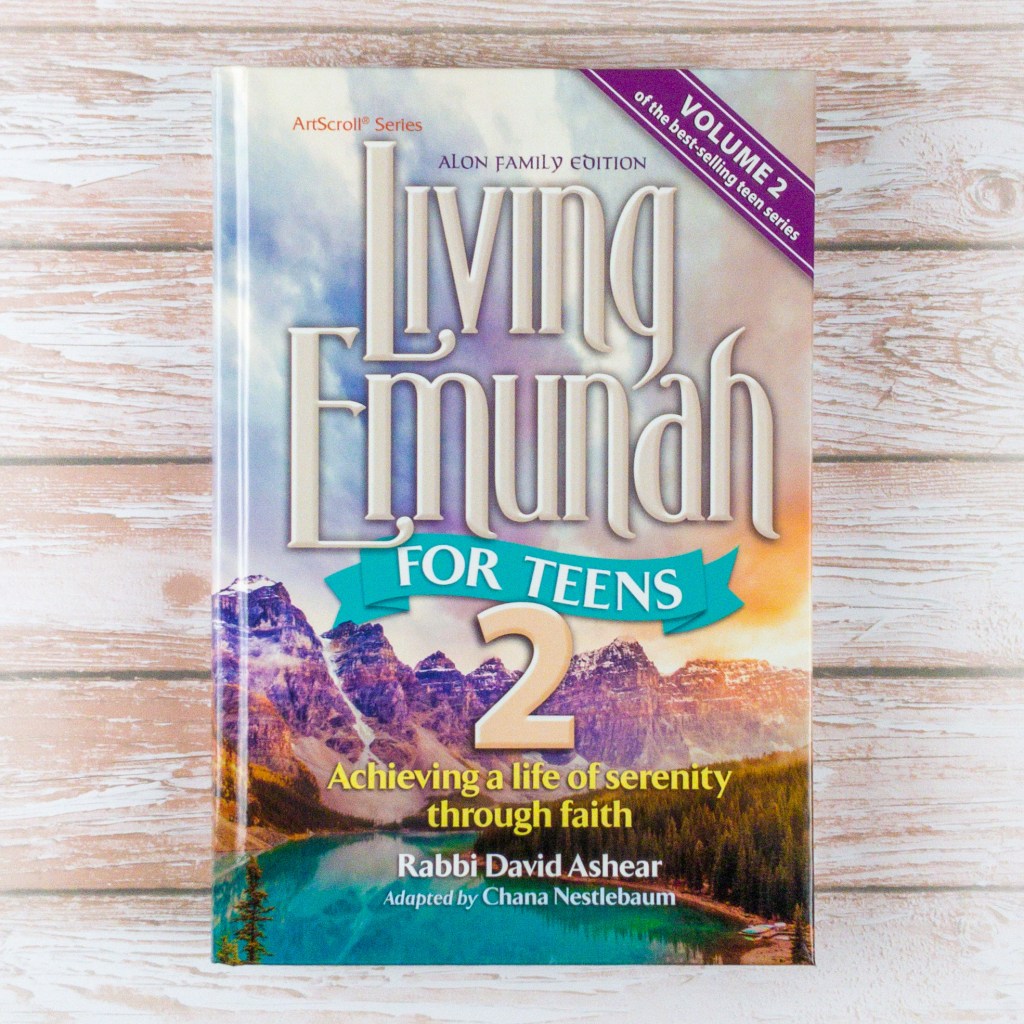
ArtScroll Speaks with Chana Nestlebaum Adapter of Rabbi David Ashear’s Living Emunah for Teens #2

AS: With over 200,000 copies in print, the Living Emunah series has had an enormous impact on the Jewish world. What were your goals when you set out to adapt its message to teens?

CN: My primary goal was to capture the inspiration of Rabbi Ashear’s work and make it more accessible to teen readers. To accomplish that, I used scenarios and stories that reflect the concerns of their lives. I wanted the average teenager to be able to look at the events of his or her life and spot Hashem in action. Building emunah at this stage of life equips a person to face the ups and downs of adult life with strength and optimism.

AS: A year of Covid, followed by the Meron tragedy, the accident in Givat Zeev, missiles on Eretz Yisrael, and anti-Semitic attacks worldwide. What are a teen’s unique challenges in such tough times?

CN: I think everyone feels challenged. Everyone is reaching out for chizuk. For teens, the special challenge is the lack of experience. An adult knows that we’ve faced many challenges, personally and as a Klal, and Hashem has always enabled us to regain our balance, heal from our wounds, and move forward. For teens, these crises seem like “never before” events, which can make them even more frightening.

AS: Like all Living Emunah books, much of the teaching is done through stories. Which story did you find the most powerful?

CN: I love stories in which Hashem seems to pop out of His hiding place for one flash of a second, just to give someone that spark of certainty that “I’m here!” One of these stories is about a woman who discovered that her babysitter was being impatient with her little boy. The mother wanted to leave her job, because she didn’t want to ever entrust her child to a stranger again. But she really needed the money. She felt stuck in her dilemma until she realized that it wasn’t up to her to solve it. She began davening to Hashem with total confidence that He would see her through. A week later, she was offered a job that allowed her to work from home, for an organization called “Save the Children.” Message sent, message received!

Order your copy TODAY on ArtScroll.com!

A Conversation with Rabbi Eliezer Krohn Author of A Woman’s Guide to Practical Halachah

AS: What is the backstory of this sefer? Why is there a need for a halachah sefer for women, and how did it come about?

REK: I have had the zechus of teaching halachah to high school and seminary-age girls and married women for many years now. They are all thirsty for PRACTICAL halachah: What is the bottom line and what am I allowed and not allowed to do? I saw a need for a sefer where many of the halachos that are relevant to women on a day-to-day basis would be presented in a clear and concise manner. There are plenty of wonderful sefarim that delve into specific topics at length. And although they provide the practical halachah at the end, there is often so much information that it can become overwhelming for the girl or woman looking for a specific answer to a question. This sefer is straightforward and to the point. Yes, there will be she’ailos that women will still have to ask, but the standard, general halachos are all there, easily accessible.

AS: What are some of the topics covered, and what went into choosing them?

REK: Topics covered include tefillah, Krias Shema Al Hamitah, waking up in the morning, berachos, kibud av ve’eim, the mitzvos of Shabbos and Yom Tov as they apply to women, halachos that come up around the house and particularly the kitchen (except the Kashrus aspects, which are not covered) and many women’s issues, such as yichud, kol ishah, negiah, tznius, bas mitzvah, and more. These are topics that I am asked about so often through emails and phone calls. This sefer can guide so many people (even men) in these intricate topics.

AS: What are some of the special challenges that women have in living a life based on halachah today?

REK: There is a special challenge following halachah today due to the fact that we are so technologically connected to many other people and media. Therefore, we hear so many different things from different sources and we are left confused as to what is the correct practical halachah. This sefer will b’ezras Hashem set things straight as to which is the best way to follow halachah.

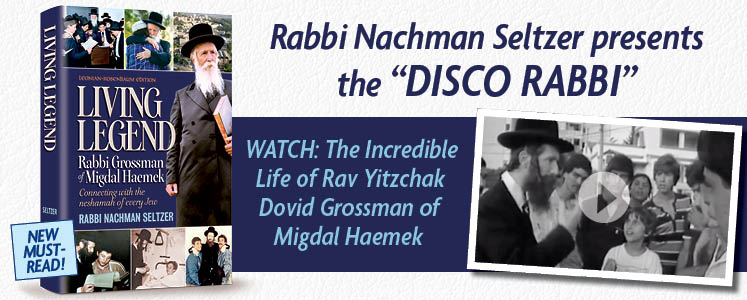
A Conversation with Rabbi Nachman Seltzer Author of Living Legend: Rabbi Grossman of Migdal HaEmek

AS: Quite a zechus, to work so closely with Rav Grossman. What was it like, meeting with a “Living Legend”?

RNS: Out of this world. He is without a doubt one of the most unique and special individuals I have ever had the good fortune to meet. Sometimes when you meet famous people — even those with a well-deserved reputation — you can find yourself disappointed by how they are in real life, away from the cameras. But not here. Rav Yitzchok Dovid Grossman is completely authentic and himself — no matter where he finds himself.

AS: What goes into writing such a far-reaching book, covering more than half a century of amazing accomplishment?

RNS: Lots of hard work. Hours and hours of interviews — of making sure that we covered as many aspects of his life as possible. Rav Grossman has accomplished so much and has such a fascinating life, that it’s almost impossible to cover everything in one book — which is why we will probably have to write another one ….

Once the book was written, there were countless rewrites to ensure that all the details of these incredible stories were accurate. We also had more than 300 photographs to choose from, with close to 200 photos actually making it into the book

AS: What are some of the takeaways that “regular people” like us can get from reading about Rav Grossman’s life?

RNS: Smile at every person you meet. Greet them with love. Treat them like a friend. Give them respect. You’ll be surprised by what you can accomplish by doing those four things.

AS: Briefly, what story (among so many!) touched you the most?

RNS: “The Rosh Hashanah Murder,” when Rav Grossman saved Migdal HaEmek from a lynch mob.  

“May These Letters Be a Shield,” when he brought 700 Israeli soldiers to Migdal Ohr on the eve of their going into battle, treated them like his own children, and blessed them to return safely — which each and every one did.

And, of course, the story of how a young Meah Shearim Yerushalmi walked into a Migdal HaEmek disco, with his beard, peyos, and Chassidic garb, and managed to captivate the young, irreligious, and angry teens — not to mention the crime boss of the town!

I can go on and on. There are so many stories that I love. And that’s why you are going to have to read the book.

Order your copy TODAY on ArtScroll.com!

Yes! You Can Have a Stress-Free Pesach! My Pesach Kitchen by Faigy Murray

Do you think that without a personal chef and home organizer, a stress-free Pesach is an impossible dream?

Think again.

Faigy Murray wants to be your personal chef. And your home organizer. She does it with her marvelous new cookbook, My Pesach Kitchen: Stress-free recipes your family will love.

Faigy’s roots as a recipe developer go back to her childhood, when she spent hours watching her gifted mother whip up fantastic foods. She began her professional career with one follower on her Instagram page (hurray for mothers-in-law!) and in an amazingly short time had thousands enjoying her menu ideas, recipes, and tips.

Then came COVID, when newlyweds fresh from their Corona chuppahs had to clean their apartments and cook their Seder for two, and families whose Pesach prep had always meant booking flights and hotel rooms faced the task of making Pesach at home for the first time in years. And everyone, it seemed, was turning to Faigy for help. “Somehow, I became the Pesach go-to person,” she remembers. “How to organize for Yom Tov, what to cook, what kitchen equipment they needed to buy.”  

Realizing that here was a pressing need to fill — an “everything-from-A-to-Z” Pesach cookbook — Faigy has spent the past year and countless hours creating My Pesach Kitchen.

What will you get when you enter My Pesach Kitchen? Great recipes, of course — more than 130 recipes that are easy-to-follow yet elegant enough for a dazzling Yom Tov table. They’re all gluten free (except for the matzah balls!) “Like Dinner Done, that’s become so spectacularly popular for year-round use, these are recipes for good, solid food. After all, you can eat healthy and well even on Pesach!” Faigy says. “You can give this book to your ten-year-old daughter and she can make every recipe. They’re easy, not intimidating. Your family will say, ‘Yum, I can’t wait to eat.’”

A special section on Chol HaMoed gives fantastic ideas for people who are “all cooked out” from Yom Tov, but still have hungry families and guests to feed, and also includes great food ideas for Chol HaMoed trips.

The unique “Pesach in Your Kitchen” section offers step-by-step notes and tips to making Pesach, including templates for shopping lists, day-by-day cleaning tips, menu plans, and a guide to “turning over.”

“In this book,” says Faigy, “You’ll hear my voice, and I’ll hold your hand. I’ll be your Pesach organizer.”

And yes, you will have a stress-free Pesach.

Get your copy TODAY at ArtScroll.com!

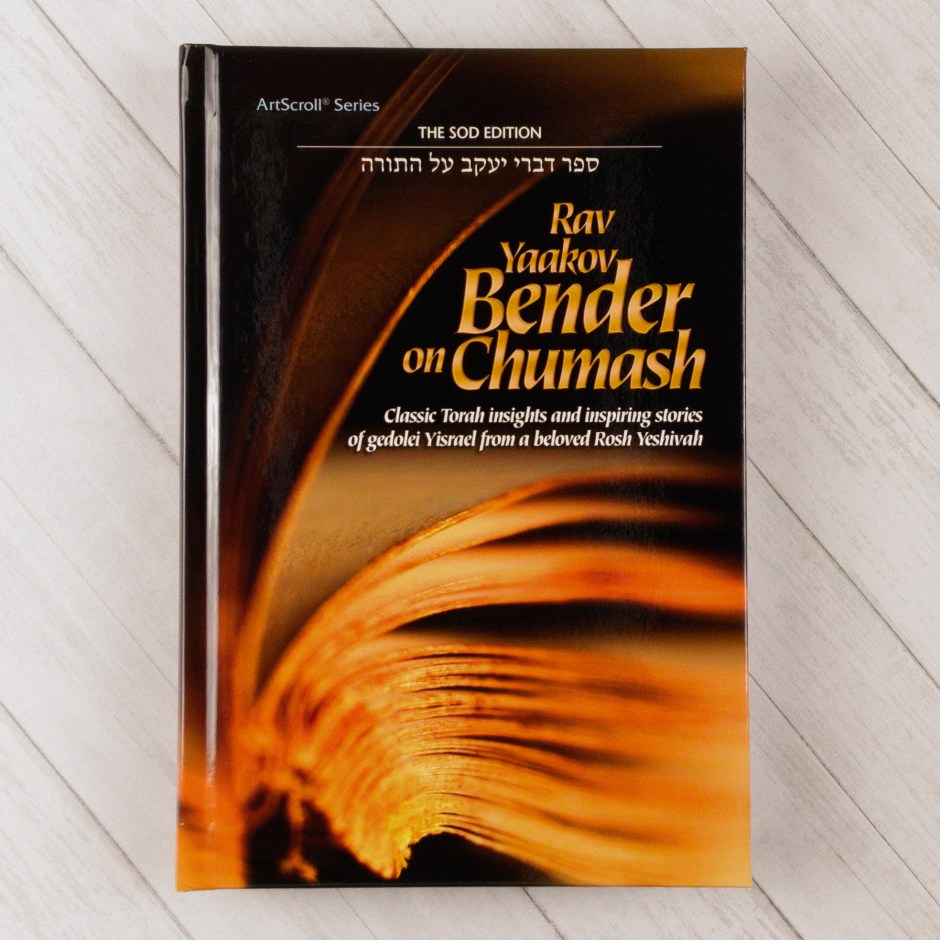
A Conversation with Rabbi Yaakov Bender – Author of Rabbi Yaakov Bender on Chumash

Rabbi Yaakov Bender is a gifted mechanech, a distinguished talmid chacham, a visionary Rosh Yeshivah, a community builder, a man completely devoted to his talmidim. We have all been inspired by his initiatives, his ceaseless effort for the Klal, his never-ending mission to strengthen Torah learning and give chizuk to those who need it. We admire his warmth, his passion, and his love for Klal Yisrael. Now, we can bring that warmth, passion, and love to our Shabbos tables, through his new book, Rabbi Yaakov Bender on Chumash.

Here’s what Rabbi Bender had to say about his new sefer and about navigating today’s challenging times.

AS: You are busy with so many important projects, yet you found the time to write this important sefer. How did you do it — and why?

RYB: I spent a great deal of time over the past two summers working on it. I have felt a tremendous thirst from parents to hear about chinuch inyanim. If I can help in some small way, I would like to.

AS: The sefer includes beautiful and unusual vertlach, engaging stories, and important lessons and insights. What are some of the themes touched upon in the sefer?

RYB: Middos, middos, and more middos. Rav Yisrael Salanter used to say it is easier to finish all of Shas than to change one middah. There are various programs for more and more learning, obviously all important. But there needs to be a major emphasis on middos.

AS: Your hakdamah speaks about the challenges we’ve faced this year and the heroism we’ve seen. Can you share some words of chizuk during this difficult time?

RYB: The kids hear so many negatives about people dying and people being very sick. I think the children should hear again and again that we can overcome the problems coming our way. Remind them that the yeshivos continue to learn better than ever, talk about the chasadim being done with neighbors, etc. Adults, too, need to focus on positive accomplishments during this time.

AS: What is the most important message a parent can give to a child today?

RYB: Don’t worry, kinderlach, we are here for you. Yeshivos are here for you. We will all be matzliach.