This delicious, naturally sweetened pulled brisket is a real crowd pleaser. Its versatile, goes-on-anything flavor profile elevates so many dishes. Try it over mashed potatoes, brown rice, zoodles, or spaghetti squash, stuffed into a sweet potato or baked potato, in a bun, or even to top a latke on Chanukah! It freezes beautifully, and leftovers repurpose so well.
MEAT KP
Yields 8 servings
4 lb second cut brisket
>> This recipe can also be used on short ribs or flanken, which will be melt-in-your-mouth, falling-off-the-bone tender!
1 Tbsp kosher salt
1 tsp black pepper
2 Tbsp olive oil
2 onions, thinly sliced
6 cloves garlic, crushed
½ cup silan
½ cup red wine
1 cup chicken broth
Season brisket with salt and pepper; massage seasoning into meat.
Preheat oven to 300°F.
Heat a Dutch oven or large skillet until piping hot. Add oil; sear meat on each side for about 5 minutes or until a golden crust forms. Transfer meat to a platter; set aside.
Add onions to the pan. Flash-sauté onions while scraping up any meaty bits from the bottom of the pan.
When onions are translucent, add garlic; cook for about 1 minute, just until fragrant. Return meat to the Dutch oven along with any pan juices that have accumulated on the platter. If not using a Dutch oven, transfer the meat and onions to an oven-proof roaster or aluminum pan.
In a bowl, whisk together silan, wine, and broth. Pour over meat; cover tightly. Bake for 6 hours or until meat can be pierced with a fork with no resistance.
Remove from oven. While the roast is still hot, pull the meat with two forks. Gently mix pulled meat with onions and pan juices.
AS: This book is about “Simply Gourmet Every Day.” With our uber-crowded days, how can we manage gourmet?
RK: My cooking philosophy is — do things simply, but the result shouldn’t be typical. It’s going to be delicious, but without extra sweat. How to do it? The key is that the steps are all easy. I’m working on a recipe and I say, “No, you’re not pulling out a second pot. Who wants to dirty a second pot?” Nothing labor intensive. I use simplified techniques to make the prep as user friendly and quick as possible.
AS: All through Simply! some recipes feature a “Simple Supper” icon – and there’s an entire “Simple Supper” section as well. Tell us about them.
RK: Here’s the criteria for Simple Suppers: No more than 10 minutes prep. If chopping the veggies takes over 10 minutes, it’s not a Simple Supper. And it’s on your table – prepped and cooked – in under an hour. You came home from work, you need start to finish supper on the table in half an hour. You see the Simple Supper icon, you know it will work. The chapter on Simple Suppers includes tips and tricks and variations. How to double, how to freeze. And prep ahead – a working mom needs to know what she can make the night before.
AS: Winter’s coming – let’s talk soup.
RK: I call them “Dump and go soups” – and they are off the charts delicious. What gave me the idea? One erev Shabbos, it’s 32 minutes before candle lighting and I forgot to put up my chicken soup! I ran to my fridge, found some shallots, onion, and celery, and cauliflower in the freezer. I literally dumped everything in with a little salt and pepper and a touch of lemon juice. I went to shower, and the soup — which I called a “dump and go cauliflower bisque” — came out great!
AS: Some people (me, included!) are, to be honest, intimidated by the idea of gourmet cooking. Got any encouraging words for us non-foodies? RK: That’s what this book is about. Anyone can be a gourmet. It’s not about spending hours. It’s about working with flavors, using creativity and following directions. Anyone – starter cook or someone really seasoned — should be able to walk away and say “I’m a gourmet.” Anybody can do it. It’s really not scary.
Do you think that without a personal chef and home organizer, a stress-free Pesach is an impossible dream?
Think again.
Faigy Murray wants to be your personal chef. And your home organizer. She does it with her marvelous new cookbook, My Pesach Kitchen: Stress-free recipes your family will love.
Faigy’s roots as a recipe developer go back to her childhood, when she spent hours watching her gifted mother whip up fantastic foods. She began her professional career with one follower on her Instagram page (hurray for mothers-in-law!) and in an amazingly short time had thousands enjoying her menu ideas, recipes, and tips.
Then came COVID, when newlyweds fresh from their Corona chuppahs had to clean their apartments and cook their Seder for two, and families whose Pesach prep had always meant booking flights and hotel rooms faced the task of making Pesach at home for the first time in years. And everyone, it seemed, was turning to Faigy for help. “Somehow, I became the Pesach go-to person,” she remembers. “How to organize for Yom Tov, what to cook, what kitchen equipment they needed to buy.”
Realizing that here was a pressing need to fill — an “everything-from-A-to-Z” Pesach cookbook — Faigy has spent the past year and countless hours creating My Pesach Kitchen.
What will you get when you enter My Pesach Kitchen? Great recipes, of course — more than 130 recipes that are easy-to-follow yet elegant enough for a dazzling Yom Tov table. They’re all gluten free (except for the matzah balls!) “Like Dinner Done, that’s become so spectacularly popular for year-round use, these are recipes for good, solid food. After all, you can eat healthy and well even on Pesach!” Faigy says. “You can give this book to your ten-year-old daughter and she can make every recipe. They’re easy, not intimidating. Your family will say, ‘Yum, I can’t wait to eat.’”
A special section on Chol HaMoed gives fantastic ideas for people who are “all cooked out” from Yom Tov, but still have hungry families and guests to feed, and also includes great food ideas for Chol HaMoed trips.
The unique “Pesach in Your Kitchen” section offers step-by-step notes and tips to making Pesach, including templates for shopping lists, day-by-day cleaning tips, menu plans, and a guide to “turning over.”
“In this book,” says Faigy, “You’ll hear my voice, and I’ll hold your hand. I’ll be your Pesach organizer.”
A candid interview with the creators of Between Carpoolsand the latest cookbook sensation, Dinner Done!
With preorders already breaking sales records, everyone, it seems, is talking about Dinner Done, the fantabulous (no other word describes it!) soon-to-be-released cookbook, created by the team that brings us the uber-popular lifestyle site Between Carpools (BCP) and published by ArtScroll. Just to add to the excitement and the buzz, we decided to chat with the Between Carpools team about their lives, their accomplishments, and, of course, how they get Dinner Done!
So let’s meet and greet our BCP friends: Leah Schapira, Victoria Dwek, Renee Muller, Esti Waldman, and Shaindy Menzer.
ArtScroll: How did Between Carpools start?
Victoria: Four of us had been in the kosher food world and we had wanted to do something online together. Then Leah had an idea. She said, “It has to go beyond food. Food, yes, but also posts about kids, home, organizing, decor, baby gear, clothing … anything goes. A website that’s built around our lives.” Then she had the brilliant idea to call Shaindy ….
Shaindy: I knew Leah from my kids’ school and from the neighborhood. I got a message from her one day, asking if I would join BCP. Before she even had a chance to describe her vision, I remember telling her that I had no time for hobbies anymore. I’d join if it was something that she thought I’d be super passionate about. Of course, three minutes later I was super-excited about the idea and jumped onto the BCP team. It’s been the best decision ever.
Esti: It went from a vague idea of a safe and interesting online place for Jewish women to a full-steam-ahead project. Somehow, with a lot of siyata di’Shmaya, people started following along, and the trust they have in us has been unbelievable. It’s definitely become more than a little “side project” by now.
ArtScroll: This isn’t the first cookbook for three of you. Did you ever think you’d get together to write a book with your Between Carpools team?
Leah: The opposite! The three of us who have written books have frequently said that we’re not writing another one. We said, “We’re tired — and we’re retired.”
Victoria: All books should be written by a team of five! I absolutely loved being able to focus on writing … without having to worry about how the food looked, because Esti and Renee were on it! What I also loved about writing with a team is that we could all focus on the types of food we actually like to prepare. For example, first Leah and Renee worked on chicken, because Renee cooks fleishigs every night. Then Leah and I tackled the dairy chapter. Finally, Renee and I brainstormed the types of fish dishes we’d need.
ArtScroll: What did you look for in recipes for Dinner Done?
Esti: We don’t want you to have to spend a ton of time in the kitchen every day preparing dinner. So, quick prep was important. Featuring recipes that use pantry ingredients was also important. We want you to be able to pull out the book when it’s time to make dinner and be able to cook without a run to the grocery store.
ArtScroll: What are your favorite recipes in the book?
Renee: It’s hard to find a favorite. I am always working with food and I am rarely tempted to eat what I’m working with. When styling Dinner Done, it was just the opposite! Every recipe was like “Yay! Lunch!” Or, “I’m so excited; another dinner idea that I KNOW my kids will love.”
ArtScroll: How do you develop the recipes?
Victoria: If you pick any random recipe in the book, we can tell you a story behind it. I think the recipe that sums it up is the very last recipe we wrote, Salmon with Silan and Garlic Slices. One day, about two weeks before the book went to print, we had a meeting at ArtScroll. At that point, the book was almost done — we just needed one more salmon recipe. It had to be simple. And we knew we wanted to include silan. During the car ride home, we had a brainstorming session, deciding just which spices would pair well with silan and salmon. When I got home, I made the recipe, just as we had discussed. And it was spot on. The give-and-take really results in great recipes. There are so many recipes in the book that are better because we have partners we can discuss them with. But not all recipes are collaborative. Leah, tell them about the process behind Crispy Chicken.
Leah:
So, basically the cookbook was all written up. And honestly, we had enough chicken recipes, but looking through the section I realized it was missing that one addictive special occasion fried sesame chicken recipe. (In my cookbook, Fresh and Easy, that recipe is iconic). Since everyone also loves takeout crispy beef, I started working on a combo: crispy sesame chicken takeout.
For the recipe to work I knew it needed a few specific elements.
1. The chicken had to be thin so that the coating would be significant enough to be crispy.
2. The coating had to have a real crisp/crunch factor.
3. The sauce had to have a good balance of sweet, to give it that addictive special occasion vibe.
Getting the chicken crispy was easy. I knew using a mix of flour and cornstarch and both baking powder and soda would give me the maximum crispy factor. And lately I love using apple juice in chicken and meat recipes, since it adds some flavor while keeping the chicken tender.
The sauce was a bit trickier. I fried up three pounds of chicken strips and tossed each half-pound with different sauces combinations, until we got the one we wanted.
In general, when writing recipes, I think of a few things:
What do people like to buy in restaurants and take-outs? Can we make a great version at home, sometimes healthier, sometimes with a twist and sometimes as is?
What recipes am I missing in my life? A new Friday-night fish, a new soup recipe that is similar enough to chicken soup so that the kids will be willing to try it?
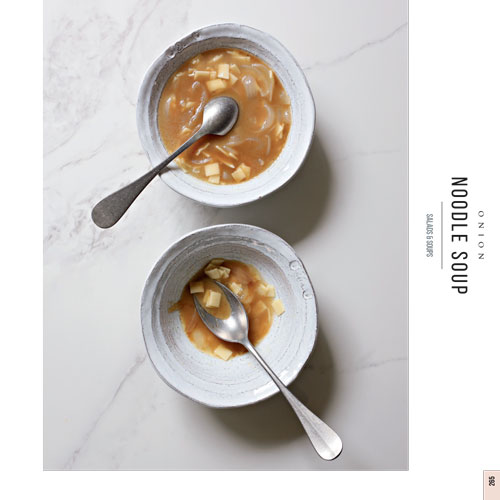
Can I find a new twist on an old favorite? For example, I wrote a mashup of everyone’s favorite two soups — onion soup and chicken noodle soup — so now DD has an Onion Noodle Soup!
ArtScroll: Esti and Shaindy, you have some contributions in there, too. Tell us about your own recipe testing experiences.
Esti: I’m not a recipe developer — I just take the pictures! But don’t tell that to my kids. They insist that all my food is worthy of publishing!
Shaindy: Every once in a while, Leah would try to pick my brain for recipes. “C’mon, I know you have some good stuff you’re not sharing ….” And I’m always like, “Me? Recipes? I start dinner at 3:30 without knowing what it will be! From start to finish, my dinners usually take max an hour to prepare … trust me, you don’t want my recipes.” And Leah says, “YES! We want exactly that!” I have so many recipes that I wouldn’t even think to call recipes. Like my Maple OJ Chicken … is that even a recipe? Apparently, it is!
ArtScroll: Can you share with us a little about the design and styling processes of the book?
Shaindy: I was called in pretty early on, to come up with a layout design. First, we needed the layout for the actual recipe pages, so Victoria would know how much room will be allowed for the description and for the tips and hacks. I did a lot of cookbook browsing to get inspired and ultimately, I knew I wanted a book that would be clean, easy to read and follow, yet beautiful visually. It had to connect with the style of Between Carpools, so there had to be some sketches and we had to stick to similar fonts and the color palette from the blog. Once I came up with the layout, I presented it to the team. I’m lucky to have a team that is so easy, and they approved it right away. Then I got a little break time while they all worked tirelessly writing, styling, and shooting.
The last few weeks before print is when all the “extra pages” were designed and created. I’m a real last-minute kind of person and work really well under pressure, so that worked for me. I spotted some inspiration that was awesome — it was a combo of images and sketches. I showed it to the team and everyone loved it! There! The hard part was over — we had a “look and style” for these pages. Once the concept is there, the rest flows. You’ll see these creative pages throughout the book, especially in the divider pages and front matter. I have to say this was such a thrilling project and it was fun to use my creative cells to make it work!
Renee: I wanted the book to have a casual dinner vibe. Something achievable, familiar, and unpretentious. Like your good denim skirt. So — don’t laugh — I added denims to the palette. Denim is definitely weekday. Right? And it’s comfy. Look through the book and you’ll see denim throughout, or shades of it. At one point, when we wanted to get a specific shade of dark denim, we used an actual skirt. Yup. True story. See if you can spot the real skirt on two pages!
ArtScroll: Tell us a bit about the “9 x 13 Life”
Renee: We starting posting 9 x 13 recipes on the site — that is, meals you can make in one 9 x 13-inch pan — and they became our most popular. It’s because that’s what people need. This is real life; there are so many days when we simply don’t have time to cook or can’t manage having a mess to clean up. So we decided to begin the book with a whole chapter of 9 x 13 recipes. It’s easy to turn to when you’re in a pinch or just want a great, mess-free meal. There are lots of baked goods in the chapter too, for the time when your child comes home and says he has a siyum tomorrow and needs something to take to his class, or when you realize you need an extra dessert on a Friday … we have you covered!
ArtScroll: Who is this cookbook for?
Esti: It’s literally for everyone who has to make dinner on a regular basis.
Renee: Us. All of us. Dinner happens 6x a week. We need solutions. Quick and easy ones. Walk through the door and need dinner done in 30 minutes? It’s possible. Leave for the day and you want to have a meal cooking and waiting for you when you return? It’s in the book. We know and understand what women need these days. We put it into the book.
Victoria: This is a book that’s even for the woman who never buys cookbooks! Those who love to cook will love it, but those who simply cook to feed their family need it, too.
Shaindy: To me, a cookbook is something you pull out before Yom Tov or when making a simchah. I honestly own maybe 3 cookbooks. (I don’t own Leah’s or Victoria’s either … shhh, don’t tell them!) I’ve always said about myself, “Me? Recipes? I don’t follow instructions like that …. Like, you’re gonna tell me what to do?”
As much as we said this book is going to be simple, I never really believed them until I was called on to test some recipes. I geared myself up to go grocery shopping and I put away some extra time to prepare. And then it suddenly hit me …. “Whoa, these recipes fit right into my daily last-minute routine … I have every single one of the ingredients, and hey … this is sooo easy!” Every single recipe I tested was a hit in my home. The idea of this whole cookbook really started to get to me. I was finally getting into it. This is not just another book … this one was going to be awesome!
Now that I have the printout proofs, these recipes are all I make for dinner. Honestly, I can close my eyes and pick any page and it will work for me. It’s amazing how every single recipe is a GOOD OPTION.
Another point: These recipes were tested and approved by our (bli ayin hara, many) kids. Different households, different palates, and yes, if it wasn’t great, it didn’t make the cut. We cooked the book constantly while writing it. These recipes work for our families. And they’ll work for yours.
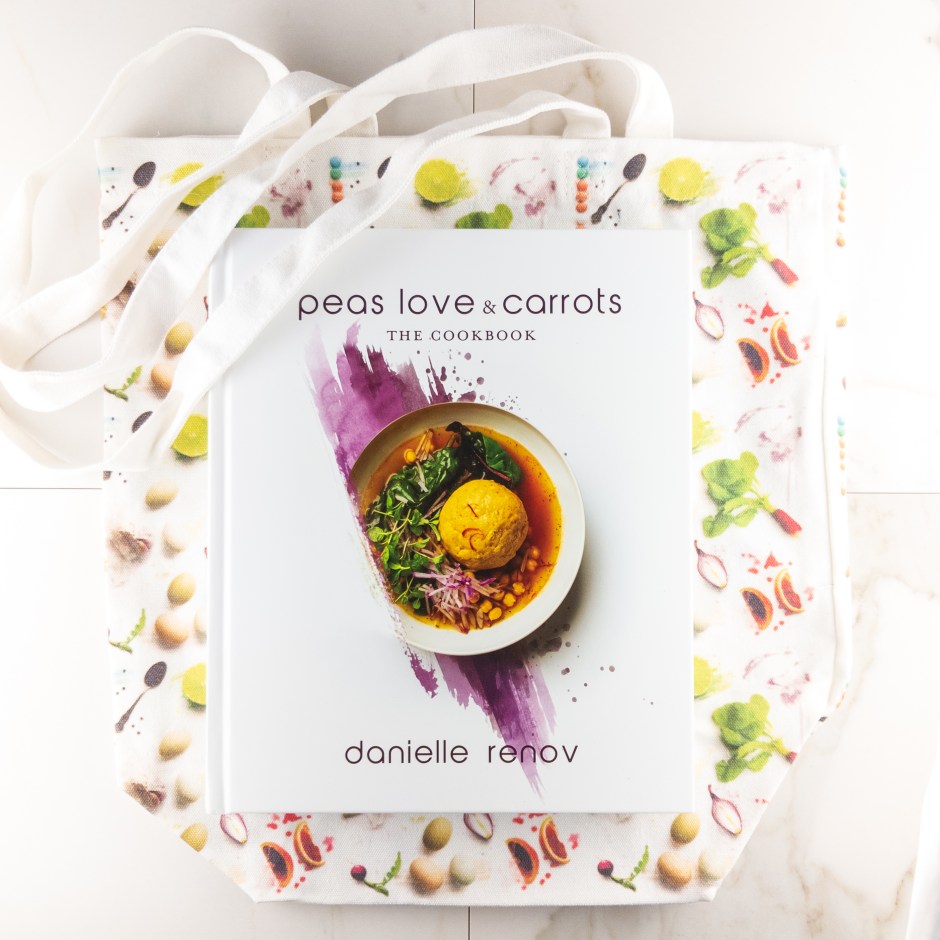
AS: The buzz about Peas Love and Carrots: The Cookbook is extraordinary, with over 25,000 (!) copies pre-sold before it’s even been released! Where did all the excitement come from?
DR: I’ve developed a really close relationship with my community, and they’ve been with me as I collected and developed the recipes and narrowed them down to the ones that work the best. The community — tens of thousands of us, and growing every day! — worked with me to create this, and we’re all very excited about it. We’re a very diverse group: Sephardim and Ashkenazim. Chassidim, yeshivah people, modern Orthodox, secular Jews. We’re all people who like to put beautiful food on the table, who enjoy eating, and serving, different, interesting foods. I bring them fantastic recipes and share techniques to make their cooking better.
AS: Tell us something about those recipes.
DR: They are very approachable. Most are budget-friendly, quick and simple to follow, but there are also the exotic, unusual recipes that need more preparation, for holidays, entertaining, or when you’re in the mood for cooking something really exciting. There is so much here: More than 250 recipes! About two-thirds of the recipes are for everyday meals, particularly dinner, which is always a challenge. The other third are designed for Shabbos and Yamim Tovim.
AS: How do you go about developing — and taste testing — your recipes?
DR: I wake up in the morning and see what kind of cuisine I’m in the mood for! My kids are my guinea pigs, and I don’t know anyone who is a pickier eater than my husband. If a dish gets everyone’s approval, I make it a second time to tweak it to perfection, and then I make it a third time to make sure the results are consistent.
AS: With so many recipes to choose from, what are your personal favorites?
DR: The ones that are meaningful for me, the foods that bring me back to my childhood and elicit memories of my grandmother, bring me to a special place and time. For me, food is so much more than sustenance. It is what ties our future to our past. It is what brought me to the table growing up in my parents’ home and what brings my own children to the table today.
The kids are spending the entire morning busy and happy, playing MasterChef. Each of the children was given the same ingredients. Everyone is excited to see what delicious dishes they will cook up. The winner? Chaya’s cherry pie — and the whole family, who all enjoyed a fun, laughter-filled morning.
Mommy brought a boxful of interesting ingredients. Now the entire family is baking and cooking together to celebrate Baruch’s birthday and Tatty’s siyum.
Bubby is making pizza with the eineklach. They’re rolling dough, spreading tomato sauce, sprinkling cheese — all together, via Zoom.
More and more families have discovered how cooking and baking together keep children busy and happy, and, most important, connected to each other and to their parents and grandparents.
As one mother put it, “Food may be love, but cooking together is bonding!”
Cooking with kids is especially fun when you’re using a children’s cookbook. Kids Cooking with Chef Shiri offers guaranteed kid-pleasers: think Teddy Bear Toast, Marshmallow Sprinkle Cookies, and Roasted Vegetable Pizza with Pastrami. Every recipe also includes “A Dash of Humor,” a joke that will get the kids giggling as they cook, “Fun Food Facts,” and Buzz the Berachos Bee, who presents interesting info about berachos.
If you’re one of Victoria Dwek’s and Leah Schapira’s thousands of fans, you’ll enjoy showing kids their cookbook, Kids Cooking Made Easy, with over 60 recipes for children.
Every one of these cookbooks is ArtScroll quality. That means gorgeous layouts, stunning pictures, and tested recipes that really work. And now, they’re available at the lowest price ever: 30% off the list price!
Cooking with an ArtScroll cookbook. What better way to spend time quality family time — and end the day with something very, very delicious!
MP: The thing about writing
cookbooks and creating recipes is that I love doing it, and I don’t really know
how to turn it off! So pretty much as soon as I wrapped up my previous
cookbook, Real Life Kosher Cooking, my brain started coming up
with ideas for another one. Two years later, here we are!
AS: What’s the process when you develop a
recipe? Do you imagine the final end product and then explore how to get there?
Or do you simply experiment with different tastes, colors, textures?
MP: Sometimes I develop a recipe
very deliberately. I come up with an idea, I research it, I play around, I make
it, I tweak it, and then I finally have the perfect recipe. Other times, it’s
far more spontaneous. I’ll throw a little this and a little that together and then,
when we eat it, if the end result is fantastic, I quickly write down everything
I did so that I can remake it as a recipe.
AS: Have you ever had any real disasters in
your kitchen?
MP: I’m human, so of course! I’ve had my share of burnt food and recipe
flops, but by far the most devastating for me was when I finished photographing
a roast, and I put it on the counter to put away later. I’m sure you can guess
the end: I woke up the next morning and realized I hadn’t put it away. I was
really sad to have to throw out a whole roast, but what could I do?
AS: Did fan feedback influence how you wrote your cookbook?
MP: Absolutely. In fact, I wrote about this in more detail in the introduction to my new book. For example, every time I published a recipe, so many people would ask me if it could be frozen. To ensure they wouldn’t even need to ask, I started to include detailed “plan ahead” information for each recipe, and it’s become a tremendously popular feature of my books!
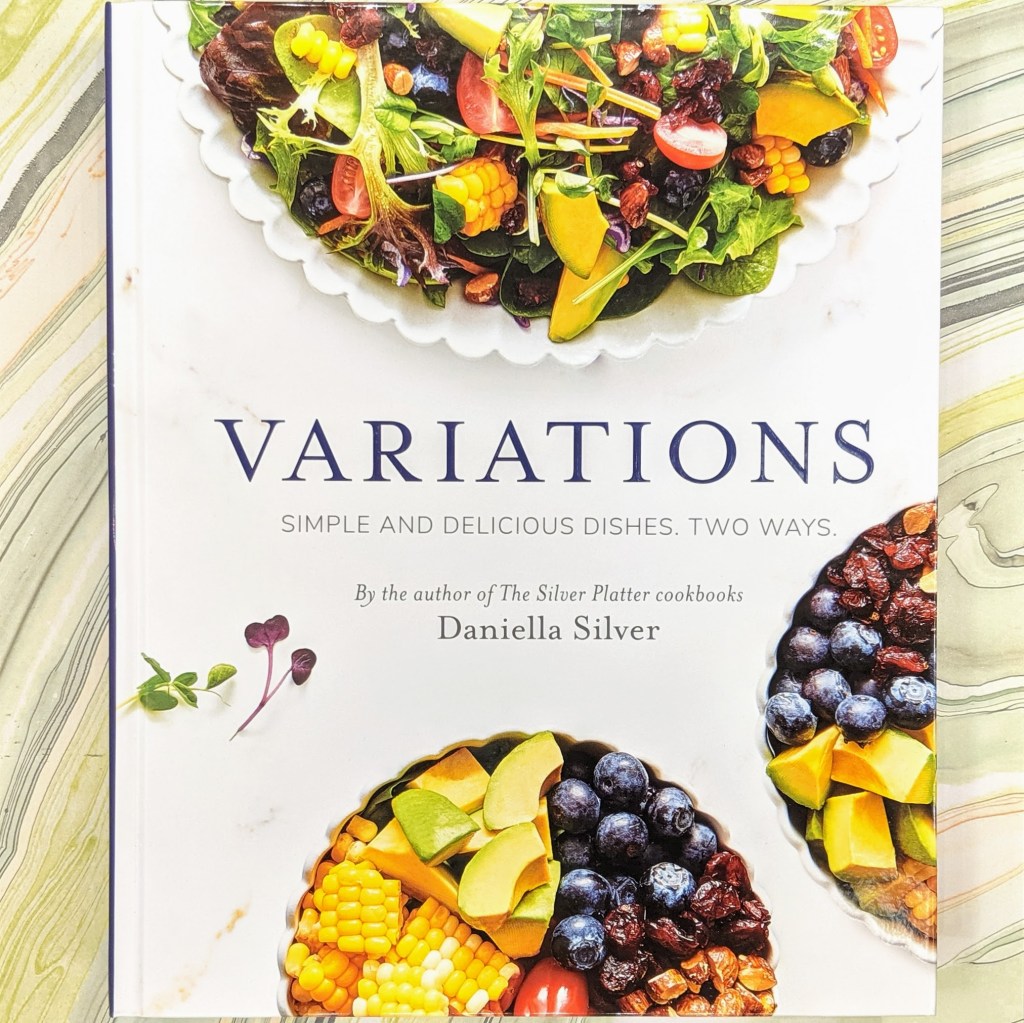
AS: Variations. It’s an unusual title, and
an unusual cookbook. Please tell our readers more about it.
DS: The idea of this cookbook is to
have some fun by showing how versatile recipes can be, all the while staying
true to my healthy and simple way of cooking. Each recipe showcases two
different ways of either cooking or serving. We learn that recipes don’t have
to stay within their original boundaries. It’s all about creativity and flair. A
main dish can be recreated as an appetizer, and a batch of cookies can become a
large cookie cake. The possibilities are endless! It actually took me a while
to come up with the title. I wanted something that explained the two-dish
concept. In the end I felt that Variations was short, to the
point, and explained it in one word. It just worked!!
AS: This is your third cookbook, after The Silver
Platter: Simple to Spectacular and The Silver Platter: Simple Elegance. Can
you share some of the feedback you’ve gotten on those two bestsellers?
DS: I think the biggest compliment
is how so many people have told me they are using my books for staple recipes
in their homes. They are turning to them for easy, healthy, and reliable
recipes. Hearing that is so rewarding.
AS: You use the word “simple” often in your cookbooks,
and yet the photos show such gorgeous foods. What’s the secret?
DS: The only secret is simplicity. I
don’t like to fuss in the kitchen and I use the word “simple” because I truly
mean it. My dishes are simple to make, healthy, and quick to prepare. Simple,
healthy, and quick meals can still look and taste amazing.
As: Here’s a tough one: Did you have any funny culinary
disasters while developing recipes for your cookbooks?
DS: Of course! Here’s one: I had
prepared my Corned Beef Biscotti for a photo shoot. My mom came over and before
I told her it was meat she was about to eat, she thought the corned beef pieces
were Craisins! It was pretty funny!
AS: With so many recipes — and two variations of each! — what are some of your personal favorites?
DS: No question: I love the Panko-Topped Kale Salad, Sesame Crusted London Broil, and Low-Fat Ginger Biscotti! Yum!
Chanie Apfelbaum has been very, very busy in Brooklyn — and we’re going to LOVE what she’s got for us!
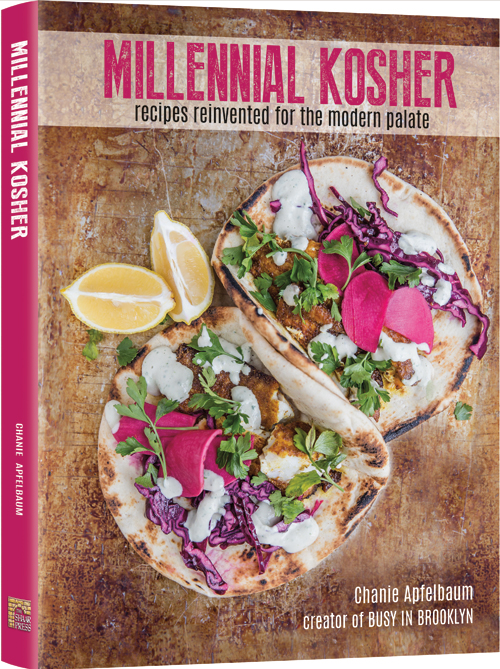
If you’re one of Chanie’s tens of thousands of followers of her popular food blog, Busy in Brooklyn, you know all about her ultra-creative, super-fun, and absolutely delicious recipes. Chanie always dreamed of writing her very own cookbook, and now her dream has come true, with ArtScroll’s Millennial Kosher: Recipes reinvented for the modern palate.
What was Chanie’s vision for the book? “I felt that the kosher food world needed something fresh and new — food influenced by international cultural cuisine, recipes using bold ingredients and spices, and dishes without the dreaded margarine and onion soup mix of our youth. I wanted to make cooking fun, and brighten dishes up with color.”
Millennial Kosher is not just for millennials — it’s for anyone who appreciates creative cuisine. As Chanie tells us, “When I thought about the dishes I wanted to include in the book, I realized that I had to appeal to a wide spectrum — people who love my healthy recipes, people all over the world who make my not-so-healthy hasselback salami, those who want Yom Tov recipes, people who want quick and easy dinners, and those who want recipes that are more complex. Of course, I also needed to appeal to those who want to introduce fresh and new ingredients into their dishes, and also those who prefer to use basic pantry staples. I think I found a good balance, and there is truly something for everyone in this book!”
Millennial Koshergives all of us the information and inspiration we need to cook and serve sophisticated yet lively cuisine. A special section shows us the tools, equipment, ingredients, and staples needed to “cook millennial.” The “Guide to Kosher Meat Cookery” demystifies the various cuts and cooking methods for meat.
And, of course, there are the recipes: fun, unique, delicious. Shavuos is coming, right after Shabbos — that’s six festive meals! Why not start with One Bowl Honey Challah. Baklava Blintz Bundles make a gorgeous dairy dish, and for a meat meal, why not try Sticky Silan Short Ribs with a side of Confetti Cabbage? Dessert? Here are some of the showstoppers: Orange Creamsicle Cheesecake, Pecan Pie Bites and Chocolate Hazelnut Ganache Tart with a Macaroon Crust.
So start cooking millennial — you’re going to love it!














 The Official ArtScroll Blog